See Photos From New York’s Historic Anti-Trump Marches
“Art is a way that we get to connect with each other, to witness each other, and to give a little bit of a buoy to keep going,” one protester told Hyperallergic.

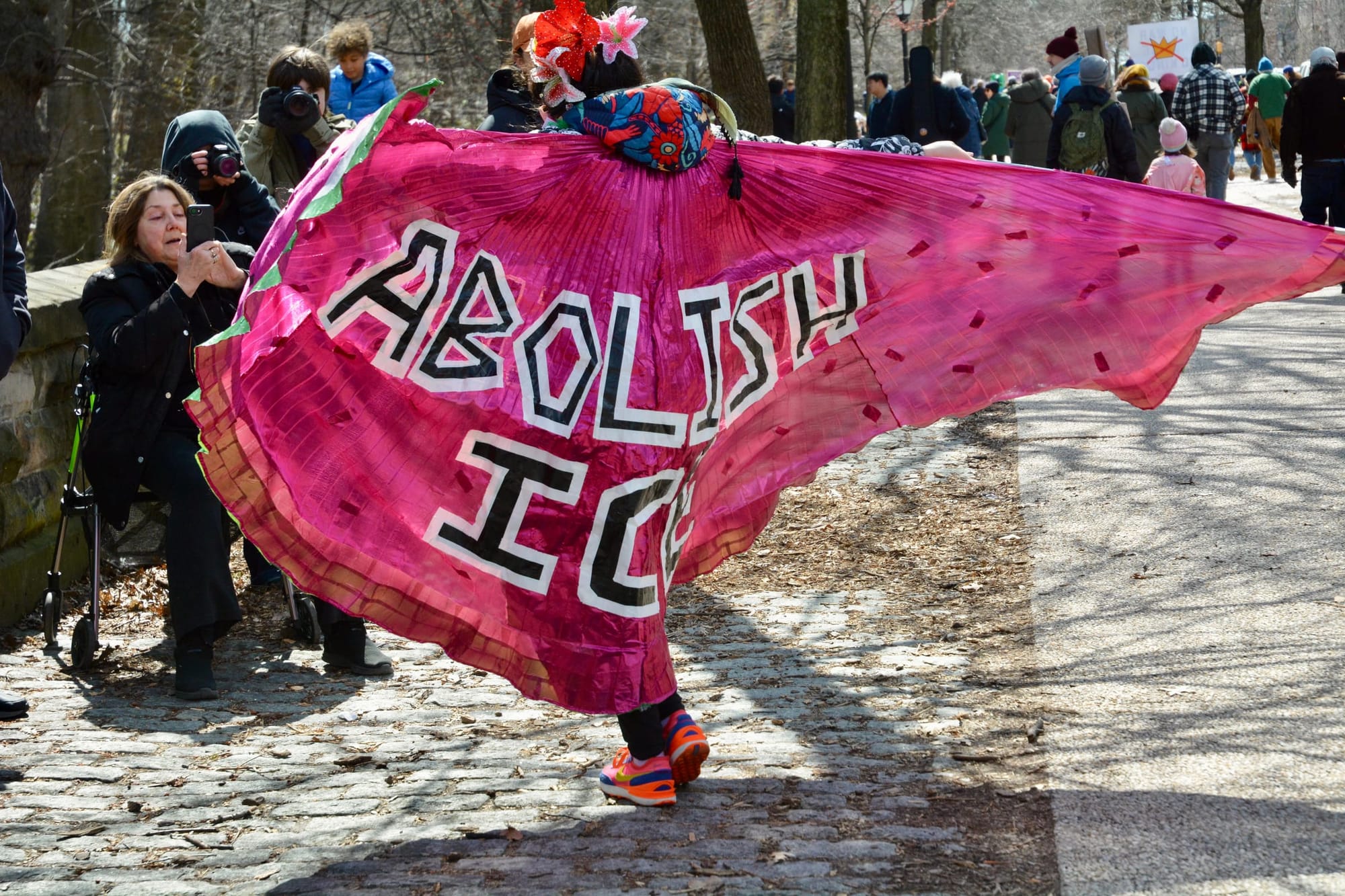
Midafternoon along Prospect Park West this past Saturday, March 28, all eyes transfixed on a billowing magenta cape emblazoned with the words “ABOLISH ICE.”
The cloak's maker: Una Osato, an artist and sex educator who came out to Brooklyn’s No Kings march with her colleague. “There’s a never-ending need for functional art,” she told Hyperallergic of her creation, which throngs of passersby fawned over for the event’s duration.
For Osato, Saturday’s march served as an important reminder of the intrinsic beauty of social movements. “When we’re together, we can be more courageous than we ever imagined we could be on our own,” she said. “And I hope that I can add a little bit of sparkle to that.”
She emphasized the role of artistic gestures during a day of action. “Art is a way that we get to connect with each other, to witness each other, and to give a little bit of a buoy to keep going,” Osato said.
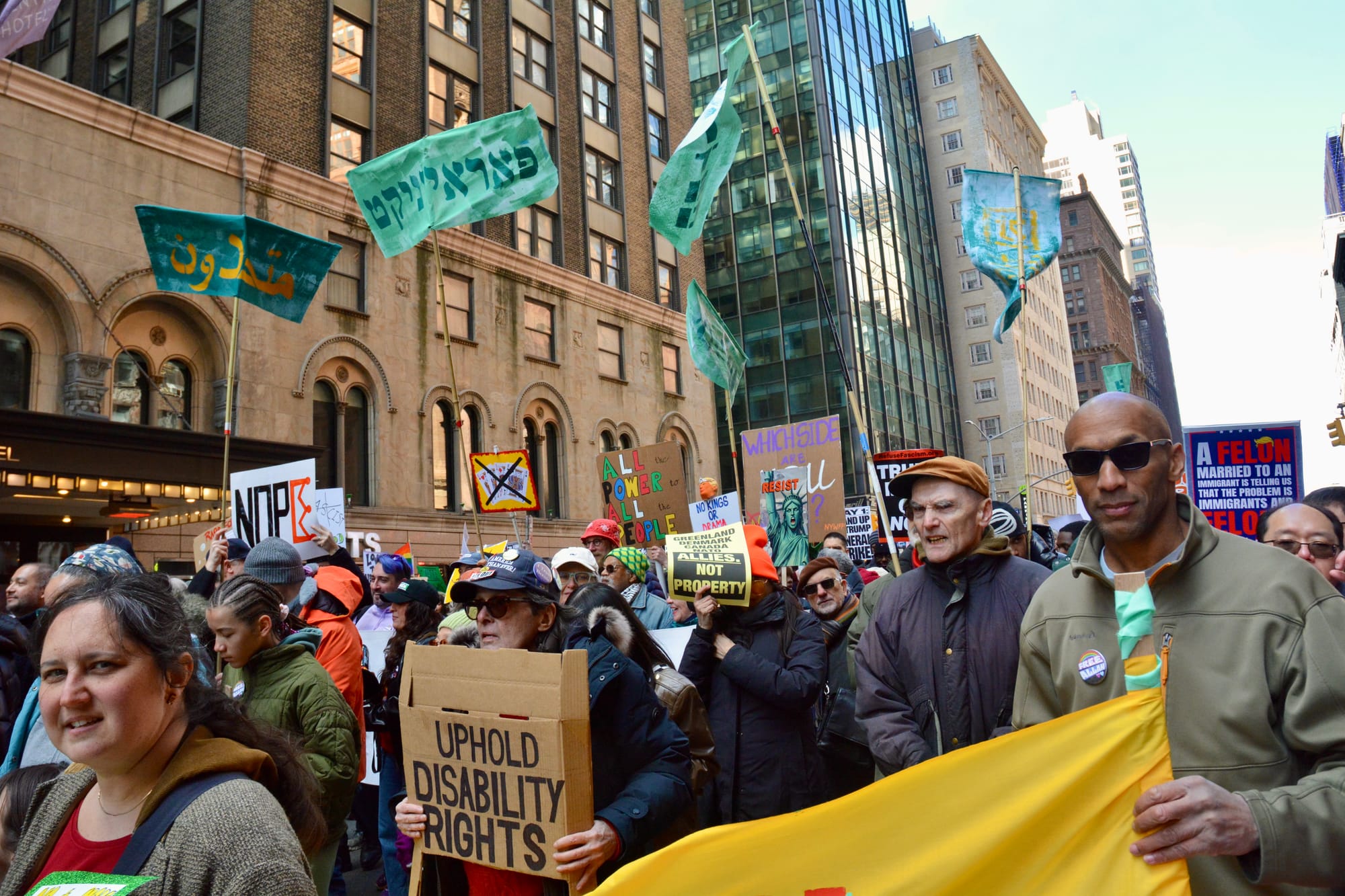
Over eight million demonstrators took to the streets in 3,300 protests across the nation on Saturday, according to Indivisible, a grassroots organization that helped to organize the marches, making the latest No Kings Day — the third installment in the series — reportedly the largest single-day mass protest in United States history.
Last October’s No Kings protests brought over 100,000 demonstrators to the streets of Manhattan. This year was different: rather than convening in a single borough, protestors showed up across their different neighborhoods. Organizers said that this intentionally fragmented configuration strove to convey that issues of authoritarianism are felt at the local and community levels.
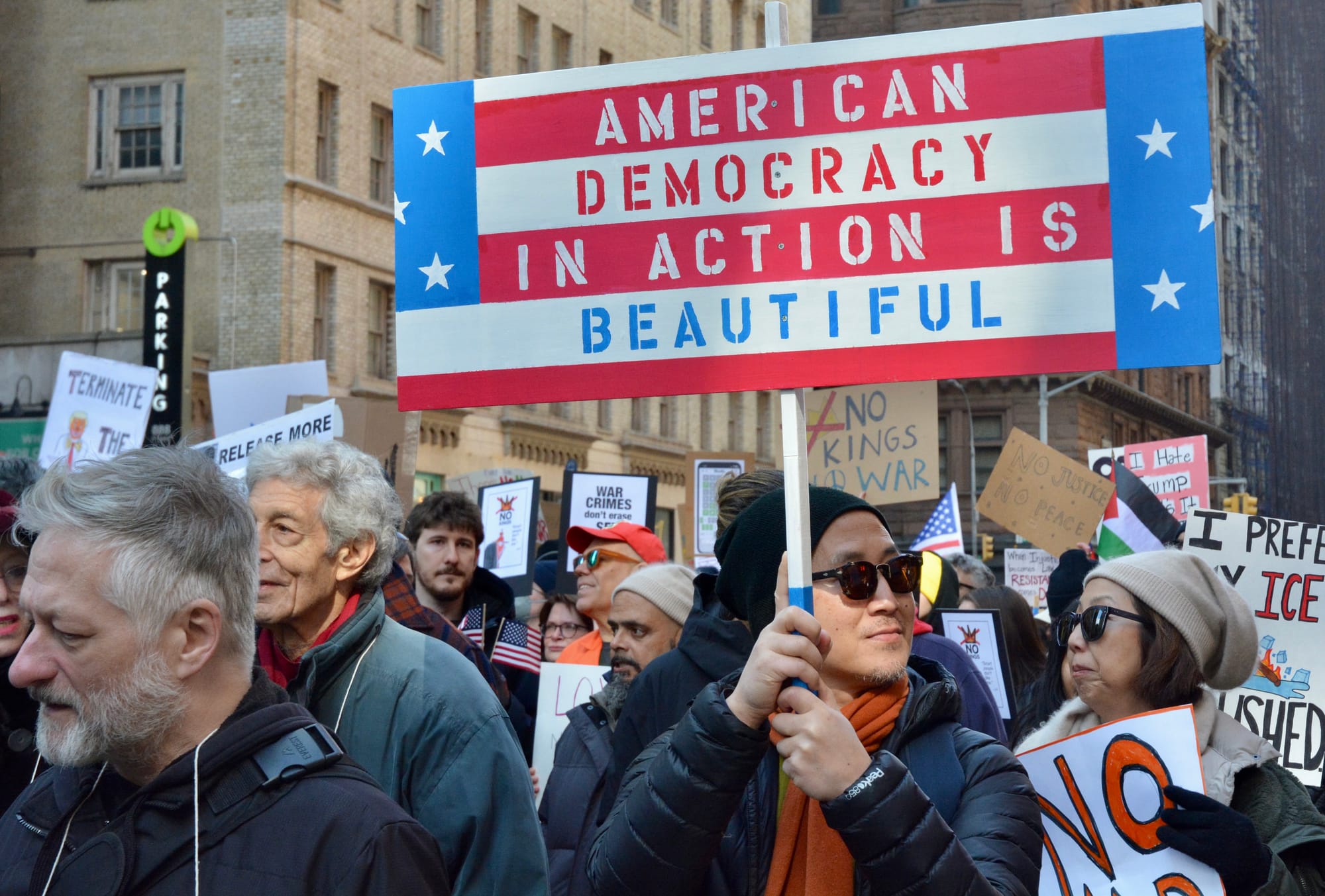
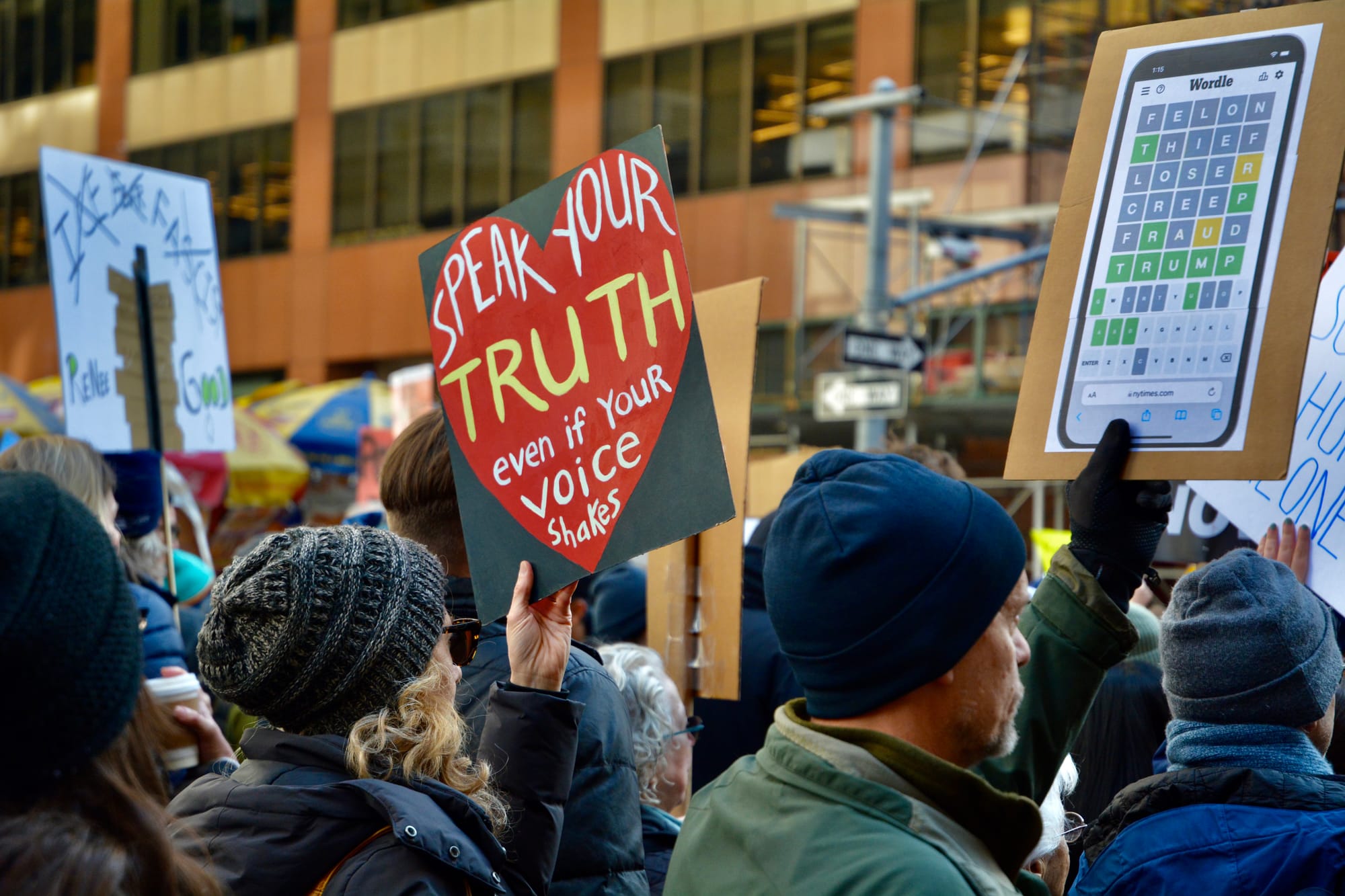
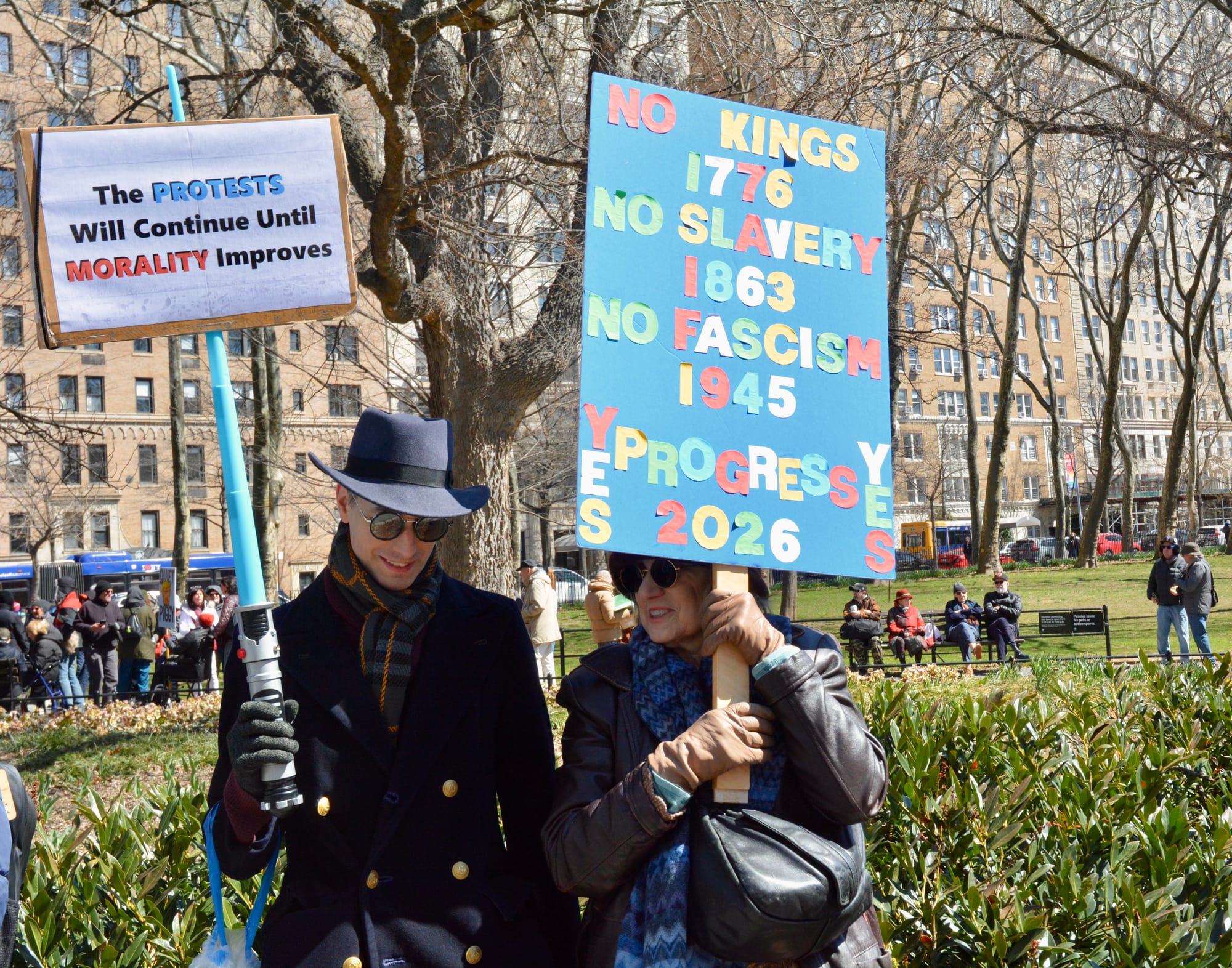
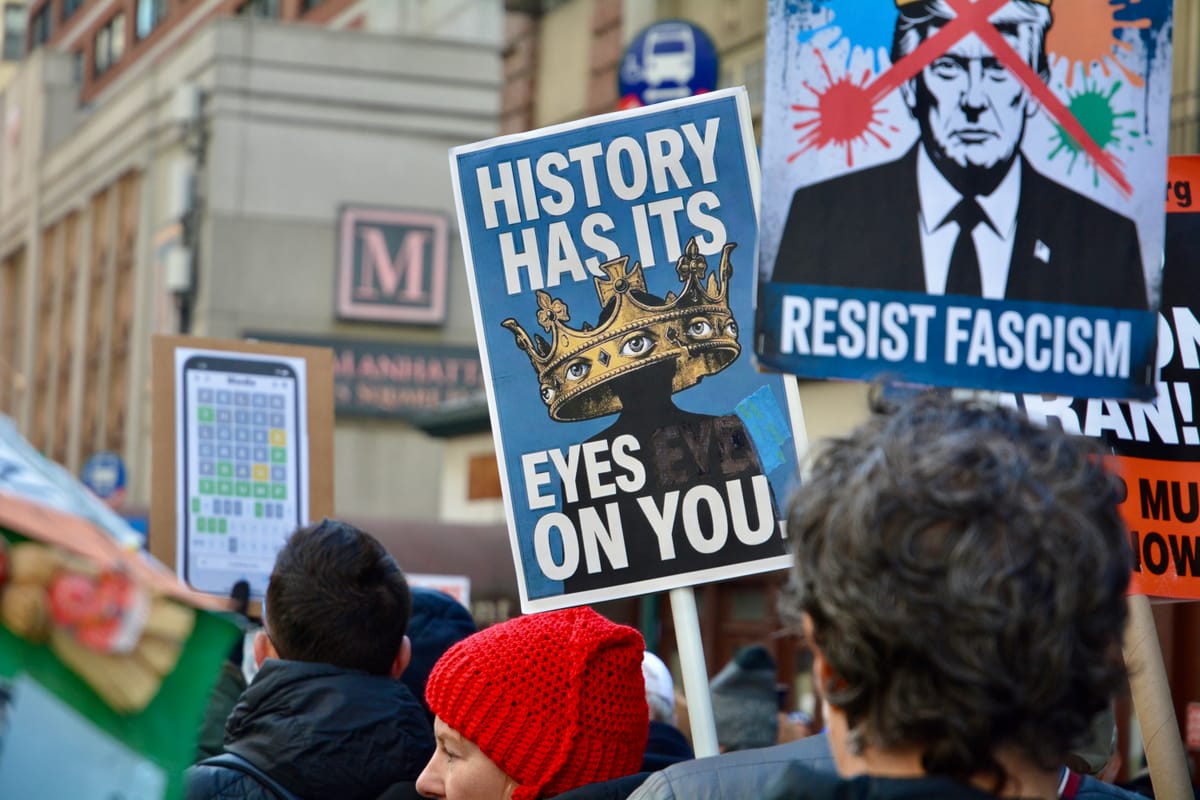
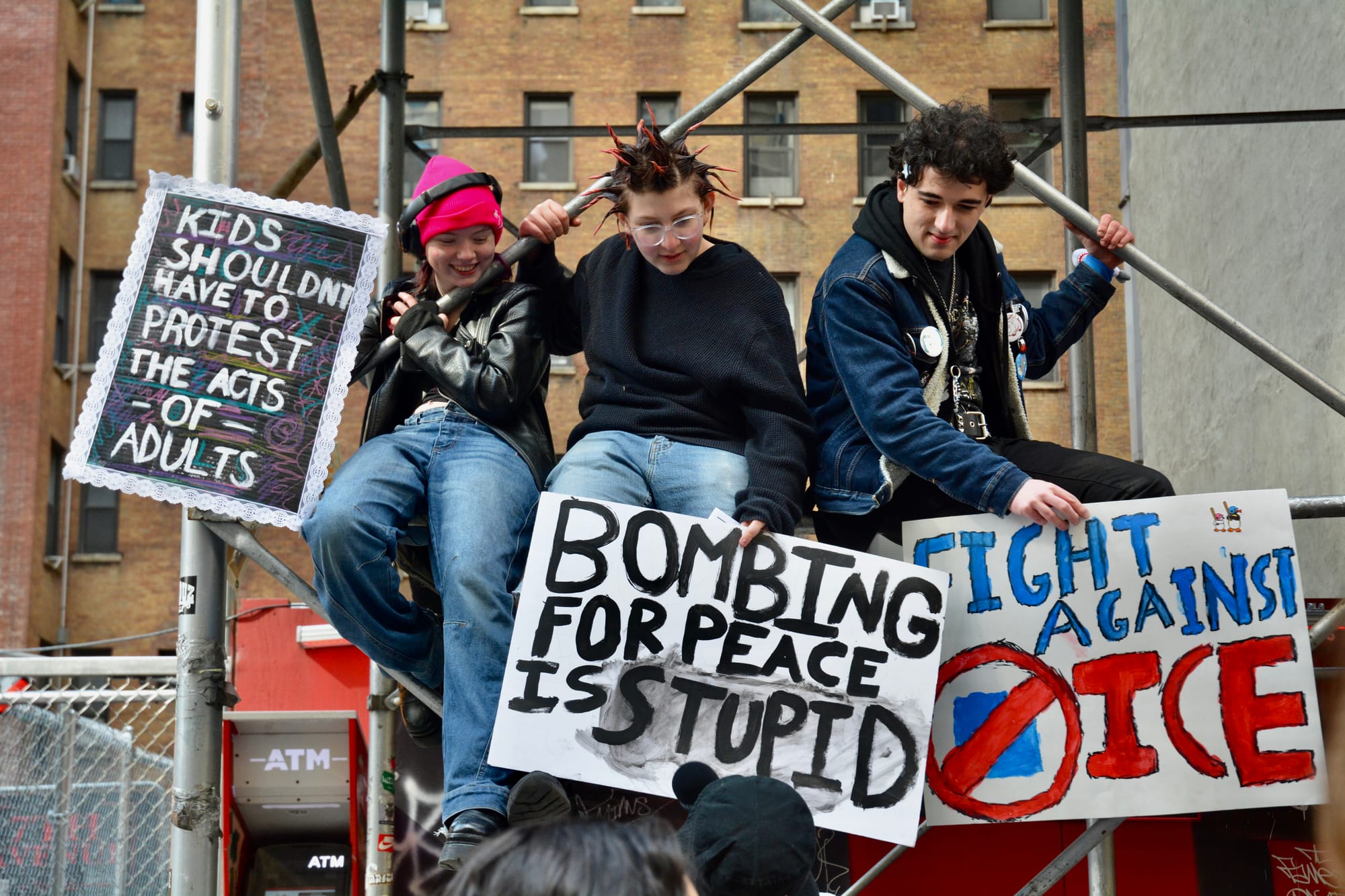
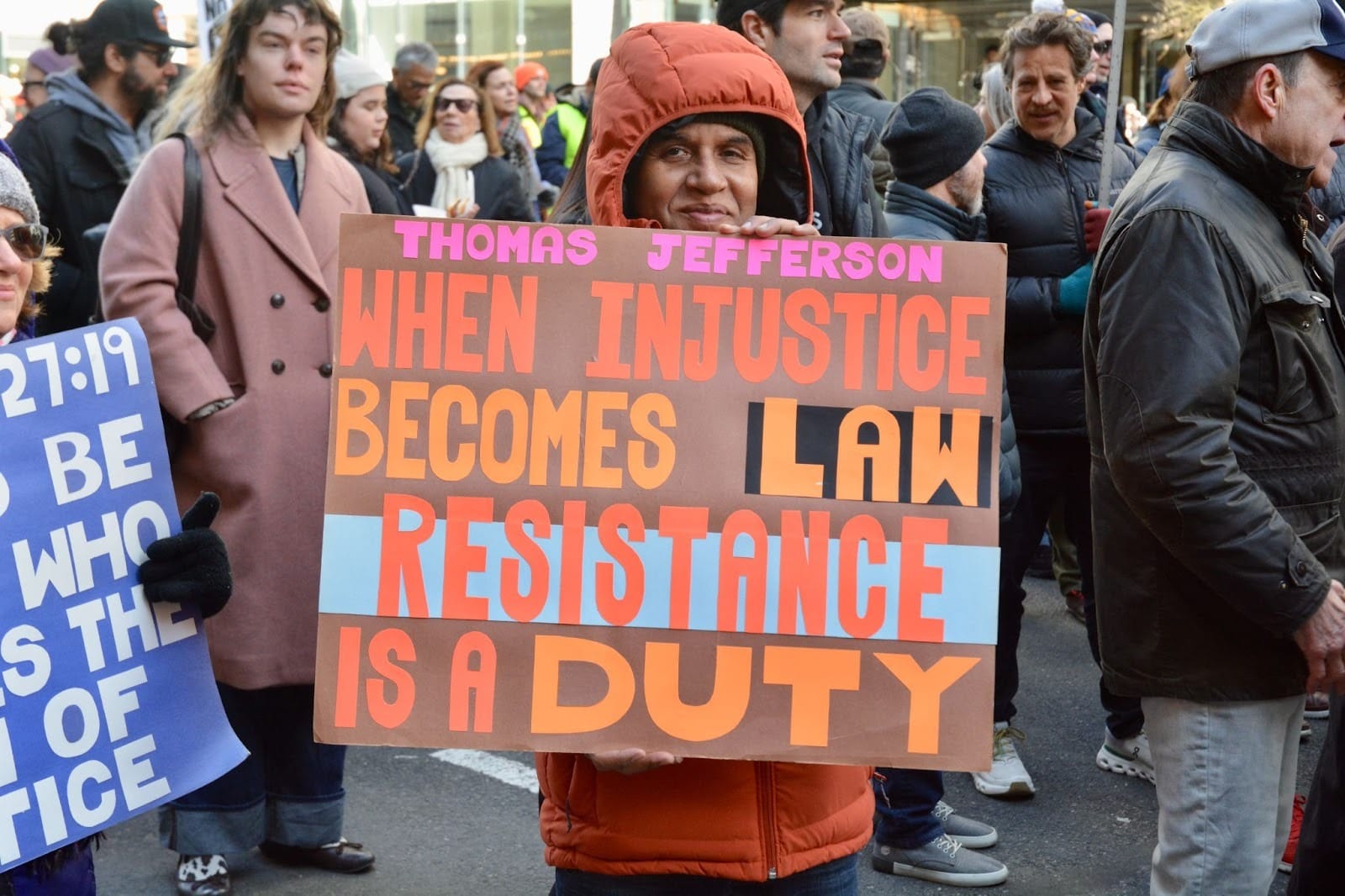
That logic extended to the sign-making. On the Upper West Side, the activist group ReSisters hosted a two-hour workshop at West 81st and Columbus, where participants convened to prepare their visual aids before heading out to display them for the world. Ungoverned by a central design committee, handmade, personal signs have become the movement’s signature art form.
“My sign is kind of what it’s about for me,” said Julia Cohen, a classical trombonist who adorned her poster with the Greek word kakistocracy, which is “a government by the worst, by the least qualified, by the most corrupt, by the most immoral,” she explained.
Cohen’s reason for coming out on Saturday was simple: “It’s a mixture of frustration and a need to be among people who are as frustrated as I am,” she said. “It’s frustrating to see they’ve got so much power. But it’s also heartening to see people coming out to say ‘that’s not what we want; that’s not who we are’.”
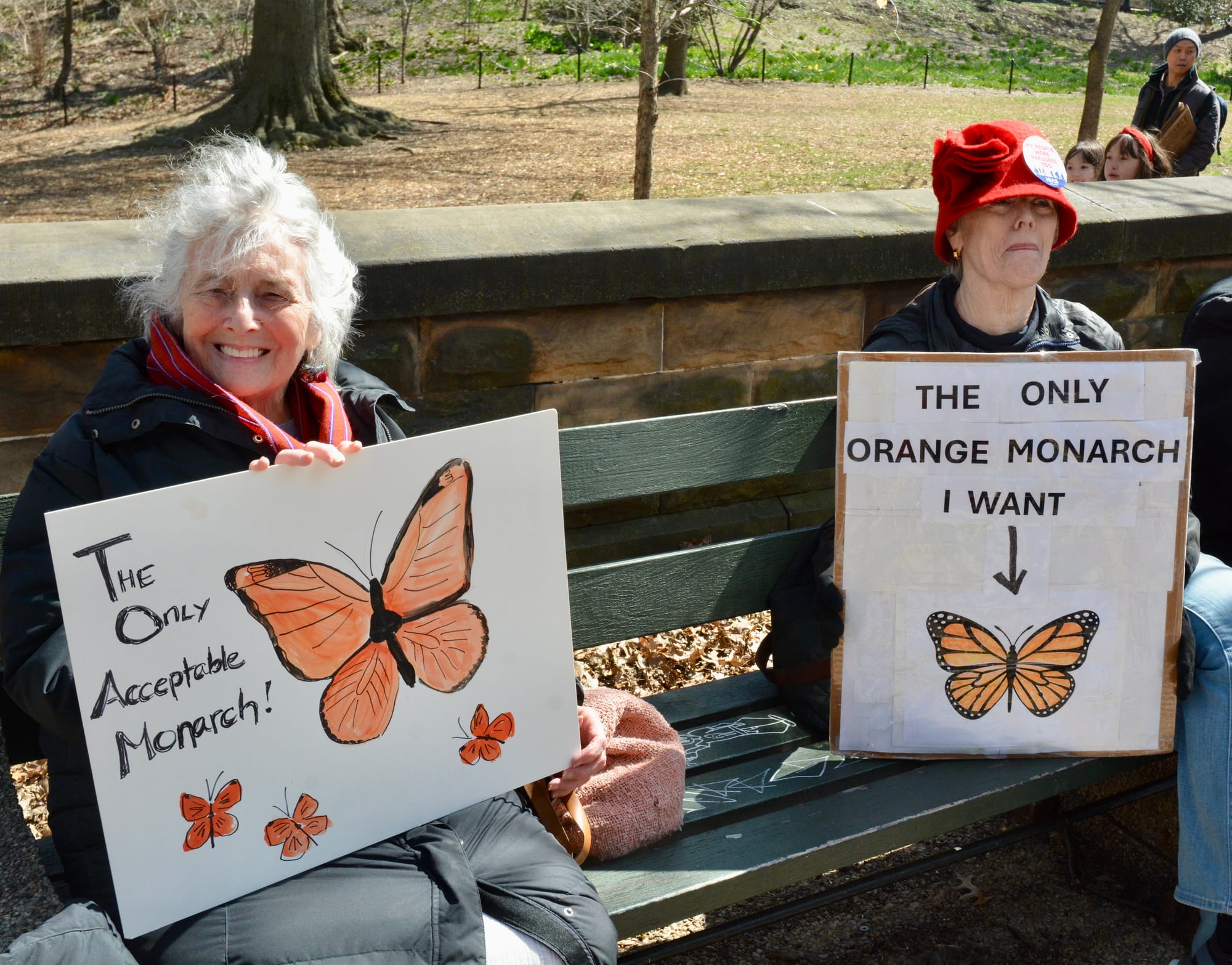
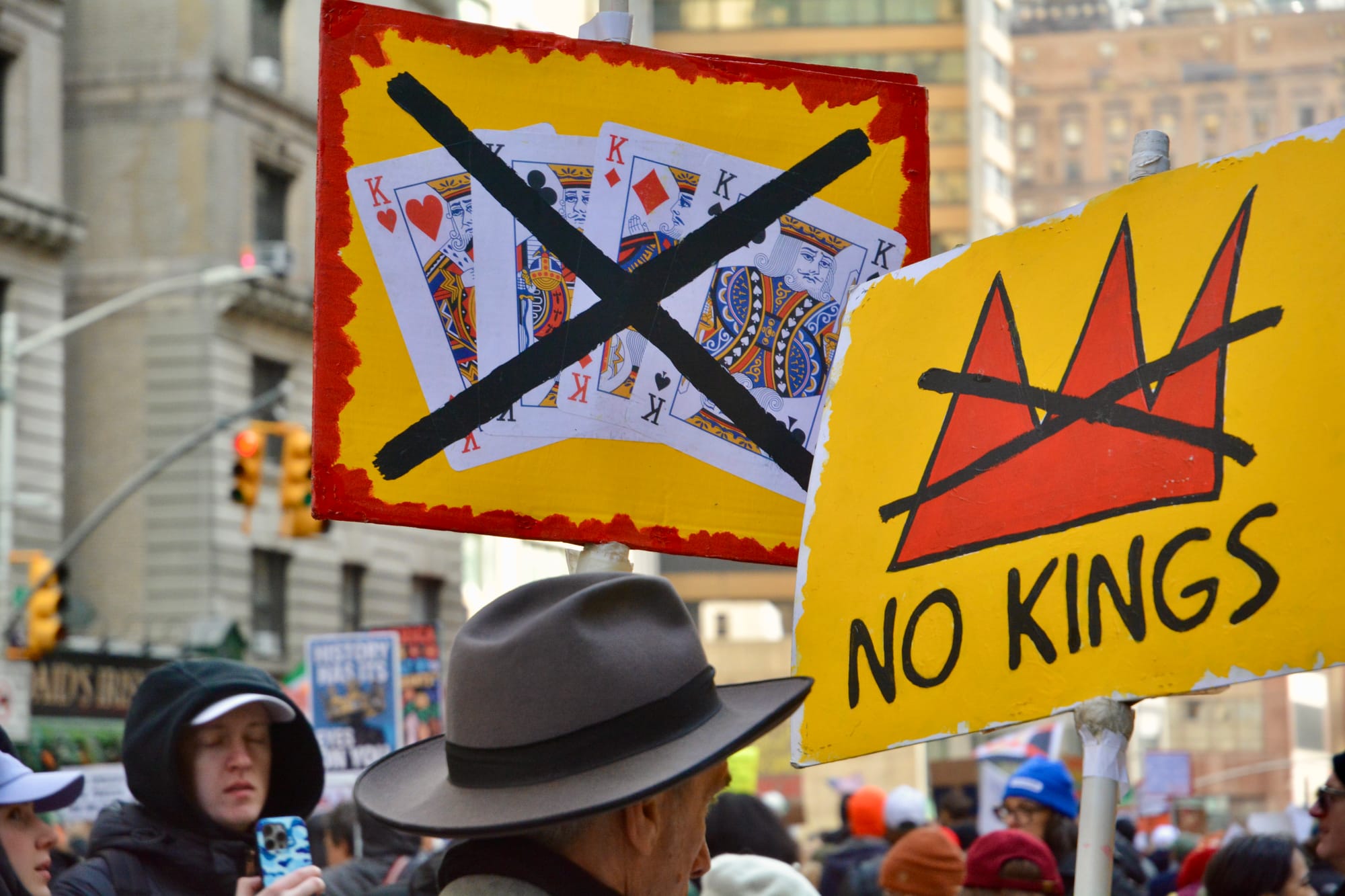
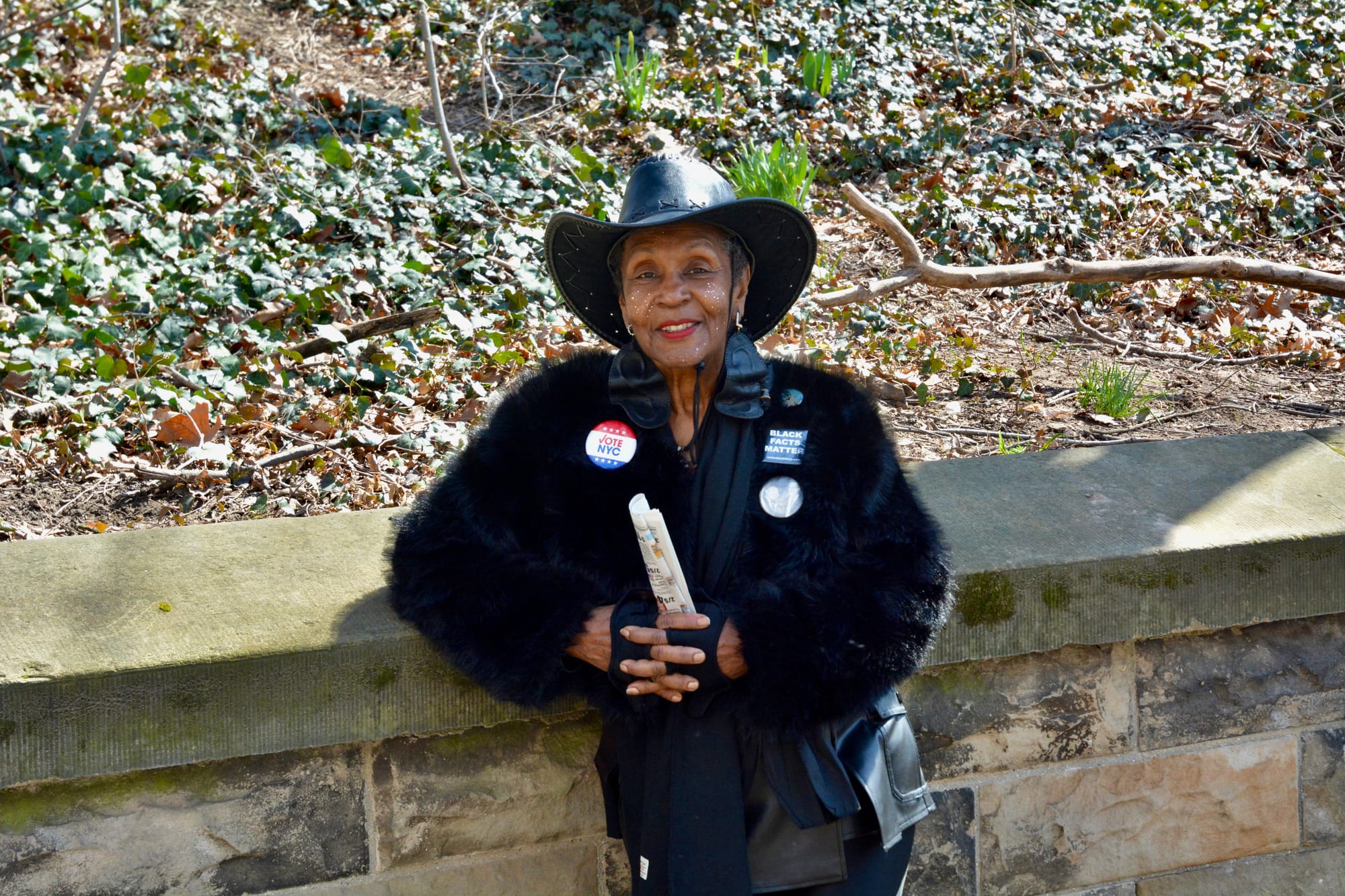
Signs tackled a wide array of issues this year — antiwar sentiment, immigration, tyrannical rule — and also showed a vast aesthetic range.
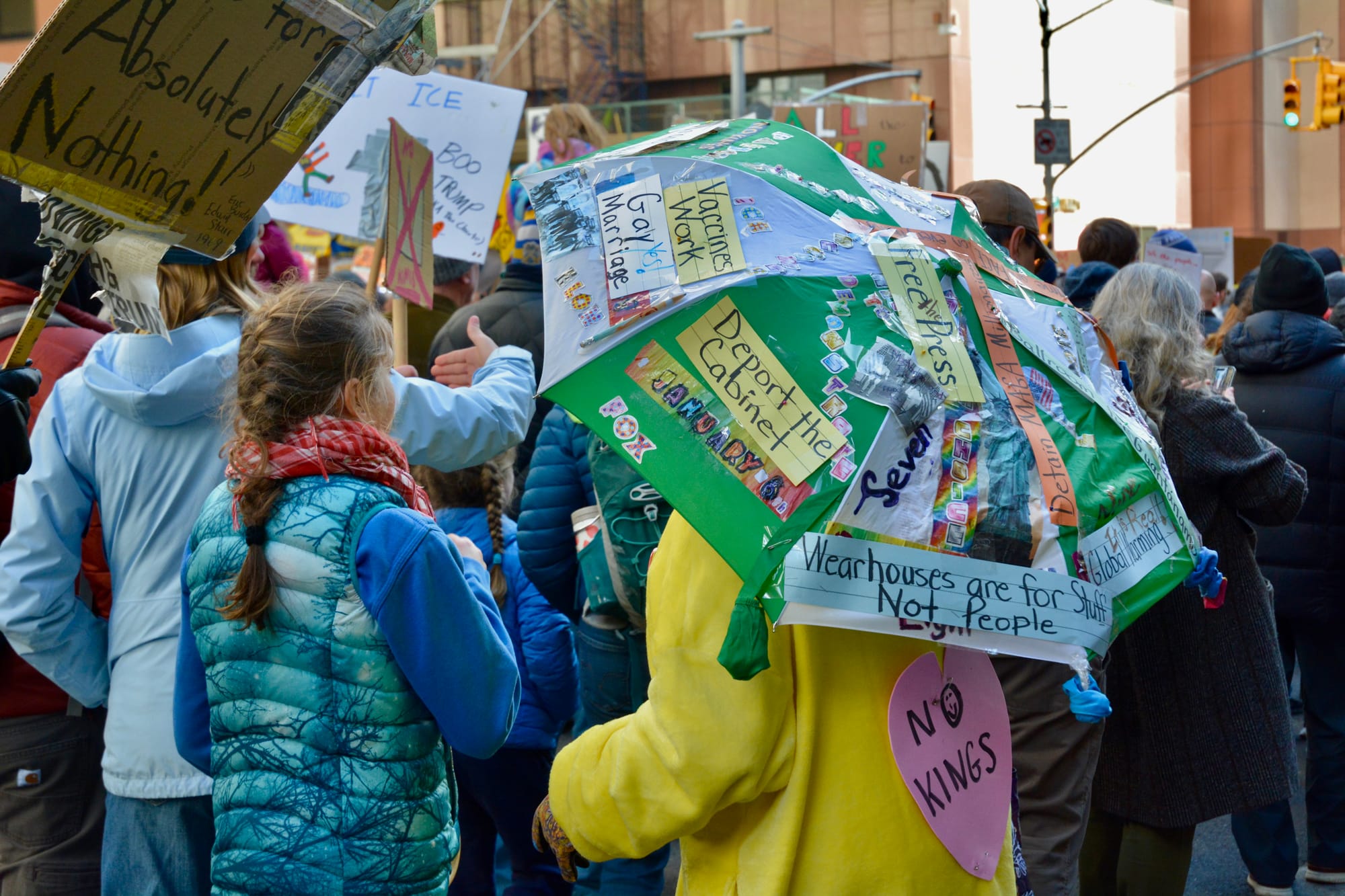
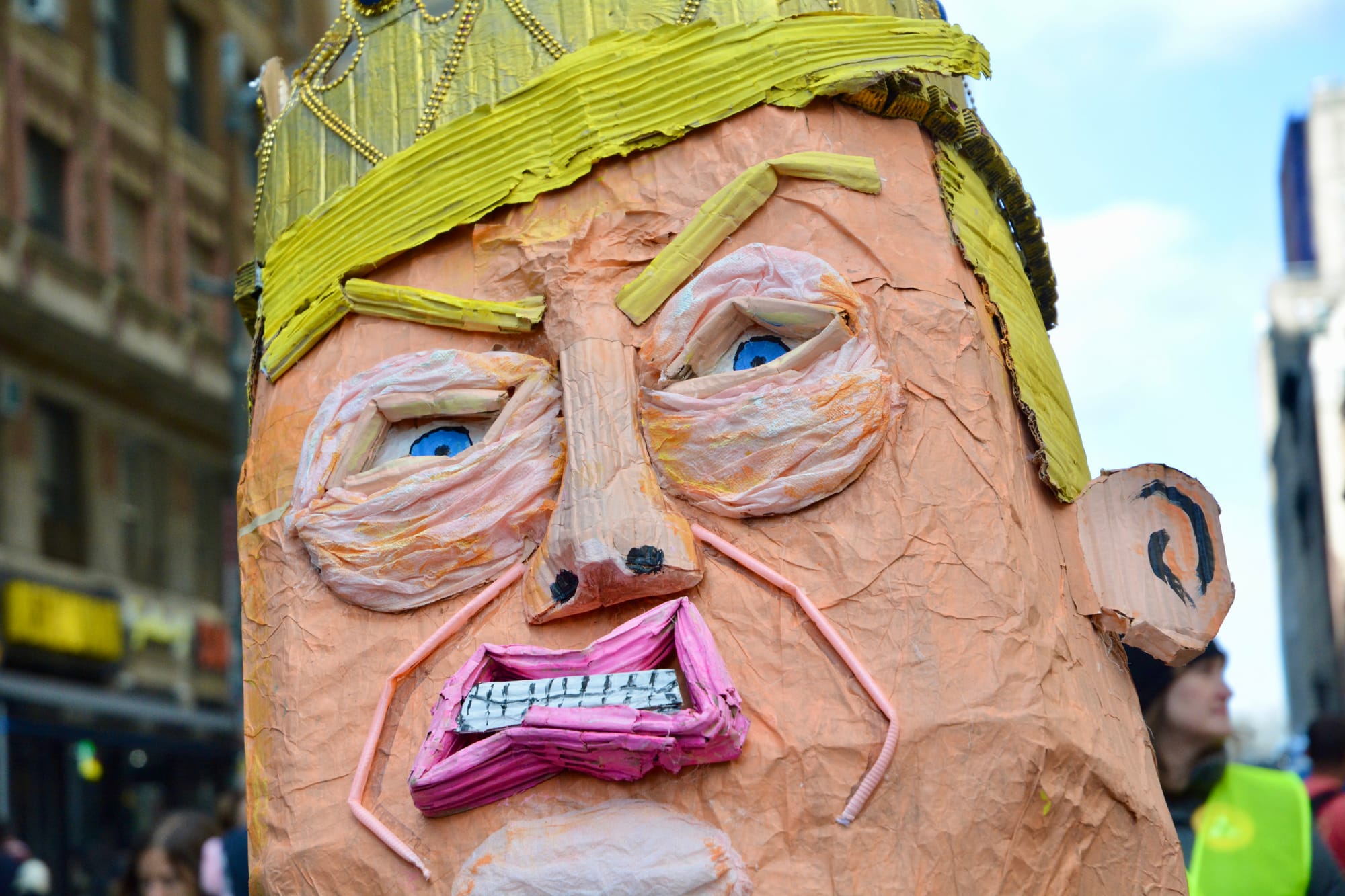
Like Osato, many protestors showed up in wearable art. During the demonstration along Seventh Avenue and Central Park South, a woman donned an intricate papier-mâché Trump head. Another wore a green umbrella plastered with various phrases and calls to action: “Deport the Cabinet,” read one; “Free the Press,” read another.
Among those paying close attention to the visual culture of the No Kings movement is Shepard Fairey, the street artist behind the Obey Giant studio.
Ahead of Saturday’s nationwide protests, Fairey distributed free screen-printed posters titled “Domestic Terrorist” and “Paid Agitator” at his Los Angeles gallery, Subliminal Projects. For those who couldn’t make it in person, he also made the designs available as free downloads online.
According to Fairey, the posters, depicting masked ICE agents holding batons, borrow the language of the administration’s attacks on immigrants and protestors and turn it outward. “These prints serve as a mirror to those committing the dehumanizing attacks,” Fairey said in a statement, “not a solution.” The solution, he argued, is far simpler: treat all humans with dignity.
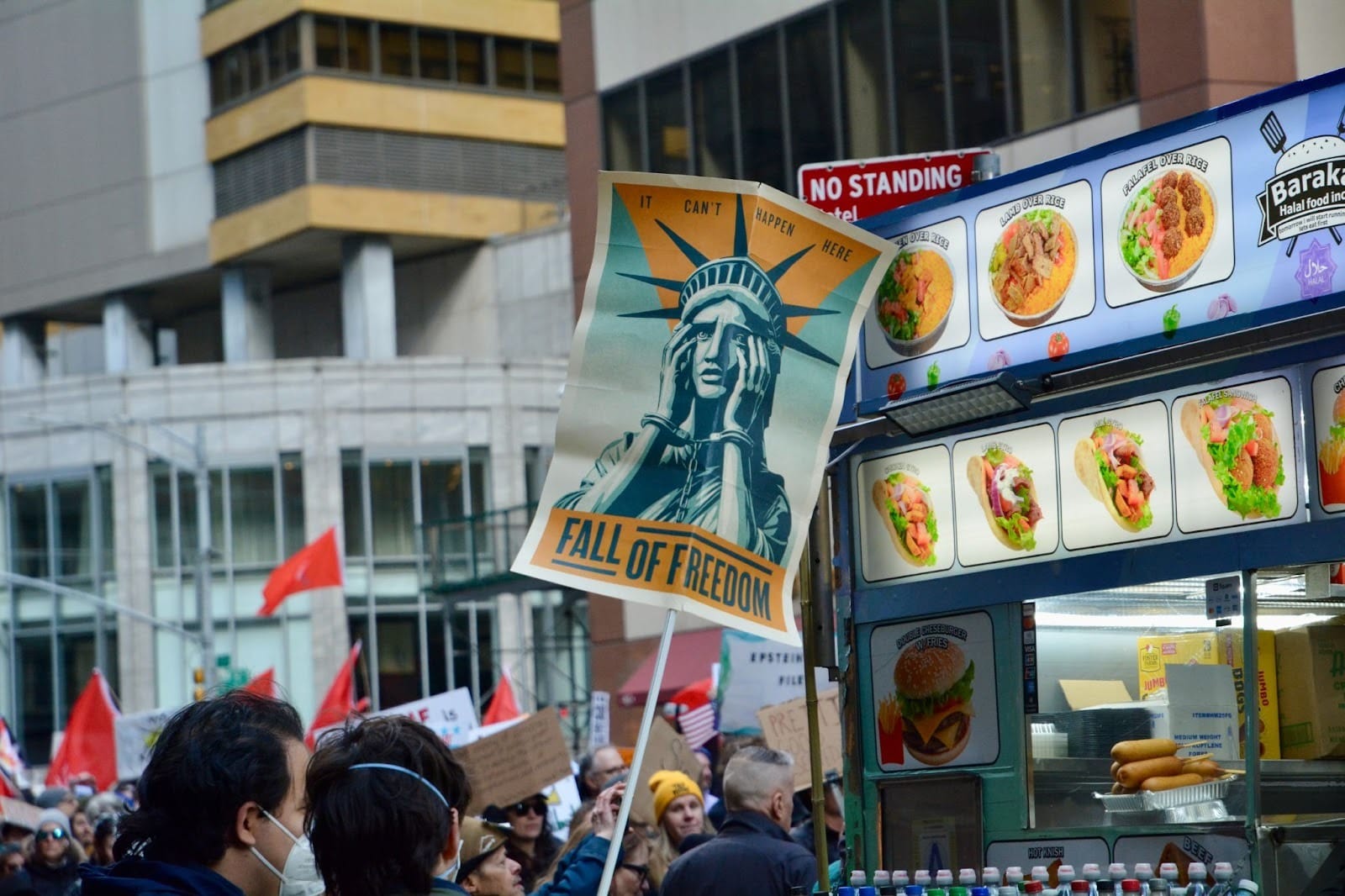
The No Kings movement has a storied visual history, and past installments have yielded some of the more inventive and compelling protest graphics in recent memory. In the case of New York City, this edition's neighborhood-by-neighborhood format seemed to only widen the aesthetic range, trading the visual coherence of a single mass demonstration for something more complex, perhaps more beautiful.
Back in Prospect Park, a young child examining Osato’s pink cape turned to his father, confusion etched into his forehead.
“What is ICE, Dad?” he asked.
“ICE is a police force that goes against people who are not from this country,” his father replied somberly.
The boy frowned, as if he could tell there was more to know. But he did not inquire further. He grasped his father’s hand, and together, the two marched forward.