Tania El Khoury’s Soothing “Revenge Art”
The Lebanese artist and Bard College professor spoke with Hyperallergic about her recent projects and precarious life under bombardment in Beirut.
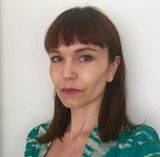
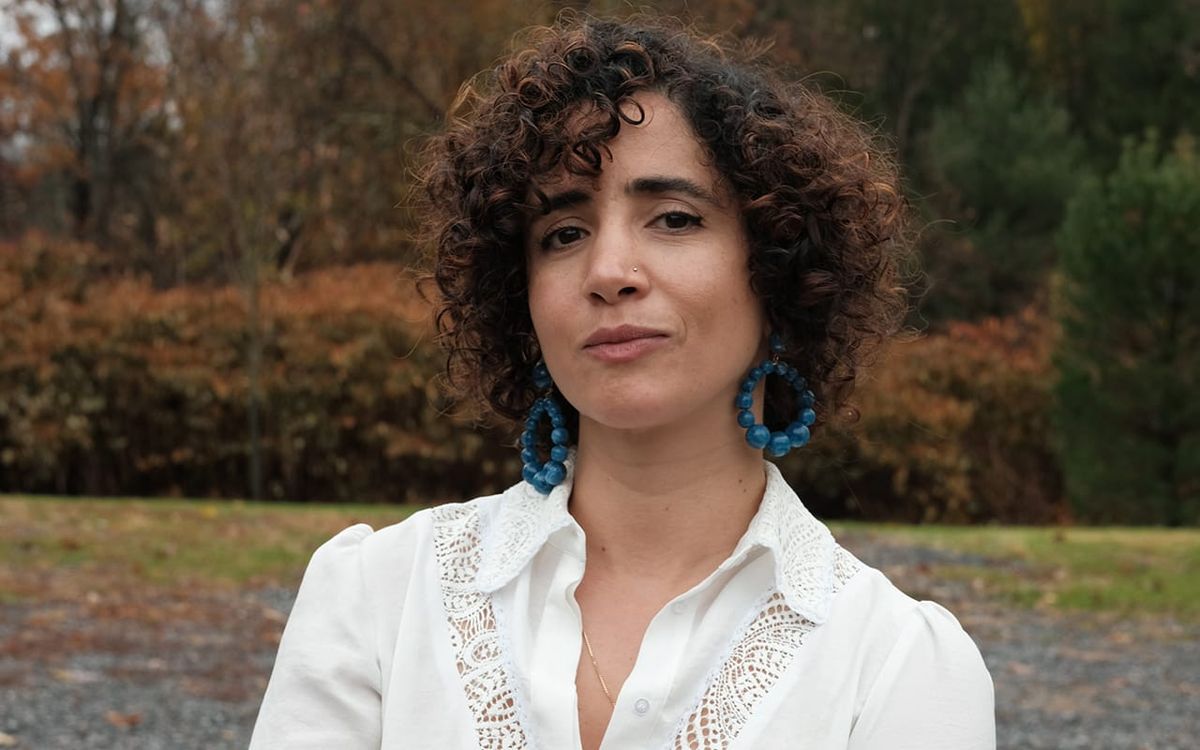
This was supposed to be a profile of Tania El Khoury, the multidisciplinary Lebanese artist, winner of the 2026 Creative Capital Award, Distinguished Artist in Residence and Associate Professor of Theater & Performance at Bard College, and founding director of the school’s Center for Human Rights & the Arts. But then the war escalated. On March 2, two days after the United States and Israel launched their first coordinated strikes on Iran, the latter intensified its brutal bombardment of Lebanon. As of writing this, over 2,294 Lebanese have been killed by Israel, including 177 children and 91 healthcare workers. At least 357 of these deaths took place on April 8, dubbed Black Wednesday, when Israel dropped over 100 bombs on Beirut in 10 minutes. Roughly one-fifth of the country’s population has been displaced. Despite April 16th’s ceasefire, the Lebanese army has reported several Israeli violations of the truce, and the displaced are being told to exercise caution in attempting to return home.
Lebanon-born El Khoury is in Beirut for a sabbatical year along with her husband, the historian Ziad Abu-Rish, and their daughter Leyl. The couple’s 2016 wedding in the city serves as the setting for their interactive live art performance The Search for Power, which reenacts the true story of the blackout that interrupted their nuptial celebration, and the collaborative research project that followed.
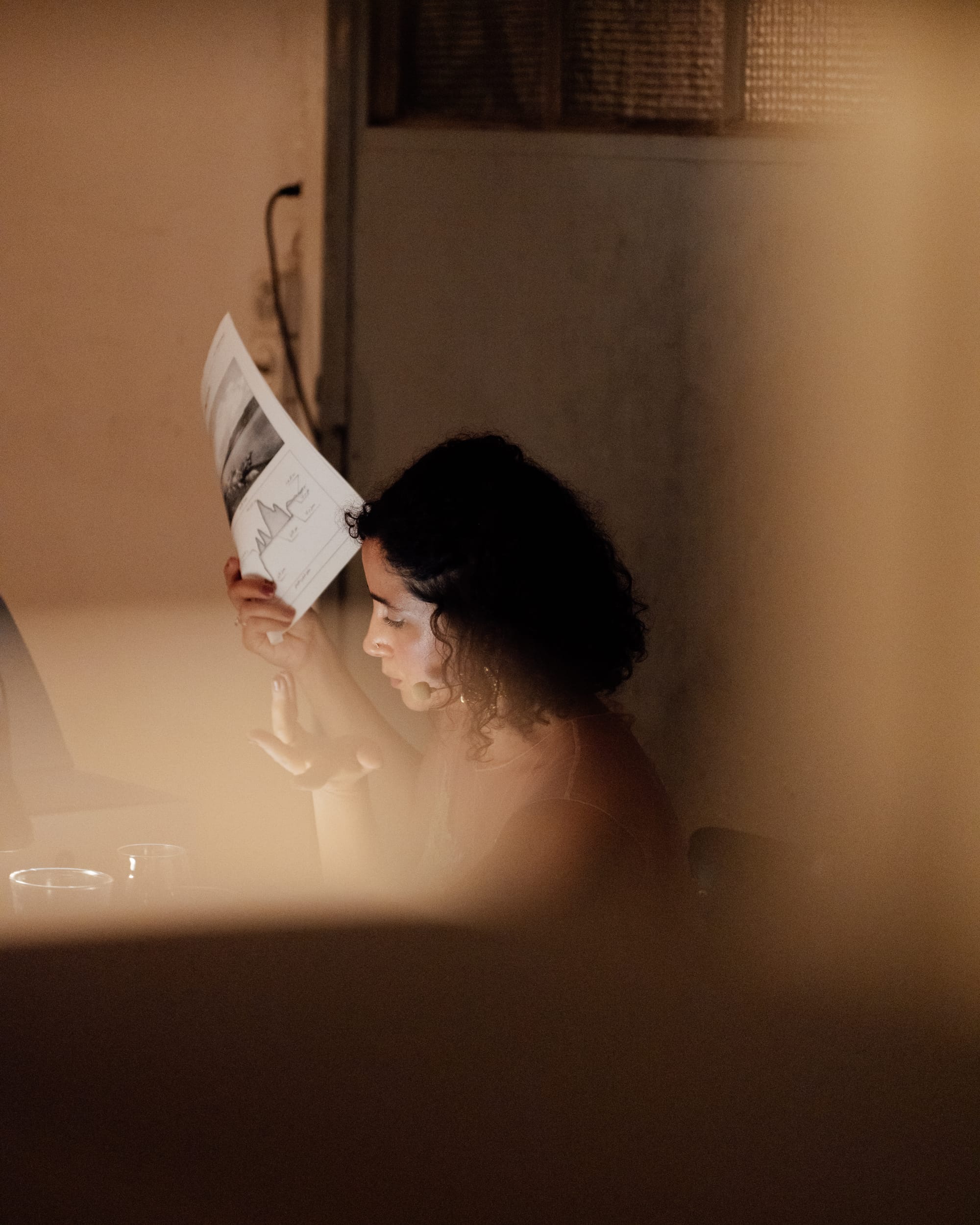
The piece restages this archival adventure with the audience playing the role of wedding guests-come-researchers. Seated around a long table laid with a wedding cornucopia, we eat, drink and leaf through reproductions of the key documents that informed the couple’s discoveries. What we learn is that the story of corruption behind power outages in Beirut goes much farther back than the Civil War, when it’s generally believed to have begun. In fact, spotty service, routine blackouts, and popular protests against these systemic failures have been happening since the early 1920s, when Lebanon was under French colonial rule.
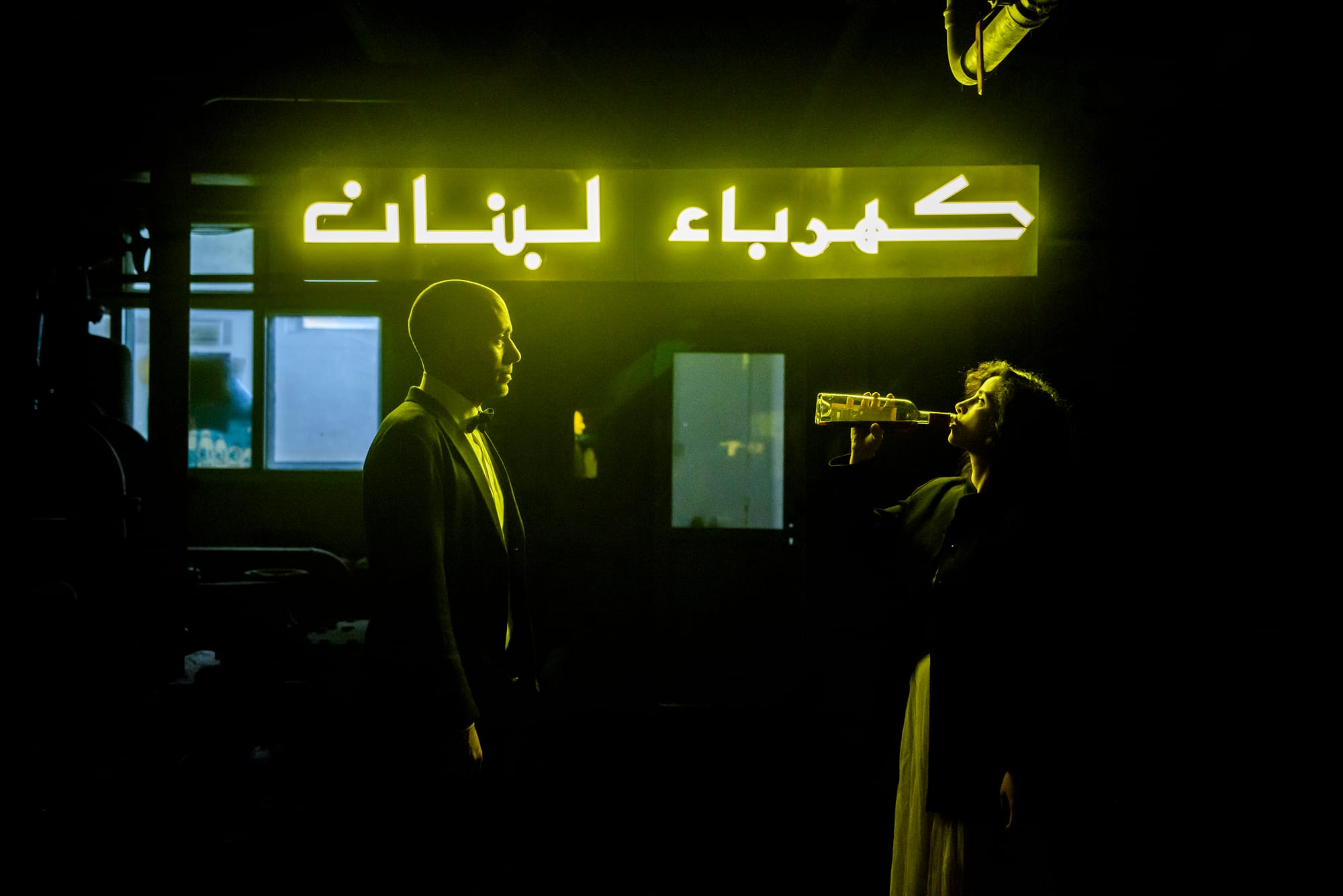
First presented in Finland in 2018, El Khoury and Abu Rish performed the show last year in New York for the Under the Radar Theater Festival. They were supposed to open a run in Beirut on March 12, but it’s been postponed because of the war.
Instead of a neat profile, the following is a condensed version of a series of conversations I’ve had with El Khoury over the past month about her work and how she’s faring during this difficult period.
Hyperallergic: First of all, how are you?
Tania El Khoury: I haven’t had the chance to sit and think about how I am doing. I think in the context of war, we function in survival mode and hypervigilance. I have the privilege to be safe and housed while a million and a half Lebanese people are displaced with nowhere to go.
I’m of course angry that we are witnessing yet another Israeli war on Lebanon with all the rampage that it brings in the form of massacres, destruction, internal strife, and ethnic cleansing. Above all, I mourn the thousands of people killed in Lebanon so far including medics, journalists, children, and entire families. And I mourn our ancient cities and villages that are currently being leveled to the ground in an Israeli attempt to expand and occupy South Lebanon.
H: Are you and your family safe right now?
TEK: Since Black Wednesday, our apartment, where we lived for eight years, and our street are no longer safe, with five of our neighbors having been killed, amongst the over 303 others who were killed in ten minutes in Lebanon. Before Wednesday, our area was considered to be relatively safe — during this war and the previous war.
Like many of my friends, we’ve been taking our kids in and out of Beirut depending on the situation. We are mostly staying with friends and family. And it feels better to be surrounded by people in these circumstances.
H: Are you sleeping at all?
TEK: No. We’re not sleeping. But, you know, everyone around me is also lacking sleep. You can see in the WhatsApp groups that nobody’s sleeping. I’m in one from the protest movement from 2019 — this one has tons of artists from all over Lebanon, so it’s a very political group, and everyone is just constantly reporting what they’ve seen and heard, constantly analyzing the situation. So between the shelling and the breaking news happening all night, no one is sleeping.
H: Do you feel a difference in public opinion about the war between your arts community in Beirut and the more suburban villages, where you grew up?
TEK: In the city and specifically in the arts scene in Beirut, it’s a very mixed place in terms of religion and sects and political affiliation, but most people around us are progressive and on the left. So it’s a very different conversation than what happens in more suburban areas that are majority Christian, where people tend to feel less personally involved. But even there, all that I hear is empathy towards the people who were displaced and fear in general about how long this will last, its effect on the economy, on everything. But people are not as involved as they are in Beirut, there’s no contest.
H: How did you end up becoming an artist? Was it an obvious path for you?
TEK: Not at all. I went to a very traditional school — the French education system — that was quite strict, quite harsh. And I don’t at all come from a family of artists.
It’s a good question, how did I become an artist, because I actually don’t remember the details. I feel that because I was born during the Civil War, I blocked a lot of my childhood memories. I went to art school at 18, but I sort of have no idea what happened before that.
H: How did your parents respond to your decision to go to art school?
TEK: We couldn’t afford private university. I do remember telling my father I wanted to go to the Lebanese University, which is public, and that I wanted to study theater. He said, ‘What? But we don’t even watch theater! This is not what we do!’ My family and the people around us were working-class people, who worked hard to put their kids in good schools so that they could become upper middle class — doctors, lawyers. Which is what my other siblings did.
My dad said, ‘You’re going to be poor!’ He asked around, and he learned that it was pretty much impossible to get into the school. They only take 10 or 12 people a year, and even some famous actors and directors had to apply three or four times before getting in. I had to do a monologue in classical Arabic — Antigone, I think it was. Somehow, even though I did it like I was sleepwalking, I had no idea what I was doing, I got in.
H: You completed your Master's and PhD degrees in London before coming to the US to teach at Bard and spearhead the Center for Human Rights & the Arts. What’s the climate been like for you on campus over the past few years?
TEK: It’s been a really great job for me as an artist because I’ve been able to maintain my practice as my main occupation — not something I do in my spare time. This commitment is what I’ve been able to share with the students and bring to the college, rather than teaching being something separate from my work. And we were never silenced at Bard during the genocide in Gaza. We had the freedom to organize incredible talks and allow students to think critically. We’ve been lucky at Bard.
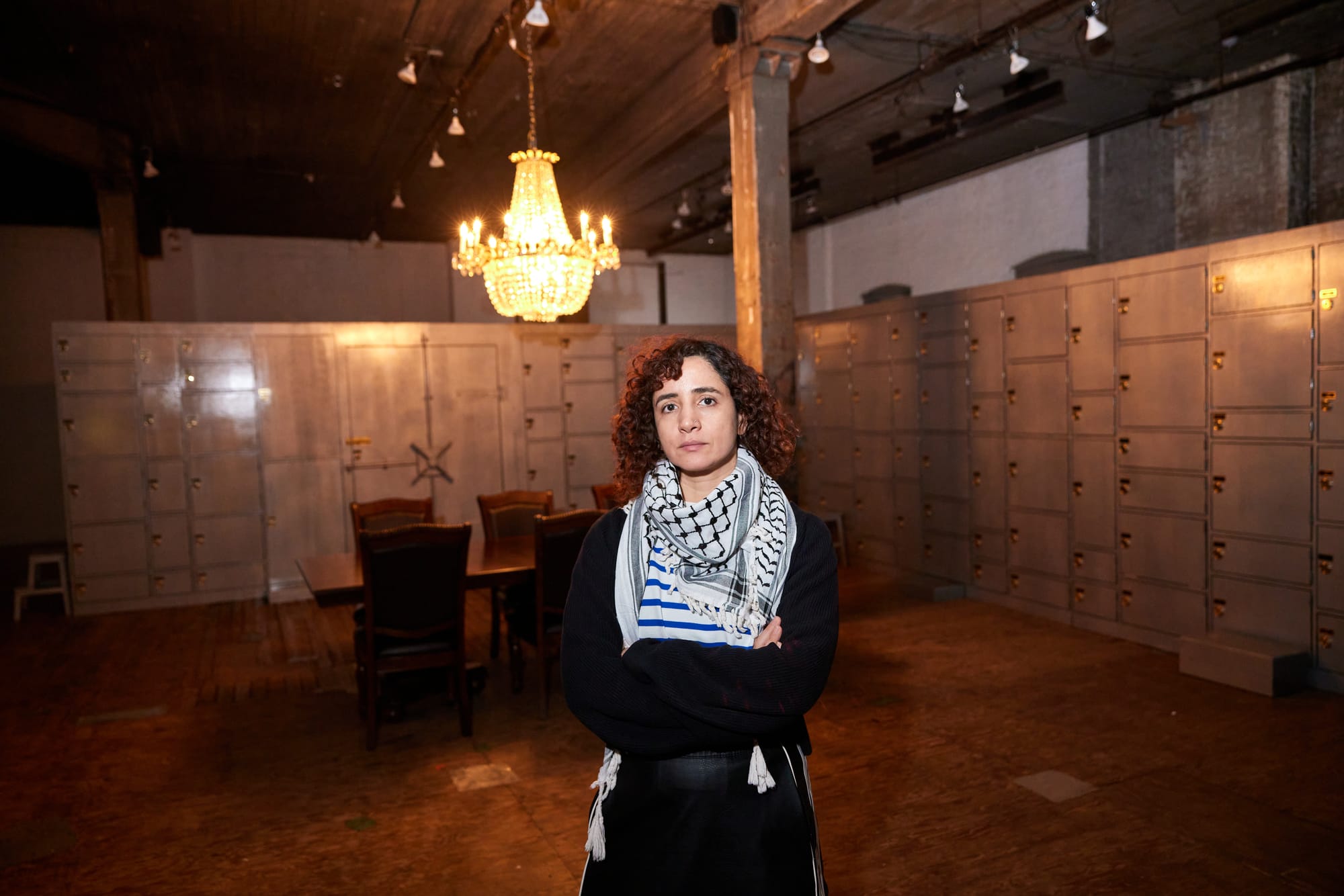
H: A lot of your work focuses on the resilience of the natural world: plants, animals, seashells, even, that stick to their routines and carry on despite the human destruction that surrounds them. And often, you choreograph these moments where the viewer gets access to a sort of intense calm while confronting stories of horrific violence. There’s the hammock with the live symphony of birdsong in Memory of Birds; the boat ride with a seashell soundtrack in Sejjah lil Malta; the locker the viewer sticks her head into in Cultural Exchange Rate.
TEK: I’ve realized only recently that a lot of my work has this calming effect, which was surprising at first, because I always thought of my practice as being more about revenge. I jokingly call it “revenge art.” My way of being “vengeful” is making works that produce knowledge that is often not public, that’s not widely circulated, or that counters the grand narrative or the state narrative. So I see the content as my revenge, or where my political anger takes shape, but the form, yes, is very different, quite calming. This wasn’t a rational decision at first, but once I recognized the pattern as something I tend to do, it has become more intentional. So now I do try to find this balance between heavy content — an oral history of people who were killed, something about migration and border regimes, for example — and a form that immediately puts your body at ease.
I think the calming effect is also because my work tends to be multisensory. I like to play with how performance, which is normally primarily visual, can be experienced sensorily when it’s on a very different scale. So if it’s one-on-one, or very close to your eyes, or if it vibrates on your body. I use smell a lot. Actually, I’m surprised that not all artists use smell because it’s a sense that evokes so much, it’s calming, it’s completely embodying, it can immediately generate meaning. So I use it all the time and when I’m creating I like to ask myself, what does this art smell like?
H: What does it smell like around you right now?
TEK: It’s a pretty awful day. My dad picked [some] sage next to his house this morning and handed it to me when I was on the way to Beirut. My car smelled of sage all day. In Beirut, the air smelled stuffy and burnt, like it lacked oxygen, so I kept moving the sage around.