Tarot for a Broken World
With some of the oldest surviving tarot decks on view, the Morgan’s exhibition traces how a Renaissance card game became something far more powerful.

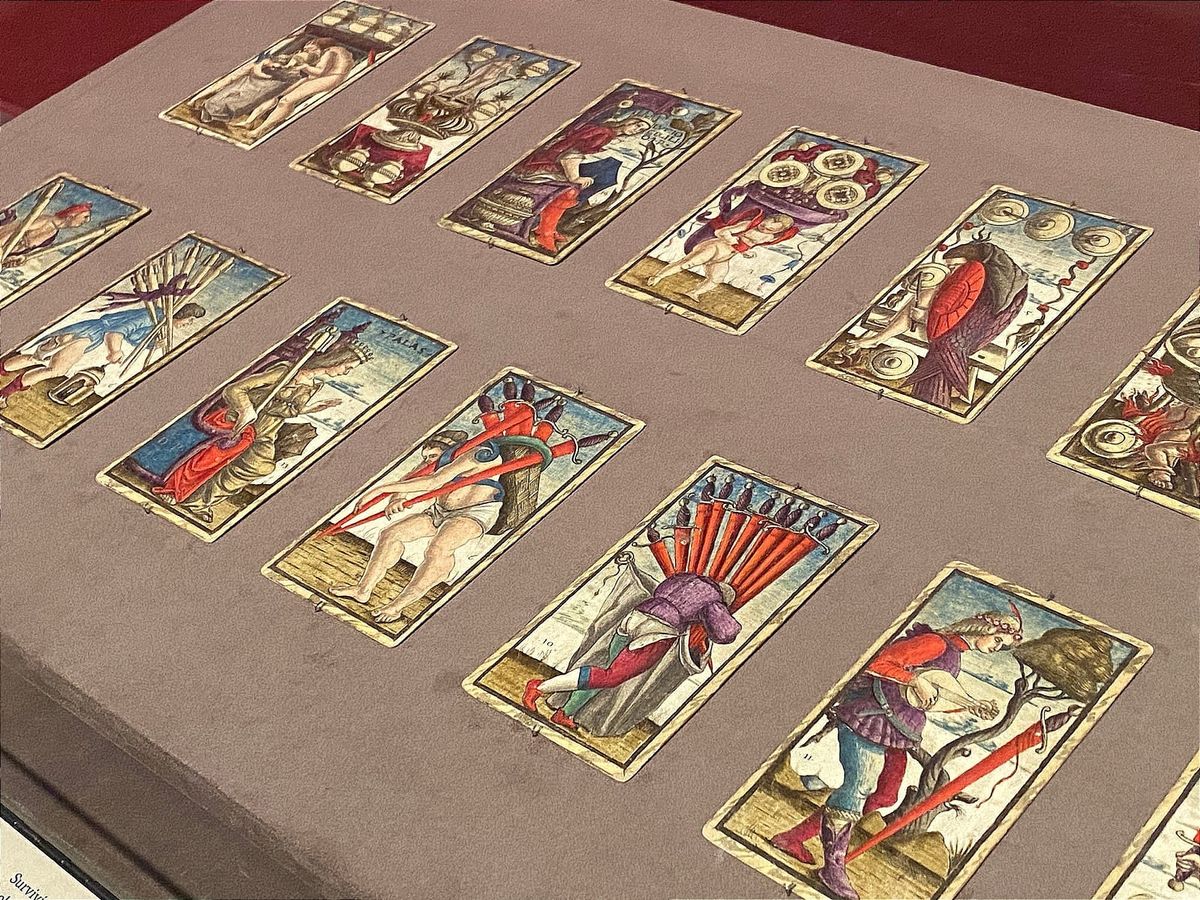
One of the more peculiar suits in tarot is the pentacles, or coins. In this deck, which so many treat as a tool for divination and spiritual exploration, why are 14 of the 76 cards focused on that most profane of objects — money? The other suits generally make sense: swords, cups, and wands have long histories in spiritual practice.
Standing in front of the Morgan Library’s gorgeous collection of the Visconti-Sforza tarot deck, likely produced around 1450 by Bonifacio Bembo for the powerful Milanese family from which it derives its name, I got a tiny hint: Measuring at 6.8 x 3.4 inches (172.7 x 86.4 mm), the gold- and silver-leaf-adorned set (one of the oldest complete decks known) was designed for the aristocracy as a game. Tarot and capital, I realized, co-evolved amidst Renaissance Italy’s rise to power, and in this context, pentacles made a lot of sense.
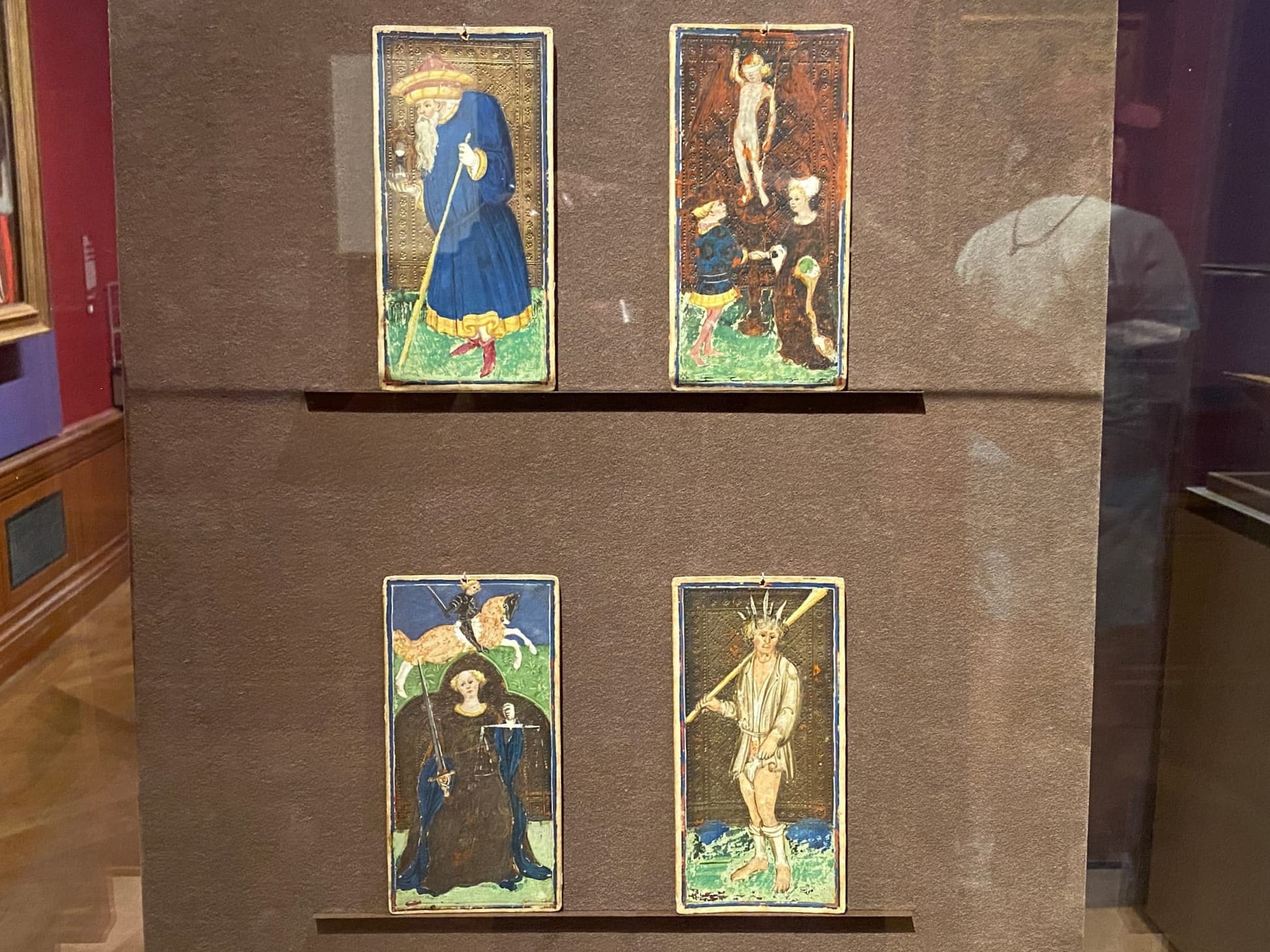
This deck is a centerpiece of Tarot! Renaissance Symbols, Modern Visions, a thrilling show at the Morgan Library. Divided into two major sections, “Renaissance Symbols” and “Modern Visions,” the exhibition focuses on the earliest surviving tarot decks from the 15th century and how, in the 20th century, these cards continue to serve as a source of inspiration for artists and practitioners alike.
Divination traditions are deeply cultural, with a material logic reflecting the world they emerged from. From coffee readings to yarrow stalks, to stars and turtle shells, many practices have existed for thousands of years, which makes tarot relatively new. So it’s worth asking why tarot specifically has endured for 500 years, and why these specific 500 years. One answer is remixability: Divinatory tarot re-emerges in popularity during times of tumult, and the card structure creates a format for reinterpreting the images for contemporary concerns.