The Book of Alison Knowles
A retrospective traces the language of bookmaking in her expansive work and its radical influence on American art.

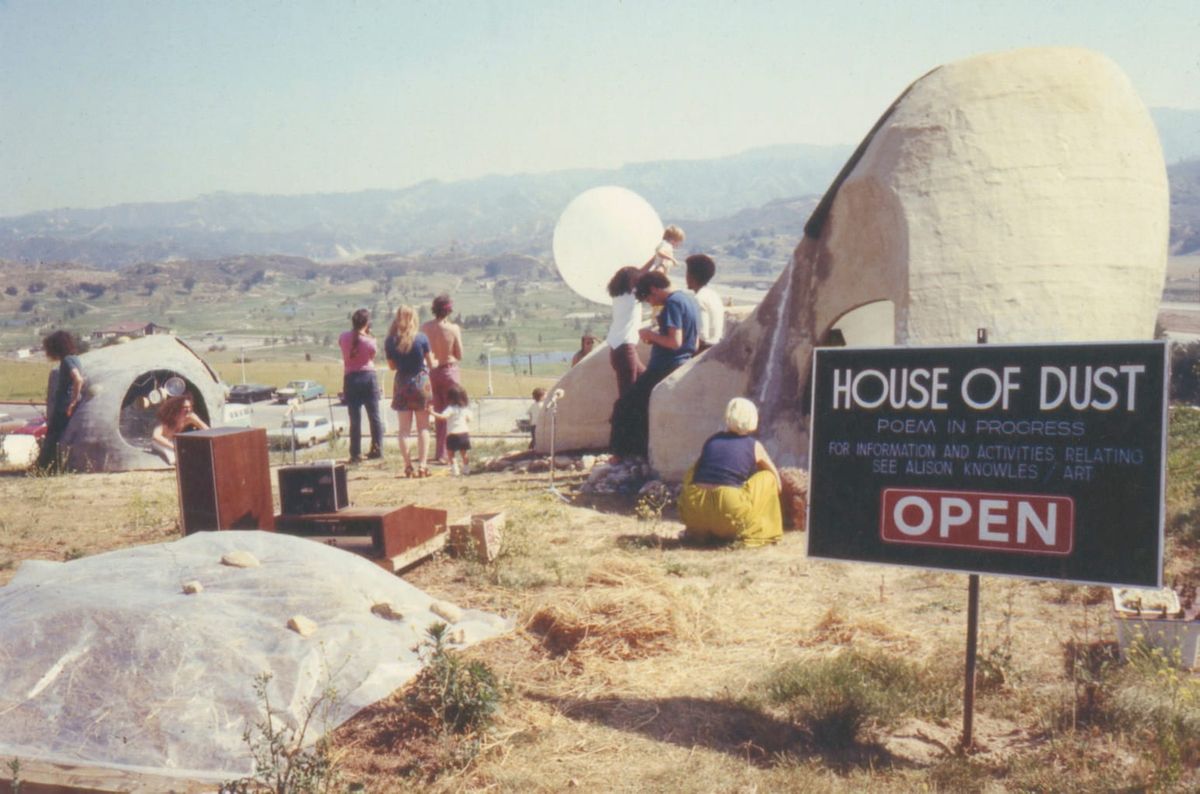
A retrospective of the late Fluxus artist Alison Knowles — known for performances, prints, sculptures, scores, and more — positions her as, of all things, an author. Curated by Karen Moss and traveling from the Berkeley Art Museum and Pacific Film Archive (BAMPFA), the exhibition traces Knowles’s lifetime of output through the language of bookmaking — binding, paper, sequencing, narrative — and its radical influence on American art from the 1960s to today.
Knowles's capacity to absorb, translate, and communicate her surroundings proved pivotal in introducing the interdisciplinary, avant-garde, and performance-based tenets of Fluxus (meaning “to flow”) to American art in the early 1960s. Indeed, the exhibition’s first section introduces Knowles not only as a distinct artist, but also as an influential part of the larger movement invested in collaboration and ephemerality. New materialism, the relational aesthetics of the 1990s, and today's dialogic practices owe much to Fluxus, and the exhibition makes clear Knowles’s formative role in shaping contemporary artistic collaboration through iterative performances and works that use wide-ranging materials such as beans, shoes, and books.
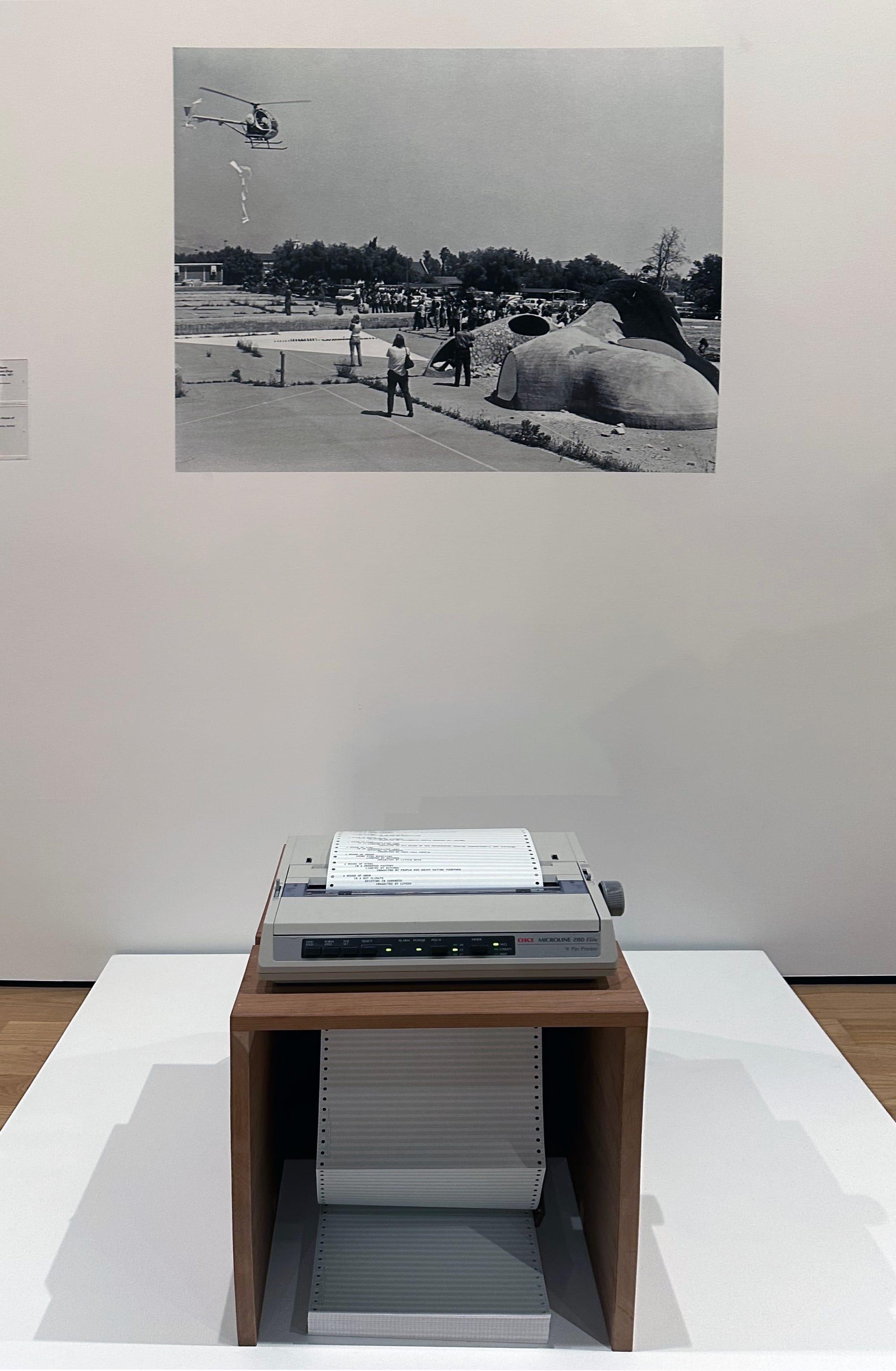
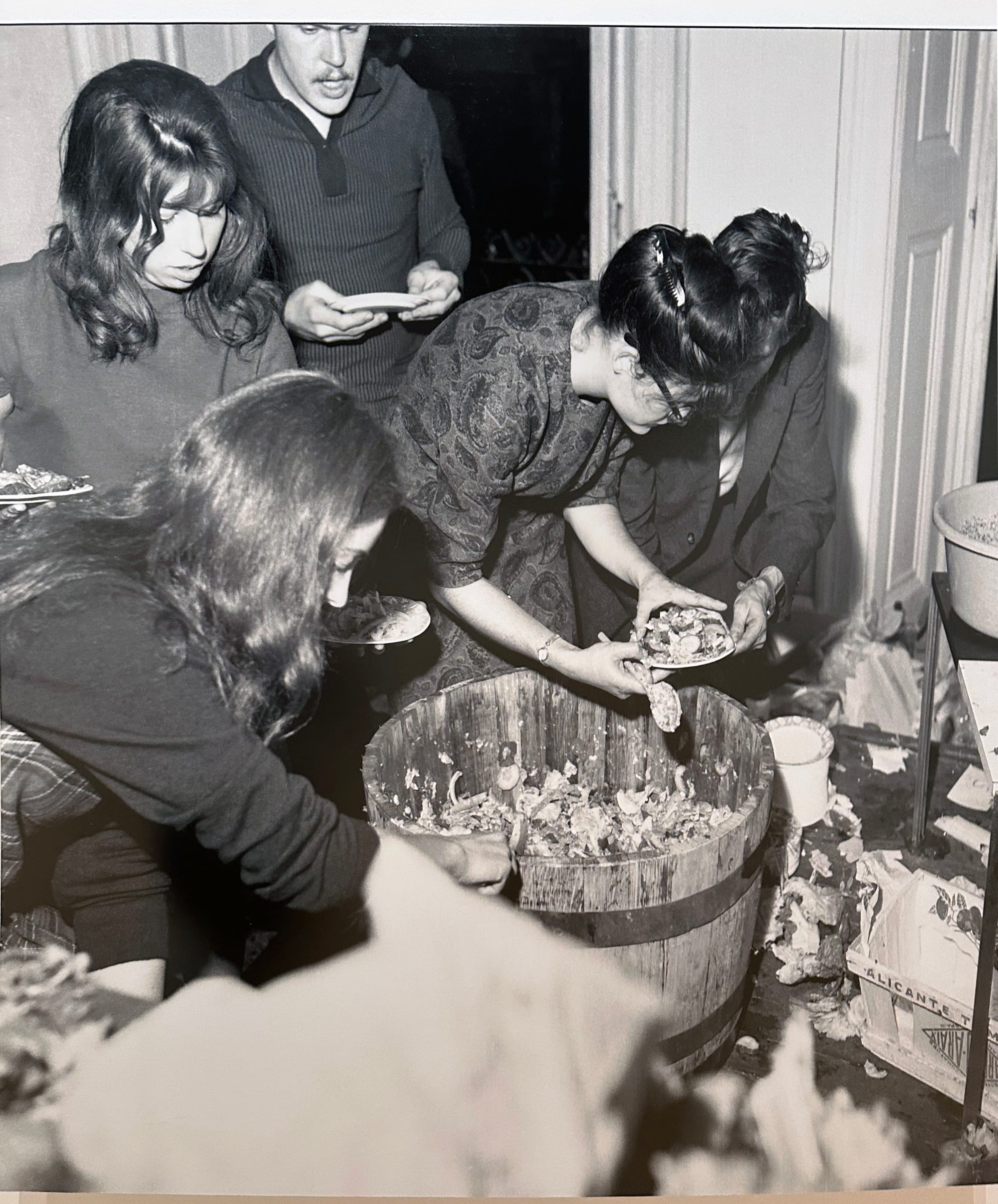
Left: Installation view of by Alison Knowles: A Retrospective (1960–2022); right: Bruce Fleming, Knowles and others performing "Proposition #2: Make a Salad" at Festival of Misfits, Institute of Contemporary Arts, London, in 1962, photoreproduction on panel
At the entrance of this retrospective is a cluster of Knowles’s early works, including a reproduction of the newsprint-hued screenprint “Room” (1960), created with artist and composer George Brecht. The work is displayed above a vitrine with announcements from Knowles’s first shows, including her 1962 exhibition at Judson Gallery, the epicenter of the New York performance scene at the time. That year proved momentous for Knowles. She toured Europe with Fluxus founder George Maciunas, her collaborator (and on-again, off-again husband) Dick Higgins, and others. Footage from the collective’s time at Fluxus Festival in Wiesbaden, West Germany, is featured on a monitor nearby, as is a photograph from Knowles’s first performance of perhaps her best-known work, “Proposition #2: Make a Salad” (1962), at London’s Institute of Contemporary Art.