The Breathtaking Sight of Ancient Rome's Largest Surviving Wall Mosaic
Beneath the ruins of the Baths of Trajan, a giant mosaic and unusual fresco remind us of the continual discovery of the wondrous: Rome’s ongoing lesson.

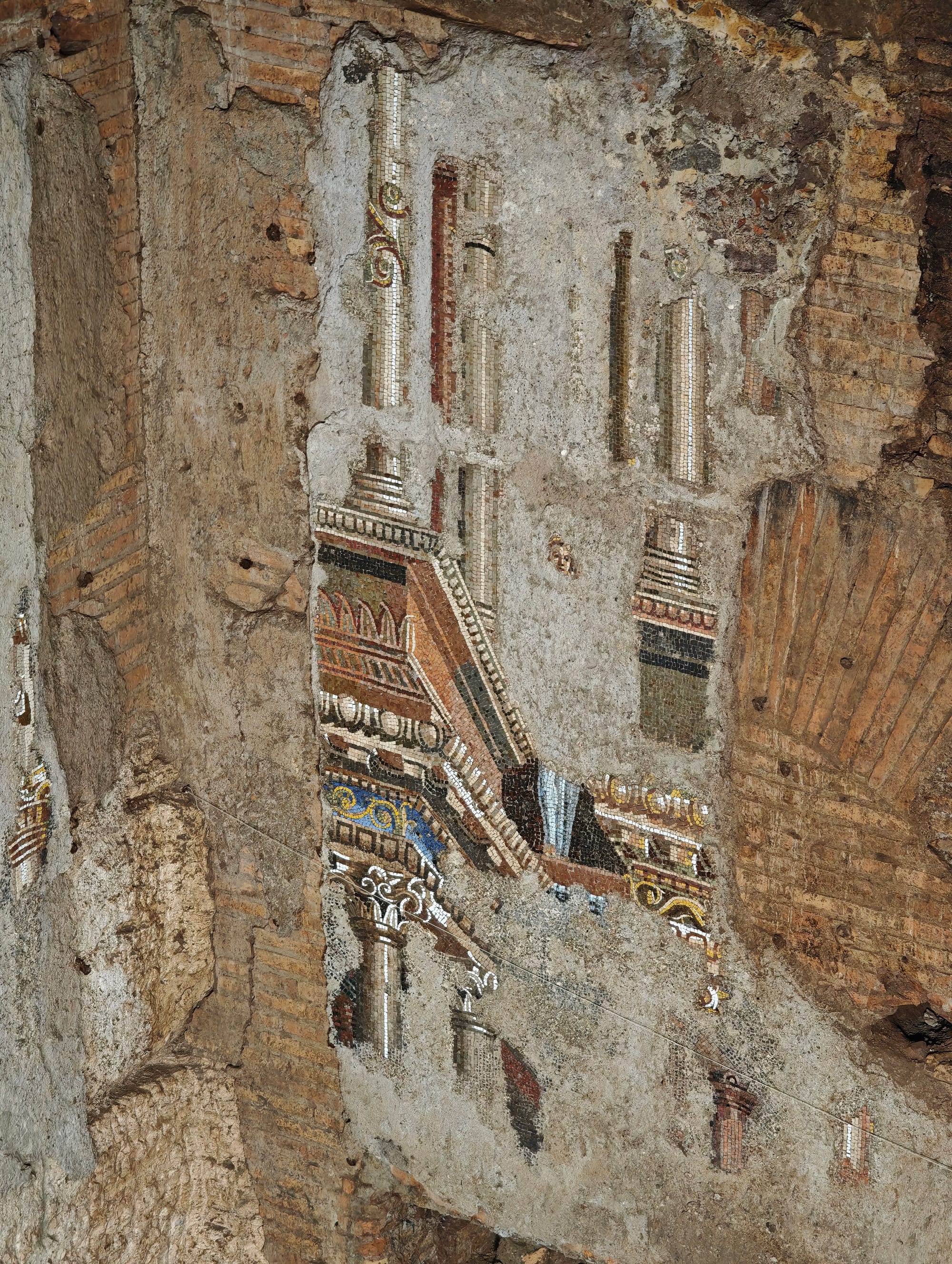
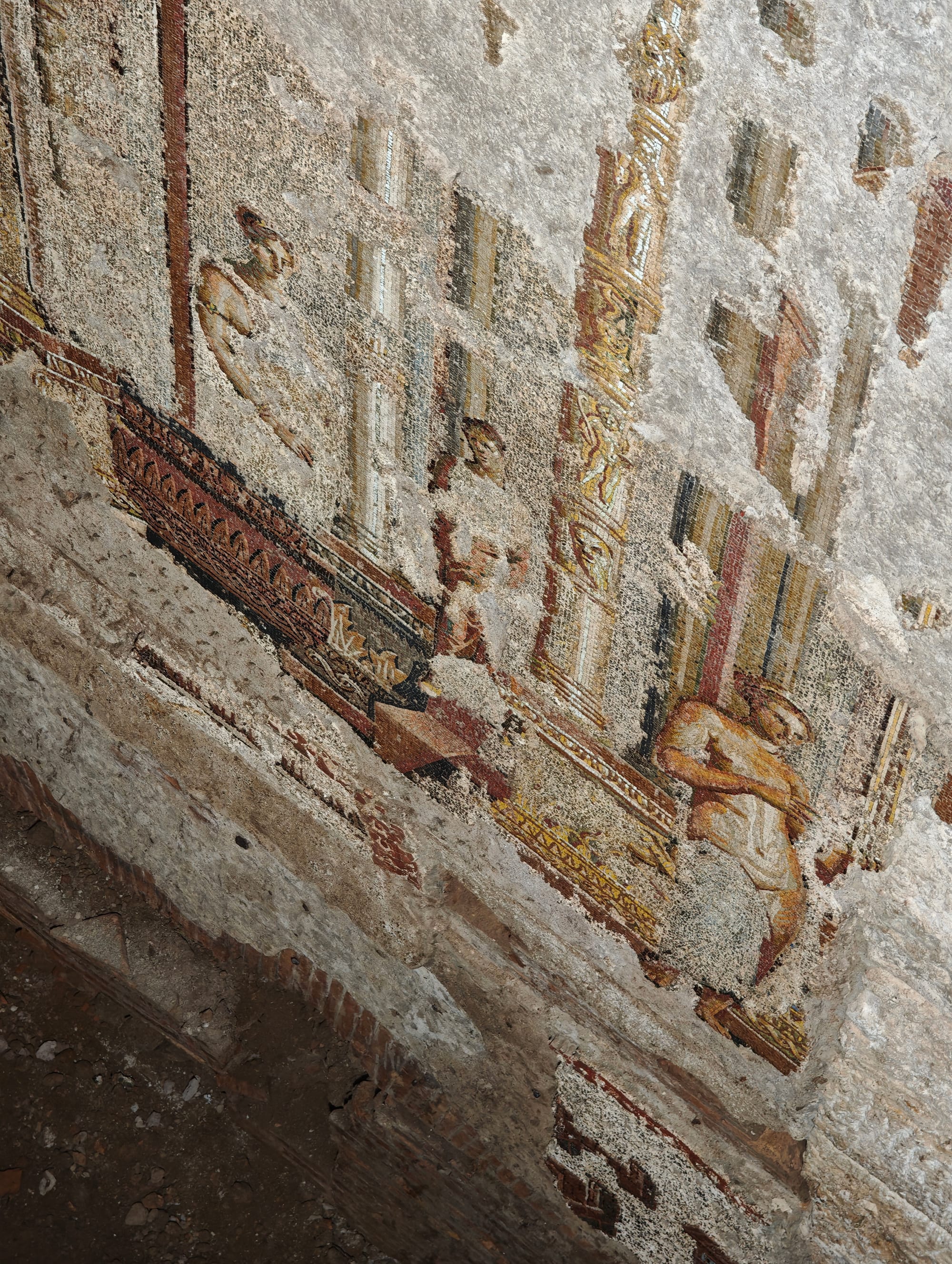
Detail views of a large-scale mosaic on two sides of a hall underneath the Baths of Trajan in Rome (photo Anthony Majanlahti/Hyperallergic)
ROME — In the newly opened Museo delle Terme di Traiano, or Museum of the Baths of Trajan, visitors can now view the largest surviving wall mosaic in the Roman world.
Directly across from the Colosseum in Rome rises the Oppian Hill, 2,000 years ago a densely constructed neighborhood and today a sunny park where immense pieces of the huge public Baths of Trajan still protrude from the earth. It has already produced some of archaeology’s wonders: underneath the Baths, the richly decorated rooms of Emperor Nero’s Domus Aurea, or “Golden House,” can be visited in a not-to-be-missed immersive experience. But when Emperor Trajan leveled the space to build a platform for his Baths, inaugurated in 109 CE, a series of buildings was buried. They came to light in digs between 1997 and 1999, in a 230-foot (70-meter) underground gallery.
Now, the city of Rome has opened this gallery as the slightly misleadingly named Museum of the Baths of Trajan. At the entrance is a small bookshop in a room to the right of the main gallery, and to the left is an irregular ancient room which now houses the only objects pertaining to the Baths: eight huge lead pipes with the words “THERM TRAIANI” cast in relief, astonishing for their size and their survival.
But the rest of the space, almost the whole length of the ancient vaulted gallery, is given over to the in situ display of two unique pieces of art that have no clear relationship to each other, and no other comparable examples in the Roman Mediterranean.