The Canonization of Frida Kahlo
An exhibition blasts apart any crystallized conception of the artist until no easily digestible singular figure emerges.

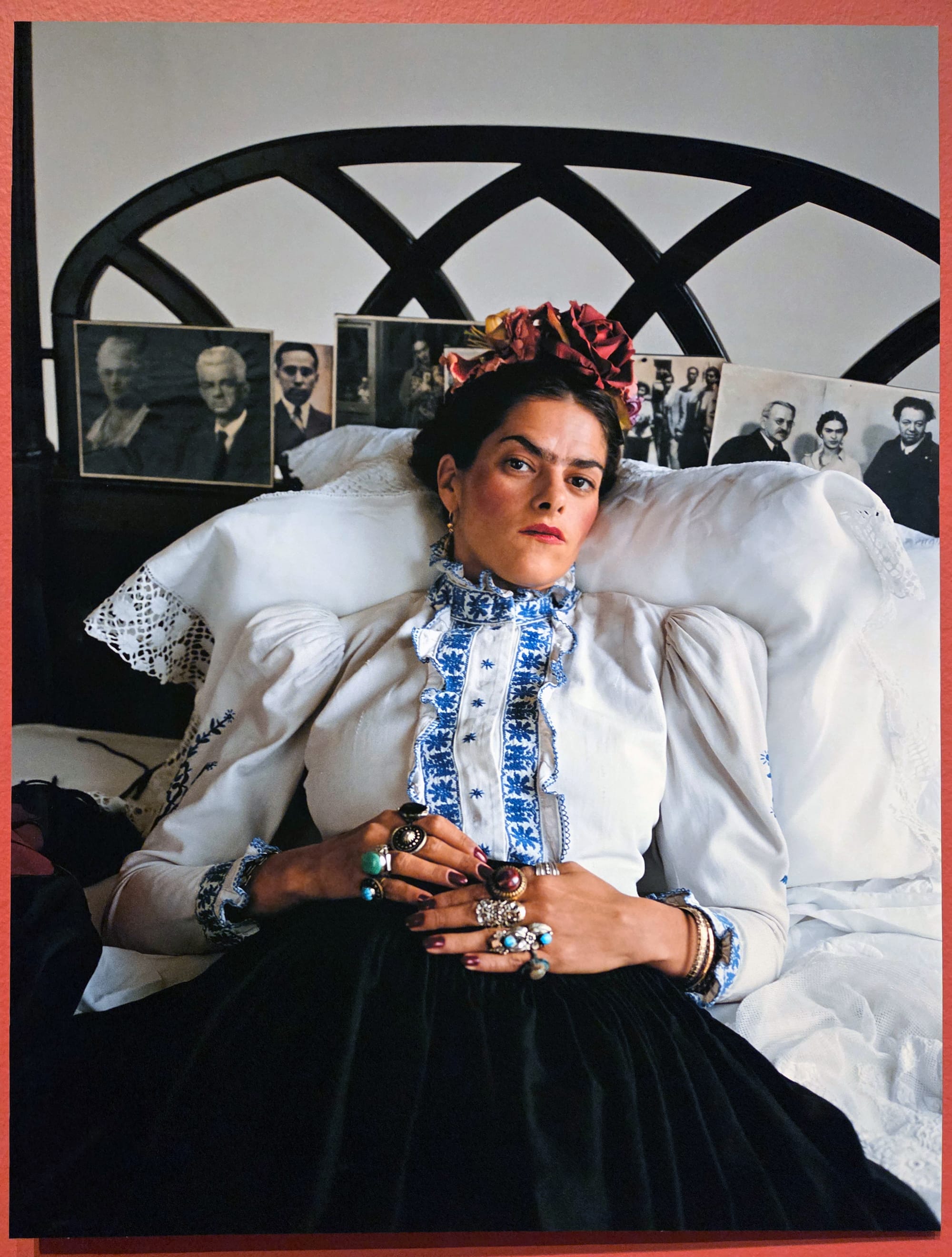
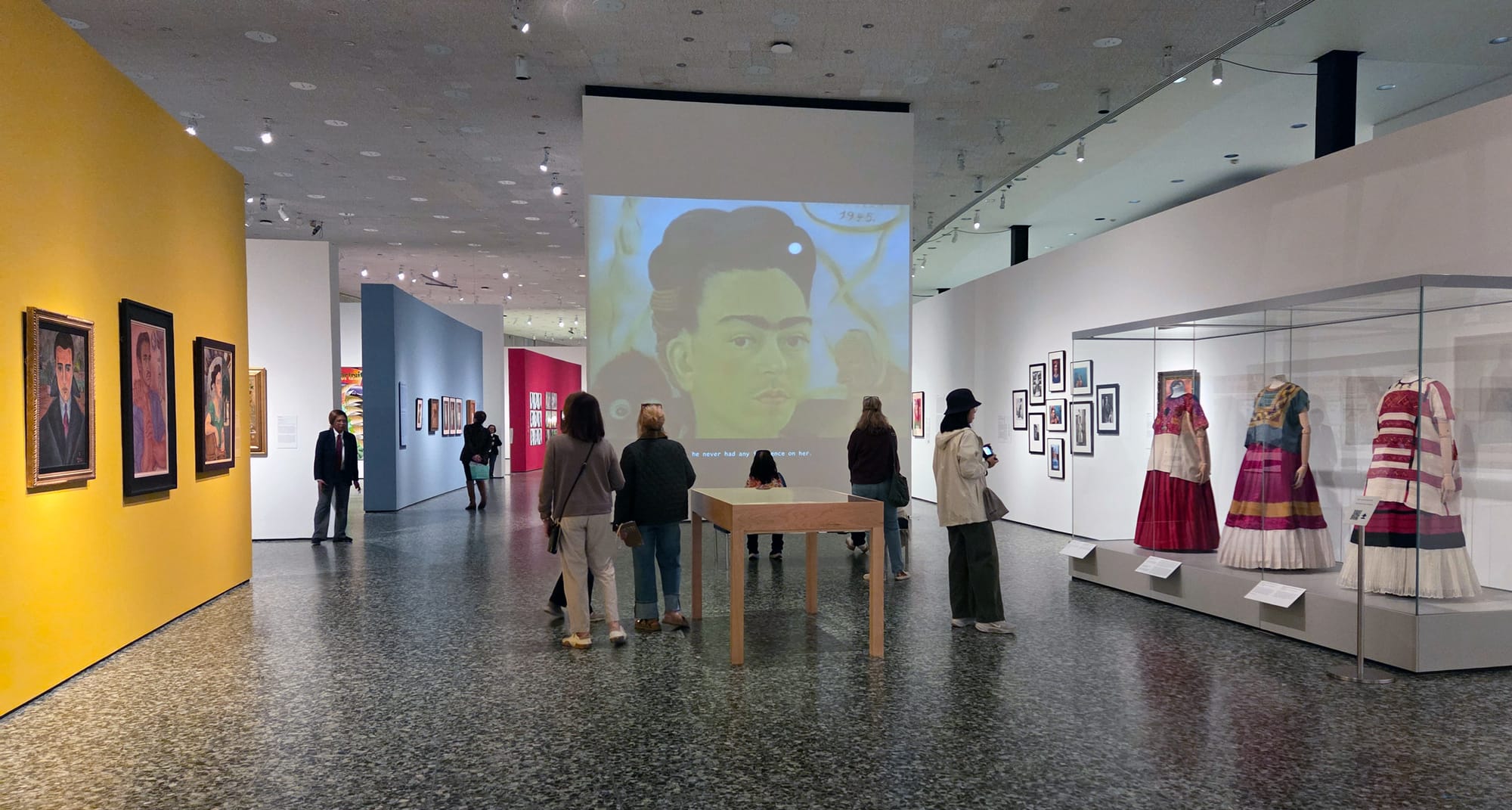
HOUSTON — Frida Kahlo is already a canonical Mexican artist, but Frida: Making of an Icon at the Museum of Fine Arts, Houston positions her as an emblem of the metaphorical and geographical borderlands. With an emphasis on the reception of Kahlo’s work across times and cultures in the past century, the exhibition blasts apart any crystallized conception of the artist until no easily digestible singular figure emerges. That is, indeed, the point.
The show is organized by theme and consists of both Kahlo’s work and those by artists who were part of her community as well as those she influenced. Three of the sections, consisting of a majority of the 35 works total, are dedicated to the artist's work, while a whopping 13 explore her impact and influence via more than a hundred works by related and subsequent generations of artists.
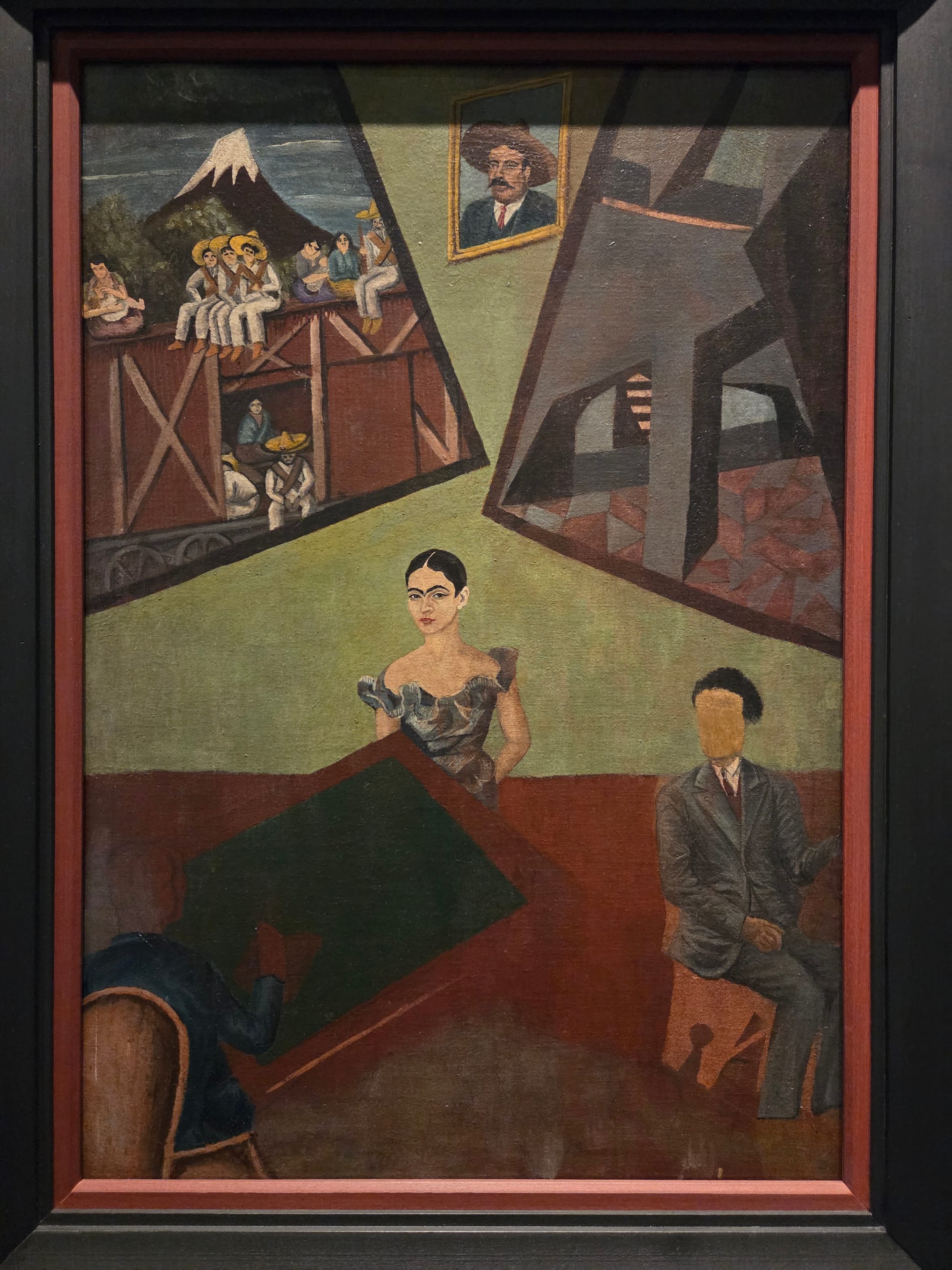
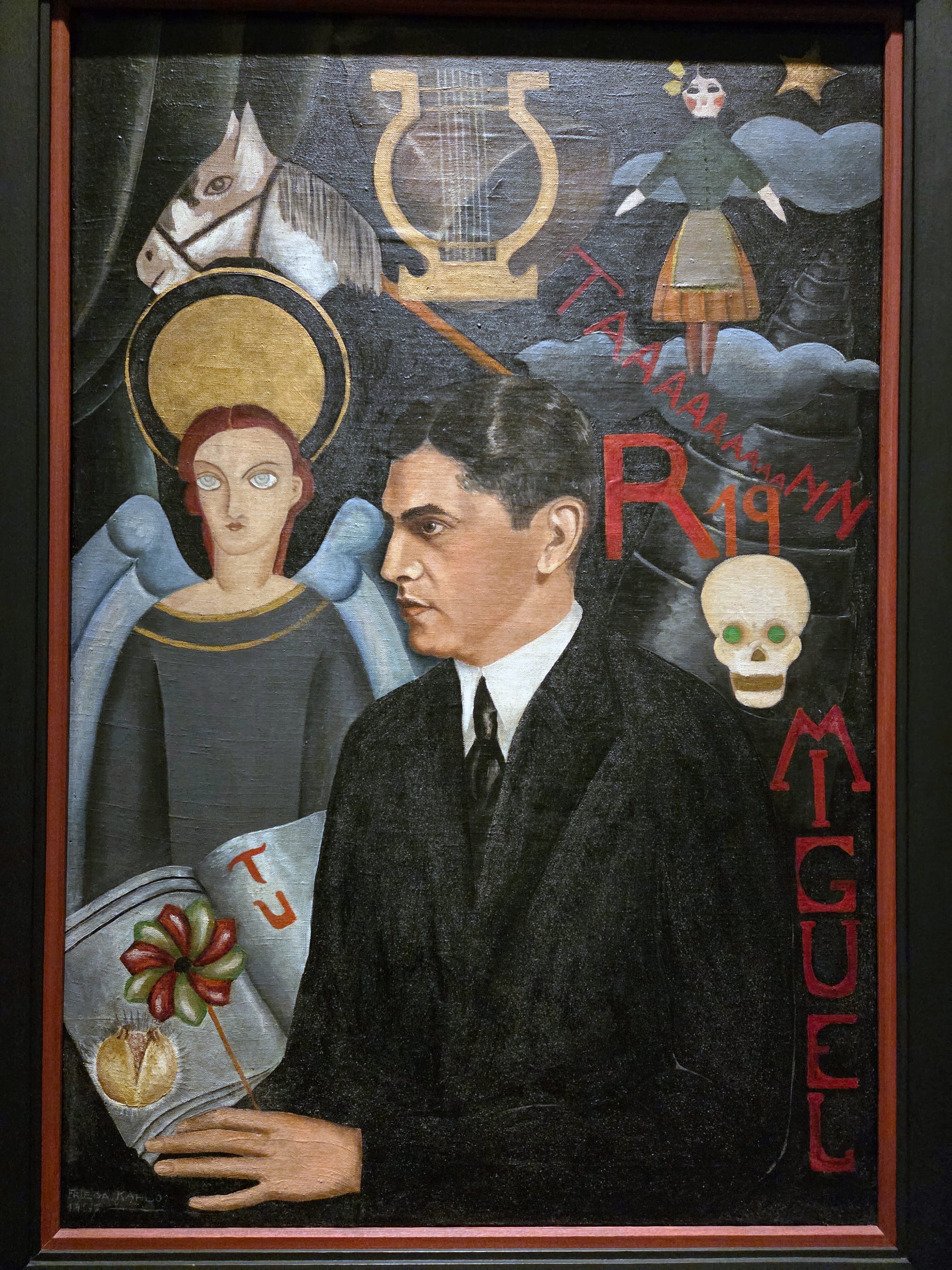
Left: Frida Kahlo, “Untitled (known as Pancho Villa y Adelita)” (1927), oil on canvas; right: Frida Kahlo, “Retrato de Miguel L. Lira” (1927), oil on canvas
The section “Early Experimentation” displays four of Kahlo’s works from the mid-1920s, made during her student years, alongside two family photos. Here, Kahlo was finding her voice, and not all of her experiments were successful, including her brief foray into Cubism in “Untitled (known as Pancho Villa y Adelita)” (1927). Kahlo’s stylistic interest in Mannerist Renaissance portraiture, on the other hand, is a revelation, as seen in works that showcase shallow depths of field and delicate linearities.
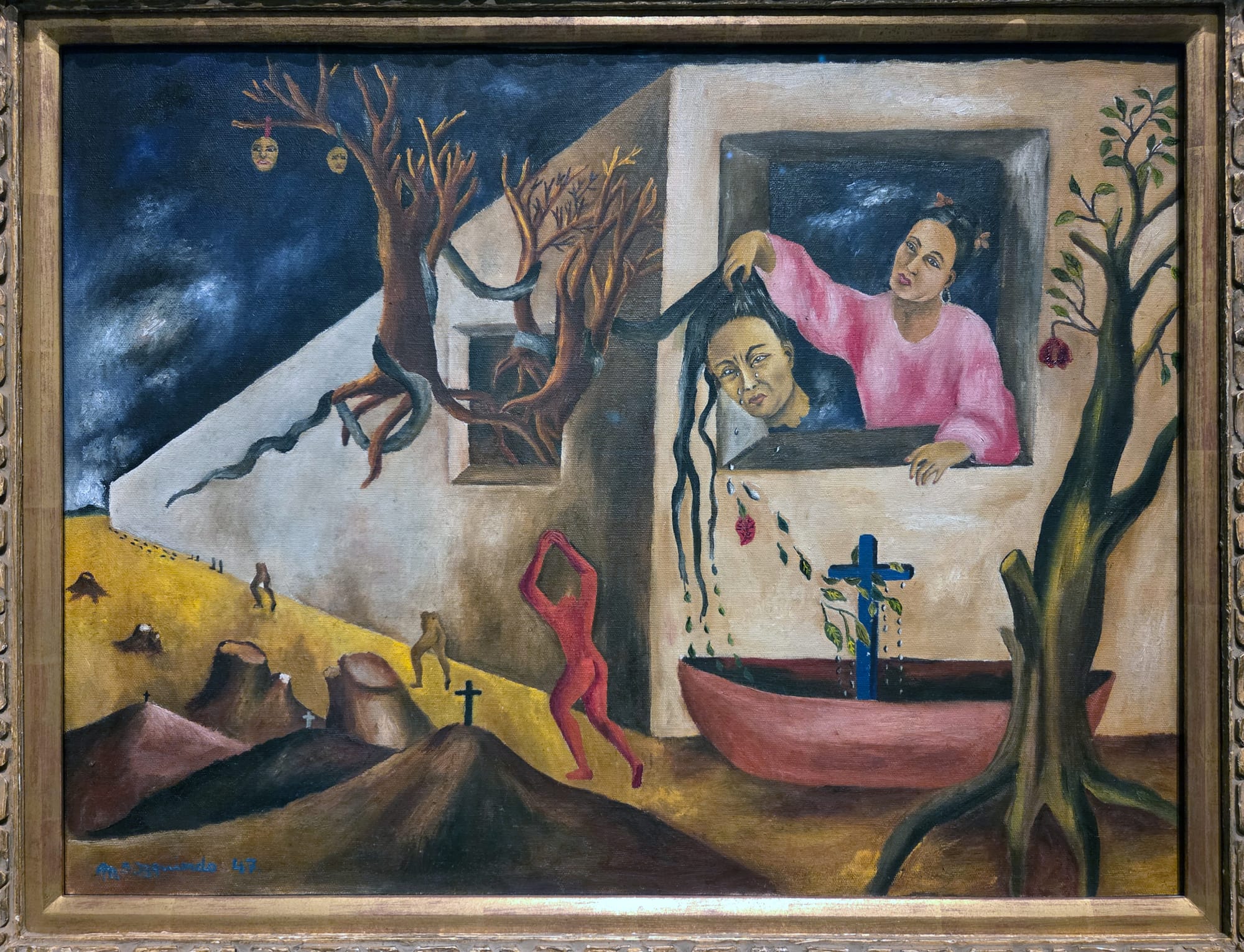
“Surrealist Affinities” brings into view Kahlo’s connection to André Breton, who organized a Parisian exhibition of her works alongside that of José Guadalupe Posada and Manuel Álvarez Bravo in 1939, titled Mexique. This section also highlights self-portraits from Kahlo’s contemporaries, such as María Izquierdo, whose “Sueño y presentimiento” (1947) depicts the artist holding her own decapitated head. Taken together, this part of the show situates the artist as not only a Surrealist, but also an active participant in larger regional and artistic circles.
The exhibition’s strength is in historicizing how Kahlo came to mean so much to so many, crediting Chicana/o artists with rediscovering her to forge an art history in their own image. This began with the exhibition Homenaje a Frida Kahlo at Galería de la Raza in San Francisco, curated in 1978 by Carmen Lomas Garza with committee support. The section “On the Other Side of the Border” reveals how Chicana/o artists such as Santa Barraza tread in her footsteps by painting odes to their Mesoamerican roots, and how those like Joey Terrill began turning Kahlo into a pop symbol.
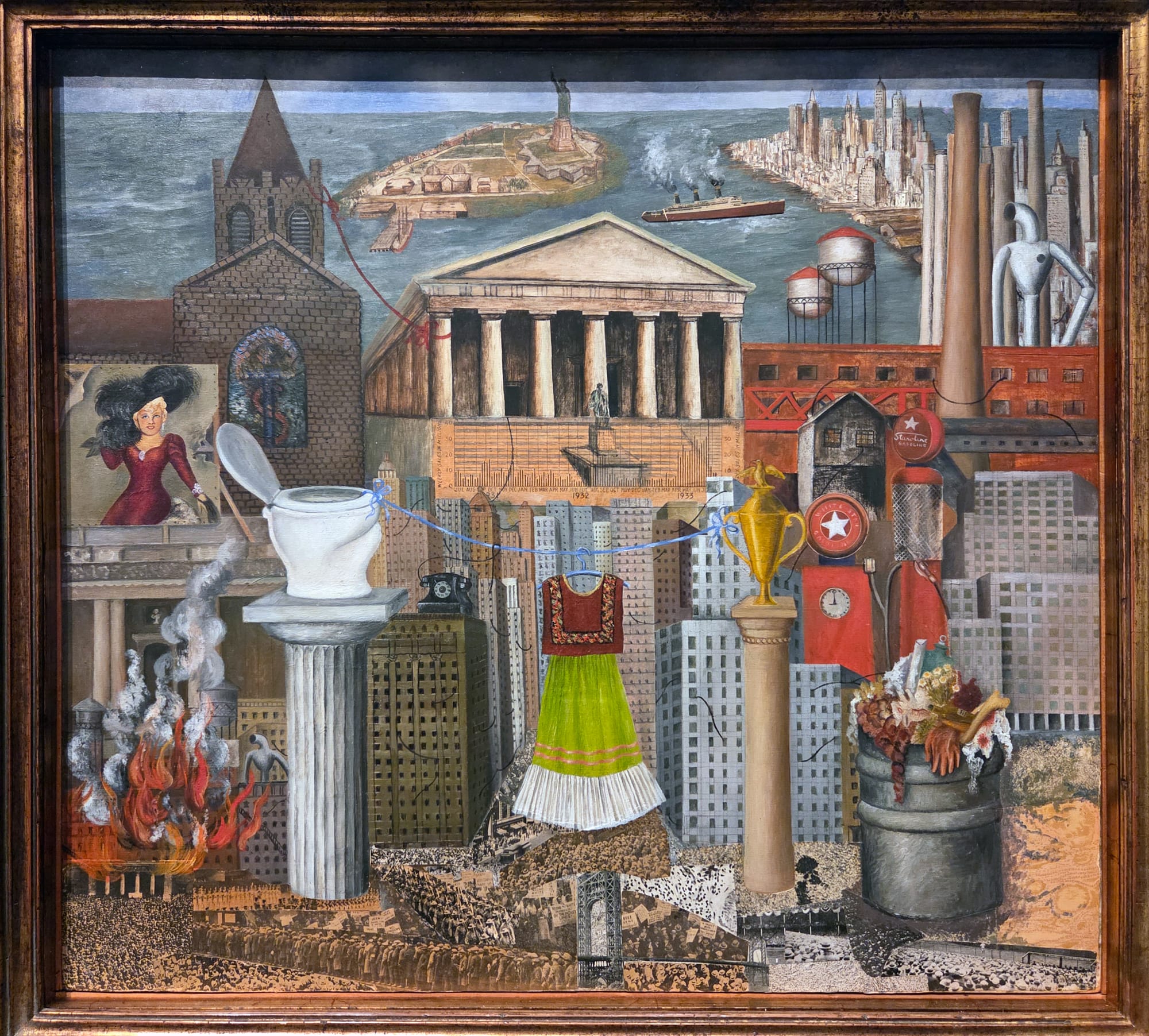
The extensive “Gendered Dialogues,” meanwhile, connects Kahlo’s work to the feminist canon of the late 20th century. Among the works included are Judy Baca's theatrical imagery, Carrie Mae Weems's intimate black-and-white photographs, and Delilah Montoya's shocking symbolic stillbirth. Here, Kahlo’s unflinching representations of the body and womanhood, such as the immensely painful work about her miscarriage, “Henry Ford Hospital” (1932), find affinities across space and time.
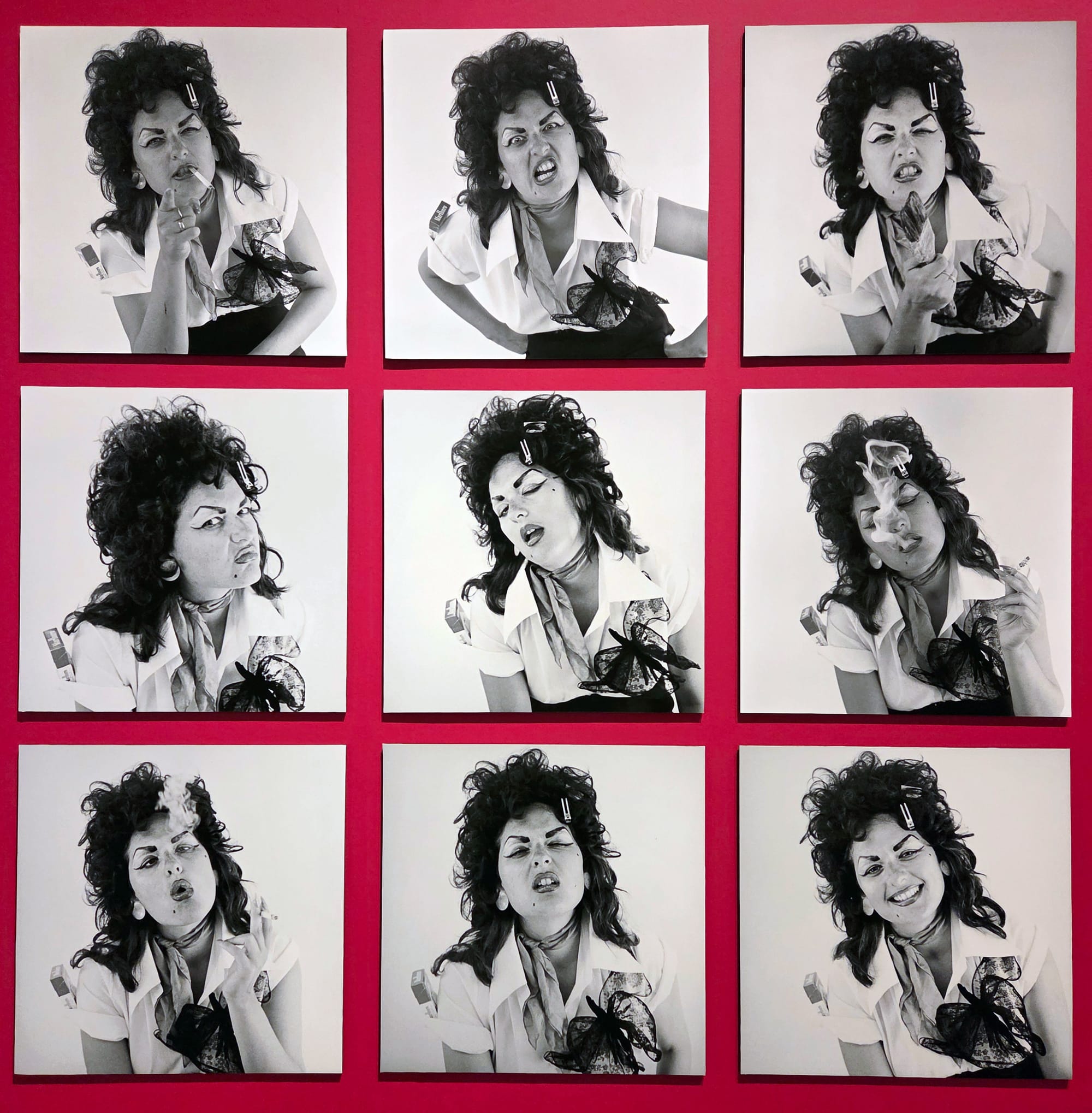
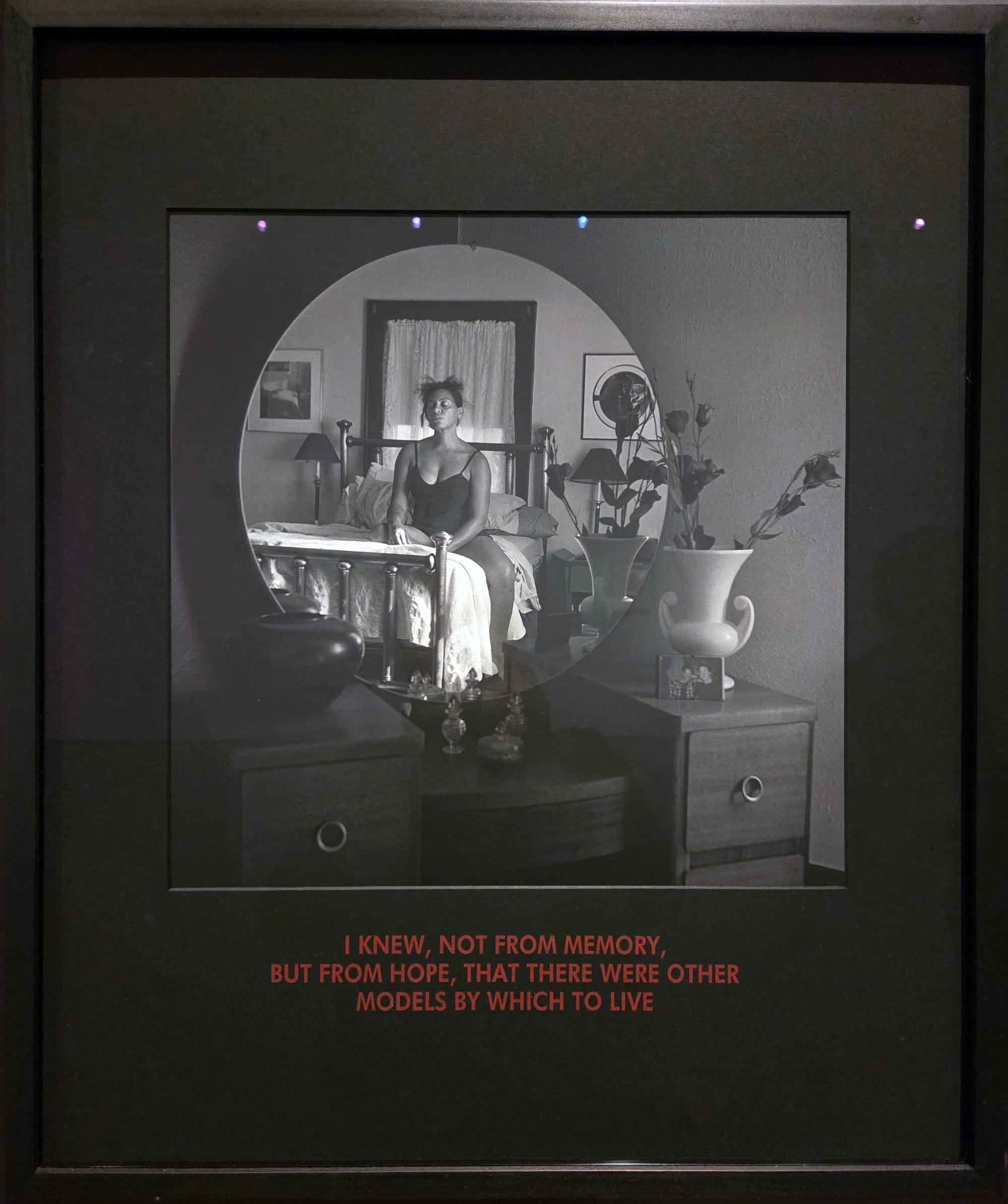
Left: Judy F. Baca photographed by Donna Deitch, “Judy Baca as La Pachuca, from the Las Tres Marías installation and performance” (1976), suite of nine pigment prints; right: Carrie Mae Weems, from “Not Manet’s Type” (1997), silver gelatin print
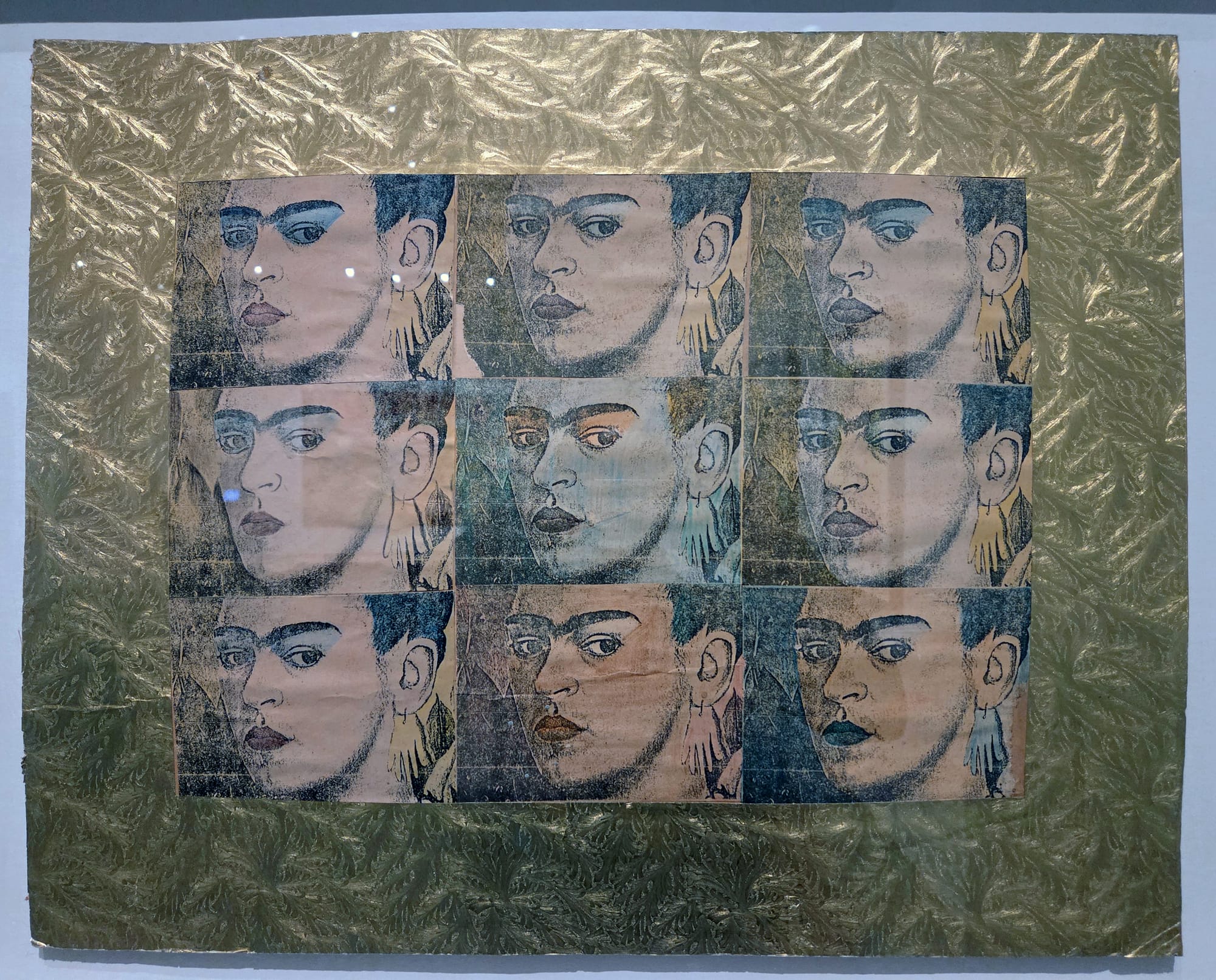
“Neo-Mexicanisms” gathers works by Mexican artists during the late 1980s and 1990s, who embraced Kahlo’s interests in subversion and folk art. Julio Galán’s self-portraits, for instance, satirize the cult of personality, while Astrid Hadad’s sumptuous cabaret costumes amplify Kahlo’s theatricality. In the uncanny section “Embodying Frida,” Graciela Iturbide poses as Kahlo in her bathtub for the series El baño de Frida, Coyoacán (2005), and Mary McCartney captures Tracy Emin appropriating the modernist in “Being Frida, London” (2000) as part of a reverent, self-referential ritual. Finally, in “Queer Interventions and Decolonization,” artists like Rafael Amorim and Martine Gutierrez deliver apt tributes to the openly bisexual icon via a staged gay pairing in "Dois rapazes de mãos dadas” (2021) and a decadent 2018 self-portrait embodying queer rage, respectively.
The exhibition misses some opportunities to juxtapose Kahlo’s works with those that emulate them, such as “Lo que el agua me dio” (1938), the painting Iturbide referenced, and “Las dos Fridas” (1939), which Amorim visually quotes. In the grand scheme of the show, however, this matters little — it is all about Frida the signifier, and her miracles are already in our minds, our hearts.
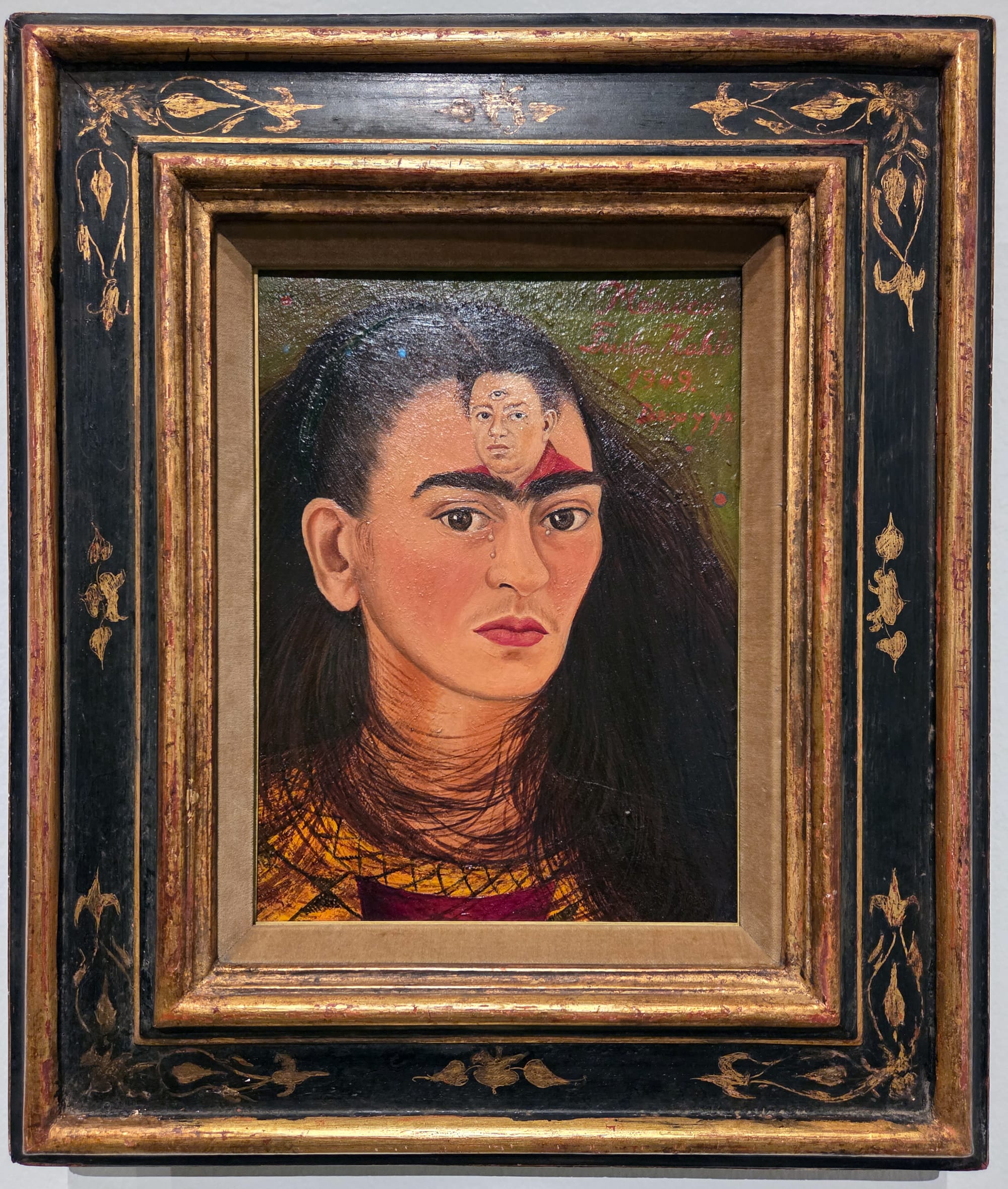
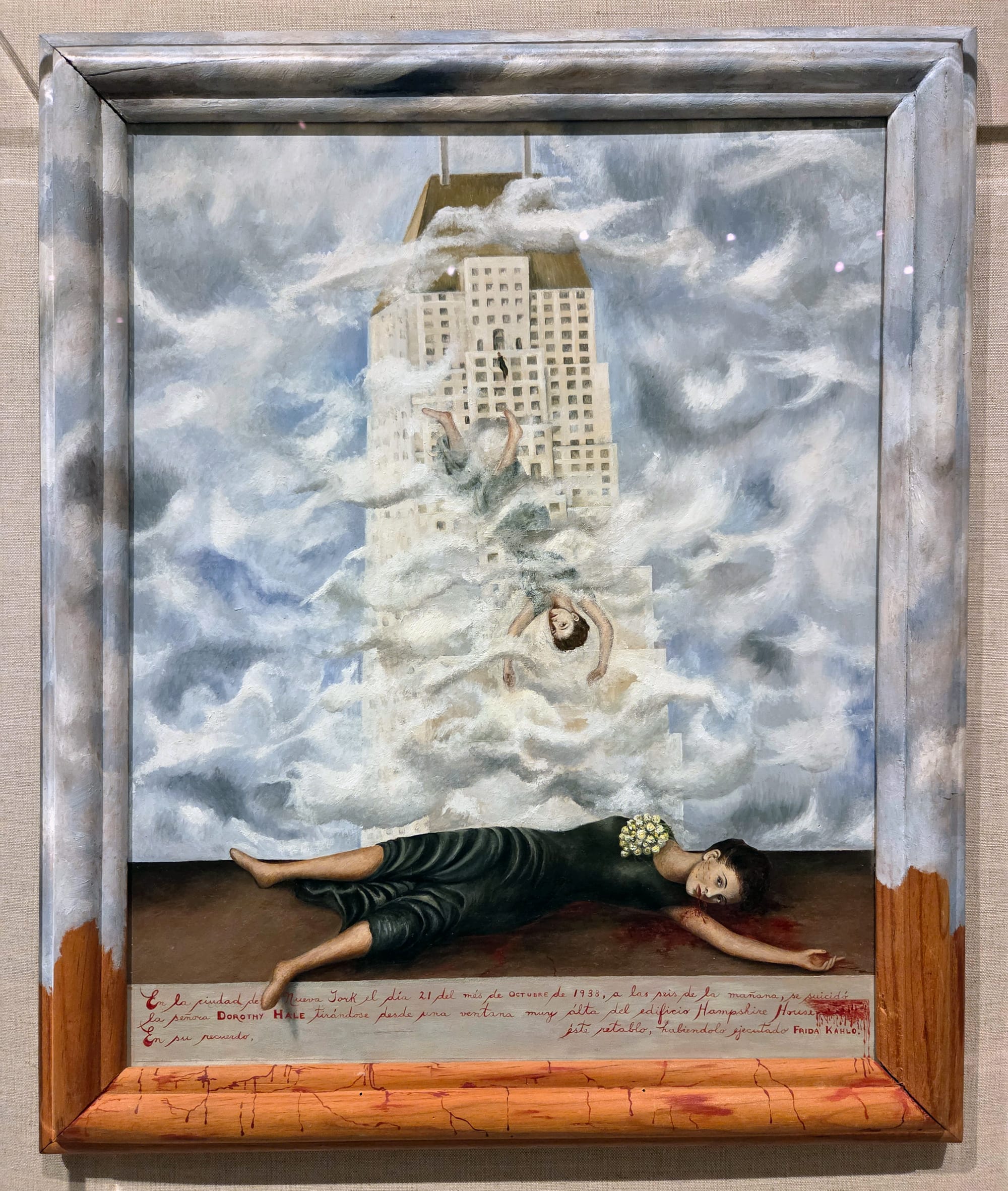
Left: Frida Kahlo, “Diego y yo” (1949), oil on canvas mounted on wood; right: Frida Kahlo, “El suicidio de Dorothy Hale” (1938-39), oil on Masonite on painted wooden frame
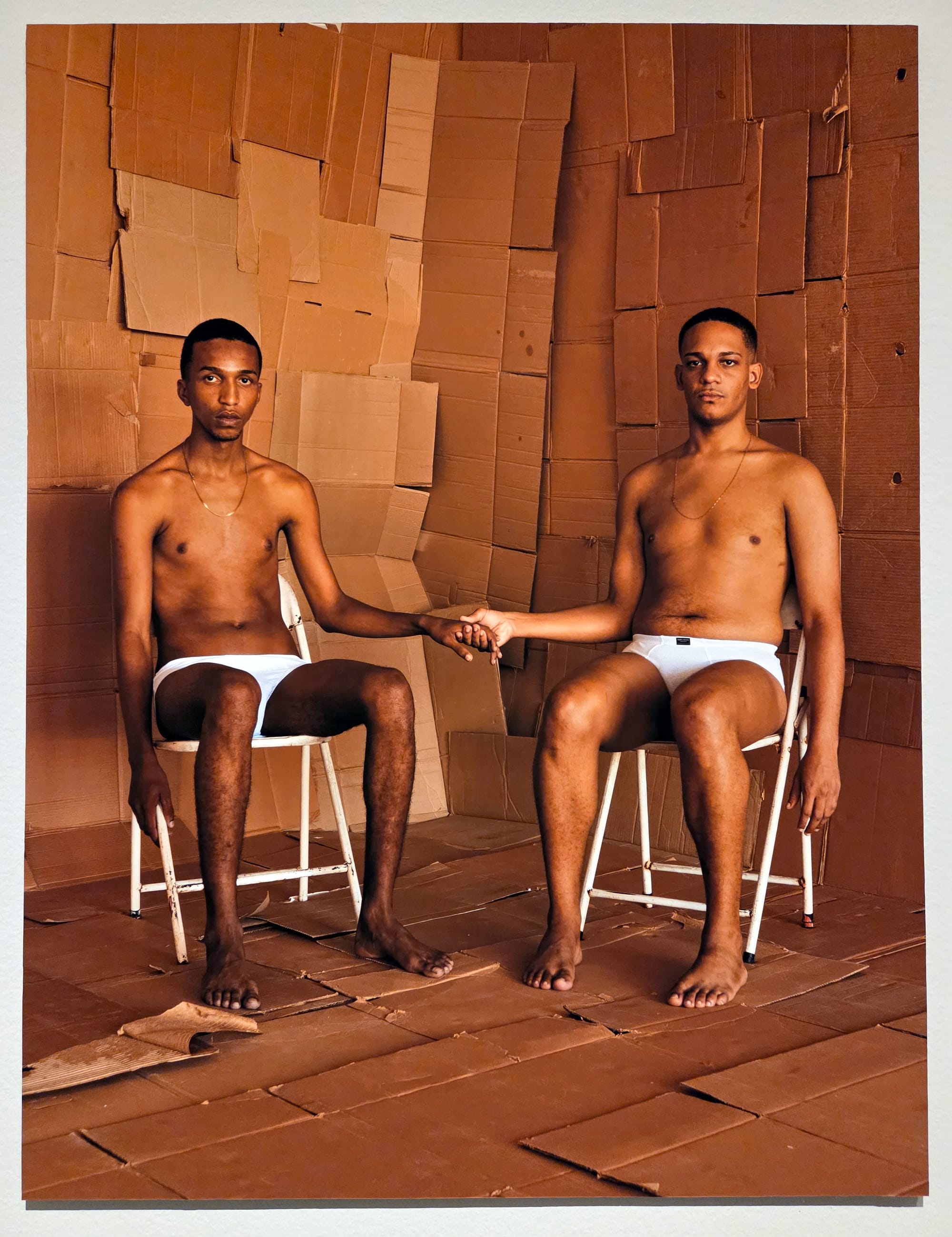
Rafael Amorim, “Dois rapazes de mãos dadas” (2021), digital photographic print
Frida: The Making of an Icon continues at the Museum of Fine Arts, Houston (1001 Bissonnet Street, Houston, Texas) through May 17. The exhibition was curated by Mari Carmen Ramírez.