The Indigenous Histories That Georgia O’Keeffe Forgot
An exhibition at the Georgia O'Keeffe Museum includes works by Tewa Pueblo artists, helping dispel the problematic “O’Keeffe Country” narrative.

SANTA FE — During a recent tour of Georgia O’Keeffe’s house in Abiquiu, New Mexico, I looked out a window and recognized the view of the highway snaking up the mesa toward Española. I felt a little uneasy when I realized that my familiarity came primarily from the artist’s paintings of the landscape.
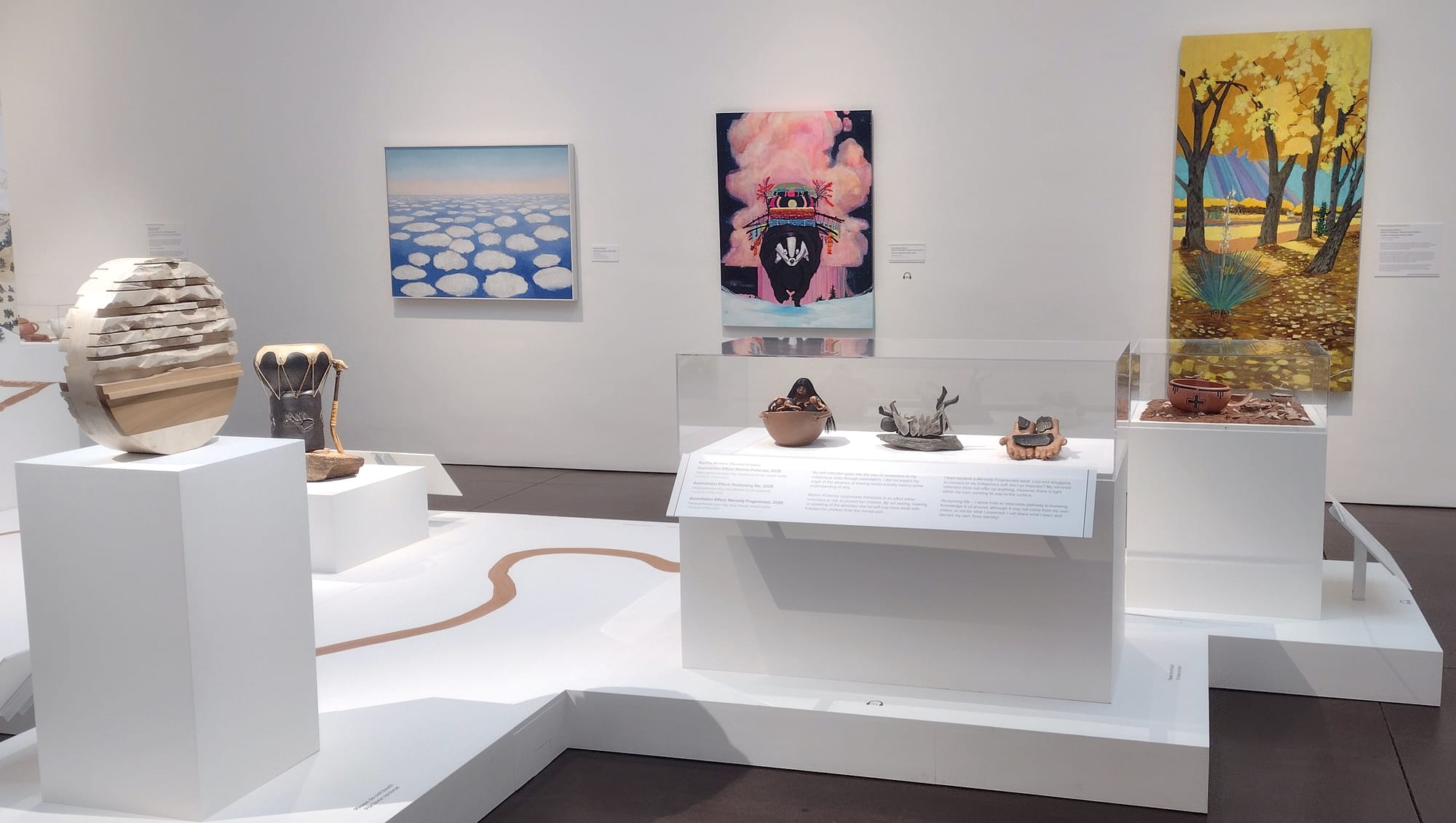
O’Keeffe’s renderings of Northern New Mexico — which do not include Tewa people or culture — and the lore of her independent settler spirit are ingrained in the history of Western Modernism, and they continue to attract tourists, artists, and collectors to the region. Her self-proclaimed divinely sanctioned possession of the land is vital to consider when thinking critically about her art. So I was eager to see Tewa Nangeh/Tewa Country at the Georgia O’Keeffe Museum, which includes works by Tewa Pueblo artists, scholars, and culture bearers alongside some of O’Keeffe’s iconic landscapes, thus dispelling the problematic “O’Keeffe Country” narrative.
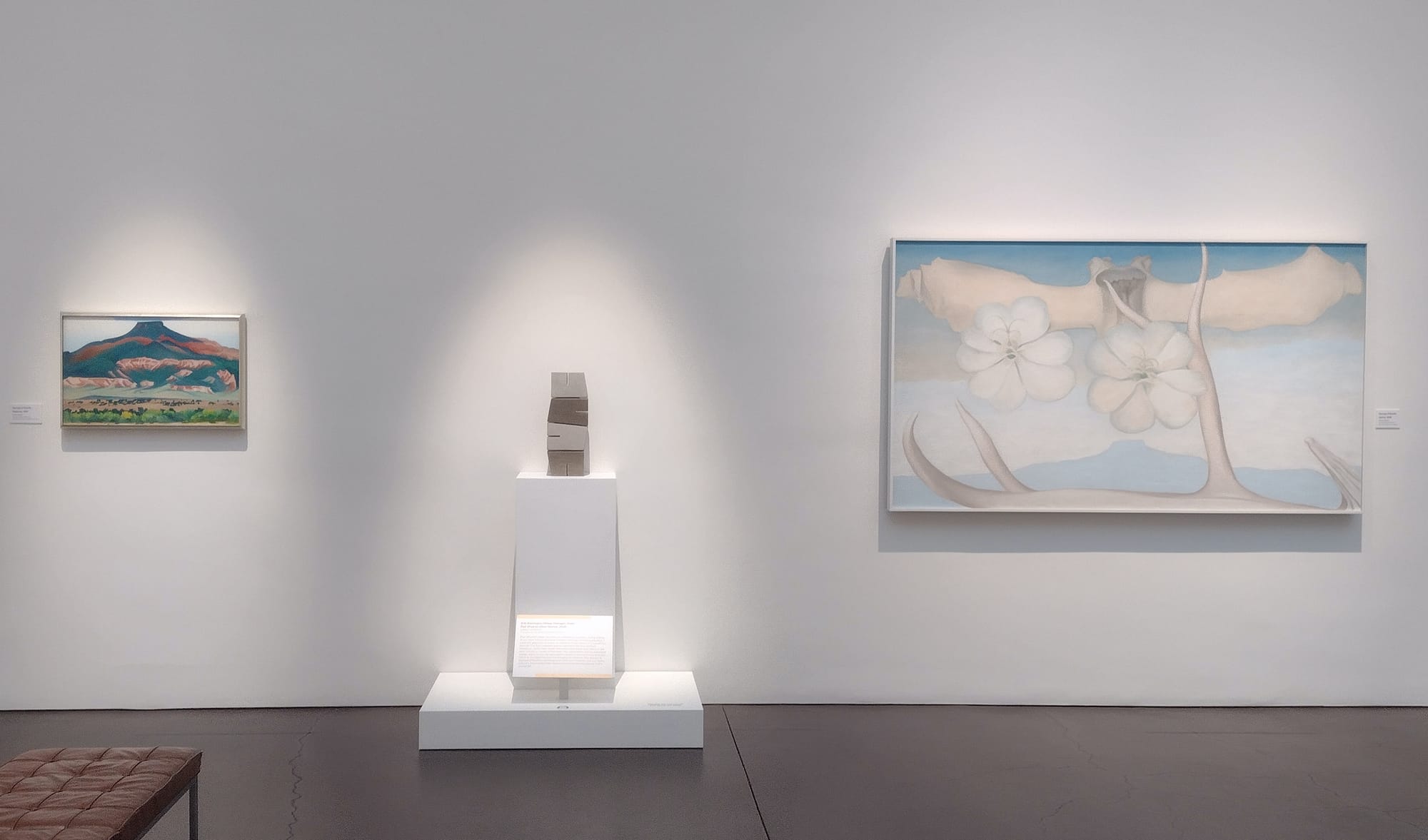
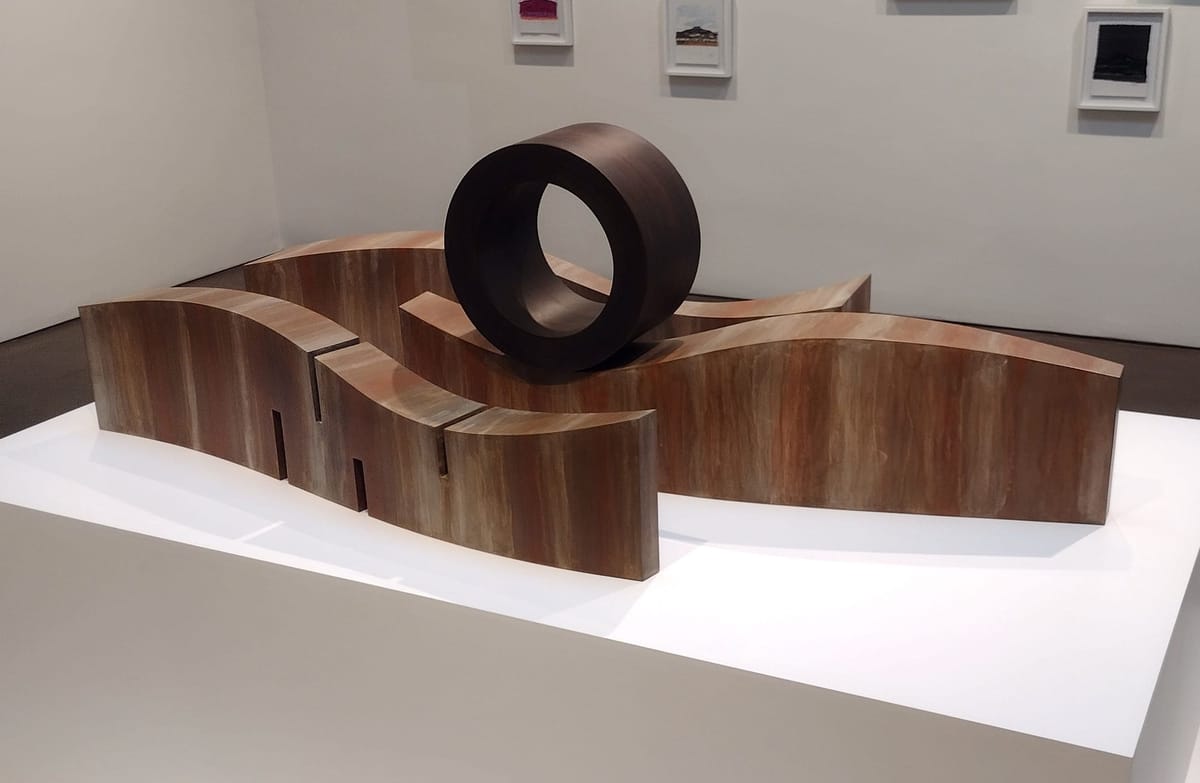
A handful of the exhibition’s comparisons reverberated with productive tensions. Arlo Namingha (Ohkay Owingeh, Hopi) evoked direct experiences with nature through minimalist abstractions. His “Paa’ Shad’eh” (Deer Dance) (2025), a sculpture composed of four stacked blocks of stone, references the cardinal directions, deer tracks, ceremonial practices, and nature’s life-giving energy, such as lightning. “Sandhills” (2008) comprises four bronze pieces, including a cylinder representing the sun, that can be arranged relative to one’s relationship to changing surroundings. In these works, the focus is on honoring animal life and traditions — not, at least in my mind, to collect animal bones, hoard rocks or other natural elements, or otherwise own any aspect of the land.
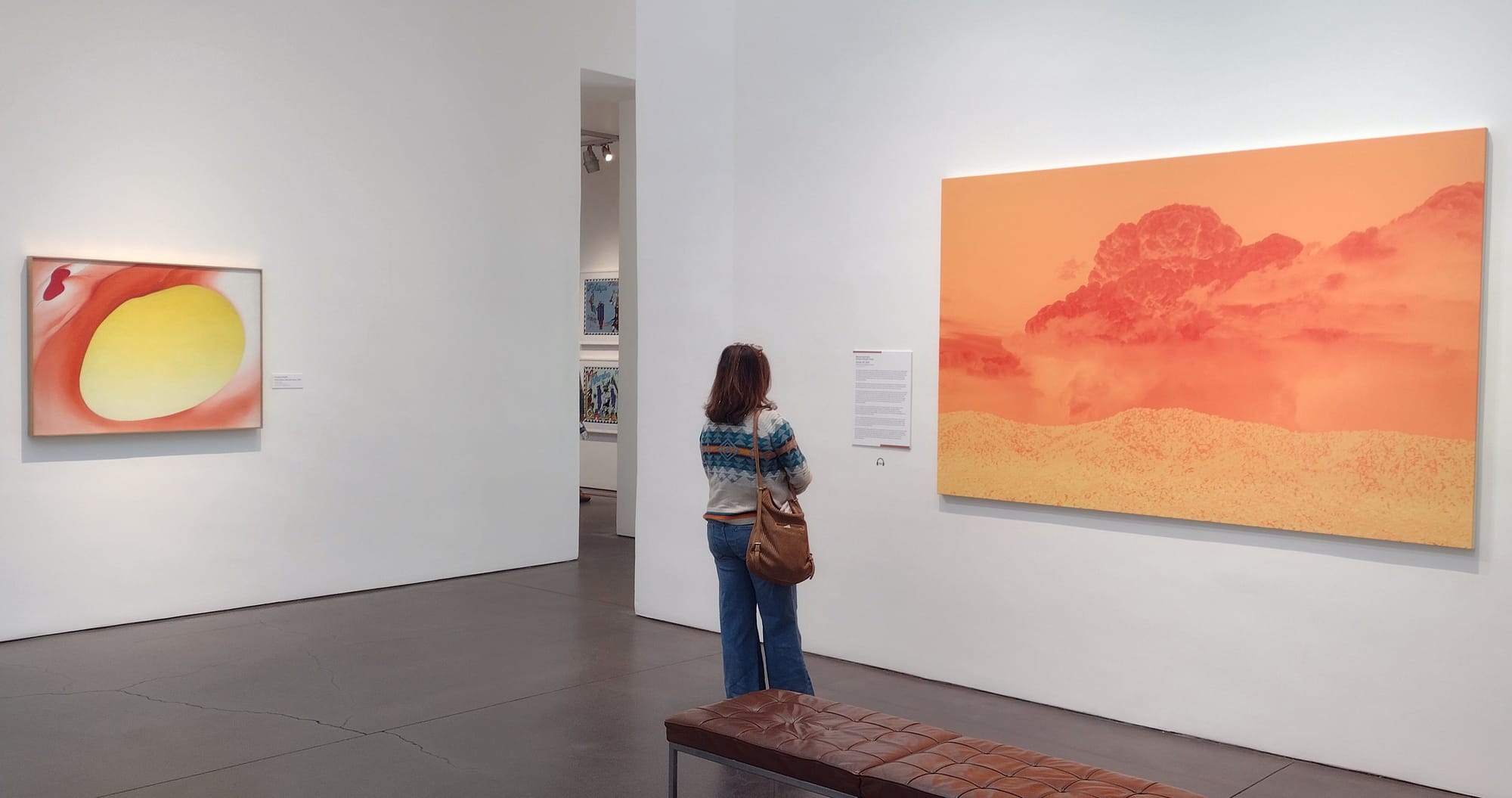
Photographer Michael Namingha (Ohkay Owingeh, Hopi) also addresses aspects of the land and nature, specifically environmental changes and extractive industry. “Disaster #8” (2025), a large-scale silkscreen on canvas, depicts an alarming orange cloud that billows above a neon yellow horizon. Associations with nuclear explosions, raging wildfires, and increasing global temperatures are unavoidable, as are connections between these catastrophes and the capitalist desire for dominance over nature.
Namingha’s “Abiquiu #3” (2013), an inkjet print on paper with “I HATE FLOWERS” spelled out in white capital letters over a photo of a butte rock against a bright blue sky, toys with O’Keeffe’s own visual language while it embraces a shared interest in close looking. The print was in my periphery, drawing my attention, as I sat at a small desk and read “Questions and Thoughts to the Spirit of O’Keeffe” (2025), a series of four handwritten letters from Samuel Catanach (P'osuwaegeh Owingeh/Pueblo of Pojoaque). I was struck by Catanach’s poignant questions to O’Keeffe about her experiences as a visitor in Northern New Mexico, and how he weaves in accounts of his dedication to the Tewa people and ways of life. For example, he writes “Do you make the connection between the land you are so attracted to — that brings you notoriety through your art — and the people who have called this place home since so long ago?” He closes this letter by imagining that he's making O’Keeffe aware of the critical state of Native languages.
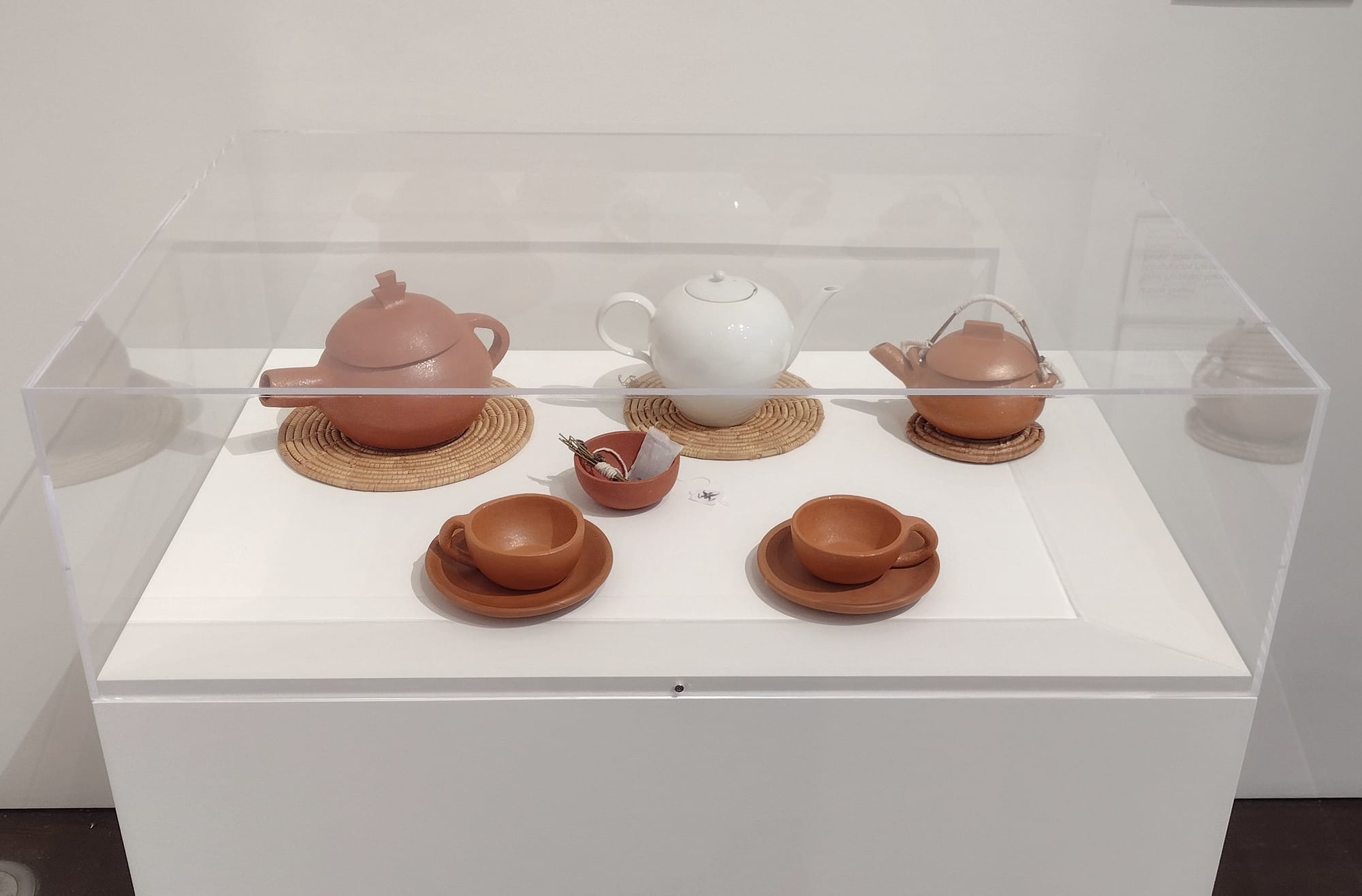
As I looped back through the gallery, I stopped and stood in front of “Let’s Have Tea, Tea Time with Georgia” (2025) by Marita Hinds (Tesuque Pueblo). The artist dug clay from the ground and fired it, and gathered red willow, to make a teapot, cups, and saucers — her first attempt at doing so. The set is installed in a vitrine with one of the many teapots that O’Keeffe collected. Here, the contrast is striking: one, a handmade item made to be shared, the other a designer object to be purchased. The museum label includes Hinds’s provocative question: If the two women had tea together, what would they talk about?
Co-curator Jason Garcia (Kha'p'oOwingeh/Santa Clara Pueblo) explained in the press release that the show is not about condemning O’Keeffe; instead, he said, it's “a deep engagement with [her] vision of the land that is also the setting for memories and experiences of Tewa people.” As such, the exhibition prompts another question: Will the Georgia O’Keeffe Museum continue to share that vision and represent the story of Tewa country?
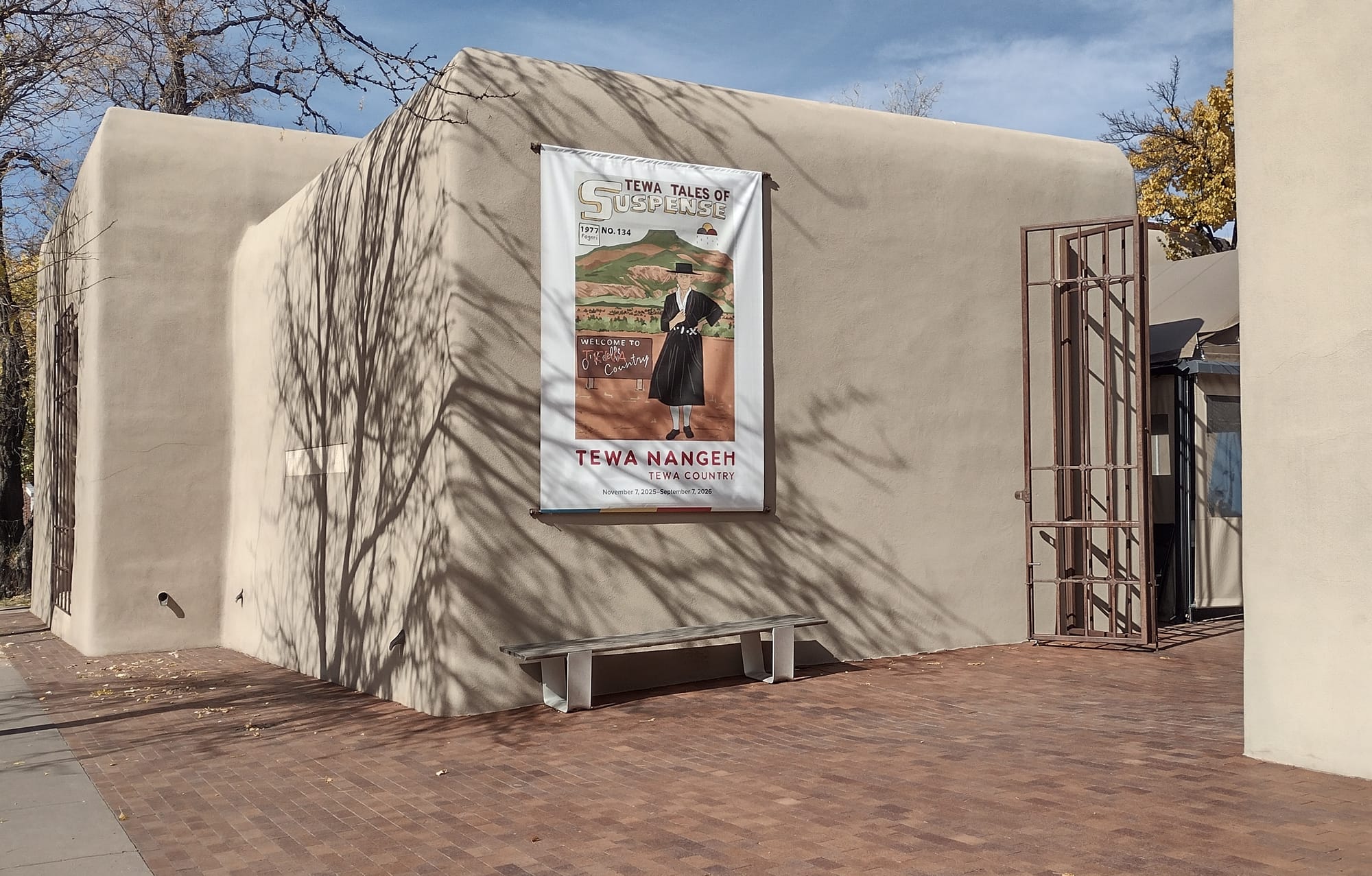
Tewa Nangeh/Tewa Country continues at the Georgia O’Keeffe Museum (217 Johnson Street, Santa Fe, New Mexico) through September 7, 2026. The exhibition was curated by Bess Murphy and Jason Garcia.