The Invincible Spirit of Edmonia Lewis
A first-of-its-kind exhibition honors the pathbreaking artist's Black and Indigenous ancestries.

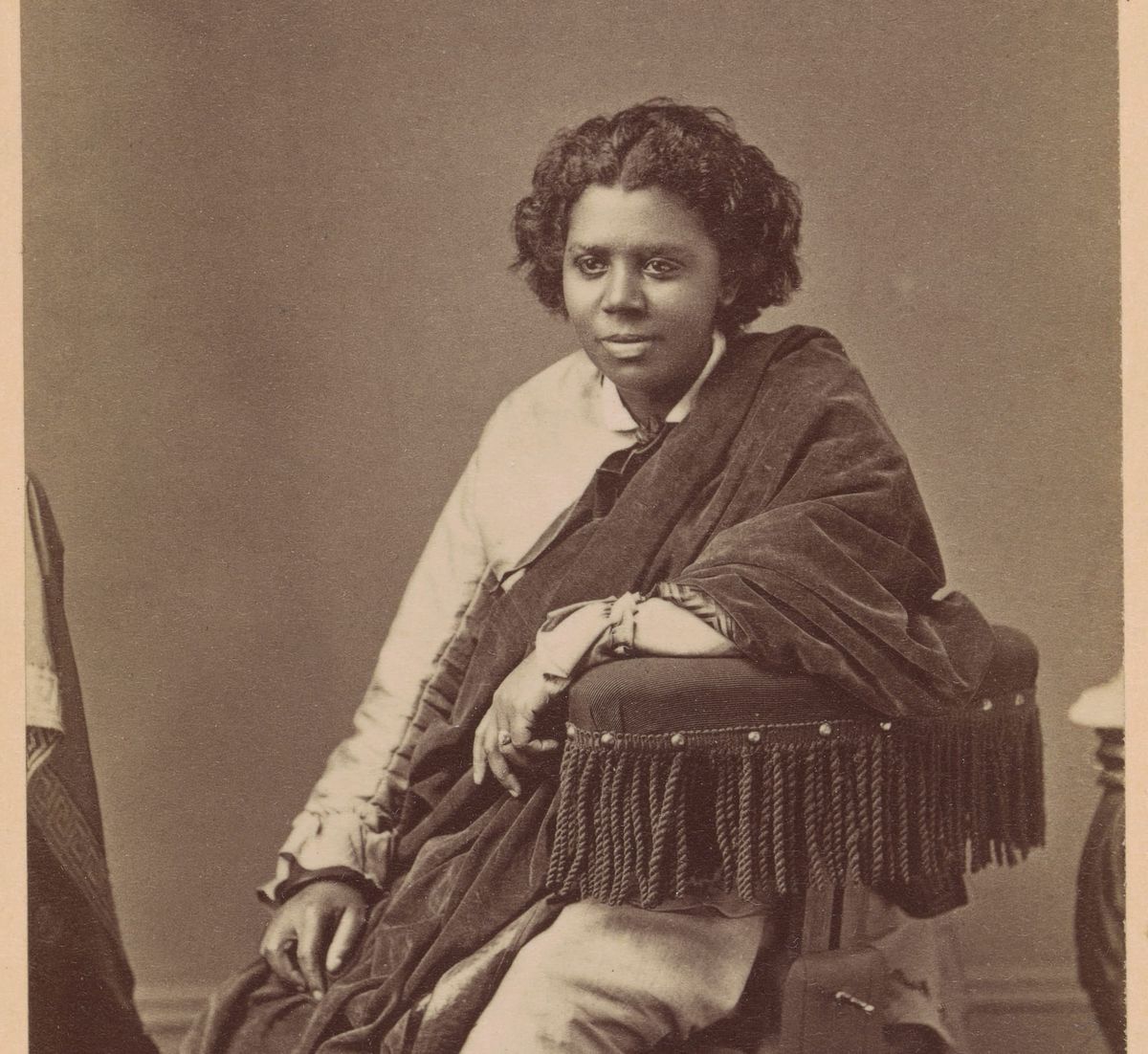
SALEM, Mass. — “Sometimes the times were dark and the outlook was lonesome, but where there is a will, there is a way,” the Black and Indigenous sculptor Edmonia Lewis once said. The quotation, now printed and spotlit on a dark blue wall in the exhibition Edmonia Lewis: Said in Stone, continues, “That is what I tell my people whenever I meet them, that they must not be discouraged, but work ahead until the world is bound to respect them for what they have accomplished.” Lewis — who was born in Greenbush, New York, in 1844 and died in London in 1907 — is paid such respect in her first major retrospective at the Peabody Essex Museum, held over a century after the artist’s death.
Co-organized by the Peabody Essex Museum and the Georgia Museum of Art, the extensively researched exhibition tells an expansive narrative of the artist’s sculpture practice and legacy, displaying 30 of Lewis’s Neoclassical white marble sculptures alongside a plethora of archival materials and works by other artists. One of the strongest elements of Edmonia Lewis: Said in Stone is that the curatorial framework allows for Lewis to be understood simultaneously as a Black and Indigenous artist without conflating the two identities. Indeed, each quite literally occupies its own space in the exhibition: Four thematic rooms — “Antislavery and Emancipation,” “Indigenous Artistic Worlds,” “the Studios of Rome,” and “Religion, Mythology, Transcendence” — are in conversation with one another and designated by different colors of wall paint. Through collaboration with Black and Native scholars, the groundbreaking exhibition is the first of its kind to present Lewis’s work in dialogue with both of her ancestries.