The Lost Pearls of New York City
Alan Michelson's public art installation “The Oyster” on Governors Island conjures up the overlooked history of Indigenous shell middens.

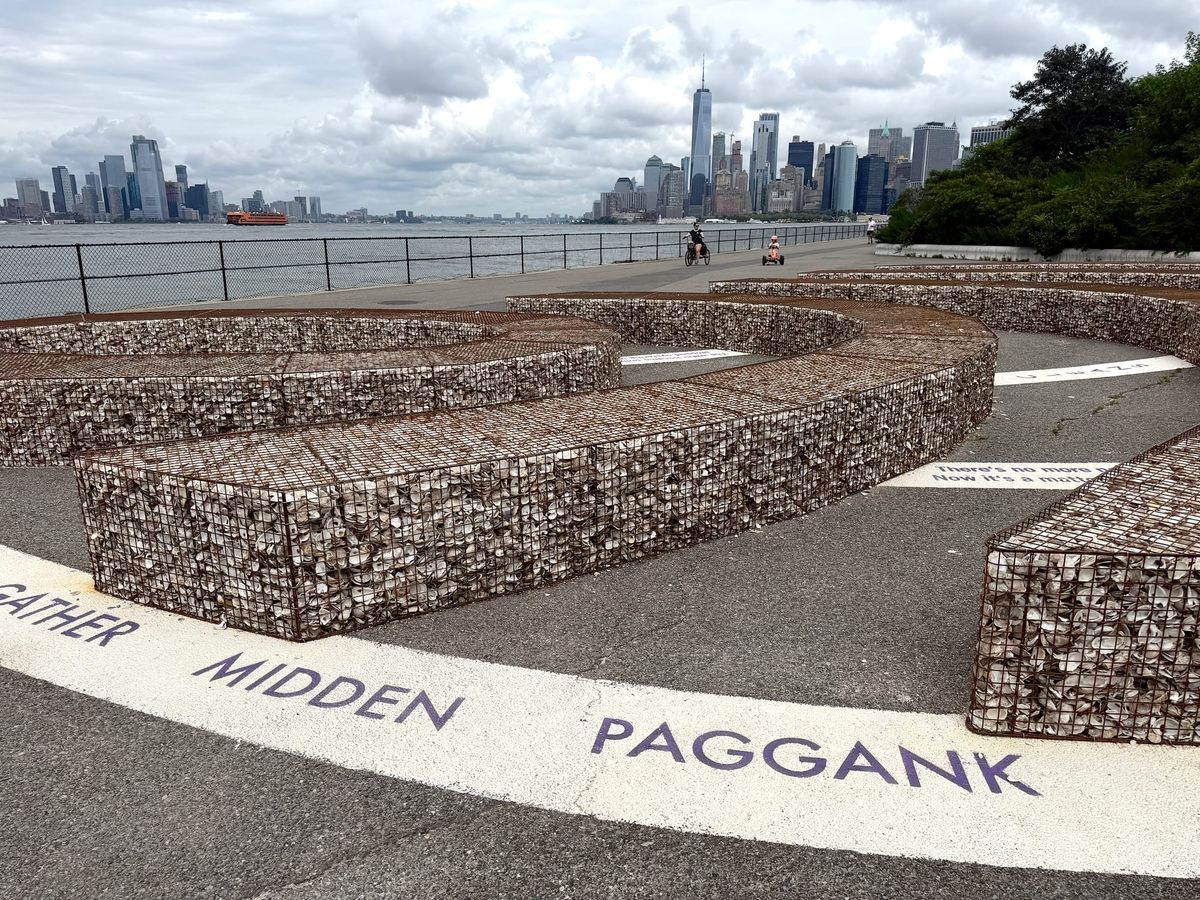
Walking down Pearl Street in lower Manhattan, you probably don’t realize that the name marks the original 17th-century East River shoreline of New York City. In fact, the street was named for a Lenape shell midden that was located on its southern section, which is also believed to have been adjacent to a Lenape canoe landing. It was one of many prominent middens that marked the region, and as Mark Kurlansky explains in his bestselling book The Big Oyster: History on the Half Shell (2006), middens are “the most common marker of a pre-European settlement anywhere in the area of the mouth of the Hudson.” These piles of oyster shells, he notes, were sometimes as much as four feet deep, sometimes buried in the ground, sometimes piled high.
The early 17th-century Dutch colonists were the first to note these large piles and many of them remained well into the 19th century when the last vestiges were dismantled and then used as filler for roads and other modernization projects. Brooklyn writer Daniel Tredwell wrote in his 1839 diary that he would explore these piles with his father:
“On the way out we pass many Indian shell heaps bleached as white as snow, which they much resemble at a distance. Some of them on the banks of the creek extend from fifteen to thirty feet upon the bank, and under water, in many instances entirely across the creek. These shell heaps, long ere this, has excited our curiosity and we had proposed all manner of questioning concerning their authors. These questions my father did not and could not satisfactorily answer, and we were consequently unsatisfied, and hence there was a constantly recurring inquiry.”
The passage highlights that the erasure of Indigenous settlement was so thorough in 19th-century New York that it never occurred to the Tredwell family that the landmarks they visited were consciously created by those whom they displaced.
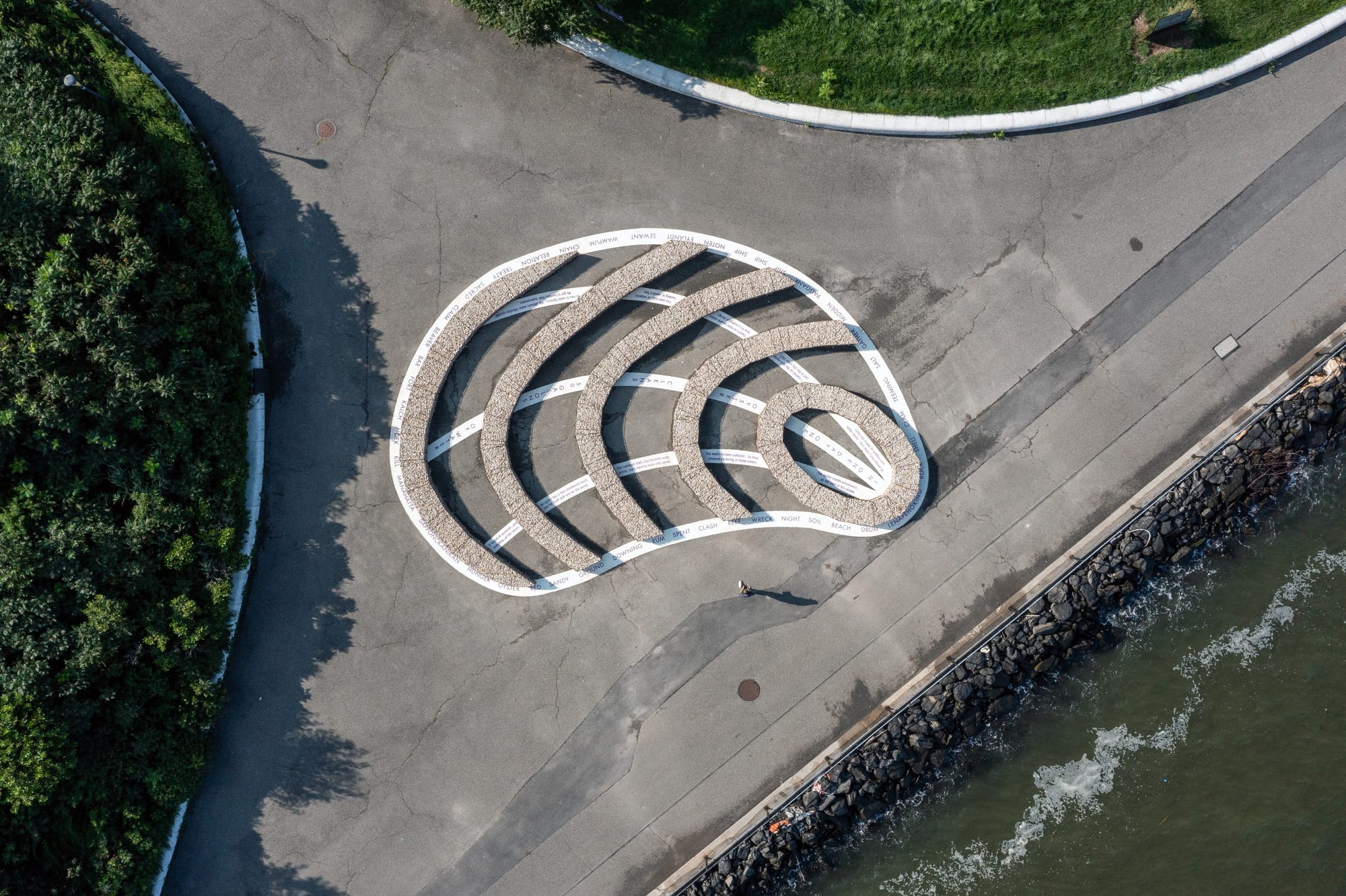
That forgetting is at the foundation of Alan Michelson’s “The Oyster” project, which opened this past weekend on Governors Island and will continue until late fall. This history, Michelson’s public artwork suggests, is still present, and equally contested, as people who live here continue to ignore the mark that the oyster has on our daily lives.