The Many Islands of “America”
A show on art from Cuba, Guam, the Philippines, Puerto Rico, and their diasporas touches on themes of colonization, enslavement, migration, and more.

WATERVILLE, Maine — At the entrance of the conceptually ambitious exhibition Imagining an Archipelago: Art from Cuba, Guam, the Philippines, Puerto Rico, and Their Diasporas at the Colby College Museum of Art are four works that embody many of its themes. A painting by Cuban-born Zilia Sánchez is composed of white marks that hover between fully abstract, figurative, and cosmological, traced on a gray-black ground, as if we are looking down at a body or up from a boat to the sky — either way, trying to find our bearings. Félix González-Torres’s “Untitled (USA Today)” (1990) lays out candies in wrappers of red, white, and blue for viewers to consume over time, incorporating the colors of the American flag (along with the patriotism it implies) into our very bodies. The letters of a 2023 concrete poem by the CHamoru scholar and poet Craig Santos Perez spell out “Archipelagoes resemble constellations,” spaced out like an archipelago or constellation — or both — on the wall. A series of photographs by Juana Valdés, “On the Malecón” (2000), documents a performance in Havana, done in the wake of a mass migration of Cubans to the United States to escape economic privation, in which she set afloat paper boats fashioned from the torn-out pages of a 19th-century novel exploring the country’s racial and social hierarchies.
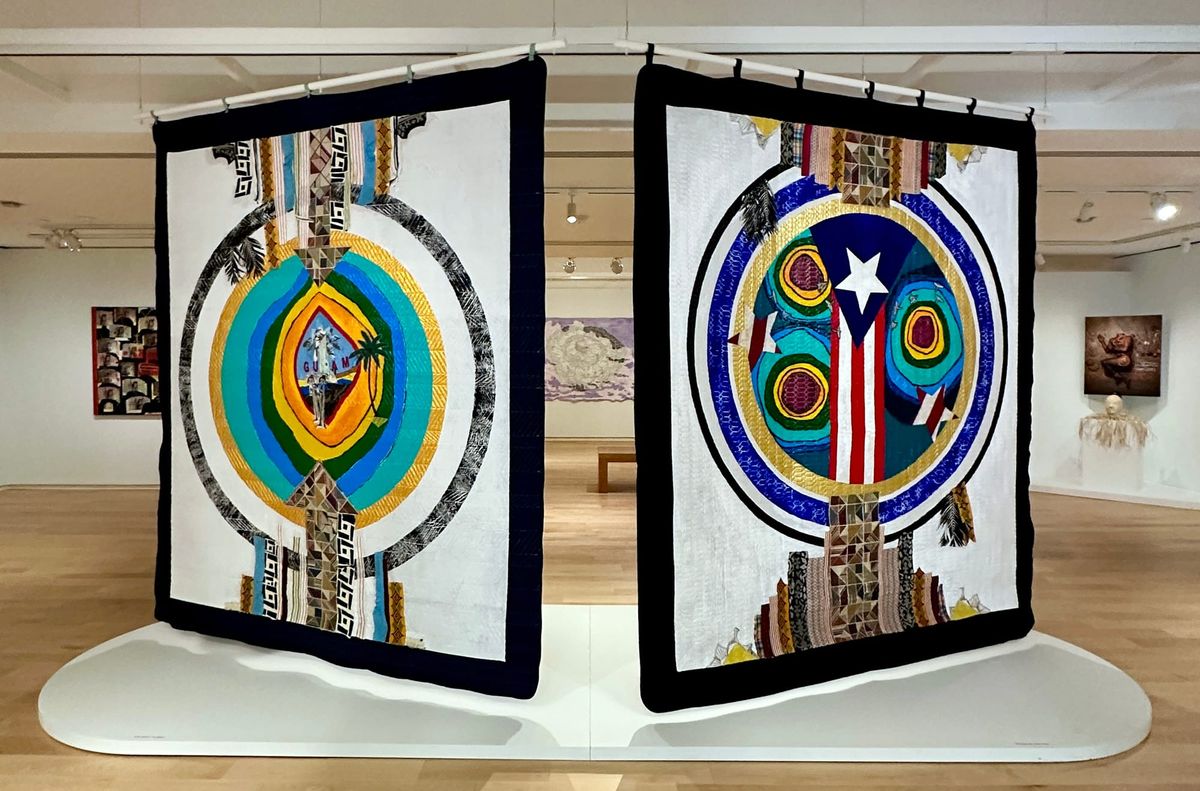
The sea, the stars, “America” as a thing to be consumed, the archipelago, waves of colonization, enslavement, migration, and diaspora that complicate any sense of identity: All of these ideas run through artworks by more than 40 contemporary artists and collectives. Though geographically disconnected, their islands of origin share a common history, playing key, if hardly willing, roles in the US’s transformation into a colonial power: All were brought under US control at the end of the War of 1898 (also known as the Spanish-American War), handed over by Spain as part of the Treaty of Paris.
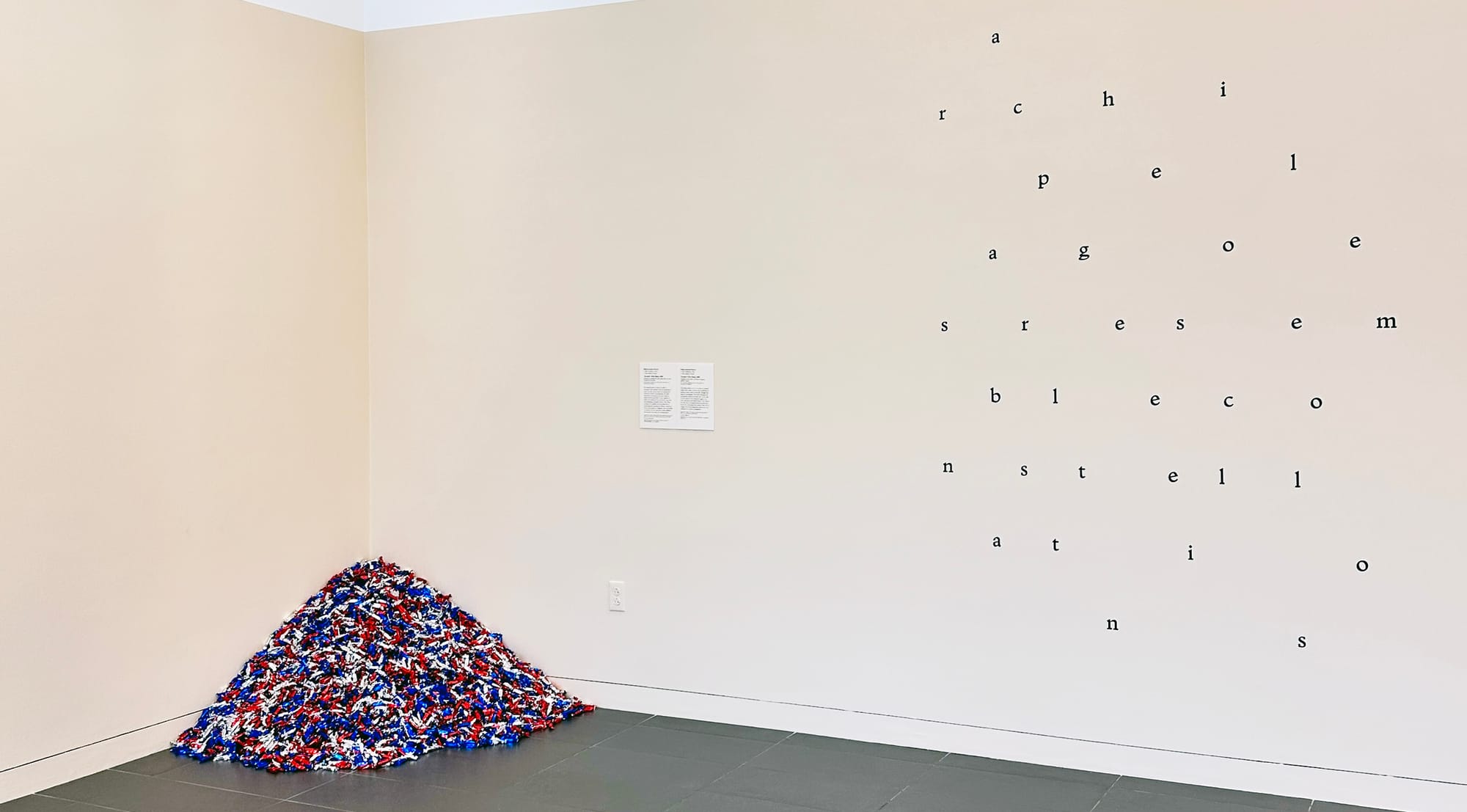
Despite the historical conceit at the heart of the show, its curator, Jessamine Batario, takes pains to ensure that these places, and the art that emerges from them, are not reduced to an unnuanced sameness. The exhibition, on the contrary, is an attempt at archipelagic thinking. Introduced by Édouard Glissant and expanded upon by many others since, archipelagic thinking asks us to consider the specific forms of relation and solidarity made possible by seeing the world from the perspective of archipelagoes, islands that retain their distinctiveness even while existing as a collective.