The Pine Trees That Would Not Leave Me
While visiting the Lebanese mountain town Dhour El Choueir, I couldn't shake off a painting and a poem I had translated two decades earlier.
Six years ago, on August 4, 2020, a massive explosion at the Port of Beirut killed more than two hundred people, wounded thousands, and devastated large parts of the capital.
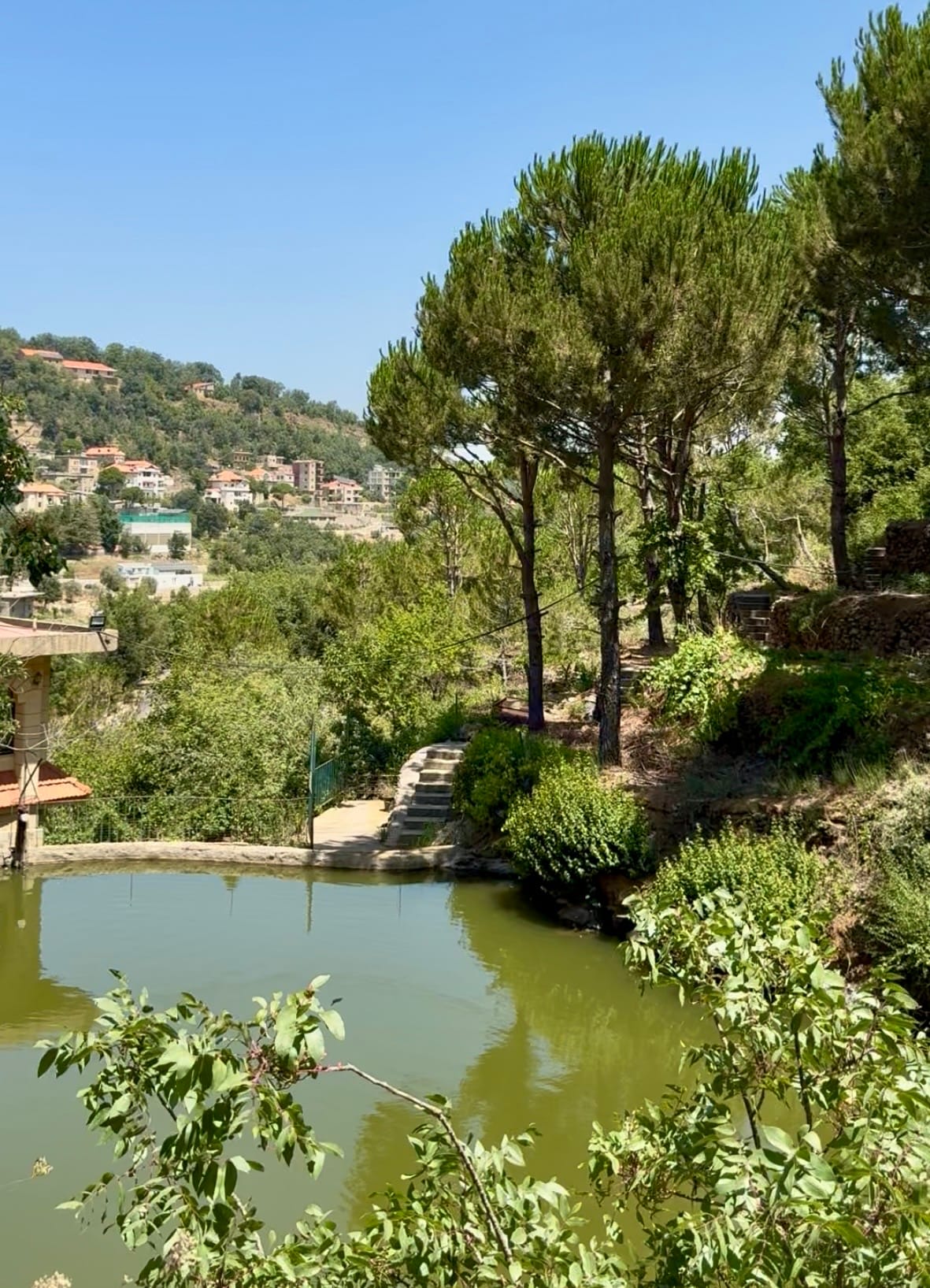
This August, sitting with a friend at a family-run restaurant amid the pine trees of Dhour El Choueir, a mountain town overlooking Beirut, I found myself unable to shake off a painting and a poem I had translated two decades earlier.
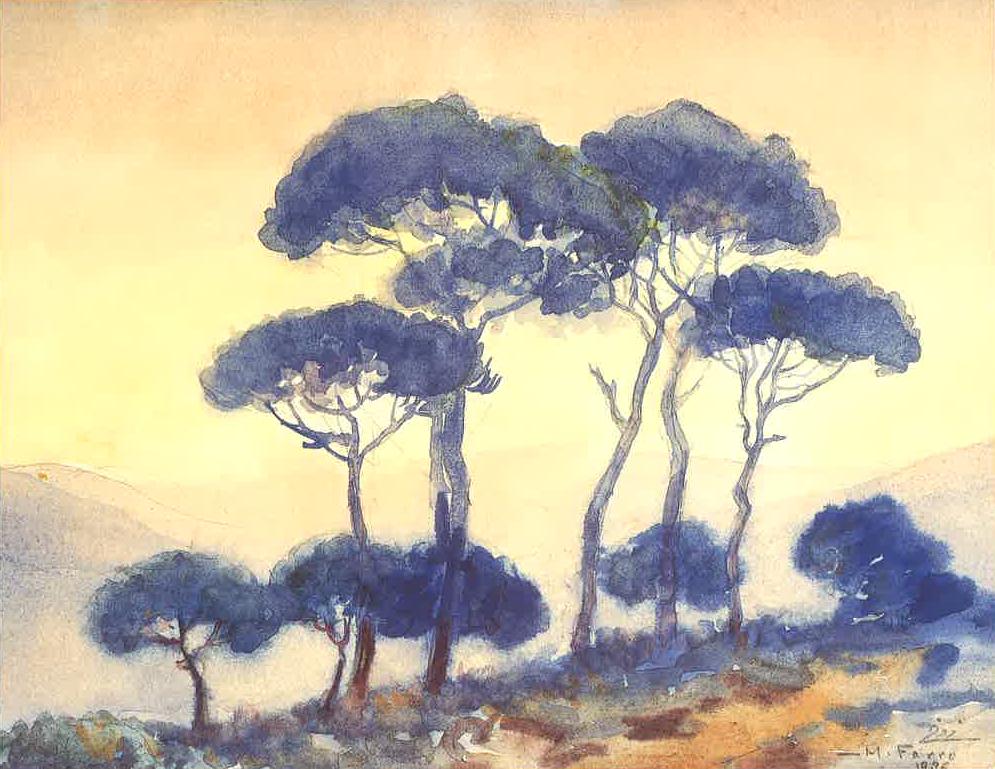
Lebanese painter Moustafa Farroukh’s watercolor “A Group of Pines in Bekfaya” was painted just a few miles from here in 1936. Born and first trained in Beirut under the painter Habib Serour, Farroukh later studied in Rome and Paris before returning to establish his practice in his native city. Through portraits and idealized landscapes, he offered a vivid vision of Lebanon’s people and terrain. Farroukh became a foundational figure in modern Lebanese painting, his art helping shape a visual language for the country while its political and cultural identity was still taking form under the French Mandate.
The painting of the pine grove was seared into my memory when I first saw it in 2003 in a catalog accompanying a Sursock Museum exhibition of Farroukh’s works. (The watercolor was on loan from the private collection of Emile Nasrallah.) Sursock itself later became a victim of the Beirut Port explosion. The blast shattered its stained-glass windows and damaged the historic building as well as dozens of artworks. The museum reopened on May 26, 2023, with five exhibitions, one of them titled Beyond Ruptures.
In August 1937, the Armenian poet Vahan Tekeyan was also here in Dhour El Choueir when he wrote the sonnet “To a Lebanese Pine Tree.”
I reconnected with the sonnet after returning home. I corrected a few errors in my translation, adjusted the wording and rhythms, and tried to bring the English closer to the movement of Tekeyan’s Armenian.
Here is the translation as I read it now, at twice the age I was when I first attempted it, with many more years of witnessing Lebanon from near and far.
To a Lebanese Pine Tree
By Vahan Tekeyan
Dhour El Choueir, Lebanon, August 1937
Your pain unfolds from the past, O soft-shadowed
pine tree… Barely risen from the ground
you have lost your maiden branch, the trace of which
appears on you, dried and jutting, like a severed arm.
Then countless others followed it, one after another…
Until, once they thought your trunk had grown large enough,
they let your upper branches sprout and thicken,
and slowly adorn themselves with translucent tresses.
And upon them too, how many fresh traces of the saw —
all your grandchildren and great-grandchildren, dead too soon,
whose open grave you have become beneath the skies…
But you do not at all inspire, O green tree of the mountains,
with memories of so many victims, any thought of mourning;
you ever bring forth new life and sway in joyous mood…
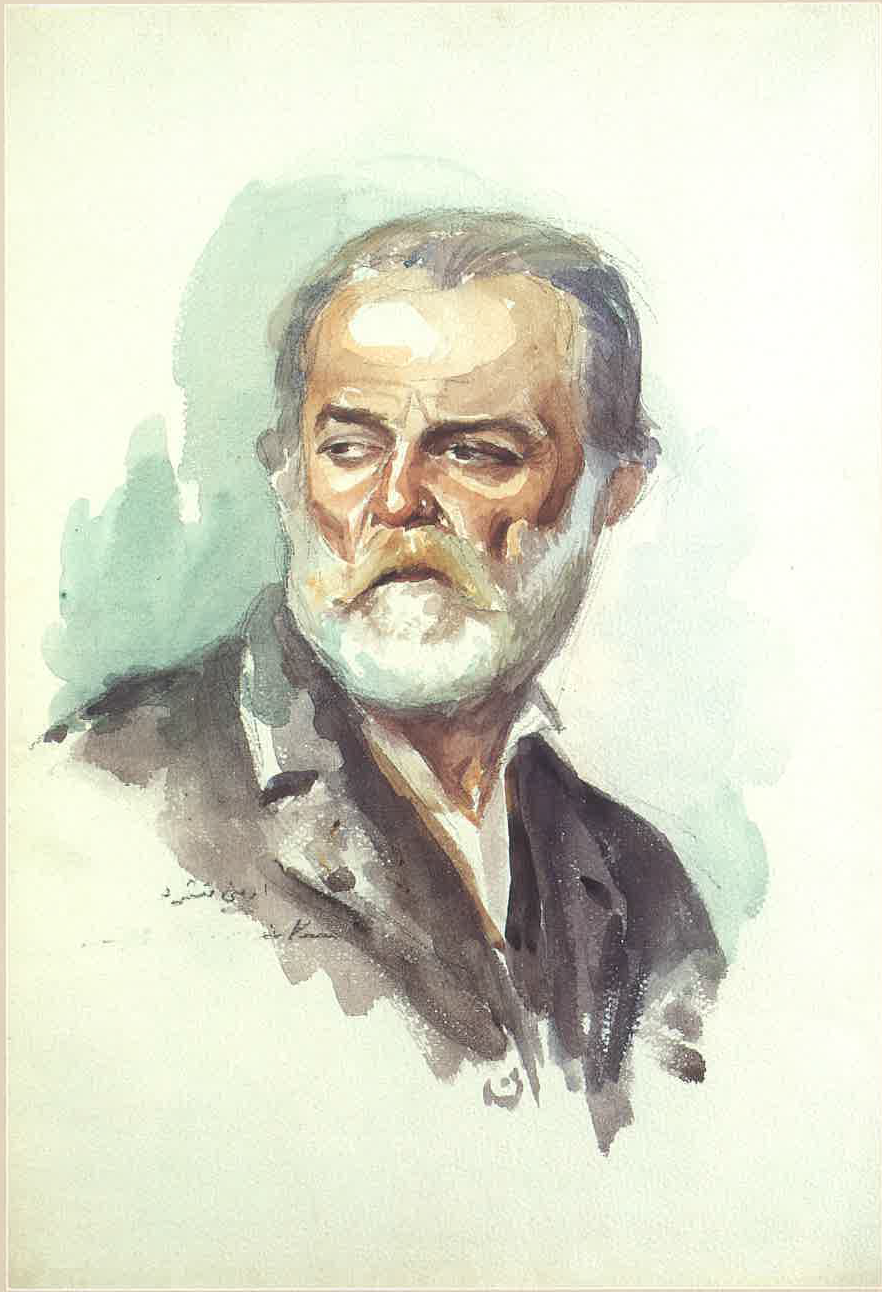
Born in Constantinople in 1878, Tekeyan came of age in an Armenian literary world that would be shattered during his lifetime. Poet, editor, teacher, and public figure, he belonged to a generation whose intellectual and literary lives cannot be separated from the violence that dispersed Ottoman Armenians across new geographies.
By 1937, Lebanon had become one of the epicenters of Armenian revival in the Middle East. Survivors of the Armenian Genocide had reconstituted community life away from their ancestral towns, rebuilding around churches and secular institutions.
Tekeyan participated directly in this process of revival. In September 1937, he became the first editor of a new Armenian newspaper in Beirut, Zartonk (“Awakening,” still published today). Tekeyan included “To a Lebanese Pine Tree,” written the previous month in Dhour El Choueir, in the paper’s inaugural issue, nestled among news items ranging from the upcoming parliamentary elections in French Mandate Lebanon and domestic politics in Palestine to the Spanish Civil War and Mussolini’s visit to Germany.
For all the Armenian resonances of Tekeyan’s wounded tree, the poem is emphatically Lebanese. Reading it in Lebanon in August 2026, I was struck less by what the pine might stand for than by how closely its contradictions seemed to belong to the country around me.
The poem begins with history lodged in the body. “Your pain unfolds from the past,” Tekeyan tells the tree.
The first wound appears low on the trunk. The lost branch resembles a human limb, its trace “dried and jutting, like a severed arm.” Before long, the instrument of amputation appears explicitly: the saw.
The mutilations accumulate. “Then countless others followed it, one after another.” Yet the tree continues upward. Its higher branches are eventually allowed to sprout and thicken, adorning themselves with “translucent tresses.” Tekeyan lets us glimpse flourishing before making us look again: those branches, too, bear “fresh traces of the saw.”
And then Tekeyan shifts the metaphor. The injured body becomes a genealogy. Its branches are its “grandchildren and great-grandchildren, dead too soon.” The ancestor remains standing as its descendants disappear around it.
Tekeyan then reverses the natural order of generations: The ancestor becomes the grave of its descendants, “whose open grave you have become beneath the skies.”
Everything in the sonnet seems to carry us toward grief.
Until it doesn’t.
“But you do not at all inspire,” Tekeyan writes, “any thought of mourning.”
And he tells us why: “You ever bring forth new life.”
In writing and conversation about Lebanon, the word “resilience” is tossed around liberally. But endlessly celebrating people’s resilience can normalize what they are repeatedly forced to endure.
No less common in Western media is the portrayal of Lebanon as hedonistic: its nightlife and crowded beach clubs, where the party continues amid economic collapse and political crisis. For decades, such coverage has treated the revival of Beirut’s bars and clubs as evidence that the country is “back.”
It is a seductive shorthand. But like the celebration of resilience, this framing romanticizes precarity and escapism while obscuring the scars of war and the uneven costs of crisis.
Tekeyan’s pine offers us something more compelling. Farroukh’s pines, in turn, offer a key to reading the poem.
Farroukh’s trees stand together.
Seen in this light, what is often flattened into hedonism may instead be understood as one manifestation of solidarity: an insistence on gathering with friends and family against the odds, even while bearing the traces of violence.
My grandparents were child survivors of the Armenian Genocide who found refuge in Lebanon, where my parents and I were born. I grew up during the Lebanese Civil War and came of age in its aftermath. When I first translated Tekeyan’s poem in 2003 and encountered Farroukh’s painting in the exhibition catalog that same year, I was still living there. Three years later came another war. Soon thereafter, I moved to the United States.
But it was only in Dhour El Choueir, in August 2026, that the poem and the painting came together for me, revealing something about Lebanon beyond the familiar scripts.
The wounds remain. The tree sways.
Acknowledgment: The author would like to thank Rowina Bou Harb, Head of Archives at the Sursock Museum, for her assistance.