The Scent of Ancient Rome in St. Louis
An exhibition makes a case for the sensuality of these marble sculptures, recreating the perfumes and balms that once adorned them.

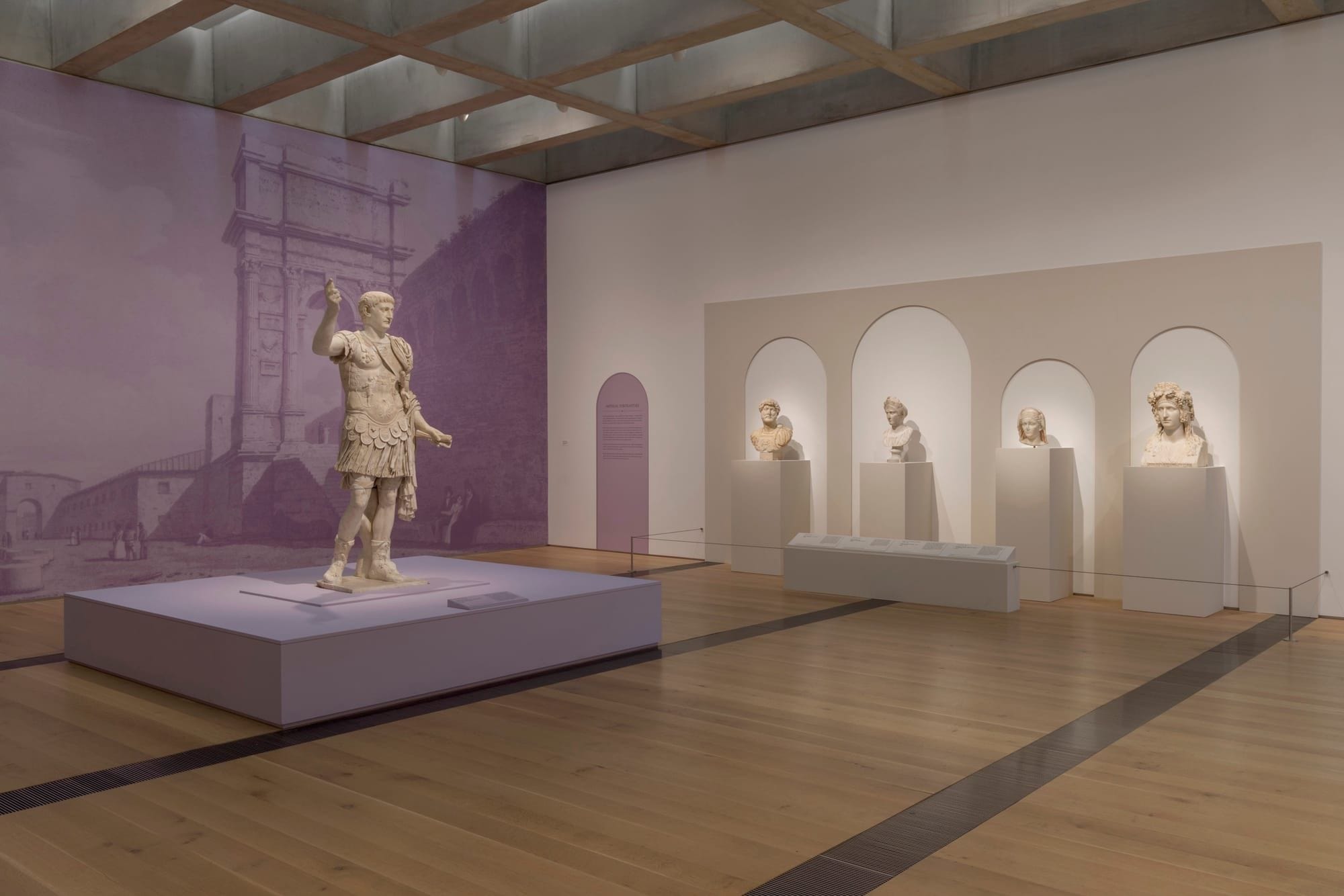
ST. LOUIS — A lilac arcade of undulating arches, a box redolent of honey and rose petals, a slender-necked vessel of iridescent glass. Flouting the masculine connotations of the Roman Empire, Ancient Splendor: Roman Art in the Time of Trajan, at the Saint Louis Art Museum, honors the era’s sensuality of a kind that resonates today as felicitously feminine. Organized by Lucrezia Ungaro, archaeological curator of the city of Rome, with curator Hannah Segrave leading on-site production, this playful exhibition resists the overwrought gravitas typical of displays of ancient Roman art, inviting us to envision a period beyond battle and expansionism and instead marked by an efflorescence of art, architecture, and culture.
Trajan ruled from 98 to 117 CE as the second of the “Five Good Emperors,” so designated for their ability to foster growth, stability, and innovation. Greeting us at the entrance of Ancient Splendor, a marble statue of Trajan in military costume appears less imperious than engaged, his gaze straight ahead, his contrapposto capturing him as a leader moving Rome forward. A champion of arches as a structural motif, Trajan boasts a pteryges, or skirt, of scalloped layers that echoes their rounded shape. His paludamentum, or cloak, ripples around his shoulder and forearm, softening his resolute stance and gaze.
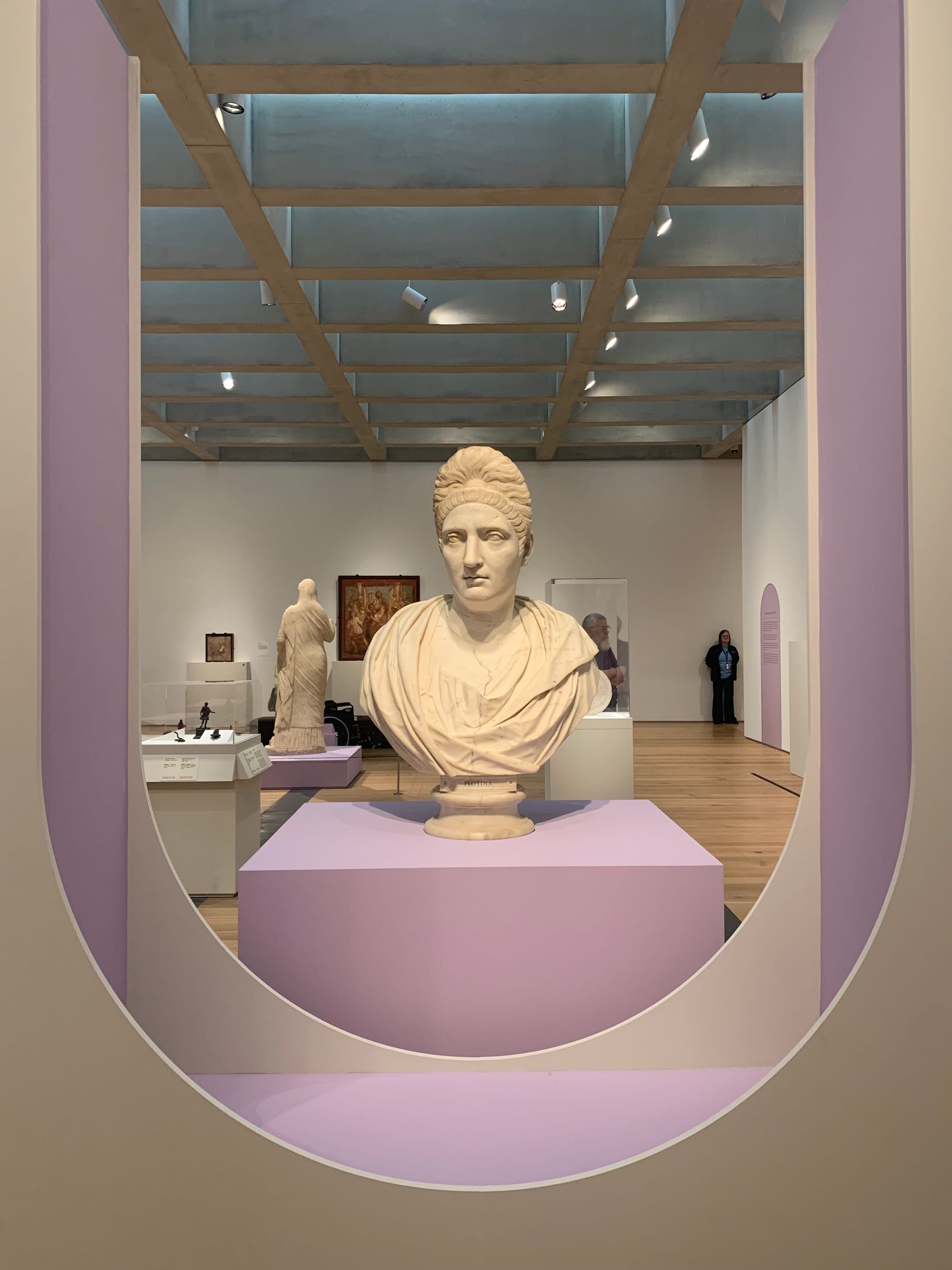
Accented with splashes of purple and pink — the former alluding to the Tyrian dye that only the emperor could wear — the exhibition foregrounds the unprecedented influence that women held during Trajan’s reign. The enormous bust of Plotina, his wife, is the same size and height as his own, similarly lit to suggest a partnership of equals. “If Trajan saw himself as the new Caesar,” Segrave explained during a private exhibition walkthrough in June, “his sister Marciana was his right-hand advisor, and his wife Plotina was pushing for critical legislation — fairer taxation, access to education, and assistance for the impoverished and orphans.”
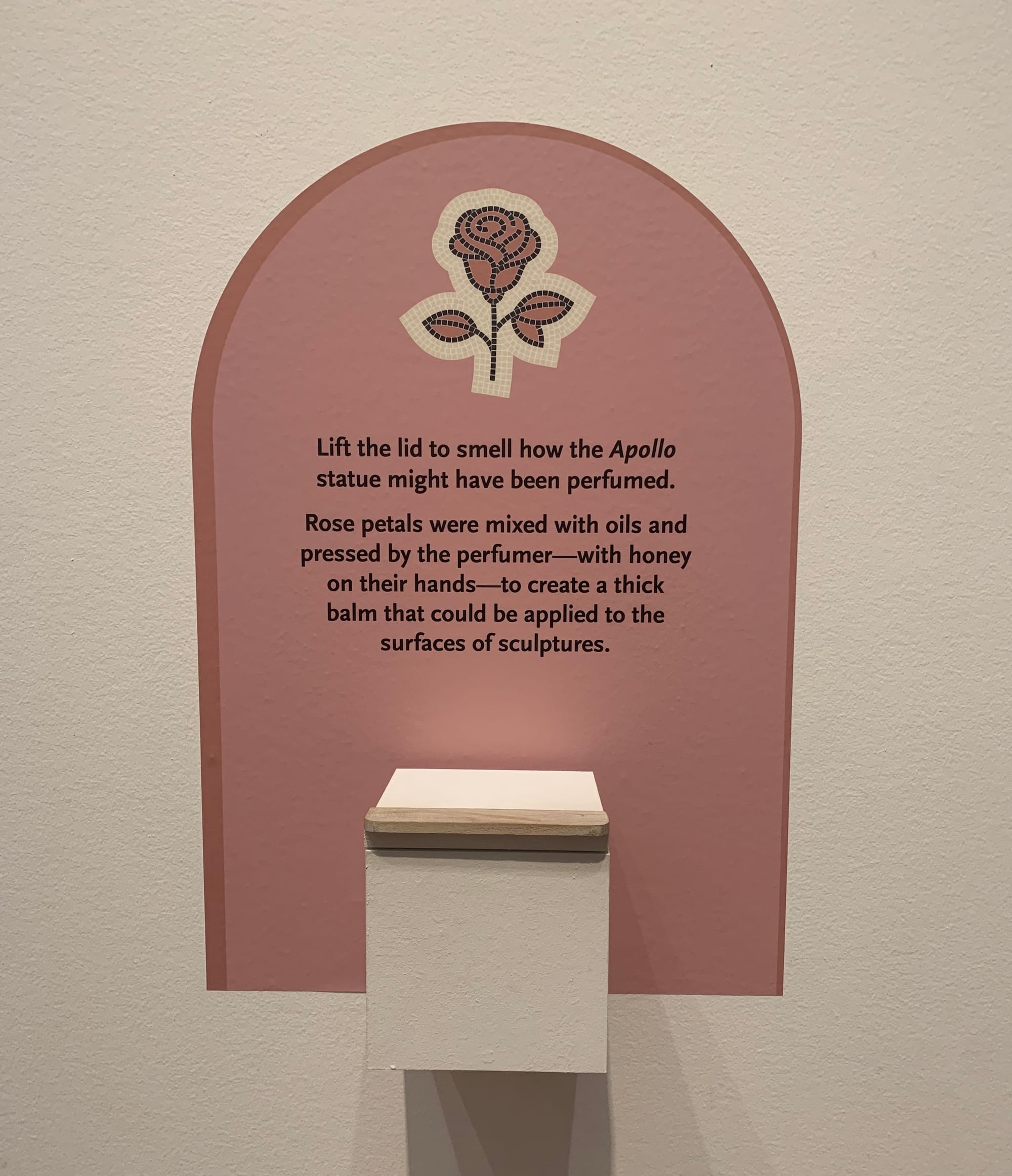
In the opposite gallery, a nude statue of Apollo, god of the sun and archery, leans upon the trunk of a small tree, his free hand curled over his wavy hair gathered in a tiara-like knot. A scent box on the wall smells like the perfumed oil rubbed onto the surfaces of sculptures when they were exhibited in Roman homes. Across the hall, another scent box smells of garum, a fermented fish sauce common in ancient Roman cooking. Designed by Alexy Karenowska, director of technology at the Institute for Digital Archaeology, these olfactory stations bring visitors into the highly multi-sensory affair that characterized daily life in the empire.
Toward the end of the exhibition, a section titled Women’s Spaces and Faces speaks to the ideals of beauty, taste, and decorum to which women were taught to aspire — as represented by a series of busts of aristocratic ladies; a vitrine of delicate gold, glass, and emerald jewelry; and a fresco depicting the judgment of Paris. While the ancient bling no doubt dazzles, the show directly invites visitors to consider the invisible labor, often performed by enslaved people, behind the beauty “industry” of the time.
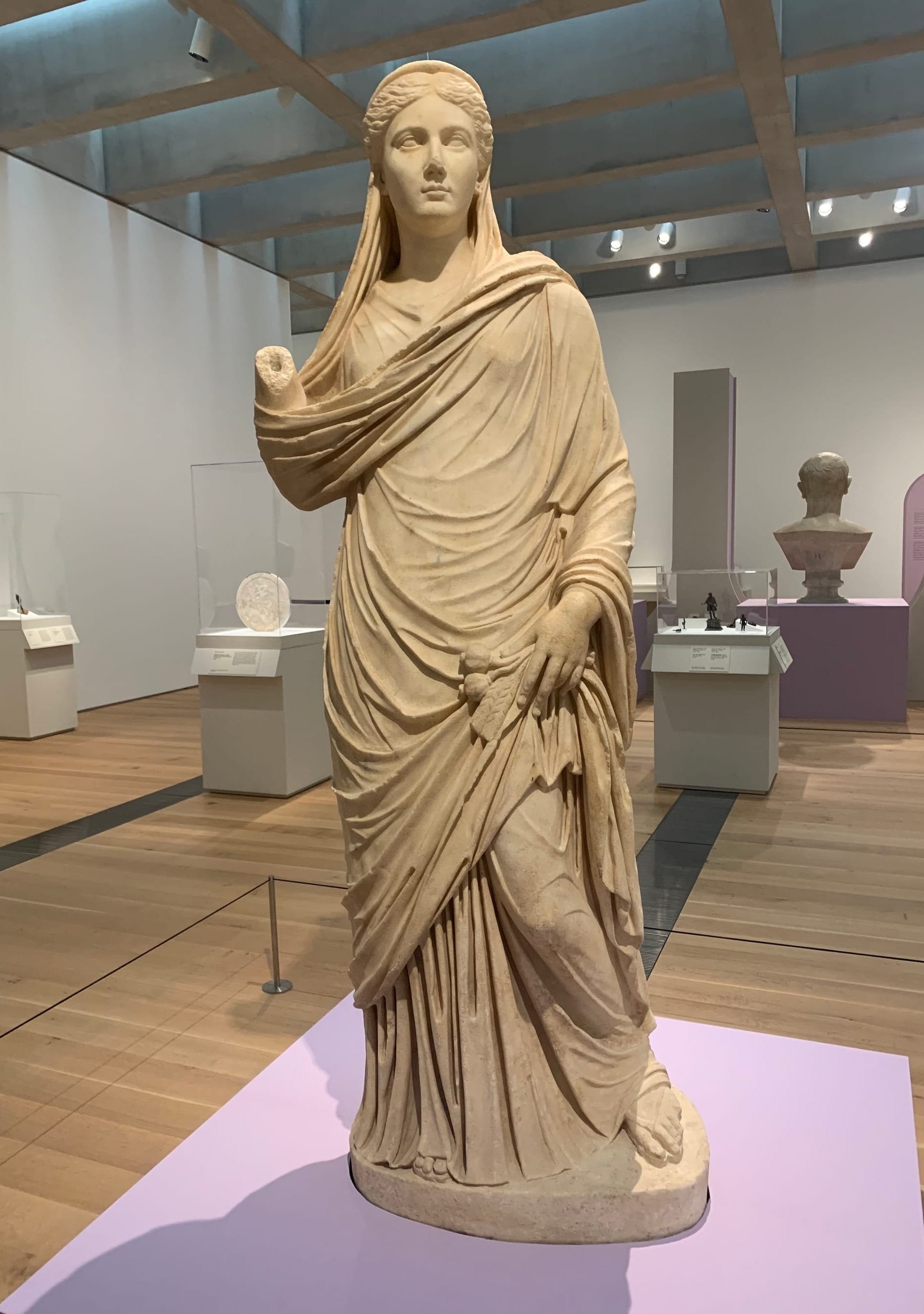
Meanwhile, in the section Religion and Myth, a statue portrays Trajan’s grandniece Sabina in the guise of agriculture and fertility goddess Ceres, reflecting how women in the imperial family often assumed the roles of priestess in public religious rituals. Almost entirely intact, though almost 2,000 years old, Sabina exudes the calm mien of classical antiquity, her palm clasping blooms and a few shoots of wheat to honor the deity.
Visitors interested in examining a badass battle helmet or a glowering statue of Caligula, a notoriously “bad emperor” a half-century before Trajan, will not be disappointed. But neither will those hungry for a more sumptuous immersion in an era in which women were not only duly adorned but often played an active role in civic life. With works on loan from collections of the Vatican, Ostia Antica, the National Roman Museum, and the Naples National Archaeological Museum — many of which have previously never left Italy — Ancient Splendor reminds us that, just as Rome wasn’t built in a day, nor were the virtues of civilization bequeathed to us by a bunch of bros in togas.
Ancient Splendor: Roman Art in the Time of Trajan continues at the Saint Louis Art Museum (1 Fine Arts Drive, St. Louis, Missouri) through August 16. The exhibition was organized by Lucrezia Ungaro, archaeological curator of the city of Rome.