The Smithsonian Is Not the President's Museum
The Trump administration’s latest order marks an unprecedented effort to subordinate one of America's foremost public institutions to partisan power.

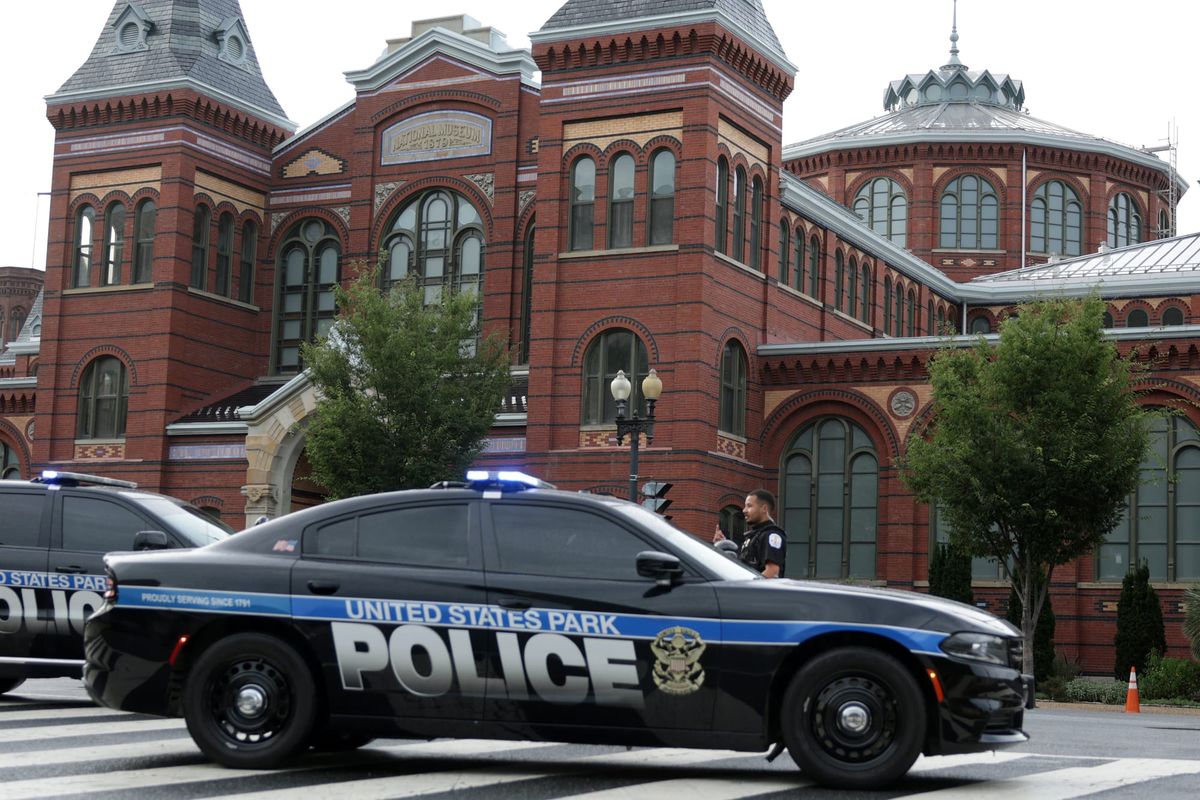
In 1846, the Smithsonian Institution was established, in the words of its benefactor and namesake, British scientist James Smithson, “for the increase & diffusion of Knowledge among men.” Today, the 21 museums centered in Washington, DC, and more than 200 affiliates throughout the United States, have indeed increased and diffused knowledge in the maintenance of an astounding 157 million objects. Along with the preservation and distribution of knowledge — never a neutral term — these museums have been the site of discourse and debate, conversation and controversy, as any indispensable cultural institution should be. Over their long history, museums have “evolved to become institutions in which objects and learning are associated to help human beings understand the world around them,” writes John E. Simmons in Museums: A History (2022). Even while such institutions have always bolstered official narratives and aggrandized governments, in an ostensibly democratic country, the Smithsonian has embodied Simmons’s observation with its legacy of being administered in a spirit of expertise rather than just by politics.
During its nearly two-century history, the Smithsonian has had its share of controversies, especially during the recent battle of attrition that is the Culture Wars. Right-wing critics accused the 1991 exhibition The West as America, Reinterpreting Images of the Frontier, 1820-1920 at the Smithsonian American Art Museum of being anti-American. A 1995 exhibition at the National Air and Space Museum about the bombing of Hiroshima and Nagasaki, which included the actual Enola Gay B-29 bomber that dropped the atomic bomb, drew criticism from veterans’ groups. Hide/Seek: Difference and Desire in American Portraiture, a 2010 exhibition of LGBTQ+ artists at the National Portrait Gallery, was denounced by conservatives as being “anti-Christian” because of a video art piece that featured 10 seconds of ants crawling on a crucifix. In all of these instances, the predictable occurred: Republican politicians fulminated and threatened to cancel federal funding, reactionary pundits bloviated and encouraged protest, and public debates (sometimes healthy and sometimes not) were waged around what the function of a museum should be. To varying degrees, such responses, and the responses to those responses, are expected markers of the discourse that defines democracy — though all of those exhibitions admirably served the institution’s original purpose outlined by Smithson.
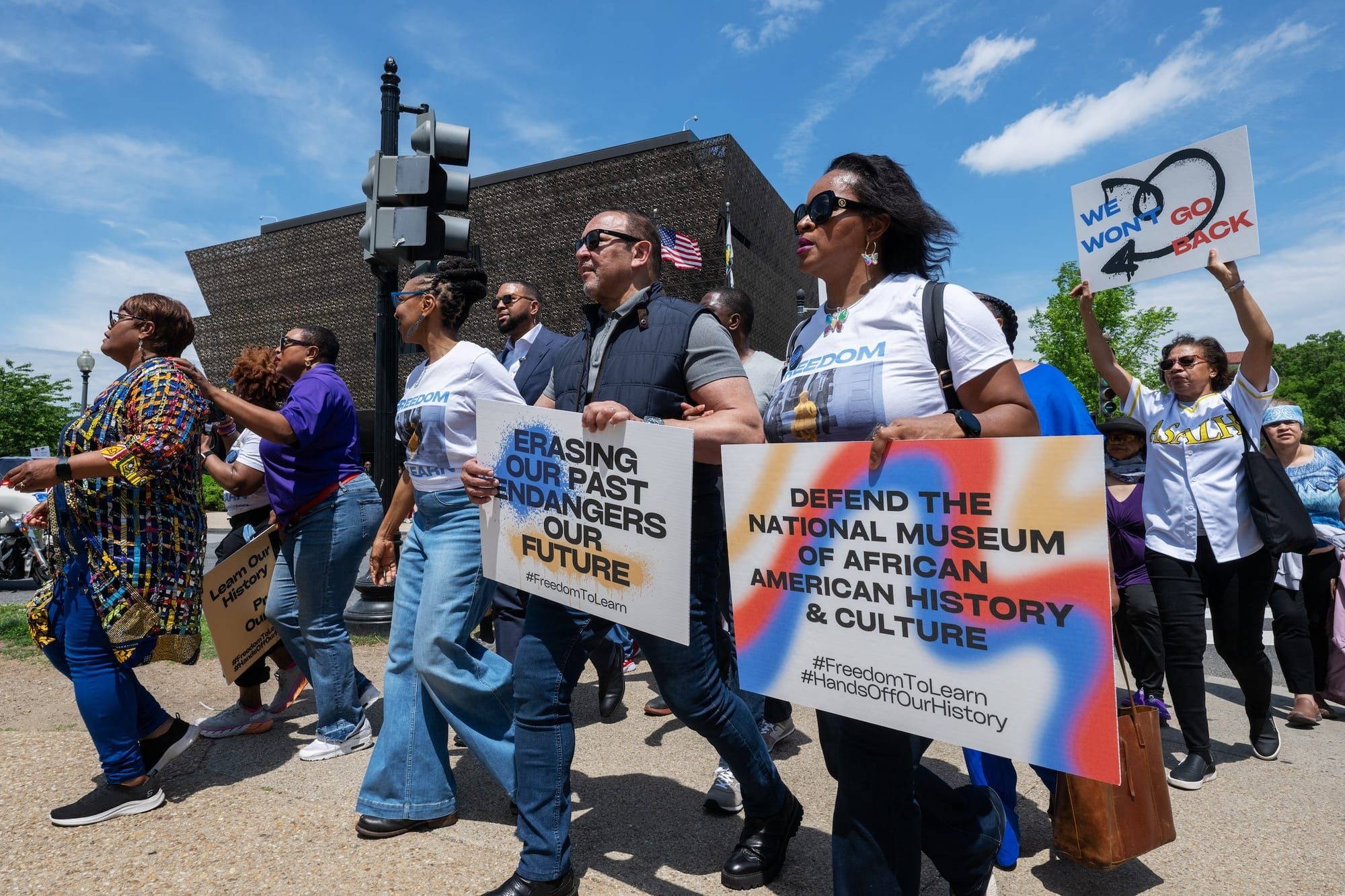
Last Friday, however, the Culture Wars escalated in an ominous fashion when the Trump administration issued an executive order with the loaded title “Restoring Trust in the Smithsonian Institution.” The Secretary of the Interior, the Director of the Office of Management and Budget, the Administrator of General Services, and the Assistant to the President for Domestic Policy, it decreed, are now charged with installing “temporary signage along the [National Park Service]-maintained sidewalks and walkways used by the public to access the [National Museum of American History],” informing visitors of what the Executive Order terms “Ideological Capture.”