The Sun Is Shining on Saif Azzuz
Across galleries, museums, and outdoor sculpture, he connects Indigenous land practices in California, the Hudson Valley, and beyond.
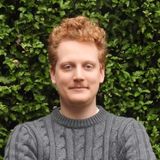
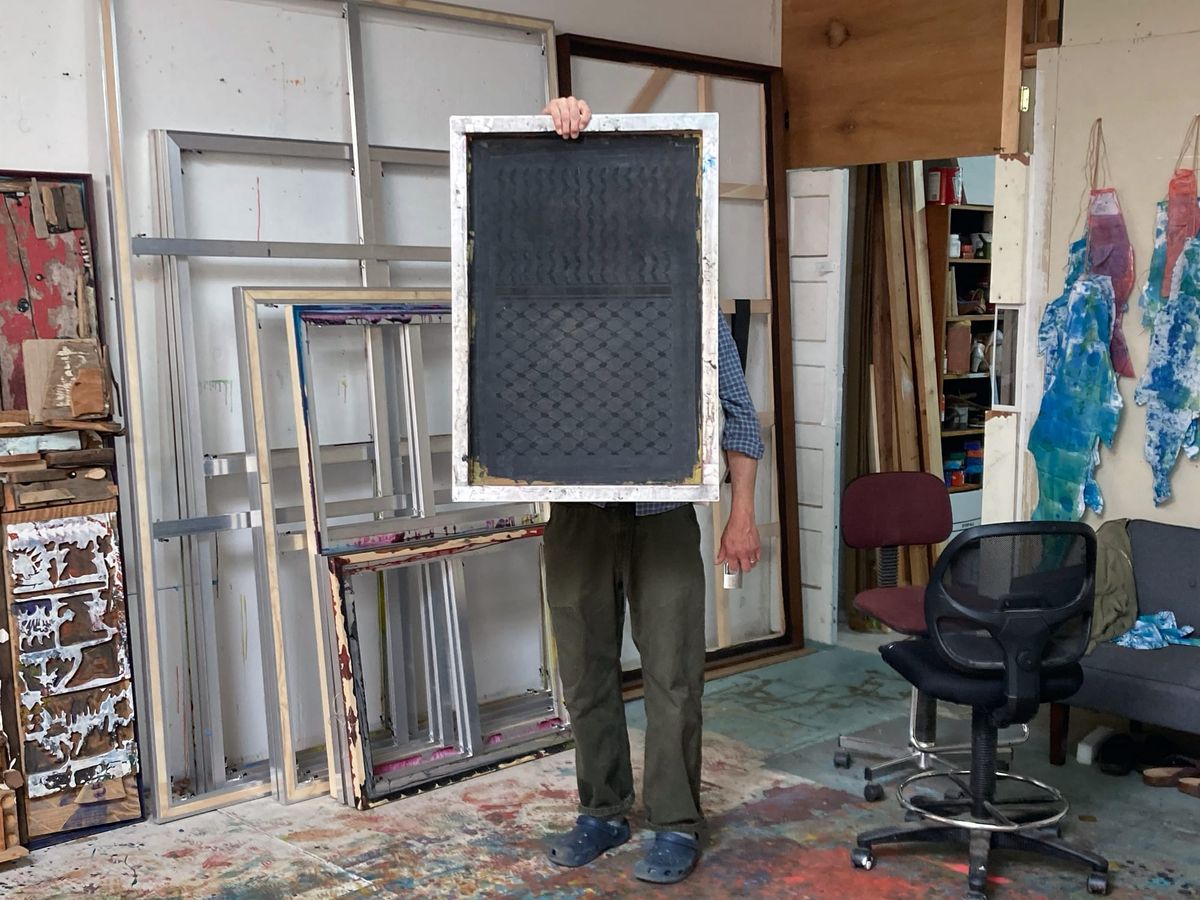
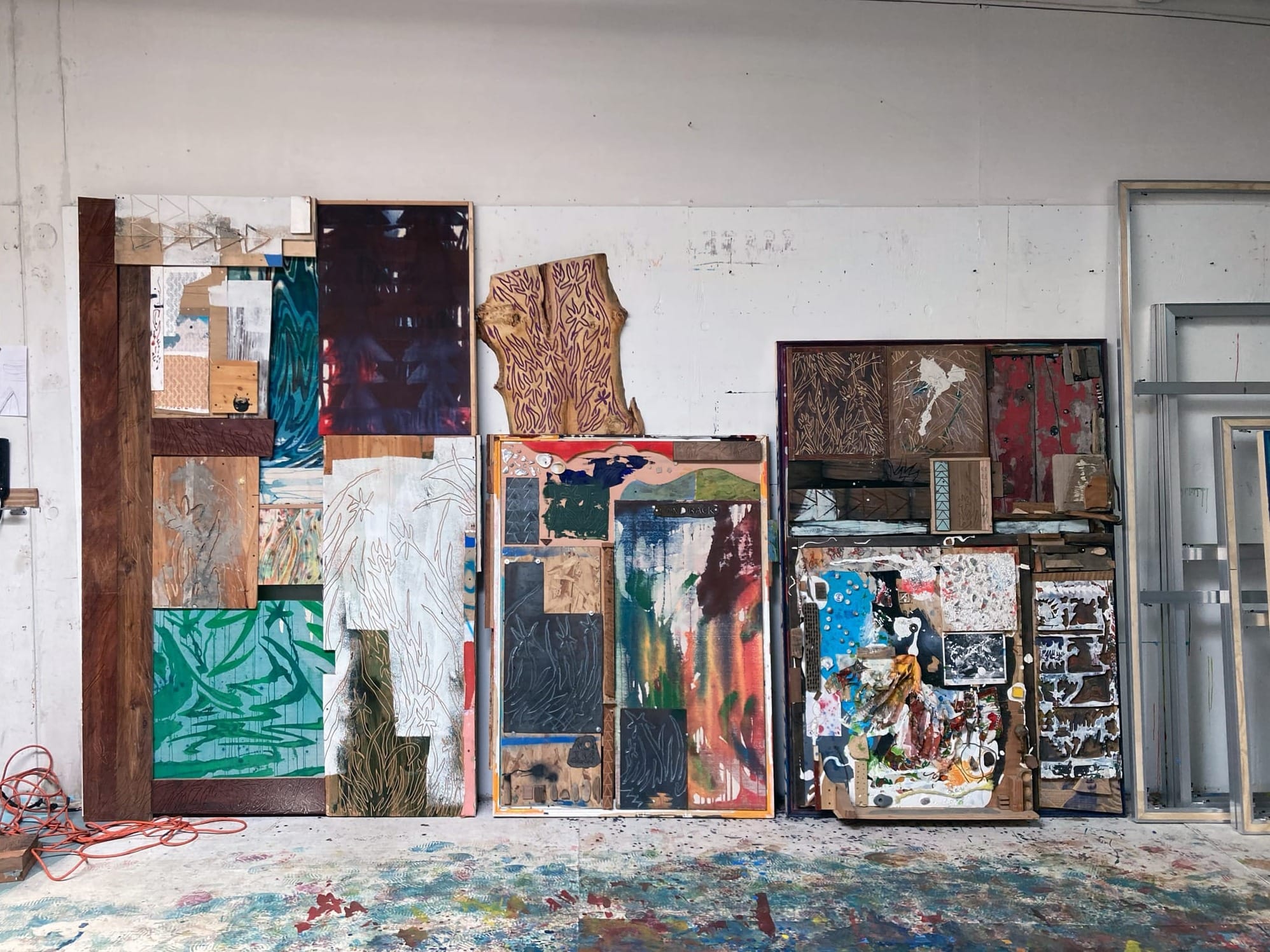
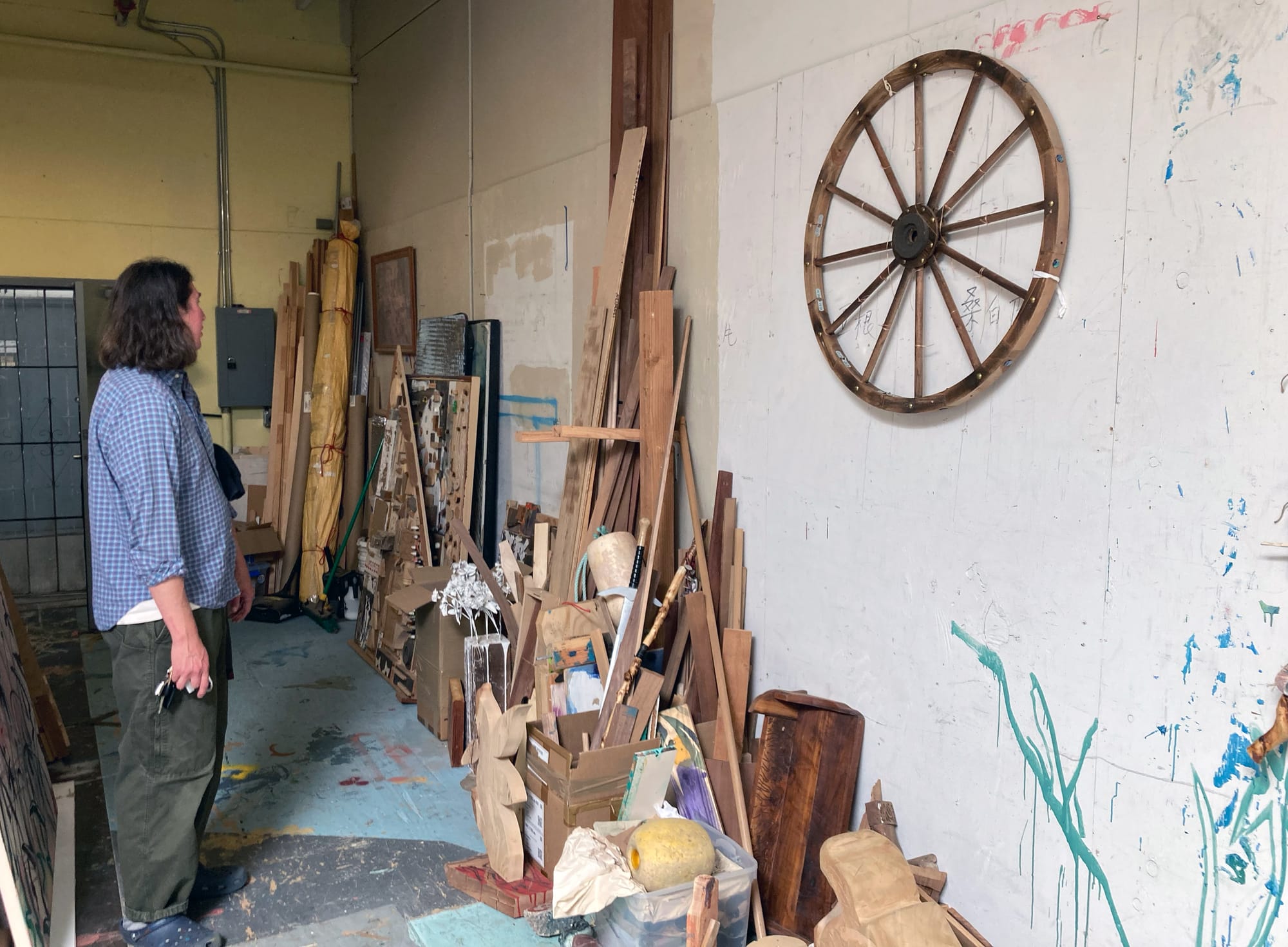
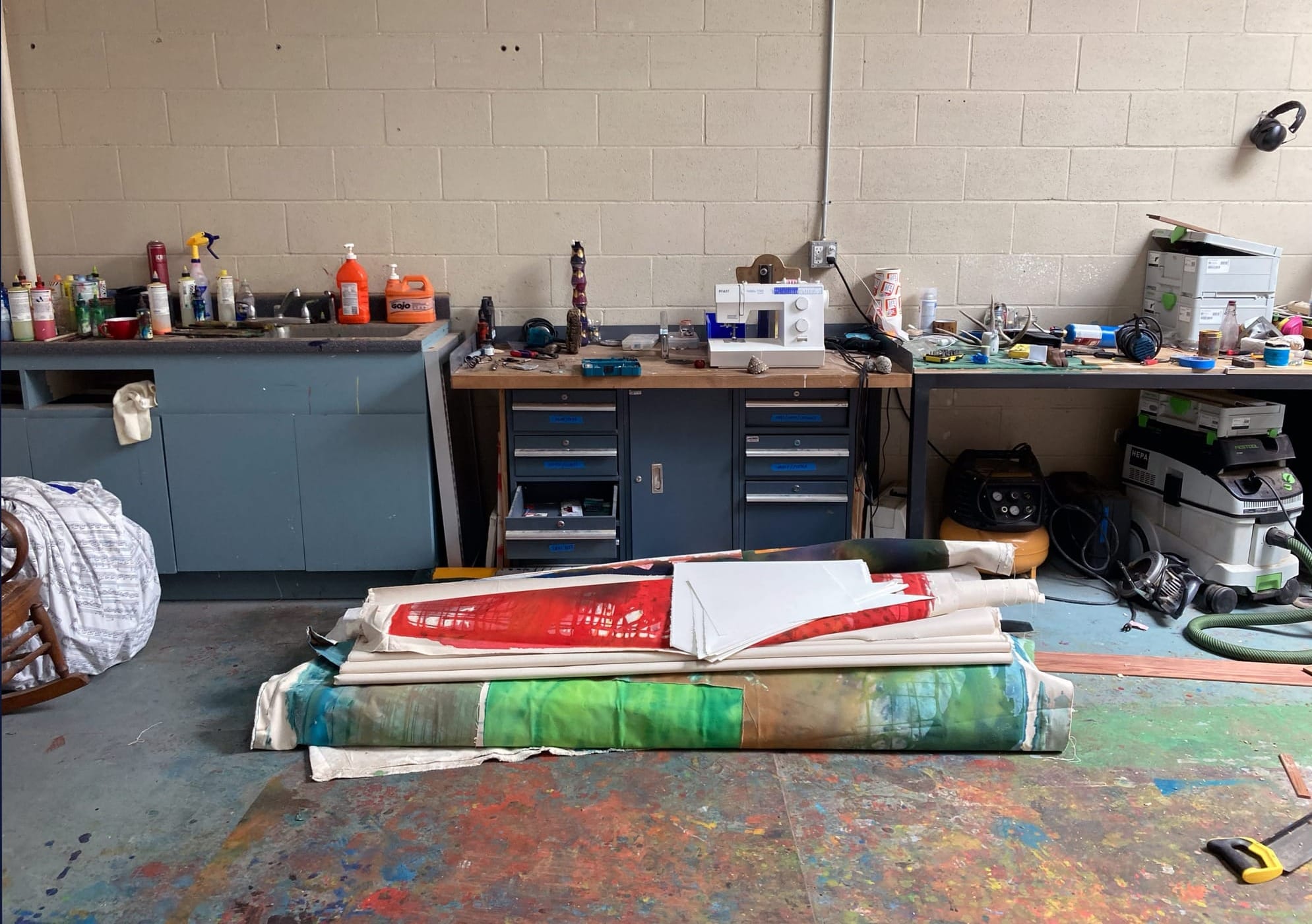
SAN FRANCISCO — “I’ve been in the studio maybe two days in the last month,” Saif Azzuz told me when I arrived at his airy, industrial studio space in San Francisco’s Hunter’s Point neighborhood.
His absence can be blamed on recent success. Lately, the Bay Area-based artist has been exhibiting around the world, from his first solo museum show at the Blaffer Art Museum at the University of Houston last year to his first solo gallery show in West Asia earlier this year. He’s showing no signs of slowing down.
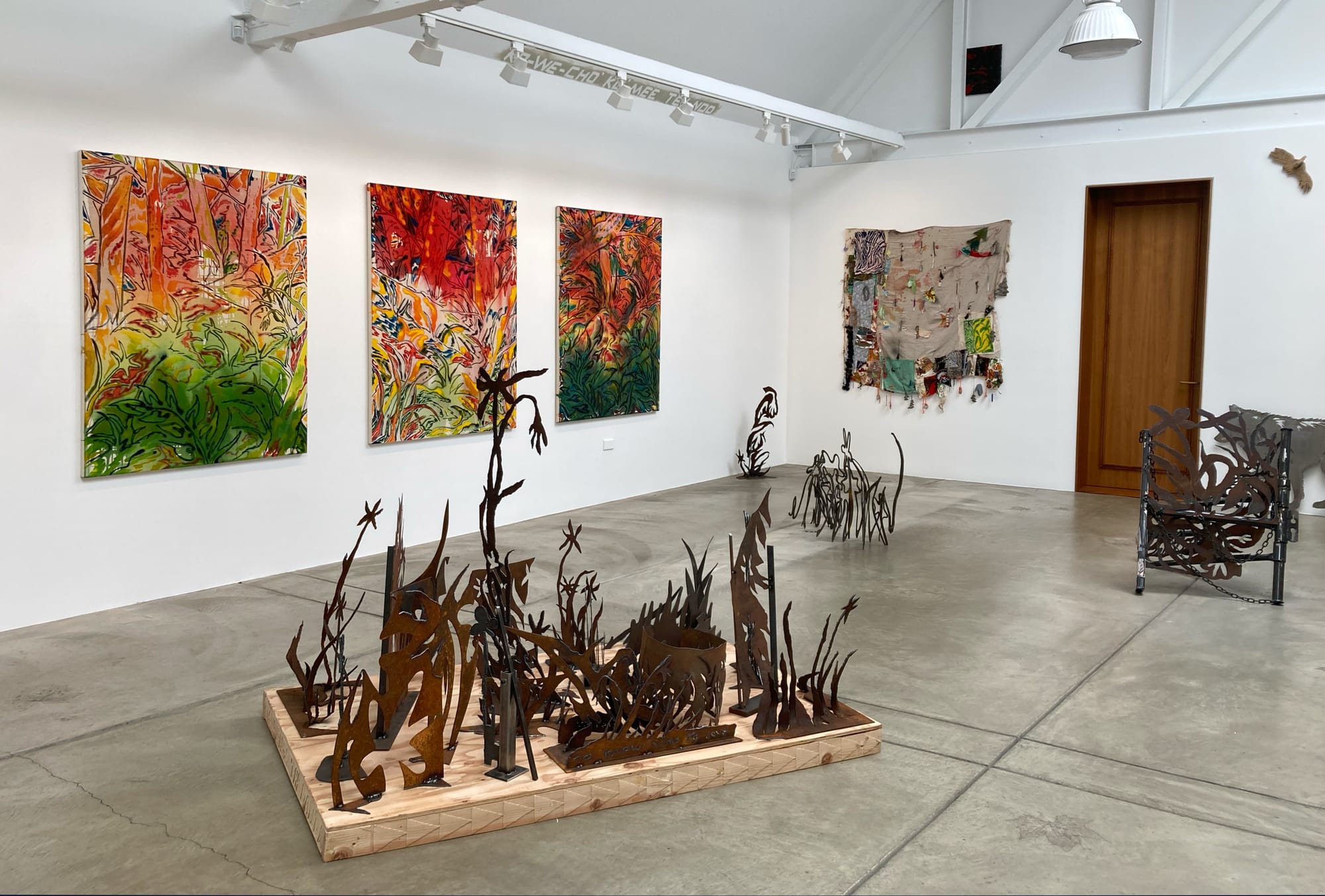
Azzuz’s second solo exhibition at Anthony Meier Fine Arts in Mill Valley, California, on view through June 26, boasts a batch of brand-new work and coincides with the release of his first monograph, published by Sming Sming Books. He also has an installation combining a painting with a sculpture of a cattle gate on view in a show about Indigenous fire work at the Oakland Museum of California, which the museum recently acquired, as well as a temporary outdoor sculpture commission recently unveiled at Storm King Art Center in Mountainville, New York.
The speed of Azzuz’s recent professional life contrasts with the slowness of his process, which cultivates introspection and examines ancestral knowledge. Of Libyan descent and a registered member of the California Yurok Tribe, Azzuz highlights Indigenous traditions of land stewardship in communities across the world through paintings and sculptures. When making work about Northern California, where he was born and raised, he often incorporates foraged plant matter and reference photos taken by his mother Elizabeth, director of traditional fire at Cultural Fire, a group that carries on the Indigenous tradition of performing controlled burns to help preserve regional ecology. Elizabeth’s work documenting Indigenous fire practices also features prominently in the show at the Oakland Museum.
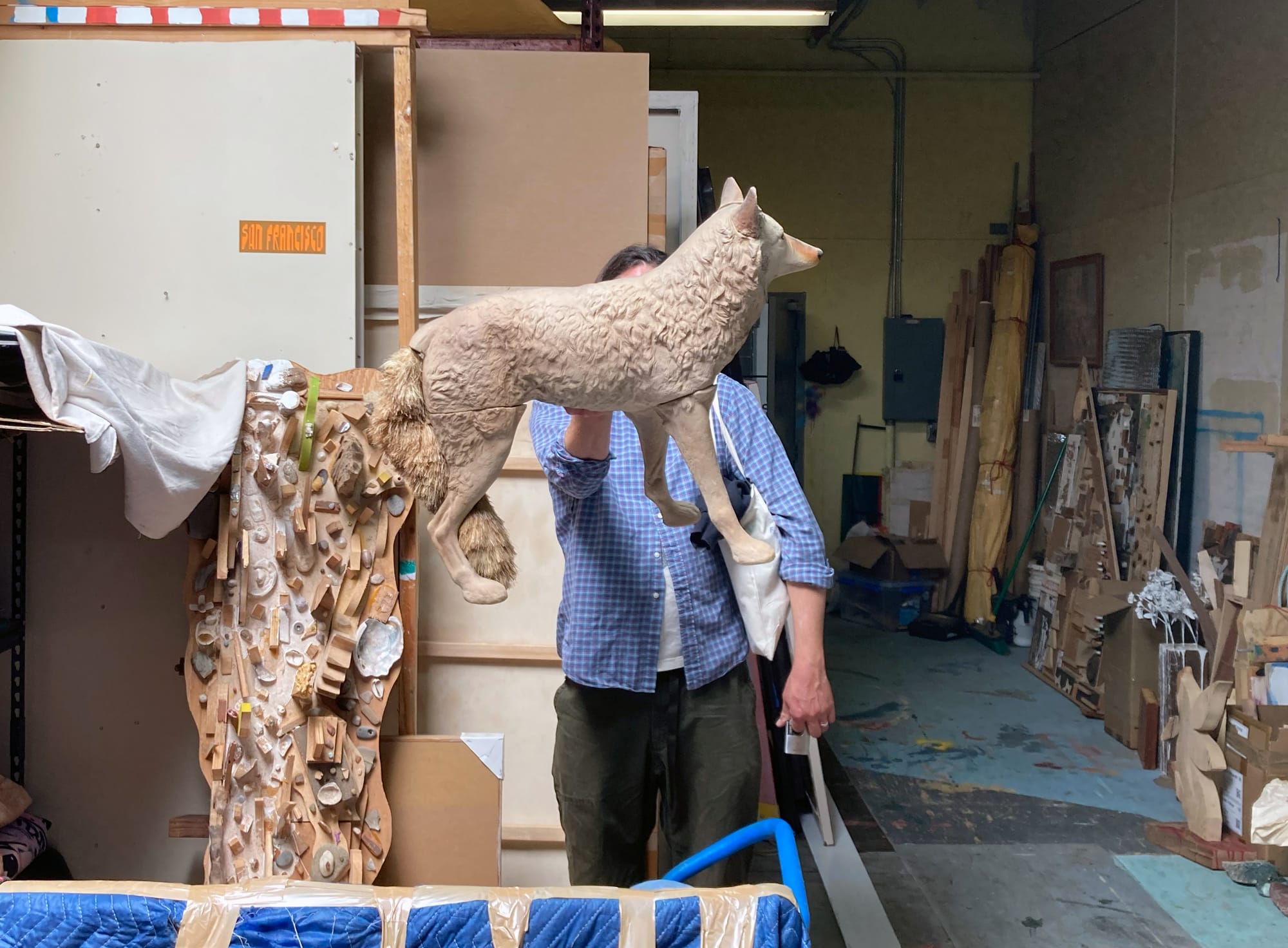
When he travels elsewhere, Azzuz shifts his perspective to engage with local histories and landscapes.
“I’m not specifically thinking of myself as a regional artist,” he said. “With any artist, where you’re making your work is going to impact the way you’re perceiving it. We’re all having unique responses to our direct ecosystem. When I’m making work here, I’m thinking about specific native ecologies in this area and where my family is, but when the work travels I’m thinking about the histories of that area. The throughline of all of those is ecologies and what’s been done to the land. The global history of where we’re at with climate change is outside of one region — it spans everywhere.”
The work in Azzuz’s recent solo exhibition Invisible Fish, at Lawrie Shabibi in Dubai, was inspired by local ecology and traditional fishing practices indigenous to the Arabian Peninsula, predating the capitalist metropolis that has come to define the area. Those histories hit home for Azzuz, whose Yurok family in Northern California has a history with fish as “first foods,” or traditional, culturally significant food sources.
“On my Libyan side, I grew up with my aunts talking about plants they would gather and cook with and their medicinal value, which is very similar to Yurok traditions,” Azzuz said. “Those specific regional knowledges expand everywhere. They exist in the United States but are very much erased to fit in with White supremacy.”
While that erasure is more prevalent in some communities than others who have managed to preserve their traditions, imperialism and extractive capitalism have global impacts. That also means that the conversation about solutions is something everyone has a say in.
“We’re all dealing with how ecologies have changed,” Azzuz said, “how that’s affecting the climate and how extractive capitalism is furthering all of these things. Water is something we all need. Within global Indigenous communities there’s attunement and knowledge to the land which I feel like you can highlight anywhere.”
The installation at Storm King also touches on shared traditions around water and fishing, in this case between Indigenous American tribes.
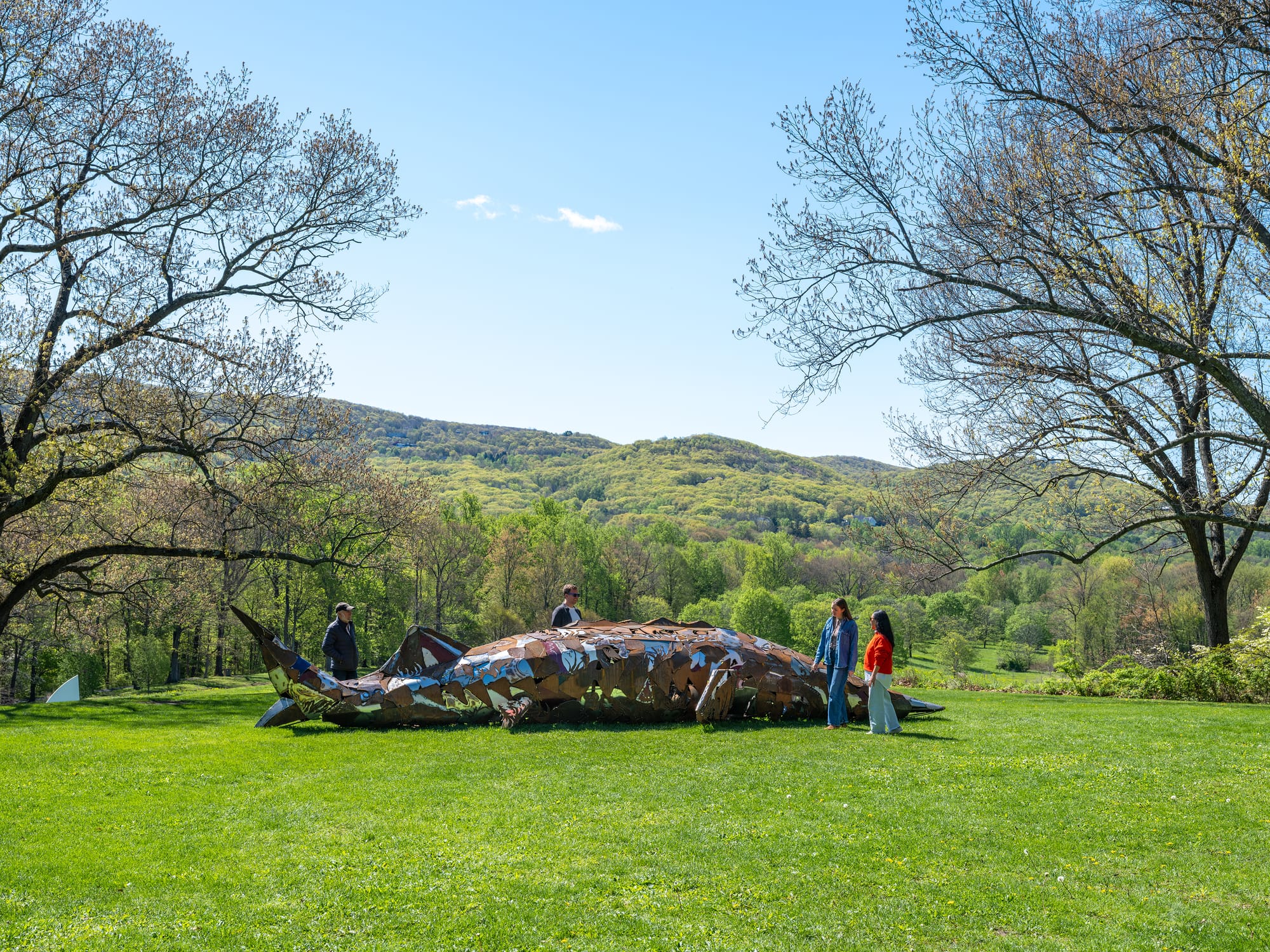
The nearly 25-foot-long assemblage, installed as part of the center’s Outlooks series of large-scale, outdoor sculptures, is made from salvaged car parts from the Hudson Valley and natural materials from the Bay Area. Material choice isn’t the only way the work bridges the distance between both regions — the sturgeon itself is significant to the Indigenous people of both Northern California and the Hudson Valley. The ancient and endangered species inhabits both the Hudson and the Klamath Rivers, the latter running through the Yurok reservation in Northern California where Azzuz’s mother lives.
“Sturgeon are as old as dinosaurs,” Azzuz said. “They’ve seen all our iterations and how we got to be where we are. They’re also an endangered species and exist today because of people advocating for the land and water.”
The sturgeon’s resilience is reflected in the steel body of his sculpture, which also features etchings of native plants, Yurok motifs, and text made in collaboration with Azzuz’s family, friends, and Storm King staff members. The piece will ultimately be recycled or scrapped, embodying the very natural cycles the work addresses.
Programming is another way Azzuz uses his art to educate the public about ecology, share the histories and practices of Indigenous groups, and open up broader dialogues. The installation at Storm King will set the stage for a public talk about conservation efforts and traditions on the Klamath and Hudson Rivers.
“Working outdoors, I’m thinking about the mountains and the trees as opposed to battling the white-walled space,” Azzuz said. “There’s a different connection to community when the work is out in space versus the very specific socio-economic class that goes to view a show in a gallery.”
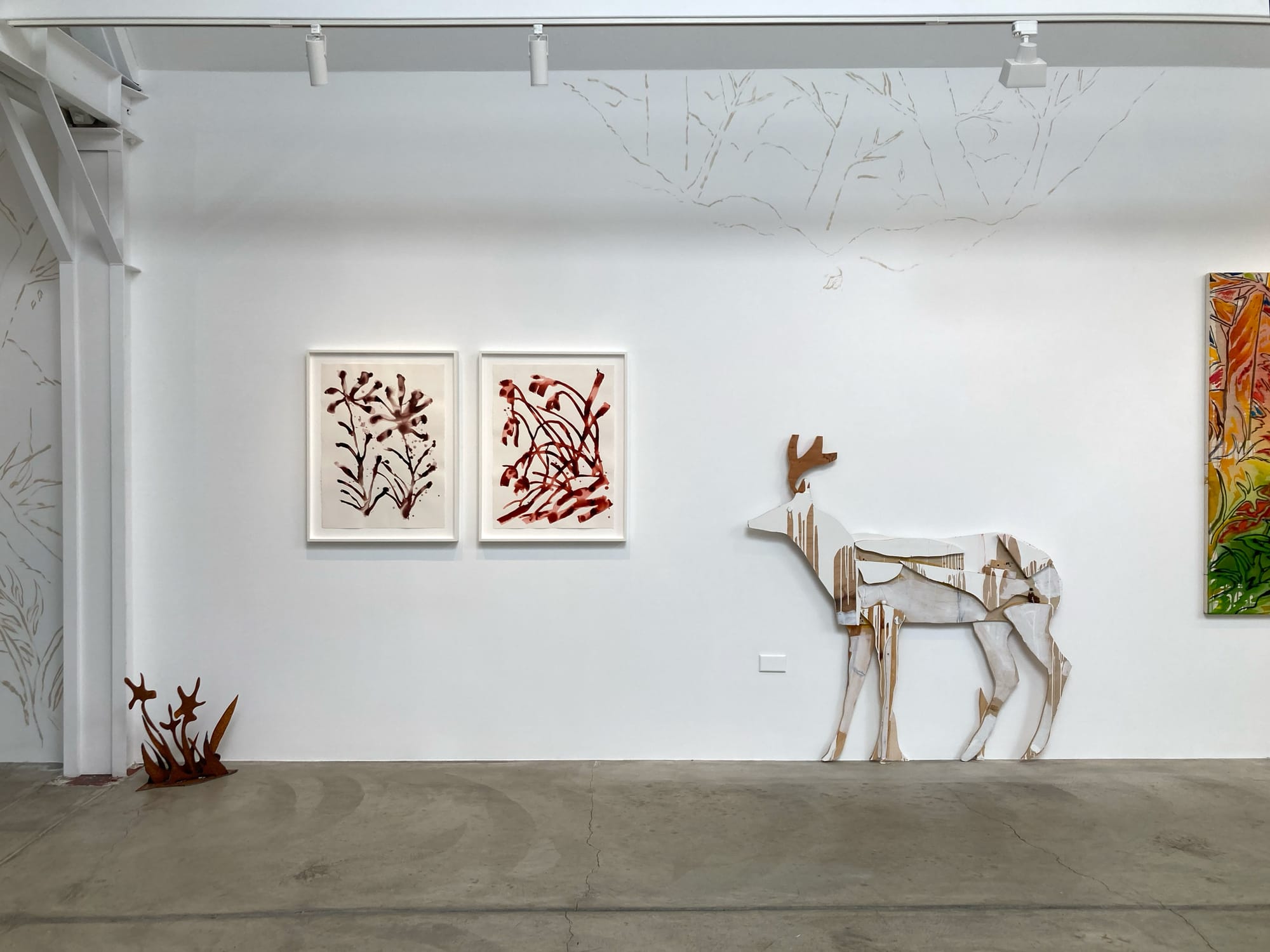
His current solo show at Anthony Meier, Aiy-ye-kwee’, navigates the traditional gallery space in unconventional ways as well. The sculptures and paintings on view are complemented by wall murals — a forest scene, an Apache helicopter, the word “stop” in Arabic script. A small, wooden carving reading “chinga la migre” (fuck ICE) rests on the floor beside a bench. Artworks and found objects are unexpectedly tucked into the rafters.
Azzuz’s spirit of collaboration once again extends beyond research. The show includes sculptures by his wife Lulu Thrower, beadwork by extended family members and facsimile leaves by fellow Bay Area artists Libby Black and Sean McFarland, demonstrating an attitude toward community and interconnectedness that reflects his ecological concerns.
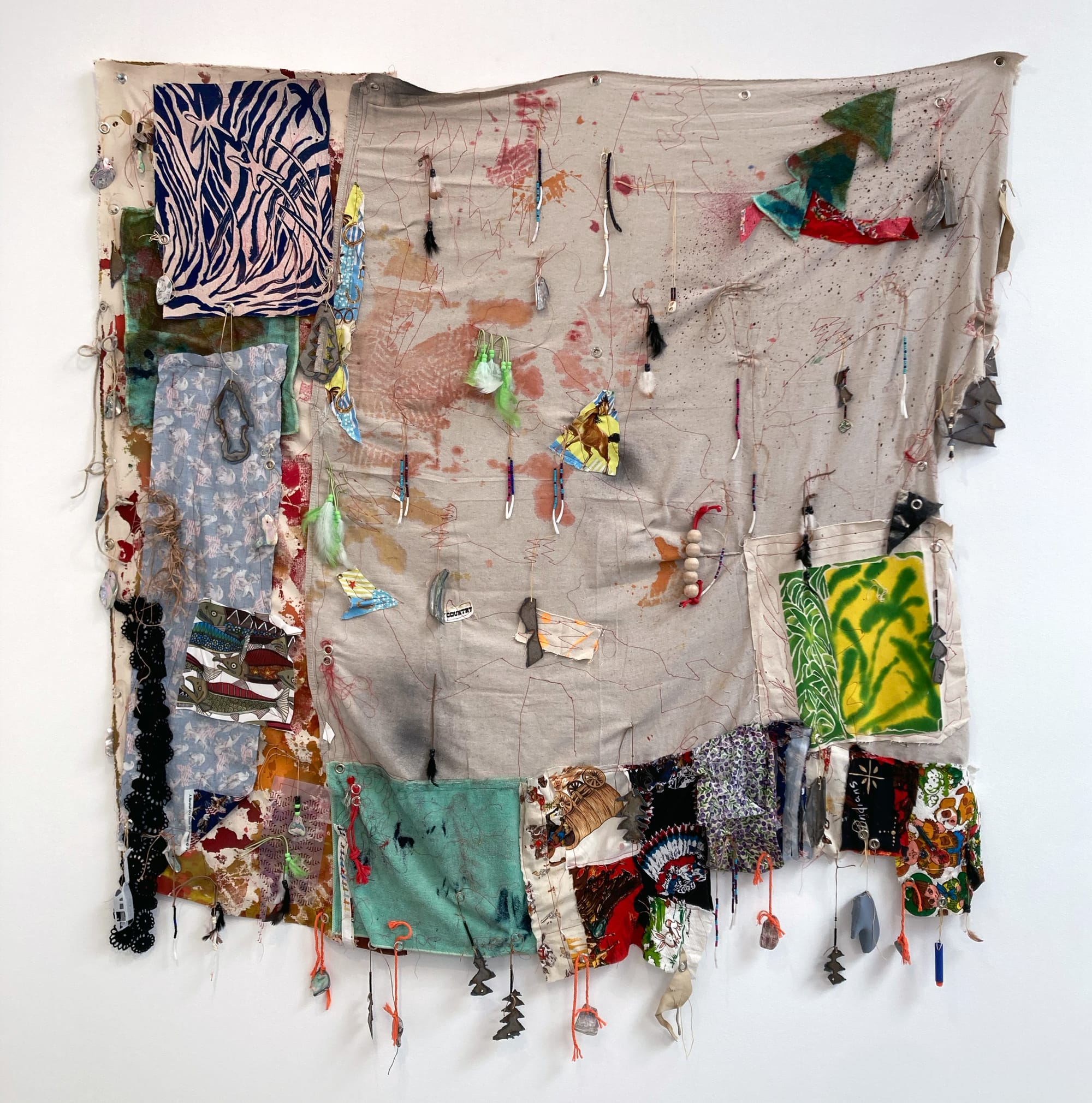
In a similar spirit, Azzuz’s most recent work also aims for a limited ecological footprint. Alongside his new paintings, a large, wall-mounted assemblage in Aiy-ye-kwee’ points in a new direction of sustainable art-making. Pieces of dollar-store dream catchers are sewn into a ragged quilt of fabric patterns, including a few sporting pulpy, Wild West illustrations of cowboy and Indian characters. While the piece itself encourages re-use, it also speaks to the way racism and cultural illiteracy have become part of the fabric of ecological disaster. In both context and practice, Aiy-ye-kwee’ exemplifies Azzuz’s aim to raise awareness about ecology, land stewardship, and the dangers of climate change, while addressing the systems of colonialism and white supremacy that have global, damaging impacts.
“I’m using ecology as a gateway to addressing more political themes,” Azzuz said. “I’m aiming for people to have empathy for ecologies, and also advocating for ideas of landback and allowing for more regional Indigenous stewardship of land to help us push to a healthier place. Hopefully, it can become a conduit for talking about the interconnectedness of all things.”