The Thorny Politics of Protest Photography
A new documentary follows the work of activist and photographer Misan Harriman, but risks overly aestheticizing the movements he captures.

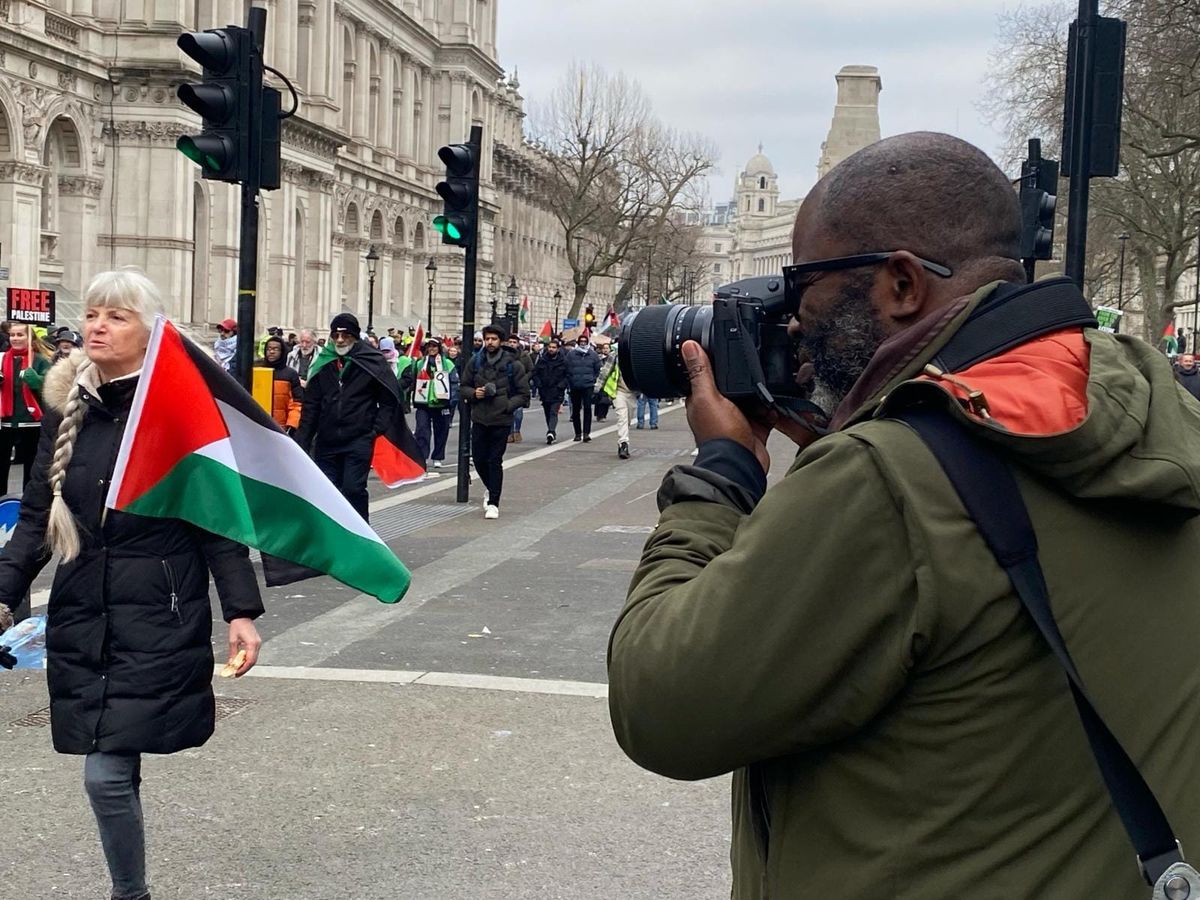
In a 2013 essay, author Barrett Swanson asked, “At what point does the aesthetic excellence of the photograph eclipse the depicted event, or, worse, distract the viewer from inquiring into what happened?” With the synchronous explosion of digital news content and unremitting global calamity, it’s a question that strongly resonates today, particularly with photography of protest and social movements. If these images overtly flatter the protestor, they can be accused of fueling performative activism and pulling attention away from the crisis at hand; if they are too beautiful, they might conceal the real risk of violence from the state. Still, if they are too graphic, they can rob the subjects of their dignity, making a cheap spectacle of dissidence.
These are tensions of which photographer-activist Misan Harriman, who has rapidly made a name for himself documenting protests since the summer of 2020, is no doubt keenly aware.
Harriman is the subject of Andy Mundy-Castle’s new documentary Shoot the People, which follows the 48-year-old Nigerian-born Brit as he chronicles activist movements across three continents. While Harriman's evolution from an amateur photographer to the first Black photographer to shoot the cover of Vogue's September edition is impressive, more exigent is his artful representation of protests, especially (though not exclusively) those in which primarily Black and Brown people are filling the streets.