Thomas Gainsborough’s Portraits of Pride and Prejudice
The English artist’s paintings work hard to make social hierarchy feel beautiful, even natural.

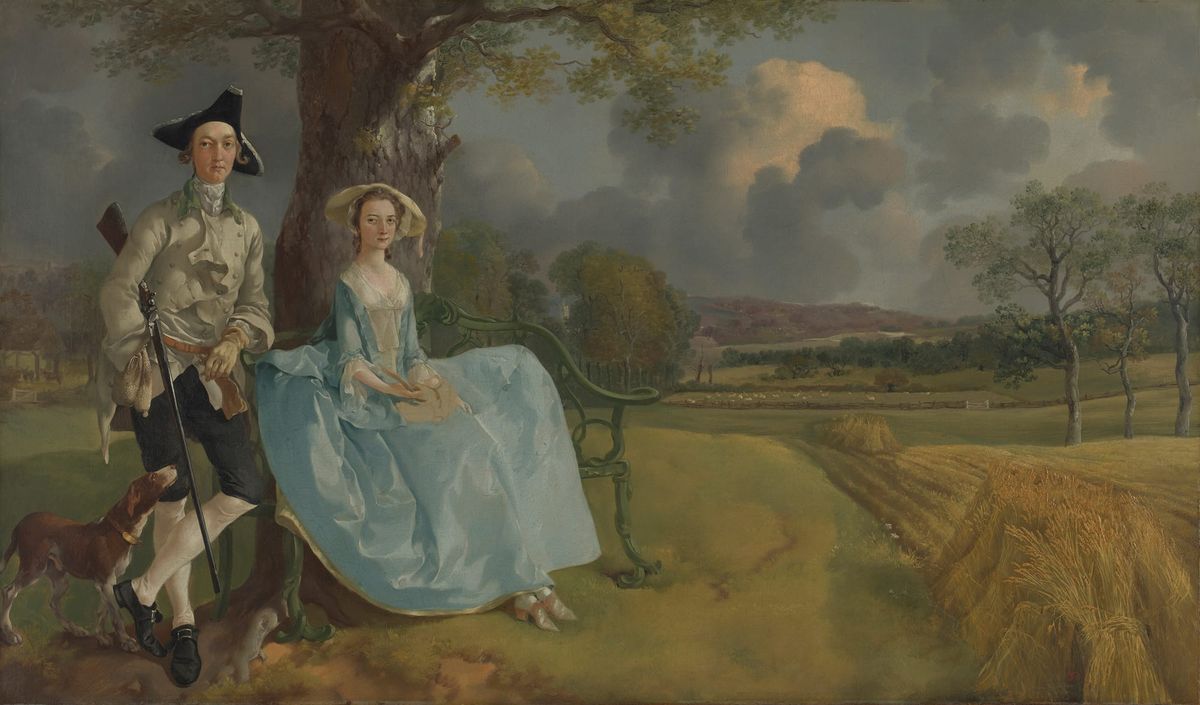
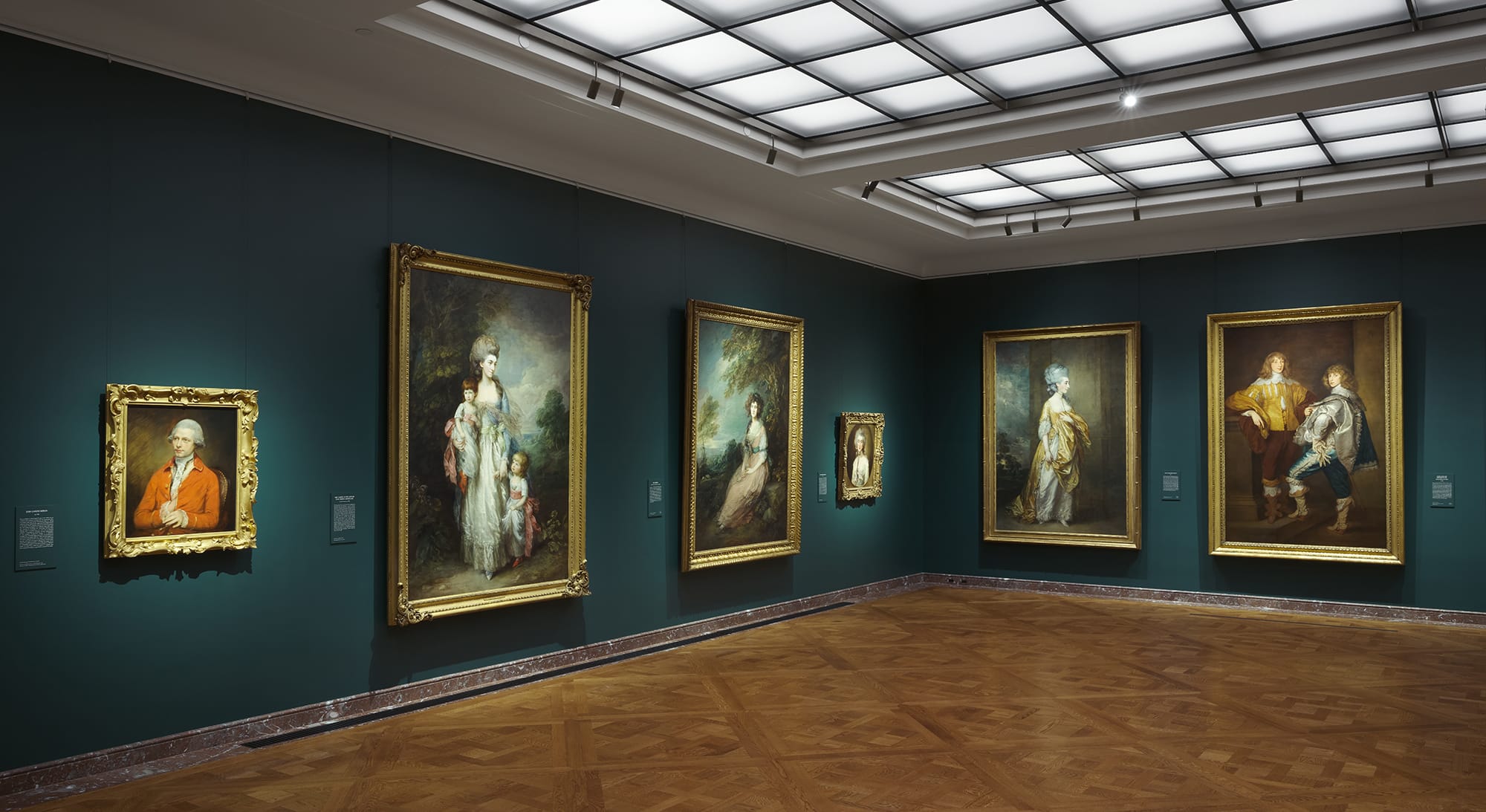
The first room of Gainsborough: The Fashion of Portraiture opens on a genre already falling out of favor. The “conversation pieces” gathered here were considered provincial by the London elite by the time Gainsborough painted them. Working from the Suffolk countryside and trained partly in the archaic conventions of English painter Francis Hayman, he gives “The Gravenor Family” (1754) a similarly formal stiffness, arranging their figures with a peculiar sameness. Yet “Mr. and Mrs. Andrews” (1750) demonstrates what Gainsborough could already do that his contemporaries could not: make landscape and clothing equally legible as declarations of ownership and belonging, devoting as much attention to the bountiful farmland as Frances Andrews’s delicate dress folds and pink satin mules. When Gainsborough moved to Bath in 1759, he refined his style in sustained dialogue with Flemish painter Anthony van Dyck, translating his dramatically lit garments and aristocratic ease into the terms of Georgian self-fashioning.
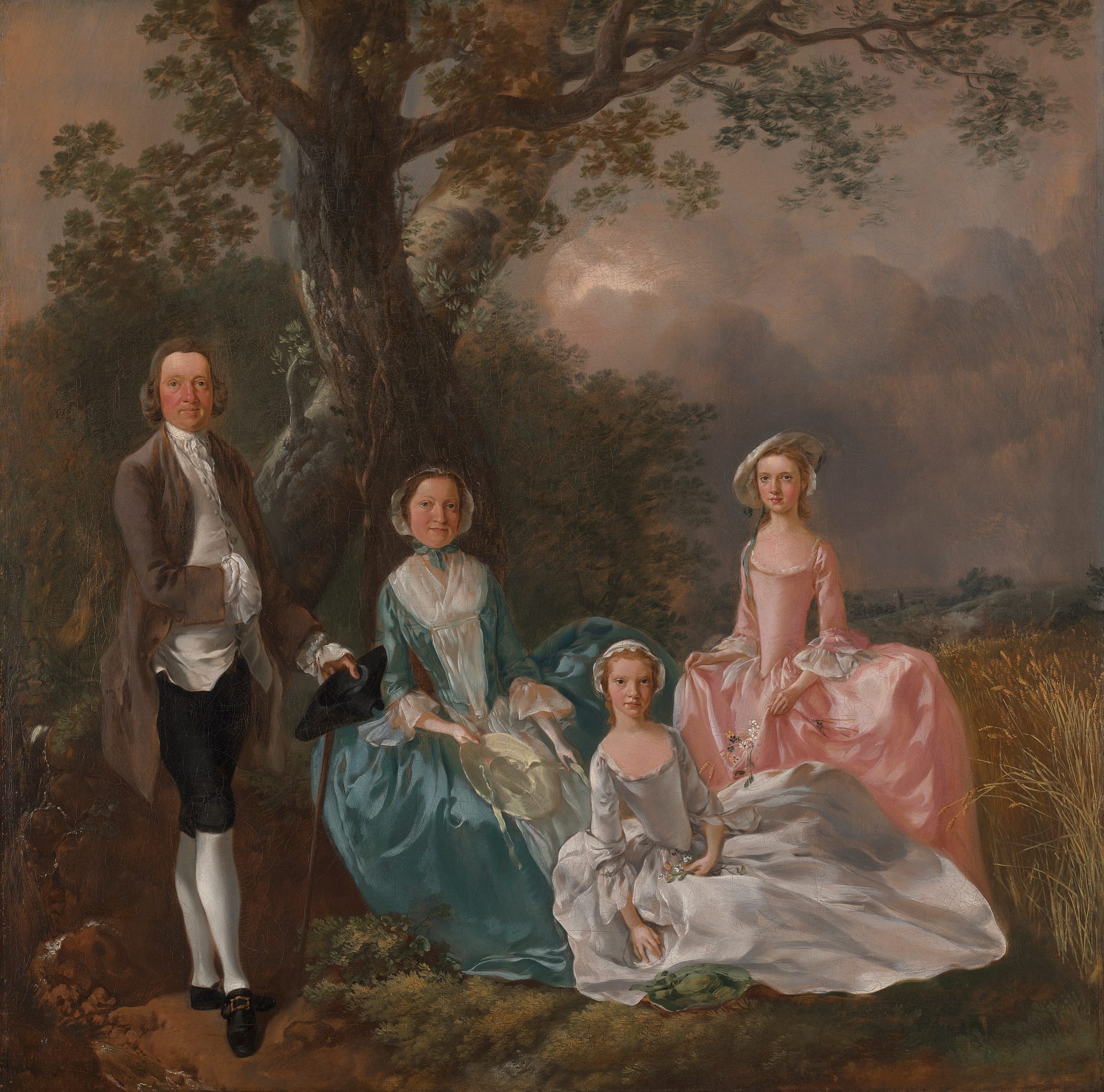
Attitudes toward British portraiture have soured in recent decades, a problem curator Aimee Ng named plainly at the exhibition's press preview. These paintings have long read as tired images of the wealthy who benefited from colonization and the labor of enslaved people. The exhibition acknowledges this, while insisting that more is enmeshed in Gainsborough’s world, making a serious case for the complexity of fashion as a site of social negotiation. In 18th-century Britain, taste was a moral technology. The philosopher Anthony Ashley Cooper, Third Earl of Shaftesbury, for instance, argued that beauty and goodness were intertwined, that to cultivate aesthetic discernment was to cultivate virtue. In a period when colonial trade was minting new fortunes faster than existing hierarchies could absorb them, the question of how to distinguish virtuous consumption from vulgar extravagance pressed urgently on critics and patrons alike. Taste promised to regulate luxury, refine appetite, and prove that wealth had earned its elevation. Gainsborough built a career on the visual execution of that promise.
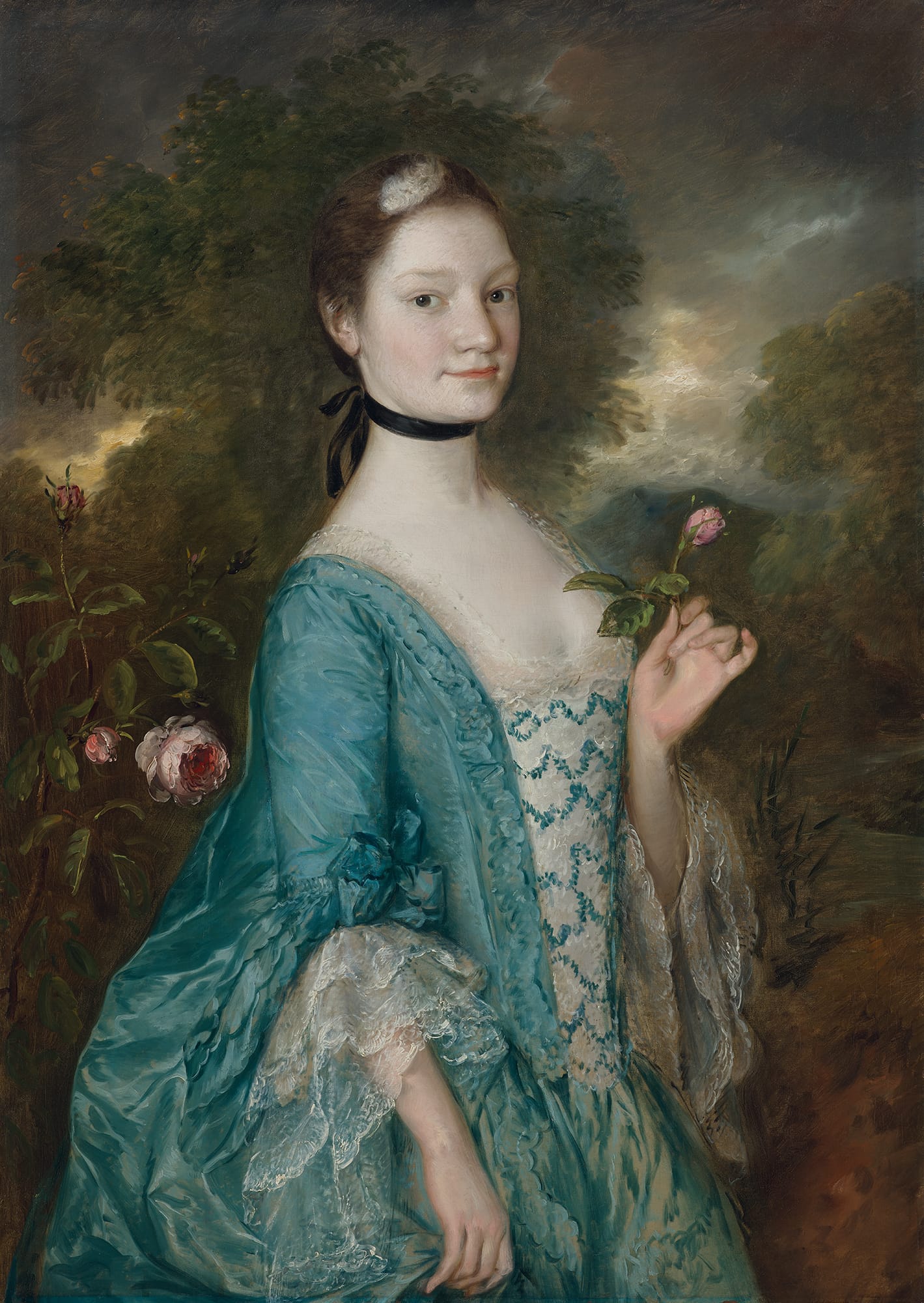
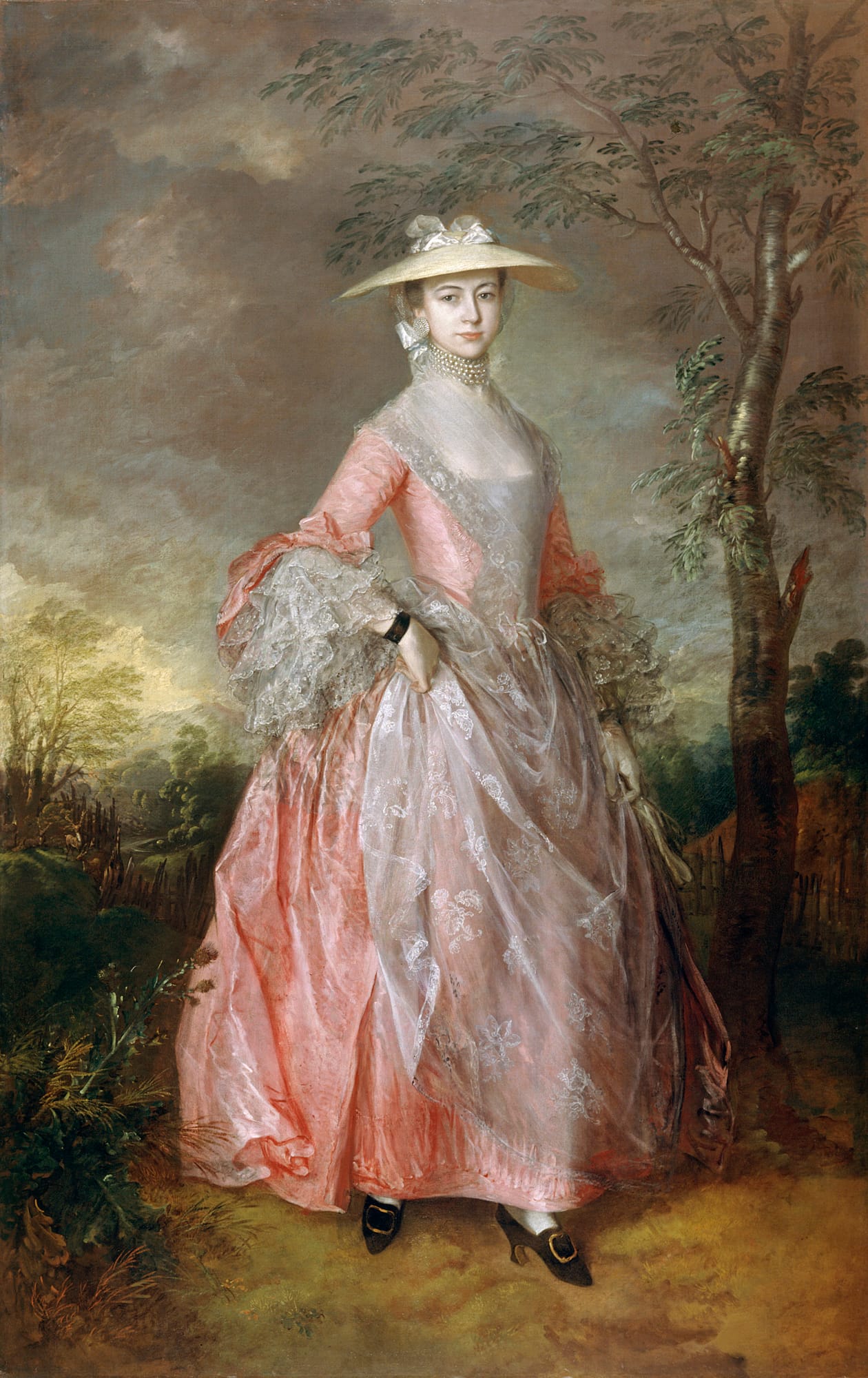
Left: Thomas Gainsborough, "Sarah Hodges, Later Lady Innes" (c. 1759), oil on canvas (photo Michael Bodycomb); right: Thomas Gainsborough, "Mary, Countess Howe" (1763–64), oil on canvas (© Historic England / Bridgeman Images)
A portrait of the young Sarah Hodges from 1759 depicts her with a single rosebud between her fingers and sheer fabric cascading down her sleeves, a debutante on the verge of visibility. Nearby, “Mary, Countess Howe” (1763–64) strides through a landscape in a storm of pink silk and a perfectly rendered lace apron that folds back on itself with impossible clarity, dressed to the height of fashion from her string of pearls to her heeled shoes. These women demonstrate that they belong in the company of those who, in English writer Samuel Johnson's contemporaneous definition, occupy “a condition above the vulgar,” where taste supposedly polishes wealth into virtue. Youth and status become questions of taste, calibrated in rosy cheeks and gossamer fabrics, a jeweled brooch or red shoe peeking out from a muslin skirt.
This calculus of status as taste extended so far that Gainsborough would often rework certain commissions to suit the changing fads. Studies revealed that “Mrs. Sheridan” (1783) was repainted once her earlier shepherdess persona became passé, and “Mrs. Samuel Moody” (1779) revised to add her sons and remove a pearl necklace, recasting respectability in a single sweep of paint. The Frick compellingly frames these additions as part of a story of reinvention and self-fashioning.
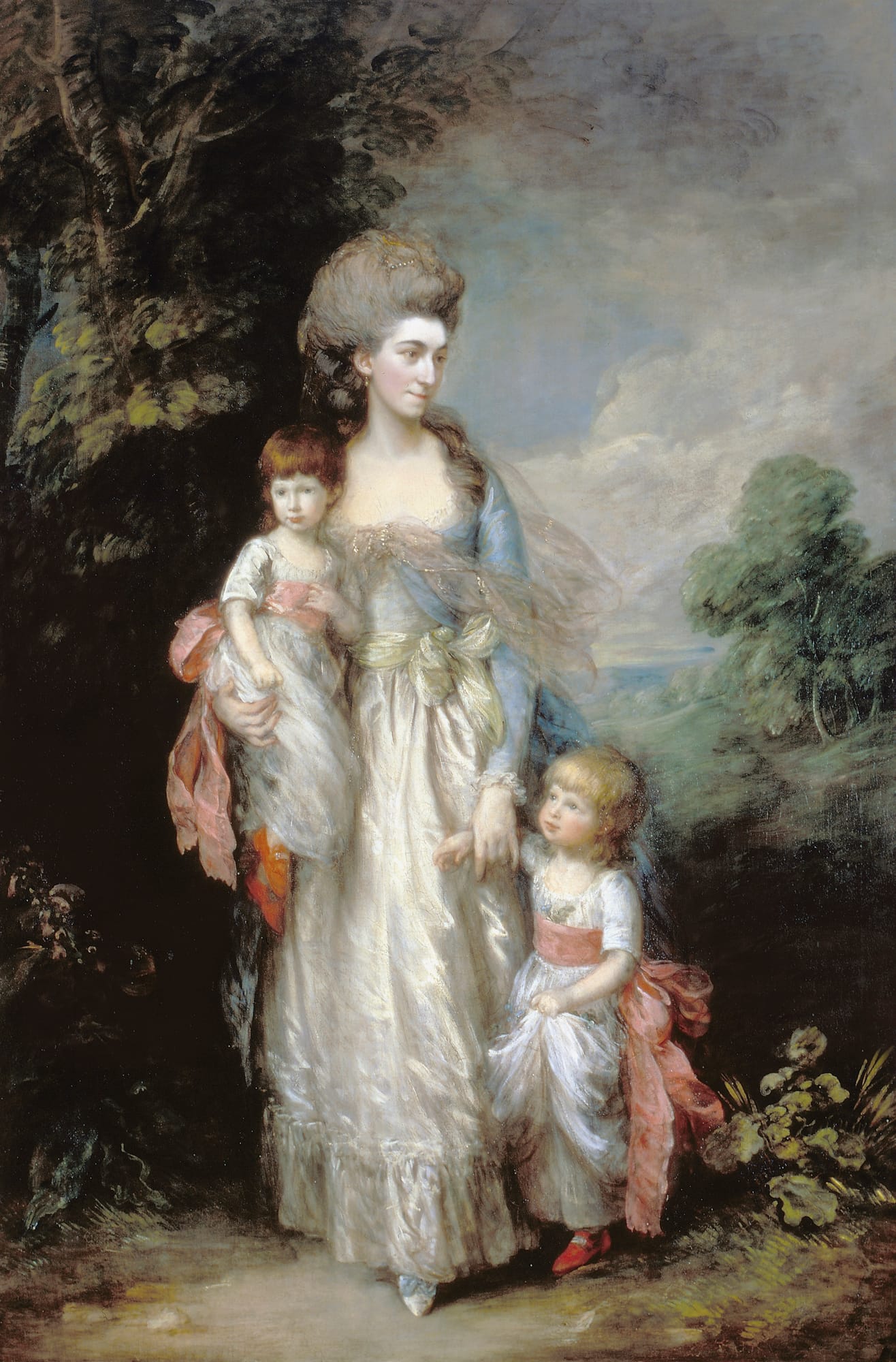
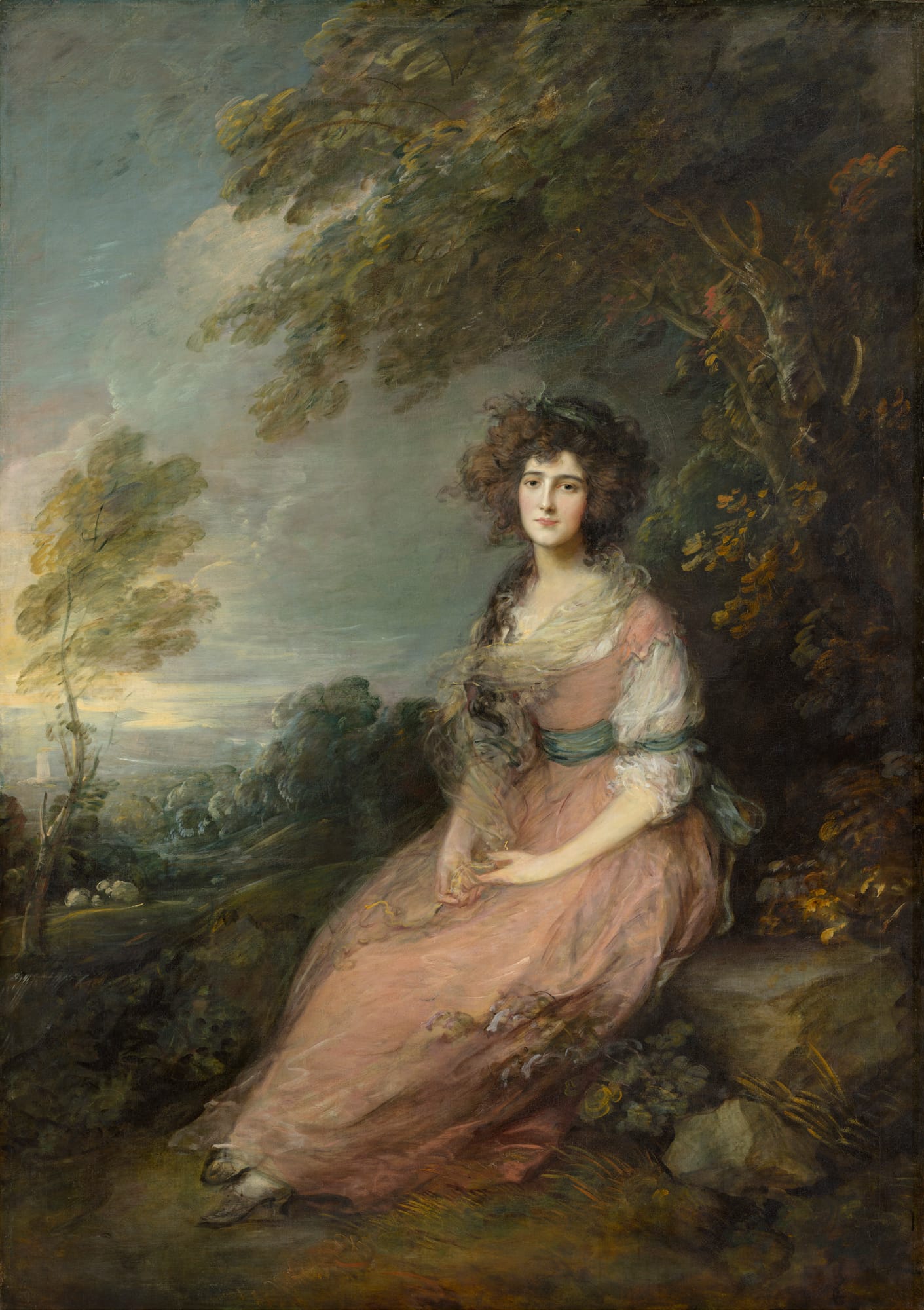
Left: Thomas Gainsborough, "Mrs. Samuel Moody and Her Sons, Samuel and Thomas" (c. 1779, reworked c. 1784), oil on canvas (© Dulwich Picture Gallery / Bridgeman Images); right: Thomas Gainsborough, "Mrs. Sheridan" (c. 1783, altered 1785–87), oil on canvas
But the exhibition is at its sharpest when the moralizing framework of Georgian taste begins to fray. One pairing places “Mary, Duchess of Montagu” (1768) opposite “Ignatius Sancho” (1768), born into enslavement, later a composer, writer, and celebrated intellectual employed in the Montagu household. Sancho appears in a gentleman's coat and waistcoat, hand tucked into his vest. Yet Gainsborough’s paint handling falters here; Sancho’s skin tone slides toward the gray-green ground so that his body seems to hover, without firm footing in space. The gesture grants him dignity while exposing the limits of taste as an engine of social transformation. Fashion can reframe Sancho as “of fashion” for the length of a sitting, but the structures that profit from his labor remain intact.
What lingers is the sense of how hard these images work to make hierarchy feel beautiful, even natural. The porcelain faces, naval uniforms, foliage, and dissolving grounds are symptoms of a world where the subject yields to the performance of good taste. The exhibition offers real pleasures in its meticulous attention to detail: silk that catches light, gold that seems to rustle, the quiet nods to shifting fashions of the social season. But its most urgent contribution lies in making visible the labor of taste itself, and the social fiction it has always sustained: the promise that style can launder wealth into moral distinction. Seen from our present, that promise looks increasingly fragile, and the paintings begin to flicker between high fantasy and indictment.
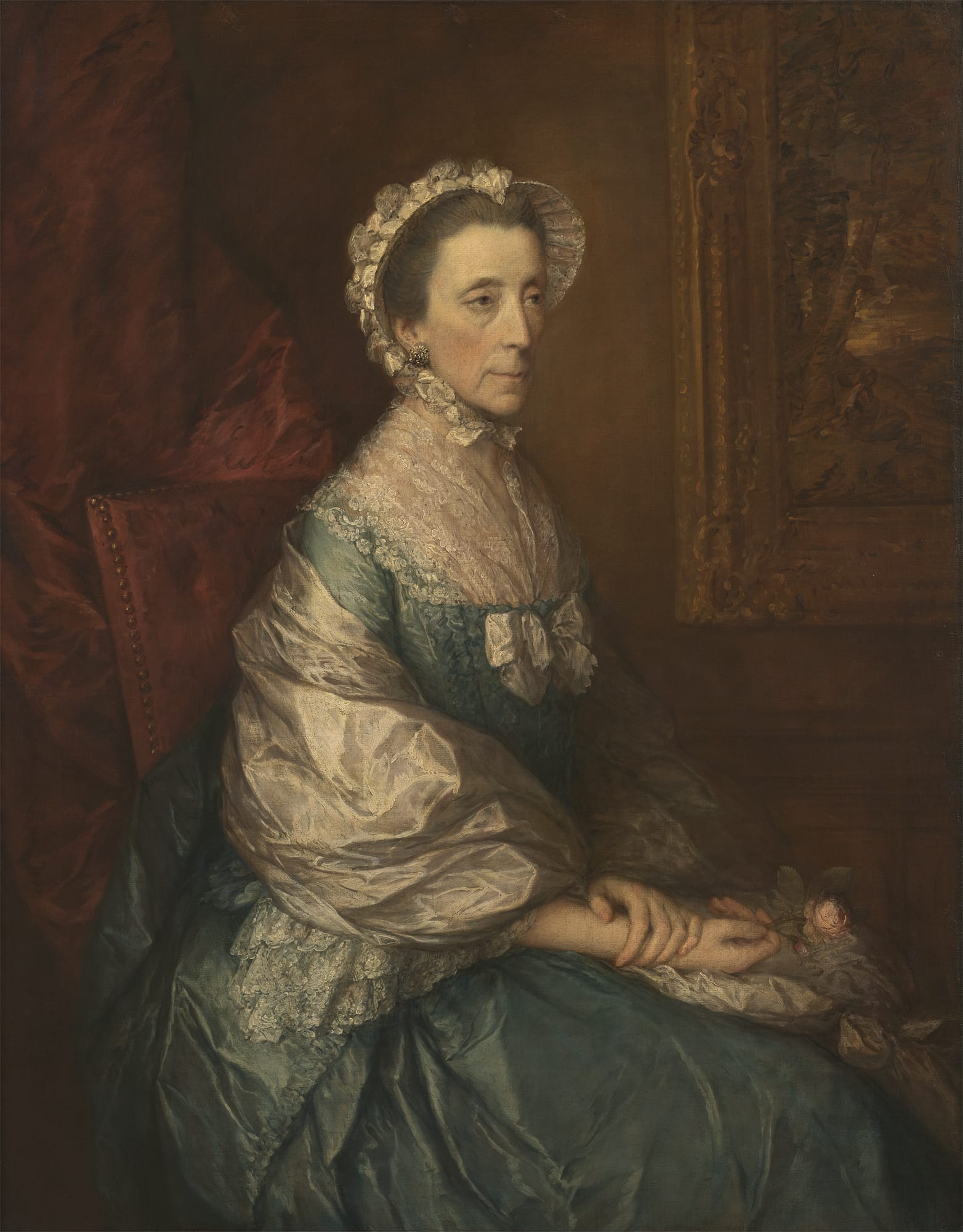
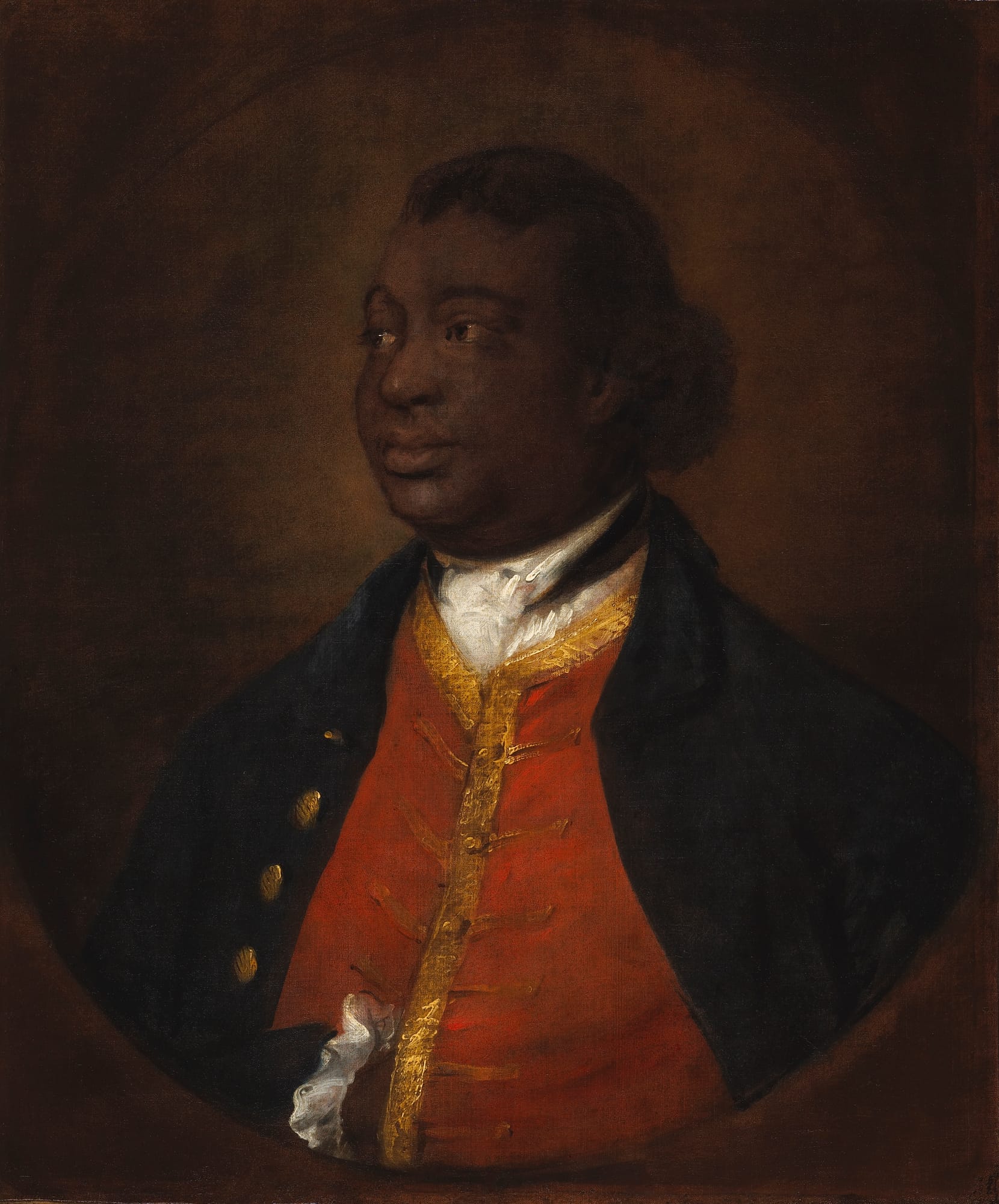
Left: Thomas Gainsborough, "Mary, Duchess of Montagu" (c. 1768), oil on canvas (photo courtesy The Buccleuch Living Heritage Trust); right: Thomas Gainsborough, "Ignatius Sancho" (1768), oil on canvas
Gainsborough: The Fashion of Portraiture continues at the Frick Collection (1 East 70th Street) through May 25, 2026. The exhibition was curated by Aimee Ng.