Trump Border Wall Crews Damage 1,000-Year-Old Native Etching in Arizona
The Las Playas Intaglio likely served as a sacred site for ancestors of the Tohono O’odham Nation.

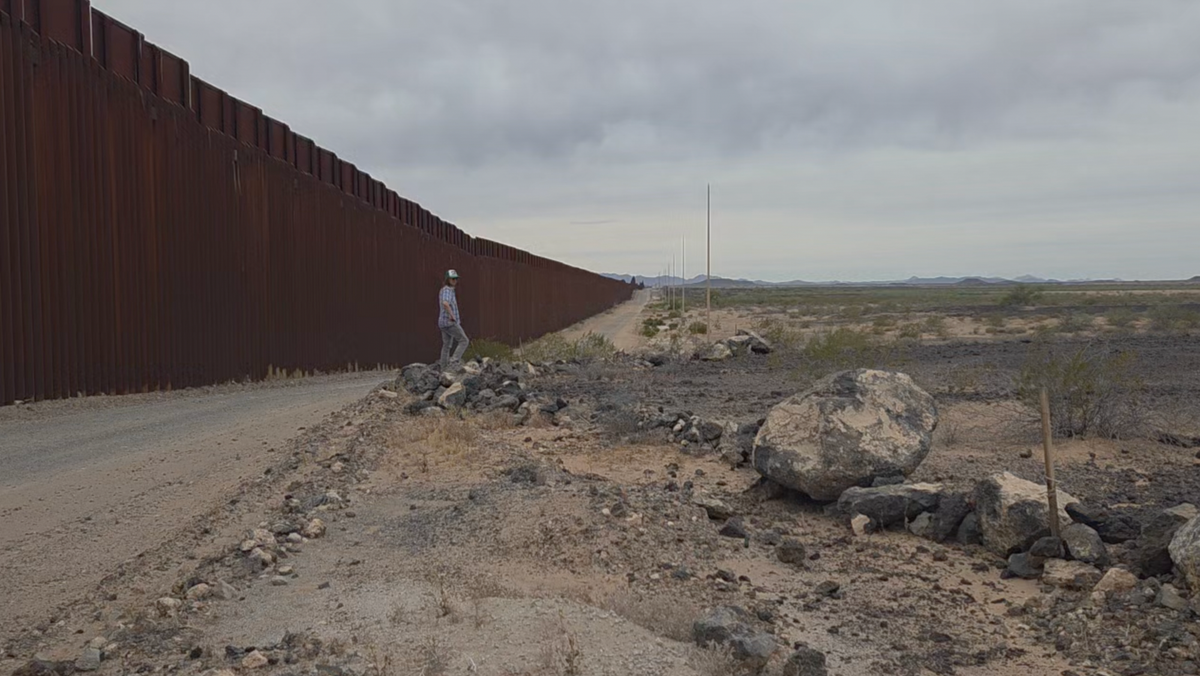
Construction crews building President Trump’s hostile border wall razed a portion of a Native American archeological site in Arizona estimated to be at least 1,000 years old.
Approximately 60 to 70 feet of the 272-foot-long Las Playas Intaglio, a design etched into the ground in Southwest Arizona’s Cabeza Prieta National Wildlife Refuge, suffered damage from heavy construction machinery, as first reported by the Washington Post.
The intaglio, a type of geometric or figurative drawing etched into arid desert pavements, resembles a fish and likely served as a sacred site for ancestors of the Tohono O’odham Nation, which lies east of the refuge.
In a statement to Hyperallergic, a spokesperson for the United States Customs and Border Patrol (CBP) confirmed that one of its contractors “inadvertently disturbed” the archaeological site last Thursday, April 23.
“[CBP] Commissioner Rodney Scott is engaged directly with tribal leadership to determine appropriate next steps,” the spokesperson said. “The remaining portion of the site has been secured and will be protected in place.”
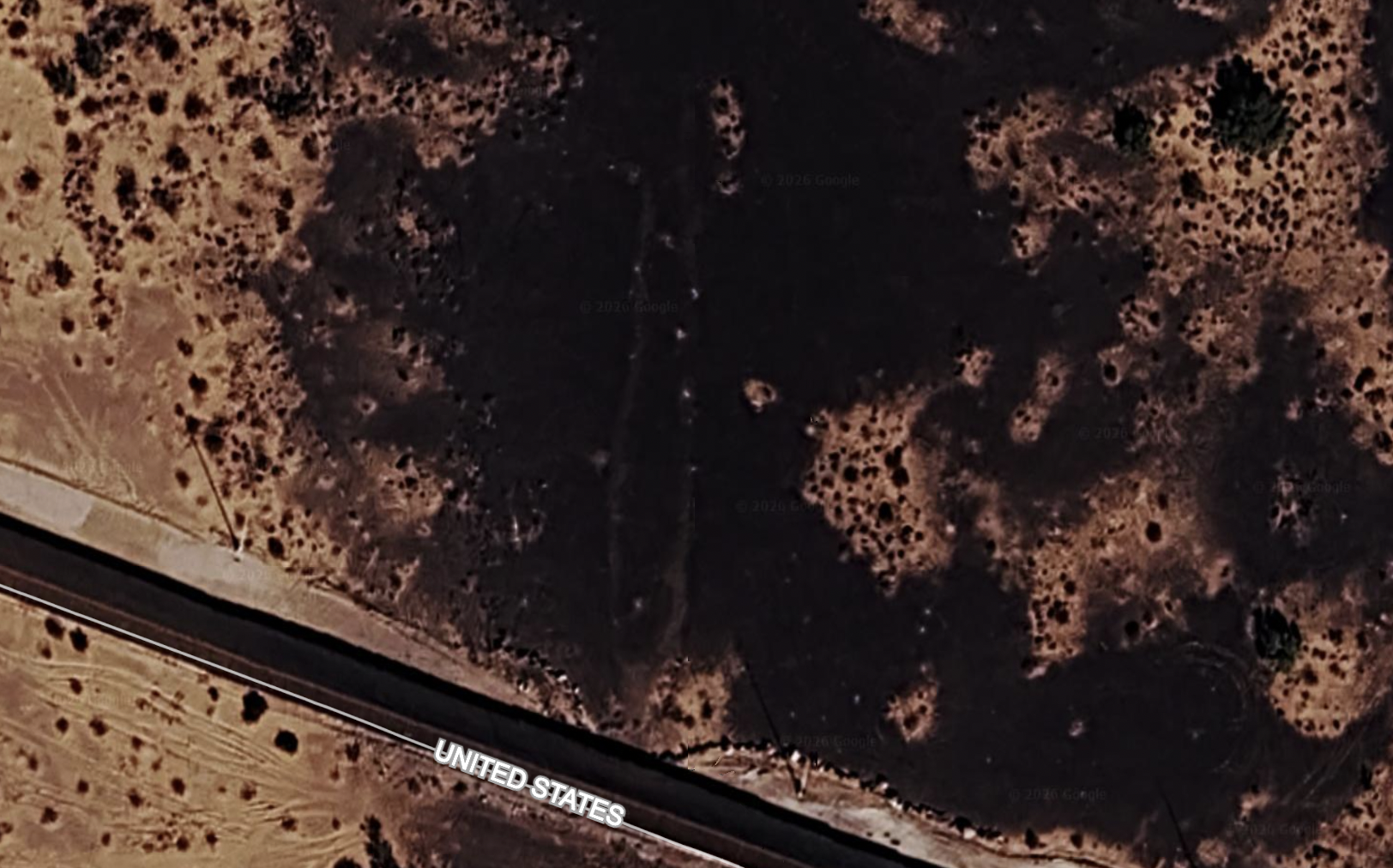
Archaeologists and local tribes have long sounded alarms over the intaglio’s proximity to an already existing border steps away. The drawing’s existence and cultural significance are widely recorded, including in documents filed in the United States Supreme Court during the first Trump administration.
Aaron Wright, a preservation archaeologist specializing in Western Arizona, told Hyperallergic in an interview that the desert area where the intaglio is carved once sat along bodies of fresh water.
“ We don't fully understand why intaglios were made and when they were made, but pretty much everyone's in agreement that they're sacred sites,” Wright said. “We have reason to believe that they're still visited by community members in spiritual contexts.”
Members of the Tohono O’odham Nation have vociferously opposed the Trump administration’s construction near the border, which has threatened their ancestral lands. Hyperallergic has contacted the Tohono O’odham Nation for comment.
Wright, who has studied intaglios for the past decade, visited the monumental etching last month after becoming concerned that the White House’s forthcoming “Smart Wall,” a multi-billion-dollar project that includes secondary border barrier enforcements, would permanently alter it.
Preservation archaeologist Aaron Wright took this video last month, days before crews dragged construction equipment through the sacred site.
When Trump took office last January, he declared a national emergency at the US-Mexico border, which allowed the government to supersede typical environmental review processes. Florida Governor Ron DeSantis similarly leveraged emergency orders to build the notorious Alligator Alcatraz prison on sacred Miccosukee land.
News of damage at the Native American heritage site raises concerns about the Trump administration’s attempts to circumvent environmental regulations as it rushes to lay three new miles of border wall every day.
“It's a grim reality that the nation's heritage basically dangles on the whim of an administration,” Wright said. “We have these environmental laws in place, but then we have other laws that basically nullify them at the will of the executive.”
Since the early 2000s, the federal government has altered the section of the border barrier lining the intaglio several times. Wright said that before the 2000s, the border was marked by a barbed-wire fence, but later, under the first George Bush administration, the fence was reinforced with sheet metal amid growing anti-immigrant sentiment in the wake of 9/11. During the first Trump administration, the federal government again made enhancements to the barrier.
Under Trump’s first presidency, contractors working on the border wall expansion also damaged other sacred sites nearby, including a Hohokam burial ground.
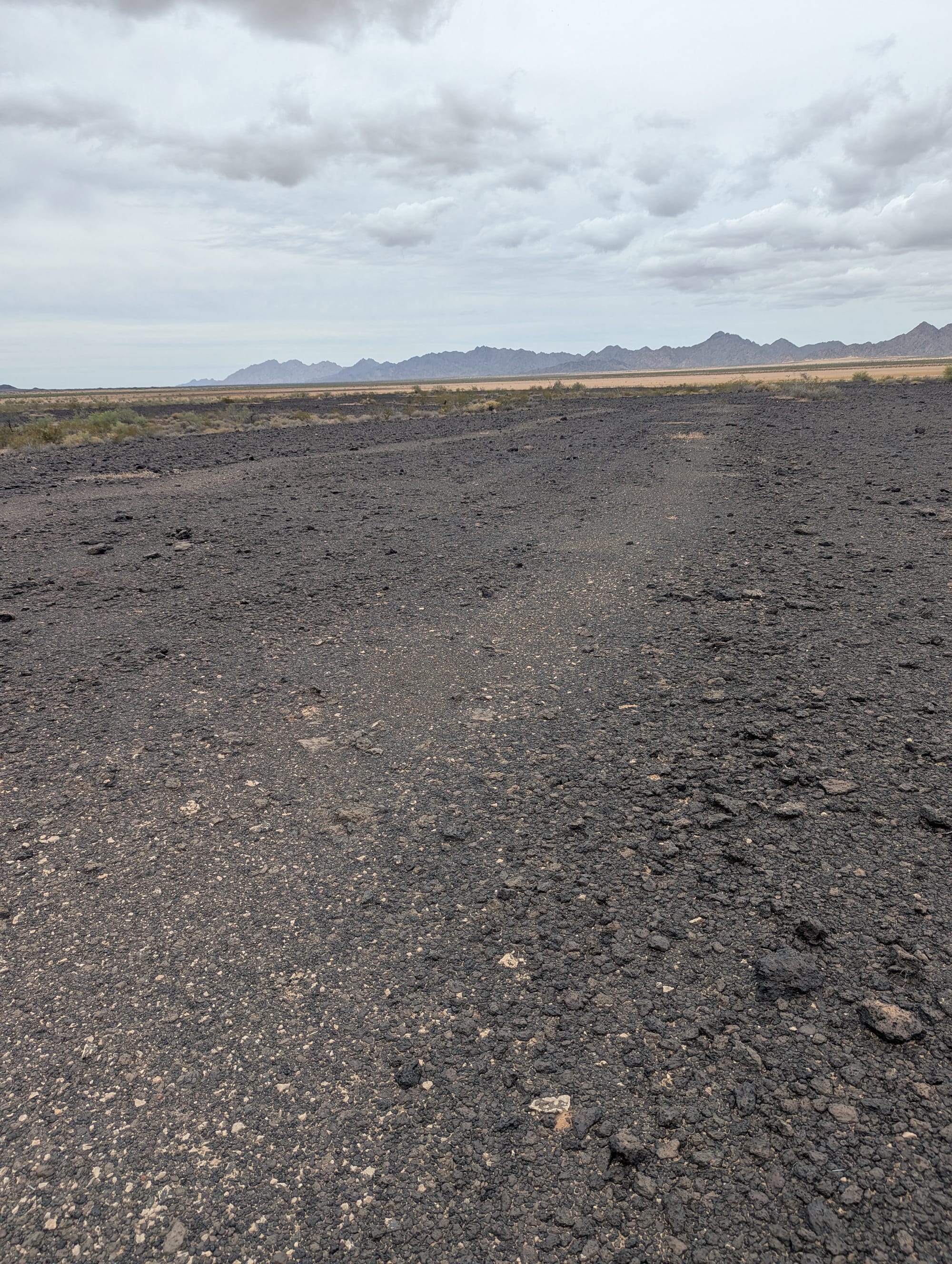
Asked how concerned individuals can support Las Playas and other sacred sites at the US-Mexico border, Wright urged people to make their voices heard.
“ Reach out to congressional people, complain, vote according to priorities of heritage preservation, protest, use your First Amendment right to say how you feel about it and say why it's important, and reach out to the communities and just show solidarity,” Wright said.
Construction for Trump’s “Smart Wall” also threatens to destroy another sacred site in the area, the Quitobaquito Springs, located in the Organ Pipe Cactus National Monument, Wright said.
“ It's just painful, sorrowful,” Wright said. “It foreshadows what's next.”