Turning Turner’s Legacy
“Turner and the Slave Trade” recasts Romanticism’s relationship to nature and landscape painting as a vehicle for colonial propaganda.

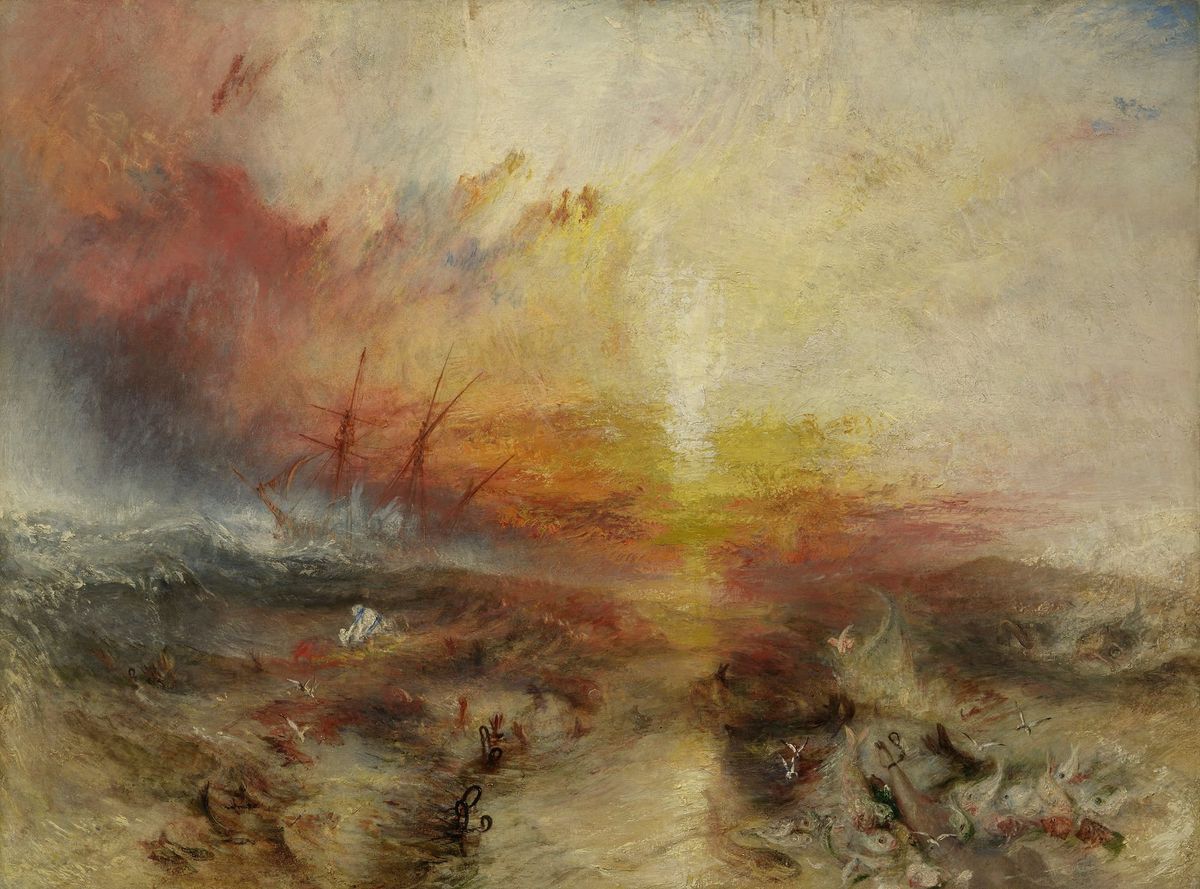
My grandfather was born near Black River, the Jamaican port town where the infamous ship the Zong docked in 1781 after the massacre of 133 enslaved Africans who were thrown overboard and killed for an insurance claim. Blood in the river mouth, Black River’s waterway flows into the Atlantic Ocean, where I used to picture the scene of English Romantic artist J. M. W. Turner’s oft-cited painting “The Slave Ship” (1840). But according to Turner and the Slave Trade (2026), by University of Plymouth Emeritus art historian Sam Smiles, I was wrong to associate the two so strongly. The author, who co-curated the Tate’s 2014 traveling exhibition Late Turner: Painting Set Free, contends the tableau of “The Slave Ship” is almost certainly not a reference to the Zong Massacre. He does write, however, that it shows the English Romantic painter’s evolving ethical journey.
I can be forgiven for associating the painting with the massacre. I was born close to the Thames, a mile away from the Royal Academy, where the painting was first exhibited in 1840 under its original title: “Slavers Throwing overboard the Dead and the Dying–Typhoon Coming On.” The limbs of Black people are rendered as footnotes in British art history; a woman’s shackled leg is most prominent in the lower right quadrant alongside fish and seagulls. Considered absurd in its time and a condemnation of chattel slavery, the painting has become synonymous with the Zong and is now being recast in a new critical light. From Tate Britain’s annual Turner Prize to scholar Paul Gilroy’s brief comments on “The Slave Ship” in The Black Atlantic (1993), which version of Turner is being invoked? Turner, whose face appears on British £20 banknotes, is currency in the art world and beyond. But for what remains unclear.
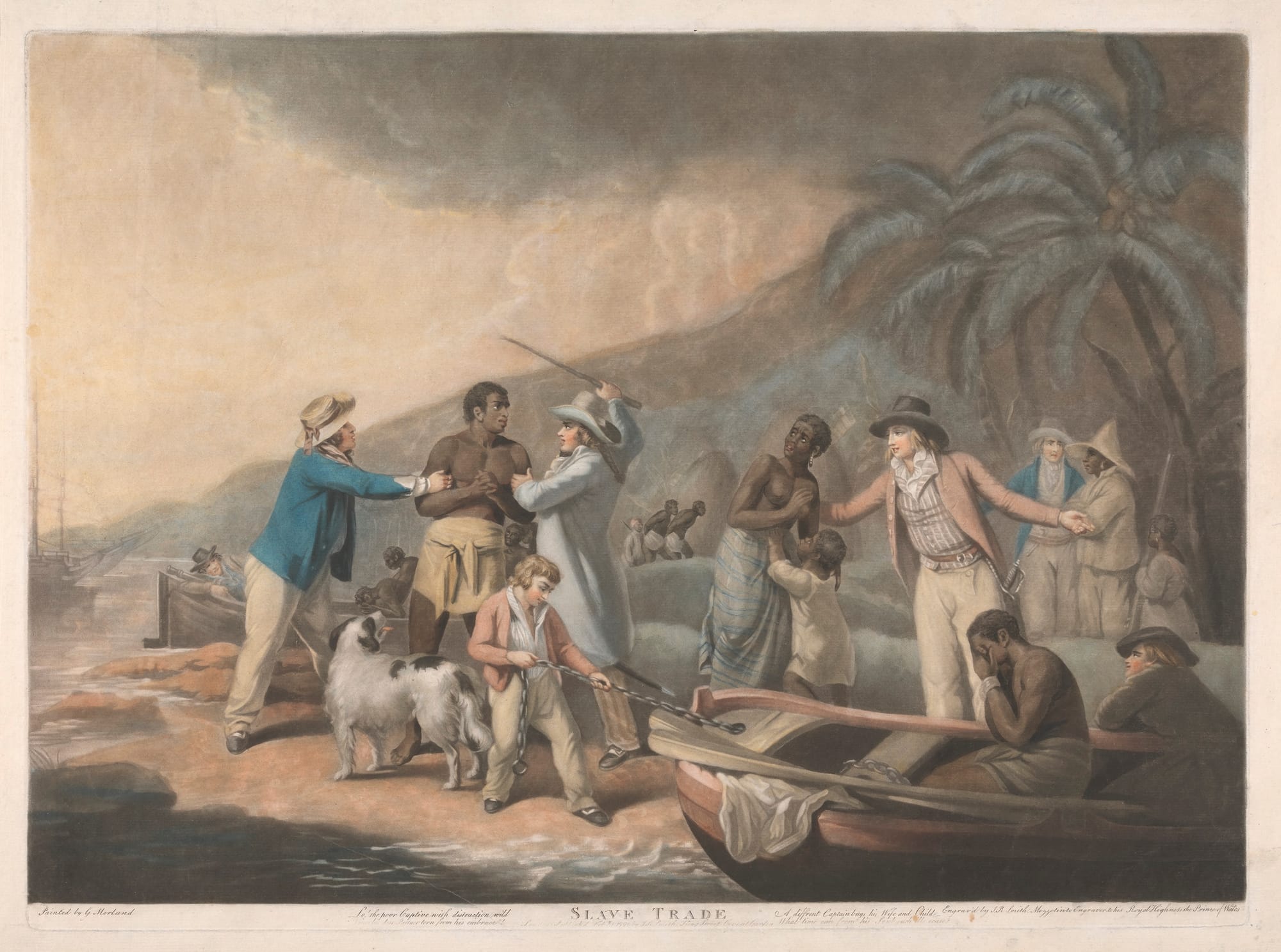
Can Turner be forgiven for profiting from Jamaican slavery? With Jamaicans recently petitioning King Charles for reparations on September 7 in London, this question is not hypothetical. Smiles assesses whether the painter was a man of his time, beginning with his 1805 investment of £100 (~£11,200 or $14,800 today) in a consortium to fund a Jamaican cattle farm operated by an enslaved African workforce. Smiles made this groundbreaking discovery in 2007, challenging the popular opinion of Turner. Furthermore, Smiles concludes there is no contradiction in Turner’s actions, arguing instead that they reflect the sublimation of chattel slavery and how it was the engine that financed England, especially through absentee colonialism. Beyond one painting, Smiles thoughtfully engages with the global Black Lives Matter movement and the stakes of ongoing epistemic violence in museums. He prefaces the investigation by stating that he intentionally omitted offensive terms or gratuitous images that reproduce the violent grammar of racism, except where absolutely necessary for the analysis. In doing so, Smiles heeds the admonition of scholars such as Saidiya Hartman to tread carefully in the colonial archive, setting a shining example for how to write art history in this manner.