Venice Biennale President Defends Russia Inclusion in New Interview
Pietrangelo Buttafuoco said he would do “everything” again if he had to, despite the Italian Culture Ministry’s backlash and the European Commission's stripped funding.

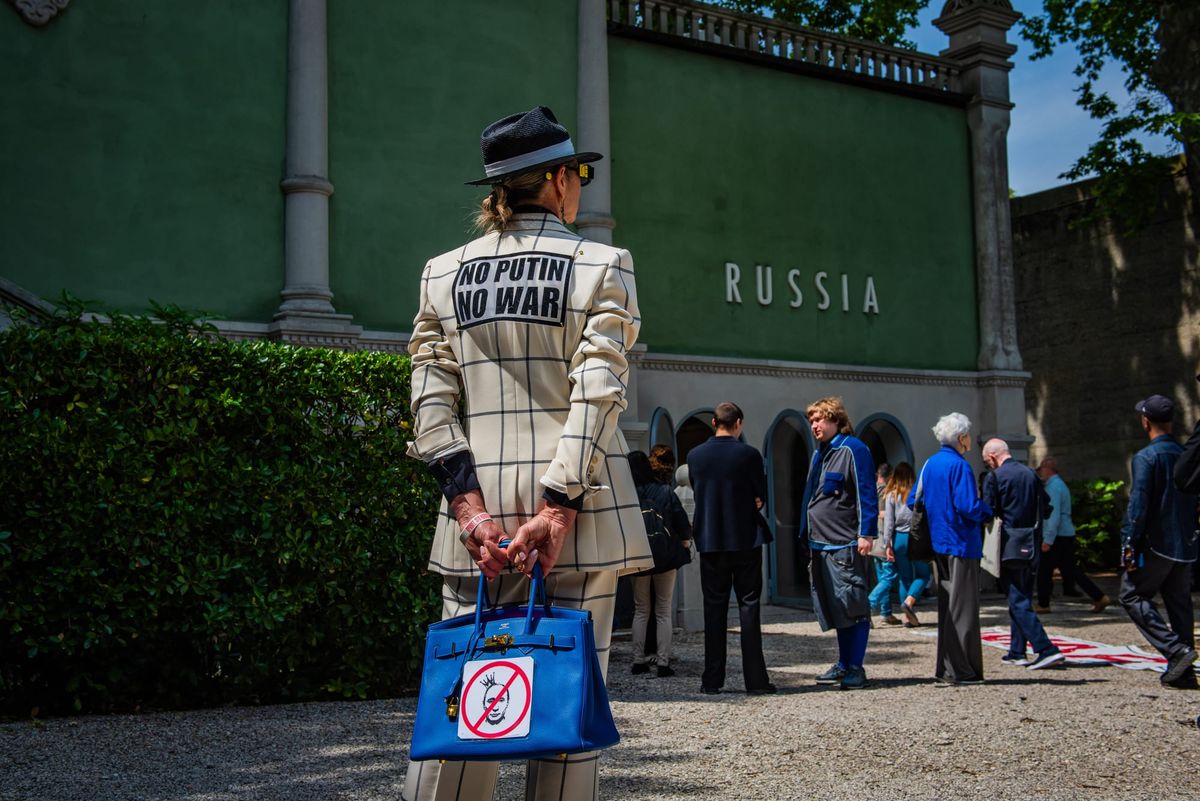
In an exclusive interview with the Italian newspaper Corriere della Sera, Venice Biennale Foundation President Pietrangelo Buttafuoco stood by the decision to include Russia in the 61st Venice Biennale this year despite pushback from the Italian Culture Ministry and the European Commission.
The Venice Biennale Foundation faced immense criticism, calls for boycotts, and a widely circulated open letter demanding revision after it announced this March that Russia would return to its pavilion for the 61st edition amid the ongoing invasion of Ukraine, stating that the Biennale administration “rejects any form of exclusion or censorship of culture and art.”
Buttafuoco told Corriere della Sera that he would do “everything” again if he had to, adding that his handling of the pavilion was “more than fair and proper to the institution [he] preside[s] over” and that there was “not a single comma that violates laws and regulations.”
Italian Culture Minister Alessandro Giuli had asked the Venice Biennale Foundation to provide all correspondence with the Russian Federation to evaluate the pavilion installation's compatibility with the European Union's sanctions regime. The European Commission also condemned Russia's inclusion, threatening to freeze its €2 million (~$2.3 million) culture grant to the Foundation over the matter.
In April, the Biennale's award jury announced its intention to omit Russia and Israel from consideration for the Golden Lion awards, and Giuli publicized his intent to forgo the Biennale's preview dates over Russia's inclusion. Ahead of the Biennale's opening, it was revealed that Buttafuoco and the Foundation's administrators worked with the Russian pavilion curator as early as June 2025 to ensure that Russia's participation played by the rules. Ultimately, the pavilion would remain closed to the public for the Biennale's run after the vernissage dates.