What to See During San Francisco Art Week
Despite recent closures in San Francisco’s art world, there's been a mushrooming of alternative spaces, side hustles, home galleries, and nonprofits.

My favorite quote about our city by the Bay is from Alfred Hitchcock’s 1957 film Vertigo. As the protagonist, Scottie, looks out at mid-20th-century San Francisco from an office window, his acquaintance, Gavin Elster, observes, “My how San Francisco's changed. The things that spell San Francisco to me are disappearing fast. I should have liked to have lived here then. Color, excitement, power, freedom."
That was then, but we could utter the very same words today, and at every juncture of the city’s roller coaster history, for that matter. As much as I would like to diss the ubiquitous and ever propagating AI companies and expose their nefarious effects on the Bay Area art world, I just can’t simplify the city into “tech friendly and art-repellant,” as so many might. At least not yet.
This year's San Francisco Art Week attests to the resilience and adaptability of the Bay Area art world. As someone who grew up in San Francisco in the 1970s and who has watched artists leave town for major art hubs and institutions molt, disappear, and then reappear in new forms, I would attest to the city’s magical gift of reinvention. San Francisco adapts to economic booms and busts, and to new technologies, and artists and curators are always prepared to respond. They figure shit out.
San Francisco recently lost its two venerable art schools, the San Francisco Art Institute and, just this week, the California College of Art, as well as several beloved mid-sized galleries. Four of them (Altman Siegel, Anglim Trimble, Jack Fischer, and Rena Bransten) were located inside Minnesota Street Project, a consortium of galleries in the Dogpatch neighborhood, while Gallery 16 was in the South of Market area. Although these closures sent a shudder through the community, it did not feel like a death knell since they were accompanied by a palpable mushrooming of alternative spaces, side hustles, home galleries, and nonprofits. Lately, I’ve seen a lot more activity away from the traditional gravitational and commercial centers of the art world.
Take, for example, the ambitions of Art + Water, the new arts education project by beloved San Francisco author and founder of 826 Valencia and McSweeney’s, Dave Eggers. Art + Water, set to open this year at Pier 29, defines its mission as “a new kind of art space” that addresses “the crisis of affordable artist workspace in San Francisco.” In this way, it hopes to meet immediate needs in the city.
The Institute of Contemporary Art San Francisco (ICA SF) recently announced a plan for “embracing uncertainty” by adopting a nomadic model in which the museum will stage site-responsive exhibitions and public art projects in various temporary locations across the Bay Area. ICA SF Founder and Director Ali Gass explained on Instagram that “this model allows the ICA SF to be more agile and responsive to the city's evolving needs and current cultural questions, flowing resources directly into projects and people.”
Small, scrappy galleries like Et al. in the Mission (formerly Chris Perez’s gallery space Ratio 3) have adapted to the times by becoming a 501C3, bookstore, collaborative public programs space, publishing house, and rental and cultural hub for the art world all at once. Aaron Harbour and Jackie Im, the stewards of this project, are also spearheading two new affordable art fairs with free admission, ATRIUM and Skylight Above. They will take place during SF Art Week at the Minnesota Street Project. I have no idea what to expect, but if it's anything like the insanely successful yearly SF Art Book Fair we should be in for some fun times.
I asked Trevor Paglen, whose name and work are now synonymous with art and technology in the Bay and whose current solo exhibition, The Horizon Waved, and Nothing Was Certain: 2006–2026, is at Jessica Silverman gallery now that Altman Siegel has closed, how he feels about the anxiety around AI and its effect on artists in the city.
His answer lines up with my thinking:
Something fundamental is happening to our relationship with images right now, a shift I believe will be as consequential, if not more, as the inventions of perspective or photography. San Francisco is complicated but I love it deeply. I understand the anxiety around AI but I think we’re living through an incredibly exciting moment for artists. We’re being forced to reckon with what art even is in a post-AI culture, and I suspect the answer is something magical.
In the spirit of experimentation and optimism, several cultural offerings around the Bay pivot away from the commercial center of SFMOMA’s FOG Design+Art Fair at Fort Mason during the third edition of San Francisco Art Week, which takes place January 17–25. Below are some of the city's most exciting offerings of the season.
AIDS Memorial Quilt
San Francisco International Airport Museum, International Terminal, Departures, Level 3, San Francisco
February 8–March 22
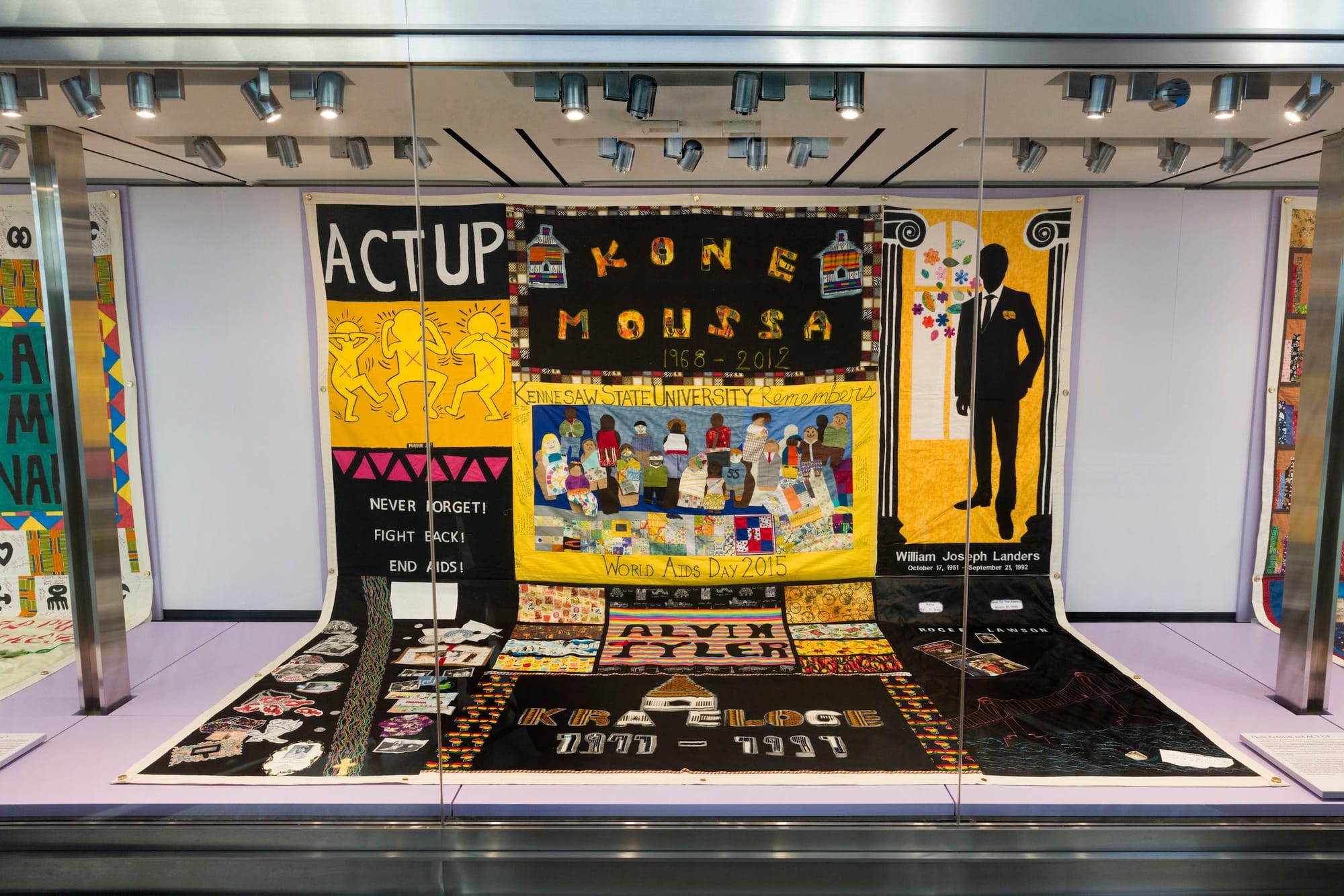
SFO’s public arts program and museum are second to none. Don’t miss this exhibition, which marks a homecoming for the quilt that was started by Cleve Jones here in San Francisco in 1987.
Today considered the largest community project in history, the AIDS Memorial Quilt honors the unique lives of those lost to HIV/AIDS and serves as a reminder that the epidemic persists today. This moving exhibition features six of the quilt’s panels (out of the 50,000 panels paying tribute to more than 110,000 individuals). The three-by-six-foot size of each one represents the standard dimensions of a human grave. “The AIDS Memorial Quilt is a radical act of remembrance and activism that still demands visibility,” explains new director Jennifer McCabe. Presenting it at the SFO Museum “situates this living archive in a public space where art, history, and civic responsibility meet and that is seen by millions of international travelers who pass through SFO without barriers.”
Rainbow Pride Flag co-creator Gilbert Baker’s contribution for activist Bobbi Campbell is included, as well archival letters, photographs, and personal items submitted by local artists who created panels. I especially appreciate the memorabilia from early grassroots AIDS awareness efforts of the Names Project in San Francisco.
Creativity Explored x Open Invitational Art Fair
East Cut Pop-Up, 215 Fremont, San Francisco
January 23–25
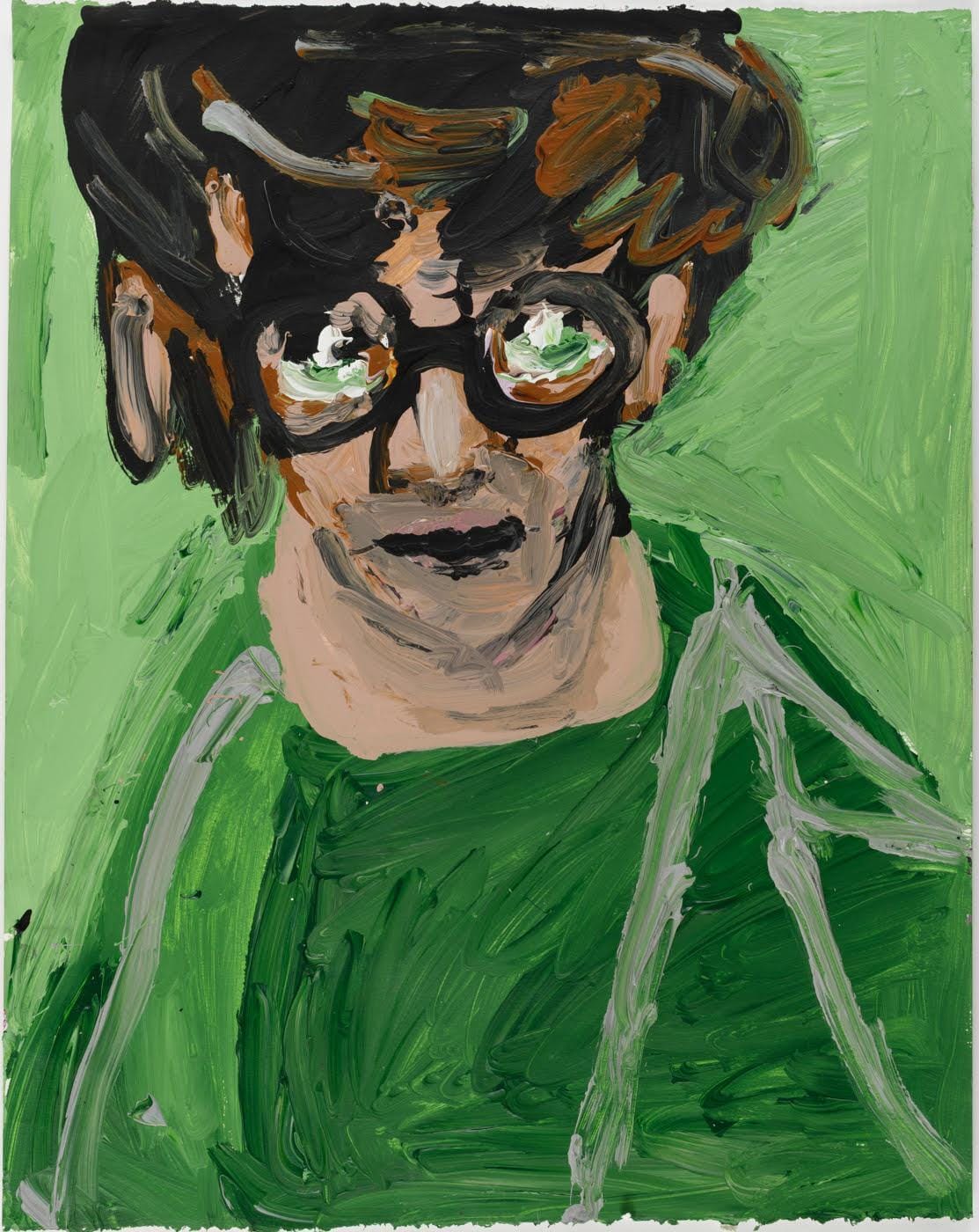
Bay institutions Creativity Explored, NIAD, and Creative Growth position San Francisco as a leader in shaping cultural conversations around artists with intellectual, developmental, and mental health disabilities. All three were founded by art and disability pioneers Florence Ludins-Katz and Elias Katz in the 1980s.
They serve as blueprints for an international network of progressive studios that collectively engage in dialogues about who is collected, discussed, and represented in the art world. Every artwork sale that these studios facilitate goes directly to enhancing the artist’s quality of life by providing income, work spaces, and a sense of purpose.
This new SF art fair is a collaboration between Creativity Explored and the Open Invitational, a fair based in New York City and Miami, and features over 20 progressive disability studios and galleries from Tokyo to Paris to Baltimore to Queens. It will take place over three days in downtown San Francisco’s East Cut neighborhood, defined by tech boom trophies such as the Salesforce Tower and its campus, and new high-rise residential buildings. The fair is free and open to the public.
Theresa Hak Kyung Cha: Multiple Offerings
Berkeley Art Museum and Pacific Film Archives, 2155 Center Street, Berkeley
January 24–April 19
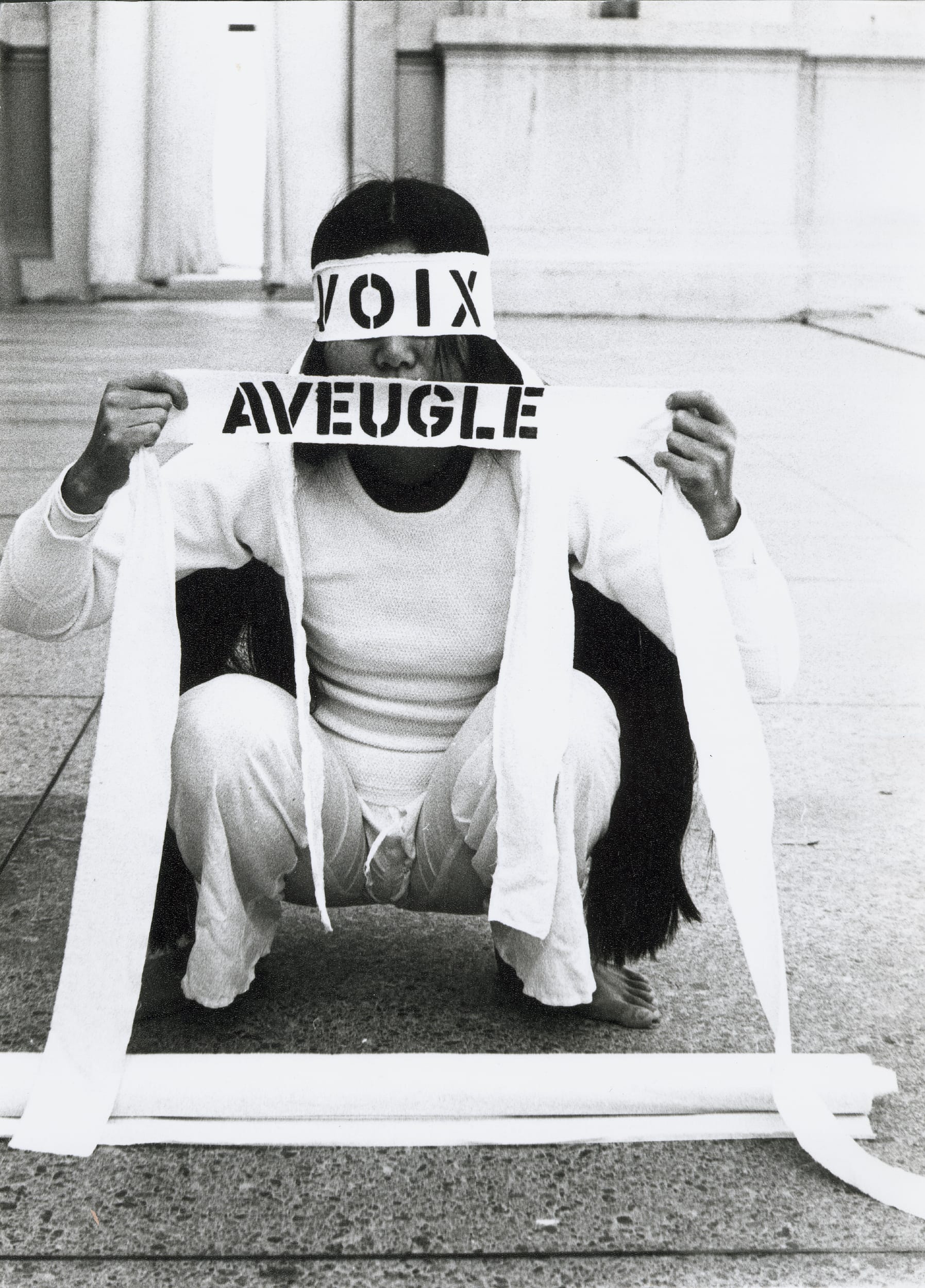
Multiple Offerings seeks to enhance the public’s understanding of Cha’s significant contributions to contemporary art, particularly in light of her recent inclusion in prominent international exhibitions such as the 2023 Seoul Mediacity Biennale and the 2022 Whitney Biennial.
The artist’s first retrospective in 25 years will debut in Berkeley before embarking on a national and international tour. Cha is perhaps best known for her pioneering 1982 hybrid book work, “Dictée,” which integrates elements of fiction and poetry into a collage of images and text. Across various media, she investigates themes of physical, cultural, and linguistic displacement.
Born in Busan, South Korea, in 1951, Cha immigrated to the Bay Area with her family in 1964 and studied comparative literature and film at UC Berkeley, where the local avant-garde art scene profoundly influenced her practice. In her brief career (she died in 1982 at 31) she recognized the active role of audiences in making meaning and emphasized nonlinear narratives to facilitate more open-ended interpretations — a concept she referred to as “Multiple Telling with Multiple Offering.” This retrospective adopts such a framework to provide diverse entry points into her work and archives, which are part of BAMPFA’s permanent collection.
Set Up Situations
MarinMOCA, 1210 Fifth Avenue, San Rafael
January 17–April 26
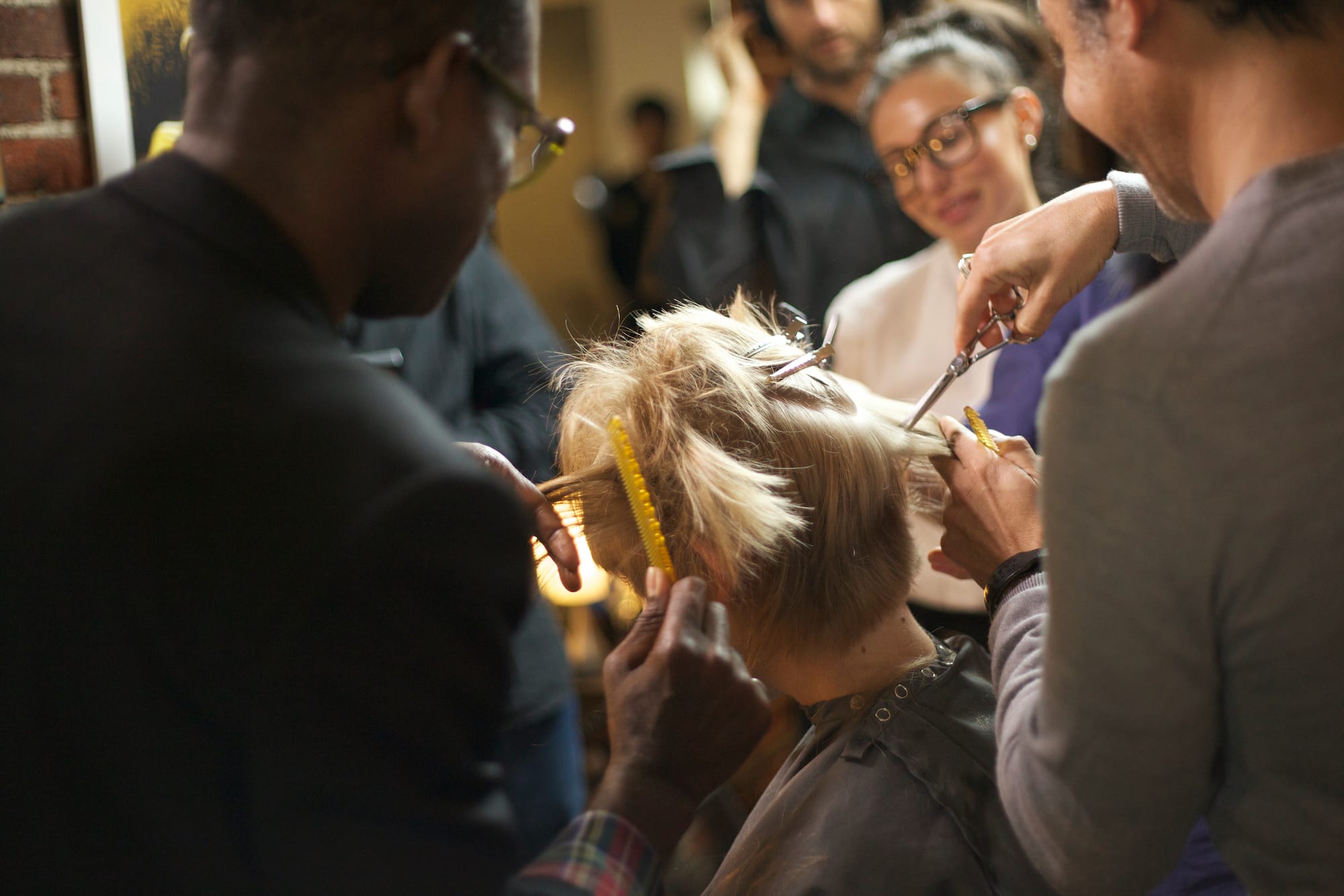
The exhibition, in MarinMoCA’s raw temporary space, approaches photography as a form of personal activism and as an evolving, performative act.
Featuring work by artists including Iván Argote, Ana-Teresa Fernández, Mariel Miranda, Gina Osterloh, Reynier Leyva Novo, Omar Soto, and Koki Tanaka, this mostly BIPOC show is curated by the multi-talented educator, artist, and curator Julio César Morales, who is taking the reins as the new director of San Francisco’s beloved artist space Southern Exposure this month.
The show draws its title from the practice of Koki Tanaka, whose work centers on constructing open-ended situations without predetermined outcomes. In “A Haircut by 9 Hairdressers at Once (Second Attempt)” (2010), Tanaka asks nine hairdressers to cut one person’s hair at the same time, creating a situation that demands negotiation, communication, and compromise. The resulting work, at once humorous and fascinating, does not document the finished product of the haircut, but rather ambient social dynamics that emerge from the collective setup.
Set Up Situations also engages the photographic legacy of verdant Marin County, north of the Golden Gate Bridge, particularly its histories of landscape photography and environmental advocacy. Richard T. Walker explores being and belonging amid the sublime beauty and immensity of nature. He combines photographs of the Western United States landscape with found objects, recordings, and performative gestures that acknowledge the fractured relationship between human consciousness and the natural world in an era of climate change.
Sahar Khoury: Weights & Measures
Jan Shrem and Maria Manetti Shrem Museum of Art, 254 Old Davis Road, Davis
January 7–June 20
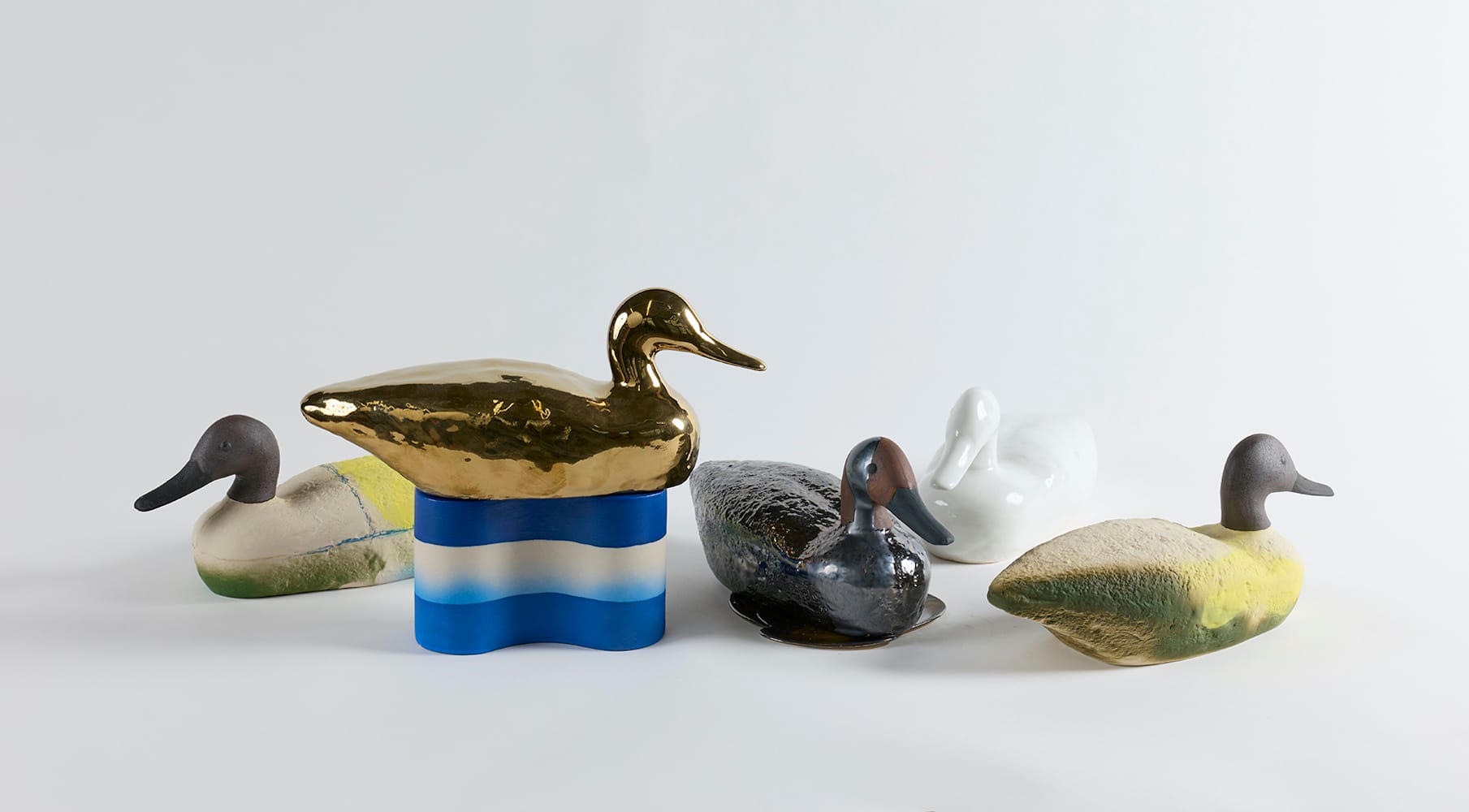
Weights & Measures situates the artist’s experimental sculpture practice within systems of value, measurement, and exchange. The exhibition’s subtitle invokes not only the physical weight and musical tempo involved in shared cultural rituals such as bread-making and music, but also the psychological and cultural burdens that individuals and communities are made to support.
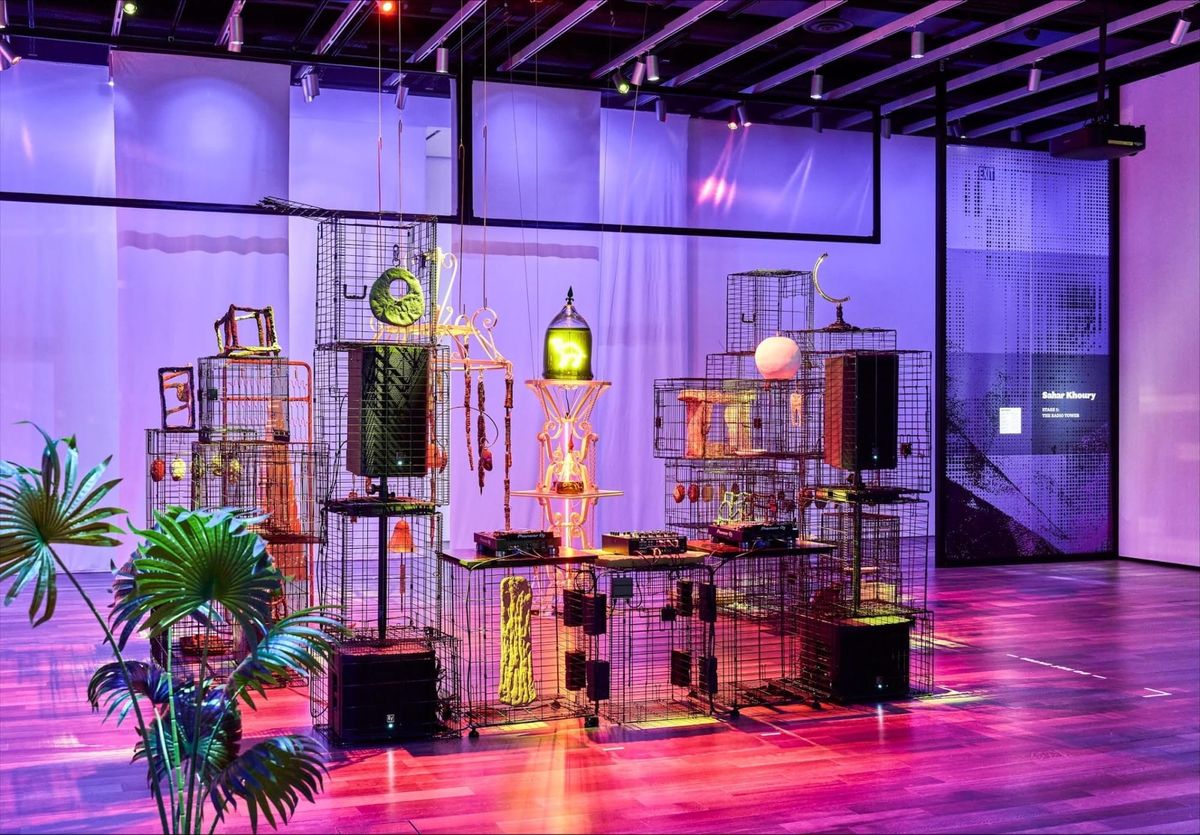
The exhibition features among its works “The Elephant in the Room” (2026), a reconfigured clock tower sculpture. The immense welded metal structure, hung with cast ceramic, iron, and brass objects, evokes the ruin of the timepiece and re-purposed objects referencing the souks or marketplaces of North Africa and Southwest Asia. For the Oakland-based artist, trained in anthropology, ruins are not simply architectural or archaeological fragments; they are witnesses to people and places resisting their own extinction, carrying memory and spirit across time and space.
Building on her 2023 exhibition, Sahar Khoury: Umm, at the Wexner Center for the Arts in Ohio, this is Khoury’s largest solo exhibition to date. The artist, who is of Persian and Jordanian-Palestinian descent, also has a central room-sized immersive installation in Naz Cuguoglu’s rave-inspired and not-to-be-missed exhibition of work by women and queer artists from the West Asian diaspora, Rave Into the Future: Art in Motion at the Asian Art Museum.
Sky Hopinka: Sonic Transmissions
Slash, 1150 25th St, Building B, San Francisco
January 10–April 18
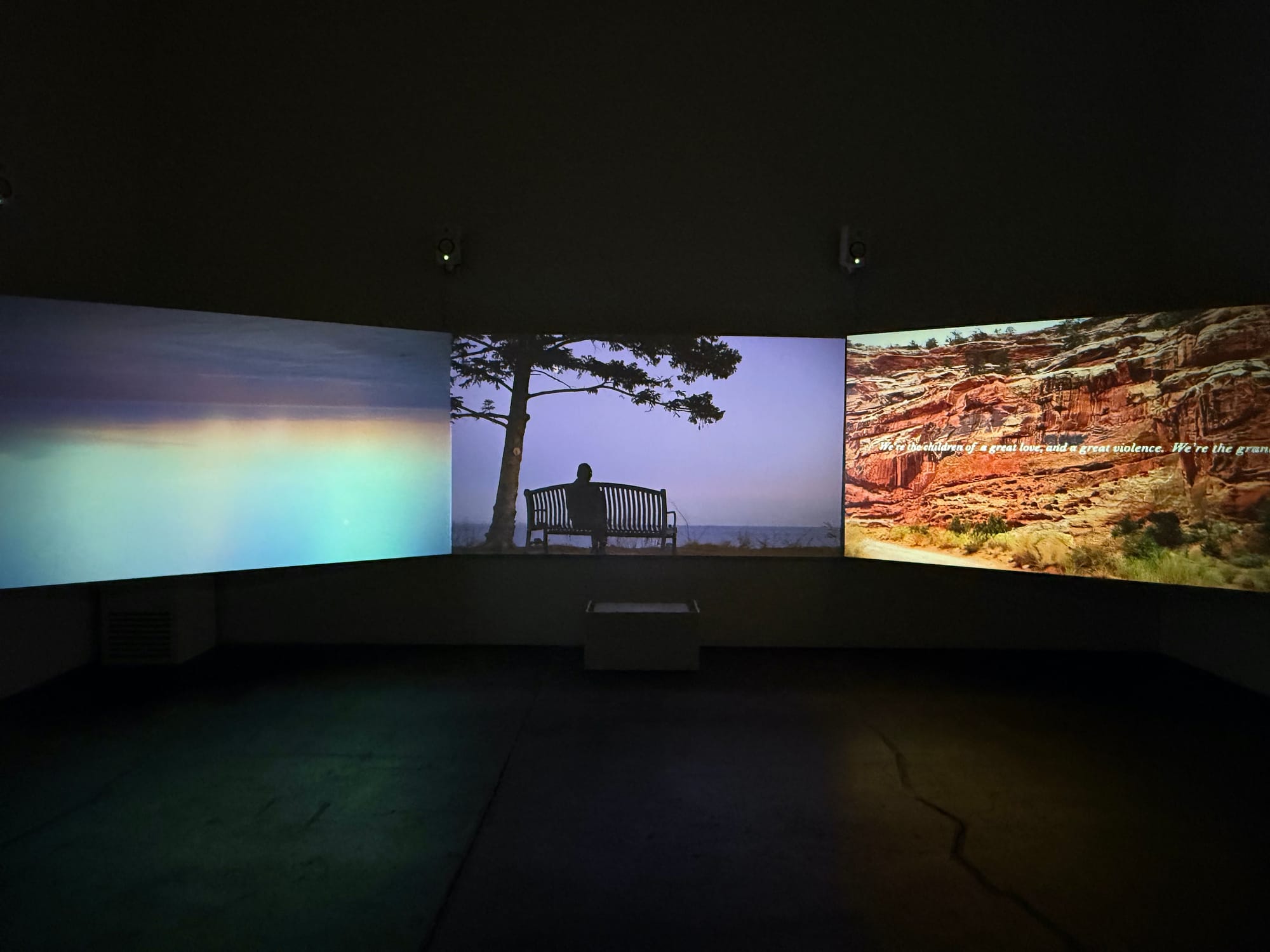
Founded in 2018 by Ana İpek Saygı, Slash is San Francisco’s newest artist-run nonprofit supporting experimentation and collaboration in contemporary art. Guest curator Gina Basso introduces Sonic Transmissions with a provocative prospect: The exhibition is “a conversation with ghosts, passengers, viewers, passersby, the unsuspecting, and for tribal communities. Stop and listen.”
Spanning 2016 to 2025, the show features Hopinka’s videos projected in a newly constructed cineorama, interwoven with poetry and a playlist that includes music by his father, Mike Hopinka. Together, these works form a multisensory meditation on sound, language, and memory.
A member of the Ho-Chunk Nation and the Pechanga Band of Luiseño Indians, Hopinka guides viewers through powwows, forest paths, and highways toward the land’s edge with his cinematography. The artist, who affirms that he “makes work for an Indigenous audience,” is, at his core, both musician and collector of sound. By blending audio and layering aural compositions, he seems to transform listening into a form of observance. The result is an experience that feels intimate, haunting, and dreamlike. Above all, Sonic Transmissions is an invitation to attune and listen deeply.