
I hate the rain, but I recognize the poetic justice of a tarnished colonial commemoration through Thursday’s forecasted washout. In the era of fast fashion, data centers, and big agriculture, the world’s most precious resource will (hopefully) nourish the land while disturbing those who exploit it. It’s hard to be mad at that, even if the sensation of wet socks squelching in soaked shoes makes me want to jump out of my own skin and start orbiting earth.
The Museum of Modern Art’s experimental arm, MoMA PS1, just announced that it’s hosting a group exhibition on Latin American art and fashion next spring. Malvestir will broach a variety of topics, including reclaiming Indigenous cosmologies and craftsmanship from the commoditized grip of Western appropriation, apparel’s role in counterculture and empowering the marginalized, and the creative, function-forward reuse of the incalculable textile waste that the United States unceremoniously dumps onto Central and South America.
Also on the topic of land and its resources, MoMA announced its forthcoming Ana Mendieta retrospective opening in late 2027, which will focus on the late artist’s material expansion, cross-cultural infusions, and boundary-shattering interdisciplinary process in chronological fashion. Like the major exhibition that’s still on at the Tate Modern, MoMA’s retrospective also veers away from discussing Mendieta’s untimely death and the speculation surrounding it. It’s an ongoing dilemma — allowing Mendieta’s work to be displayed and contextualized outside of the implications of her tragically punctuated life is interpreted by some as prioritizing the artist’s agency and impact and message, while others regard it as a deliberate erasure of part of her story, considering the subject matter she tackled.
I don’t know what the right call is.
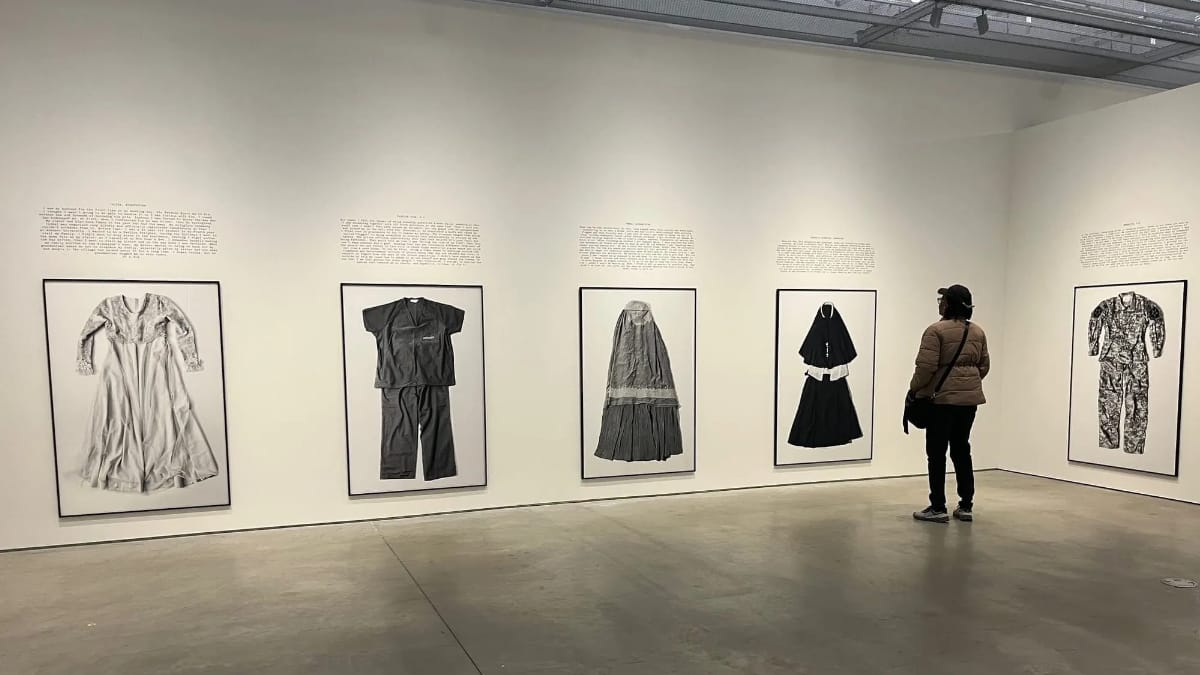
The retrospective will also unpack Mendieta’s provocative early performance art, including the confrontational interventions she staged as a reaction to the rape and murder of a fellow University of Iowa student, Sarah Ann Ottens, in 1973. The world has changed beyond recognition in the last 50 years, but the needle has merely twitched in regard to addressing and remedying misogyny and violence against women in contemporary society, as the last few months (if not the decade) would indicate. At the International Center of Photography, Spanish artist Laia Abril combs through the historic, systemic, and interpersonal bolsters of rape culture. Abril’s Black-and-white photos document the clothes worn by survivors of all ages at the time of their assault, the material culture codifying assault and kidnapping as colonial and war-related “conquests,” and other astonishingly overt examples of subjugation and dehumanization as they simultaneously evolve in contemporaneity while channeling centuries of mistreatment.
This is some heavy stuff to ruminate on, but the much-needed dead air between marquee auctions and Miami Art Week offers some breathing room away from the market frivolity obscuring the true power of art. I hope the rain and the long weekend will give me a nice blank slate to meditate on.
Have a safe and healthy holiday season, everyone. Travel safely, and take care.
From Our Critics
Alina Cohen
Laia Abril: On Rape and Institutional Failure at International Center of Photography
"Honing in on her palette, Abril gets at the seemingly eternal nature of misogyny; her distilled images stoke a similarly condensed rage."
Rebecca Schiffman
Maggie Ellis: Chaos Bewitched at Charles Moffett Gallery
"In Ellis's world, you can never be quite sure whether you've stumbled into a dream, a nightmare, or someone else's very strange family gathering."
Features
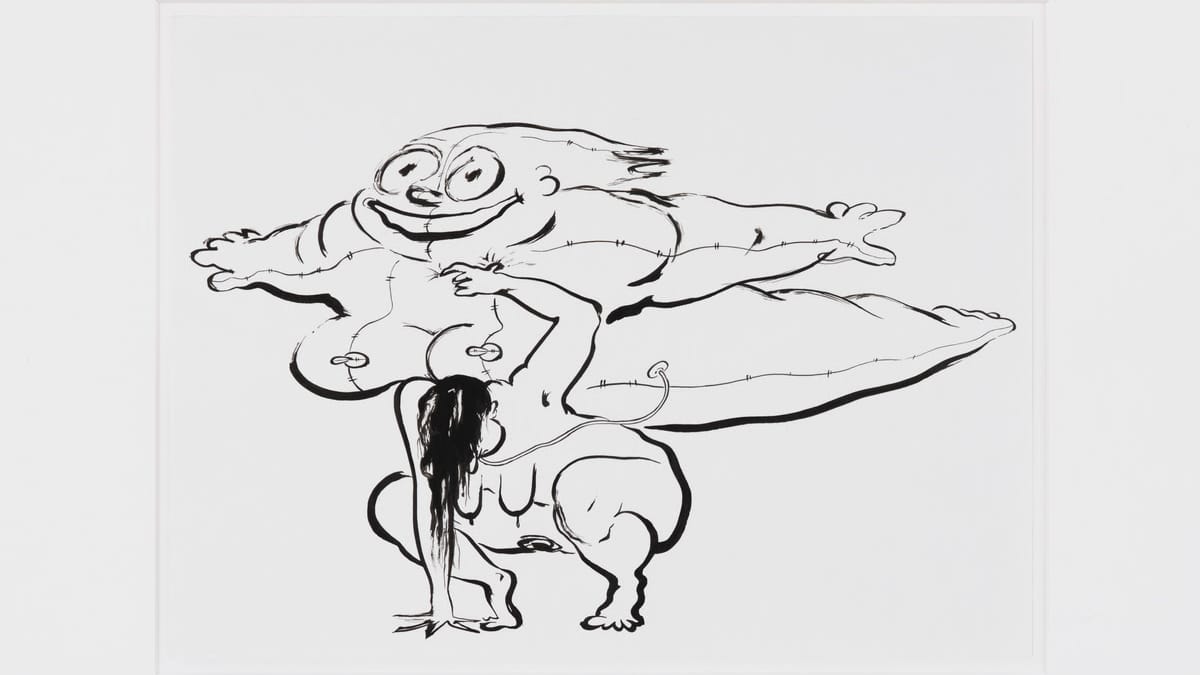
Is My Art Funny to You?
A sprawling exhibition across two New York campus galleries explores humor in contemporary art, imploring us to take seriously the jokes artists made and preserved in time. | Greta Rainbow
Read MoreIn a Midtown Office, Artists Sift Through the Junkspace of Capitalism
An intergenerational group of artists confronts technology as both a pathogen and a cure for today’s cultural ailments in the husk of an office at 260 Madison. | Phillip Pyle
Read MoreNews
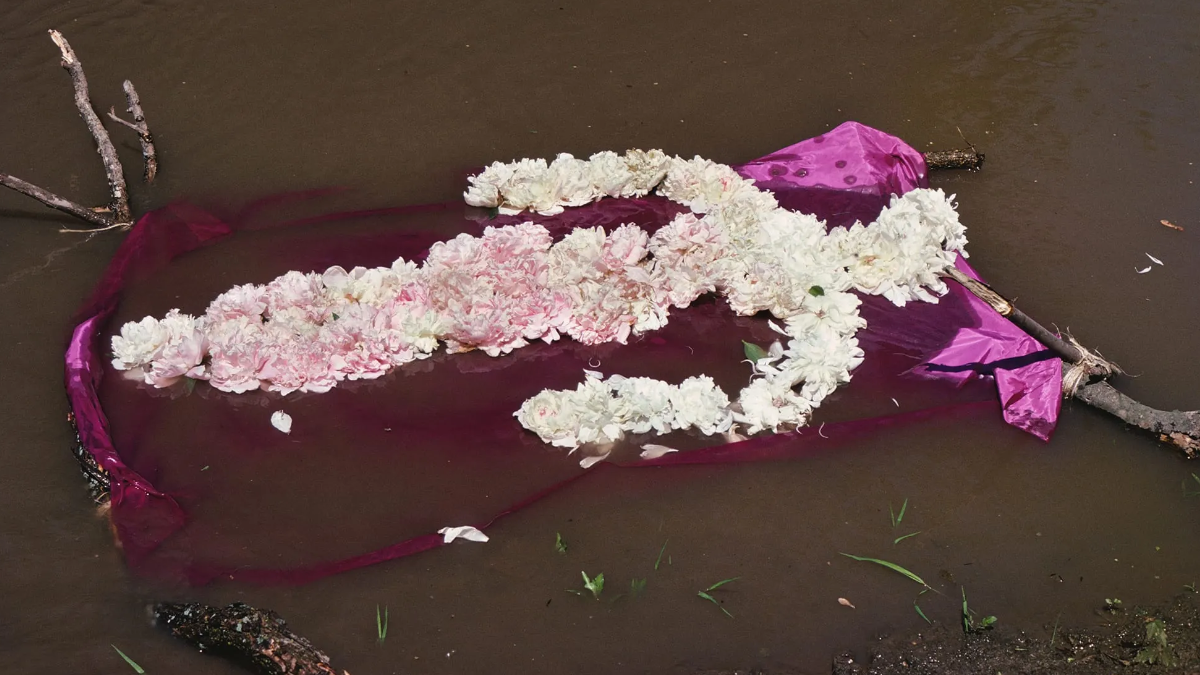
- The indelible impact of late Cuban-American artist Ana Mendieta's practice will be celebrated in a forthcoming retrospective in New York next year.
- Twenty artists and designers across the Americas will be featured in Malvestir at MoMA PS1 this spring, probing the historical and contemporary resonances of Latin American dress.
From the Archive
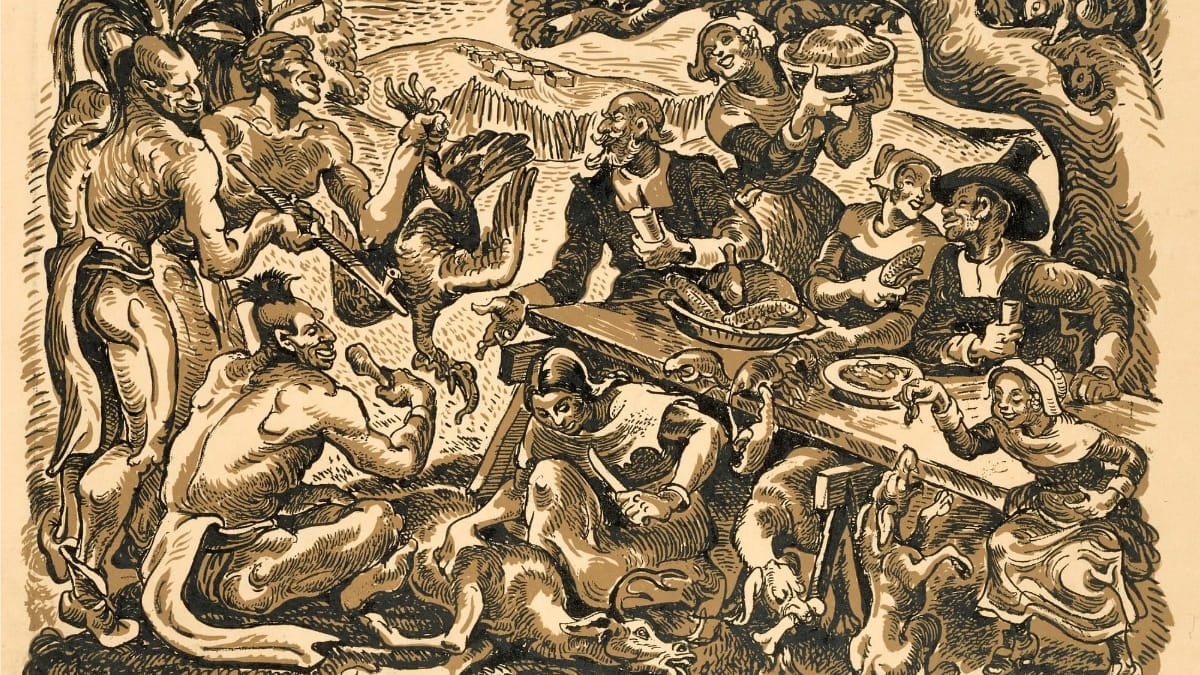
You Cannot Give Thanks for What Is Stolen
American artists were instrumental in propagating the false narrative of Thanksgiving, a deliberate erasure of violence against Indigenous peoples. | Joseph M. Pierce
Read MoreWhat Else Is Happening?
- At the Whitney Museum, Visual AIDS is hosting its premiere of seeds in a dying colony, a program of four newly commissioned video works addressing the neocolonial implications of the Trump administration's deliberate cuts to global HIV/AIDS funding and the resulting fatalities. (Sun, Nov. 29) [whitney.org]
- Thinking ahead about your New Year's resolutions? You can keep track of your progress ahead of time by your own faux leather journal in a Bookbinding 101 workshop at Brooklyn Craft Company. (Sun, Nov. 29) [brooklyncraftcompany.com]
- Calling all fun guys! NYC Parks invites you to learn more about mycology through a mushroom identification hike at Long Pond Park in Staten Island. (Sun, Nov. 29) [nycgovparks.org]
- After the long weekend, Parent Company welcomes visitors back to trinket, a group exhibition of bite-sized works with monumental significance curated by Anne-Laure Lemaitre. Featured artists include Emma Safir, Jill Magid, Noormah Jamal, Amy Bravo, Shaina Tabak, Marsha Pels, Xin Liu, Michael Assiff, and Huidi Xiang, among others. (Wed, Dec. 2) [parentcompany.net]

