Why Won’t Britain Return Looted Gold to Ghana?
In “The African Kingdom of Gold,” Barnaby Phillips explores how British colonial forces plundered the Asante people and expertly traces the stolen artifacts’ afterlives in museum storage.

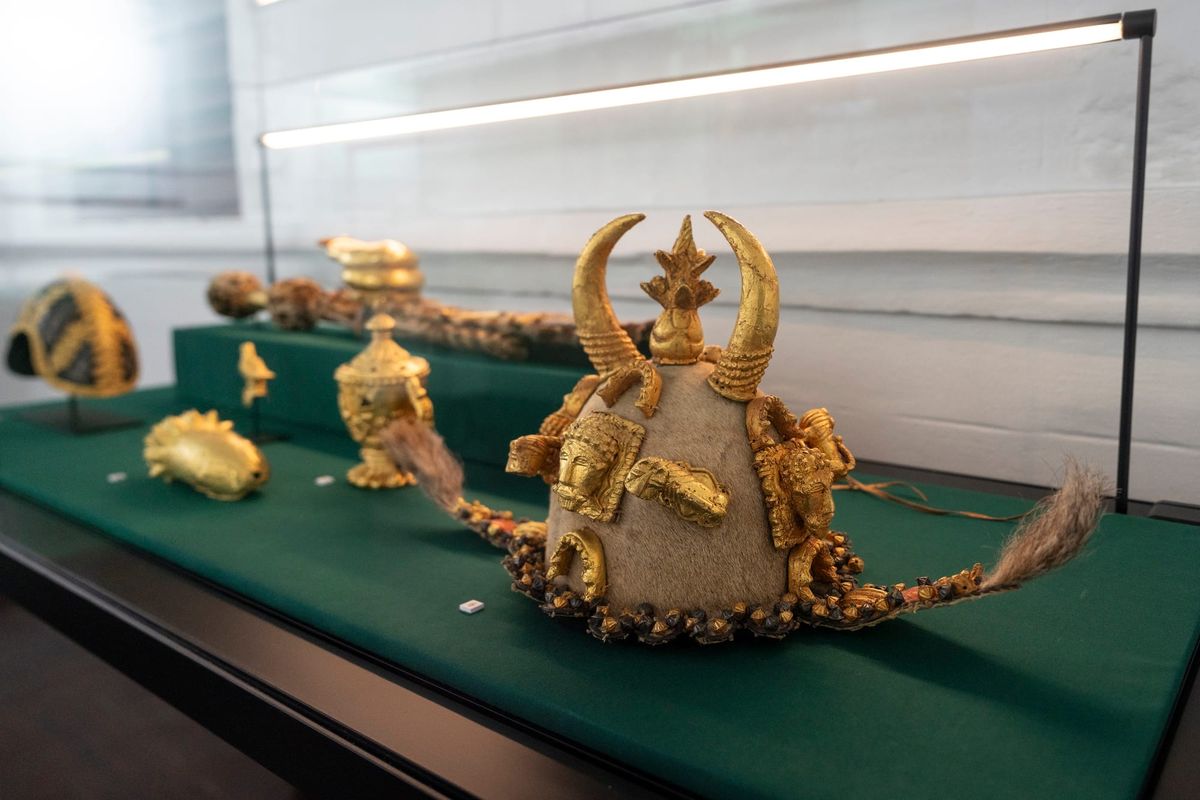
When Prempeh I was enstooled as Asantehene (king of the Asante Empire) in 1888, his immediate concern was the British presence on the Gold Coast of Africa. Barely a decade had passed since colonial forces led by Sir Garnet Wolseley sacked the Asante capital of Kumasi, unleashing devastating violence. That trauma still lingers: The Asante people remember the 1873–74 war as the “Sagrenti War,” a corruption of Wolseley’s name.
Prempeh would not prevail. In late 1895, British forces under Sir Francis Scott marched into Kumasi again, looting and burning the royal palace and mausoleum. They demanded not only a vast indemnity in gold but also the Golden Stool, the most sacred symbol of Asante identity. Prempeh prostrated himself before Maxwell, and, according to Asante oral accounts, begged him to “not take my people and myself away.” It made no difference. Prempeh was deported to the Seychelles, where he would spend nearly three decades in exile. The Golden Stool remained hidden and protected from the British, awaiting his return.
This episode forms part of the wider story told in Barnaby Phillips’s The African Kingdom of Gold: Britain and the Asante Treasure (2026). Combining archival research with original interviews, Phillips reconstructs a history of violence and systematic plunder while following the afterlives of the looted objects themselves.