Yoko Ono’s Art Is an Exercise in Hope
By inviting viewers to participate in her work, she has consistently framed collective hope amid a cultural backdrop of suffering and pain.

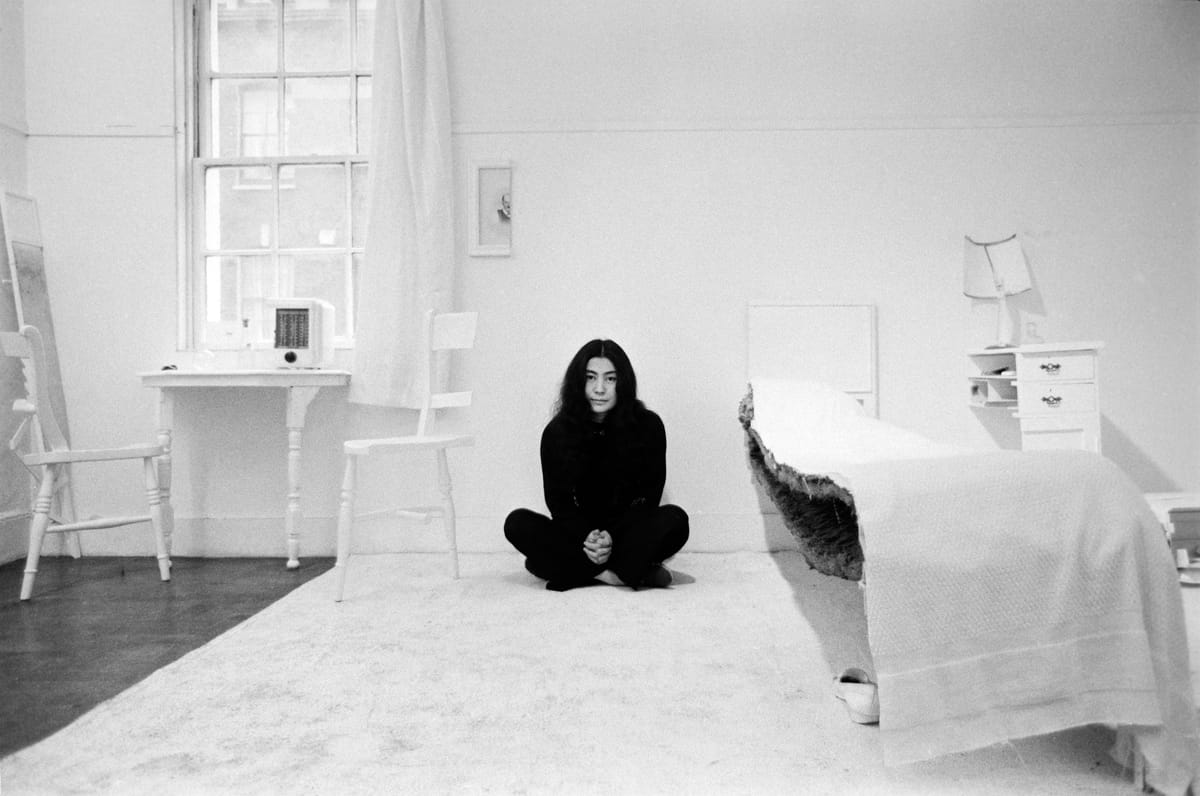
CHICAGO — With her iconic long dark hair curtaining her demure countenance, Yoko Ono has been in my personal pantheon of women makers for most of my life. When I was a distraught teenager in a midwestern suburb, she was there — singing discordant arias from my bedroom stereo. Her siren call couldn’t quite be deciphered, but, like a feminist signal from afar, it cut through the fog of oppressive cultural forces.
Ono is truly one of the world’s most generous artists. By including the viewer as a participatory component of her work, she has consistently framed collective hope amid a cultural backdrop of war, violence, racism, and sexism, each of which has touched her personally.
At 92, Ono has settled into a quieter life in upstate New York on 600 rural acres, leaving her home in The Dakota on the Upper West Side, where her iconic presence embodied the fertile years of New York City’s avant-garde.
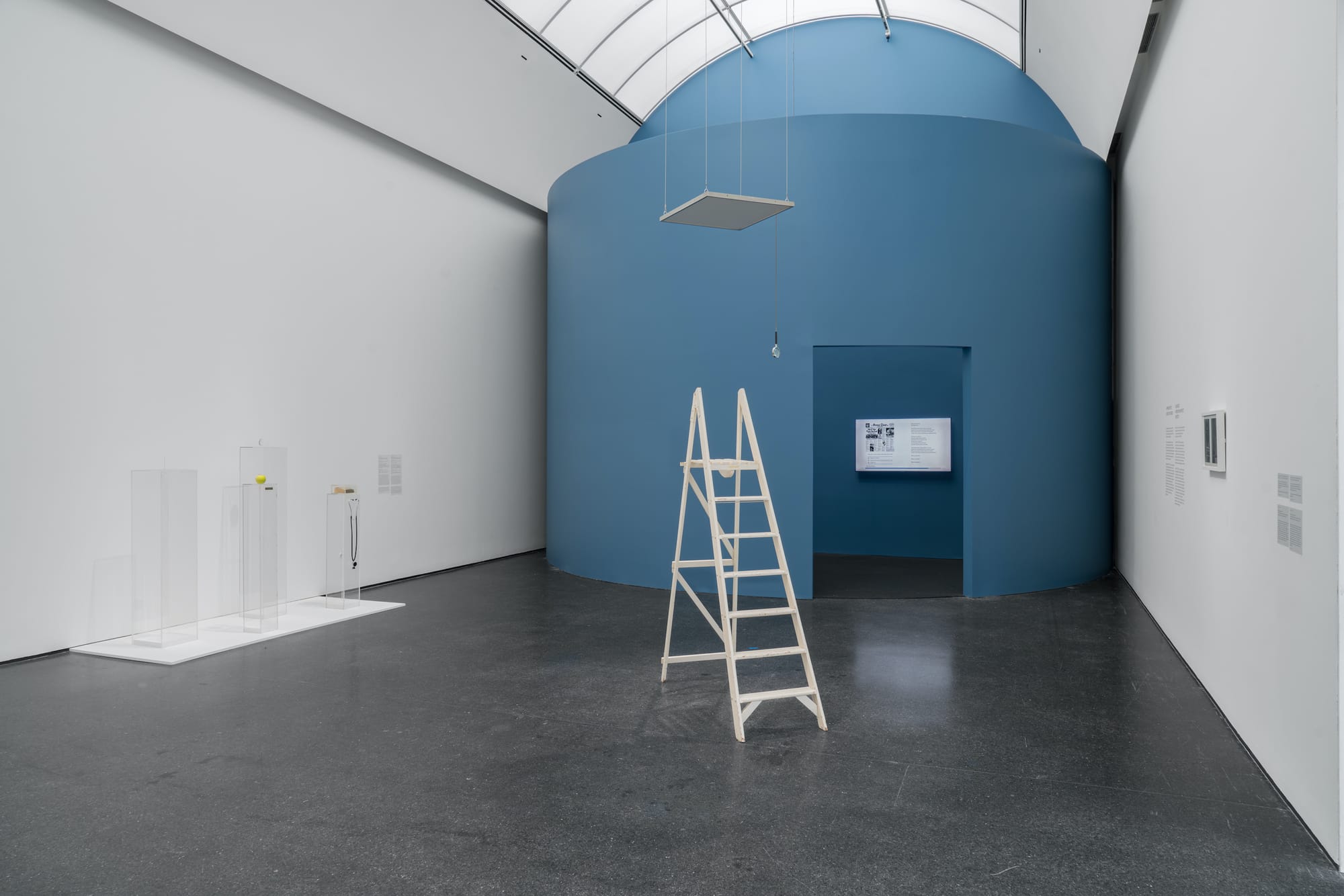
Yoko Ono: Music of the Mind, currently at the Museum of Contemporary Art Chicago, originated at Tate Modern in London. The monumental, thoughtful exhibition is mostly chronological, and strikingly black and white — both in wall color and artwork — like pages of a book. The show brims with elegant bits of minutiae: small instruction cards, archival ephemera (posters, exhibition invites, and photographs), assorted videos, and invitations to take part in interactive pieces composed of such elements as a nail wall or chess tables.
Before entering the main exhibition, “Wish Tree” (1966), in the entrance hallway, welcomes visitors to write a wish and tie it to one of four trees. The trees, now bearing thousands of notes, feel as if the weight of humanity’s needs and desires is suffocating them. Nearby, “My Mommy is Beautiful” (2004) asks viewers to write a note to their mothers and tape it to a wall. As a mother herself, Ono was tormented by her second husband Tony Cox’s kidnapping of their daughter, as discussed in David Sheff’s recent book, Yoko: The Biography, Later, when her second child, Sean, was born, his father, John Lennon, was the primary caretaker. Although “My Mommy is Beautiful” veers toward sentimentality, it also suggests the complexities of parenting. Many of the notes reveal absence and sadness as well as gratitude and respect.

I was so eager to see the full show that I did not to participate in either action. At the time, I also felt a bit put upon to engage in these overly simplistic directives that may have lost their original spirit in translation.
“Painting to be Stepped On” (1960), a torn canvas taped to the floor, introduces us to Yoko’s early work, made when she was connecting with Fluxus artists such as George Maciunas and John Cage in New York. For “Painting to Shake Hands” (1961), visitors can put their hand through a hole in a white canvas and wait for someone to shake it. But what happens if no one does — if, perhaps, no one wants to touch you? Like most of Ono’s work, pausing a pedestrian act magnifies the implications of a lived experience. Again, I could not get myself to participate.
I recently read in Sheff’s biography that Ono consulted psychics throughout her life to help make decisions about everything from business investments and property acquisitions to personal matters. She was often running the family empire on star charts and intuition. It makes sense that she would seek an alternative system of divination within both her personal life and her art practice. A question lingered, however, as I viewed the exhibition: Can such ephemeral, anti-materialist works be reframed in an institutional setting or do they inherently resist packaging?
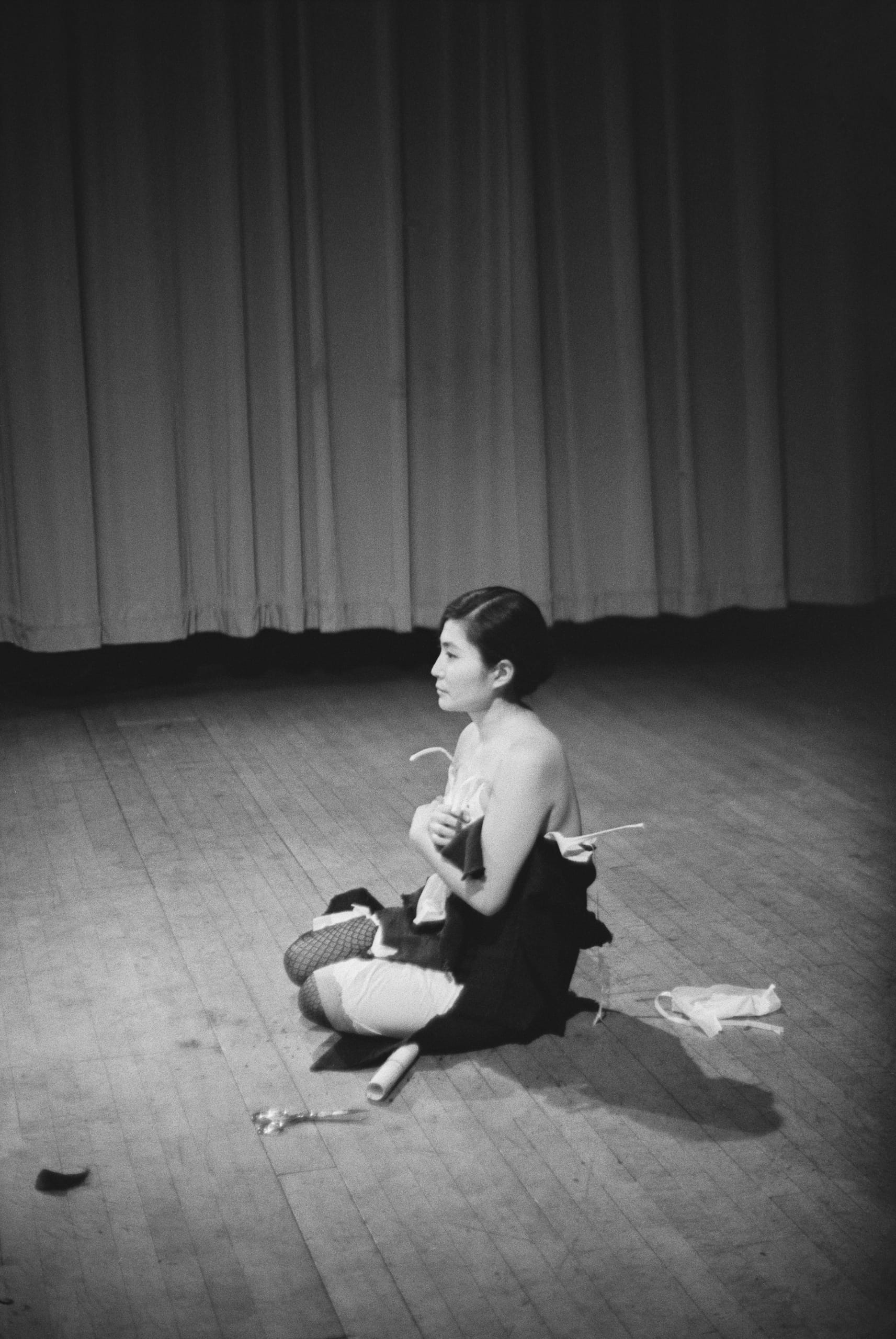
A video of Ono performing “Cut Piece” (1964), her best-known work, shows her sitting on the stage of Carnegie Recital Hall in New York. One by one, audience members cut away parts of her clothing. The snips are small until a young man begins cutting, exposing her slip, then her bra. Ono’s eyes shift and we sense her discomfort. The work coaxes vulnerability or even danger to the surface — these feelings require courage to occupy. Nearby is a line of black capes from “Bag Piece” (1964). I watched a young woman wrestle the cloth over her head. A friend led her into the circle delineated for participants. She shuffled around, stepping on the cloth. Once again, I chose not to participate. I wondered if I’m jaded by actions kept safely corralled in an art world, while purporting to have broader impact. The postwar spirit gave rise to the avant-garde — hippies, Vietnam War protests, feminist and Civil Rights activism. By the 1970s, the same avant-garde had been co-opted by the market forces of capitalism. The historicism of Ono’s work now feels fragile and remote, like the thin typed sheets of instructions from her manuscript Grapefruit (1963-64). Today, prompts like “Imagine the clouds dripping. Dig a hole in your garden to put it in,” are more artifact than simmering poetic anarchy.
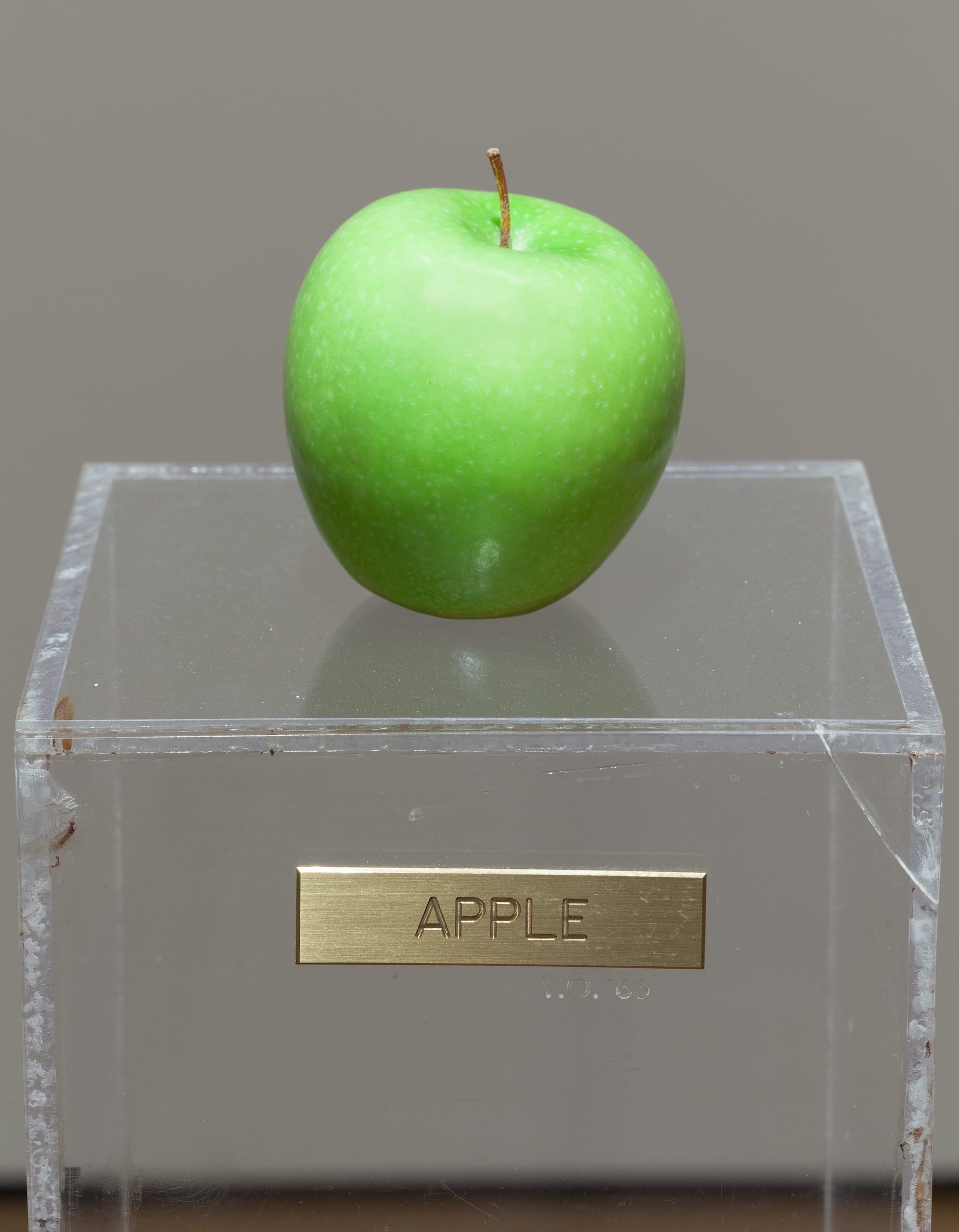
Midway into the exhibition, John Lennon enters. They met in London at her 1966 exhibition at Indica Gallery. He was entranced by her display of a solitary apple, as well as a piece inviting viewers to climb a ladder and use a magnifying glass to read a tiny word on the ceiling, “Yes.” His presence here, within her already established career, hits hard. Once she paired with Lennon, she became known in the public imagination as the interloper who destroyed the Beatles. Even though their union generated important projects, performances, and albums, her pre-Lennon production felt more radical, more feminist, more outré.
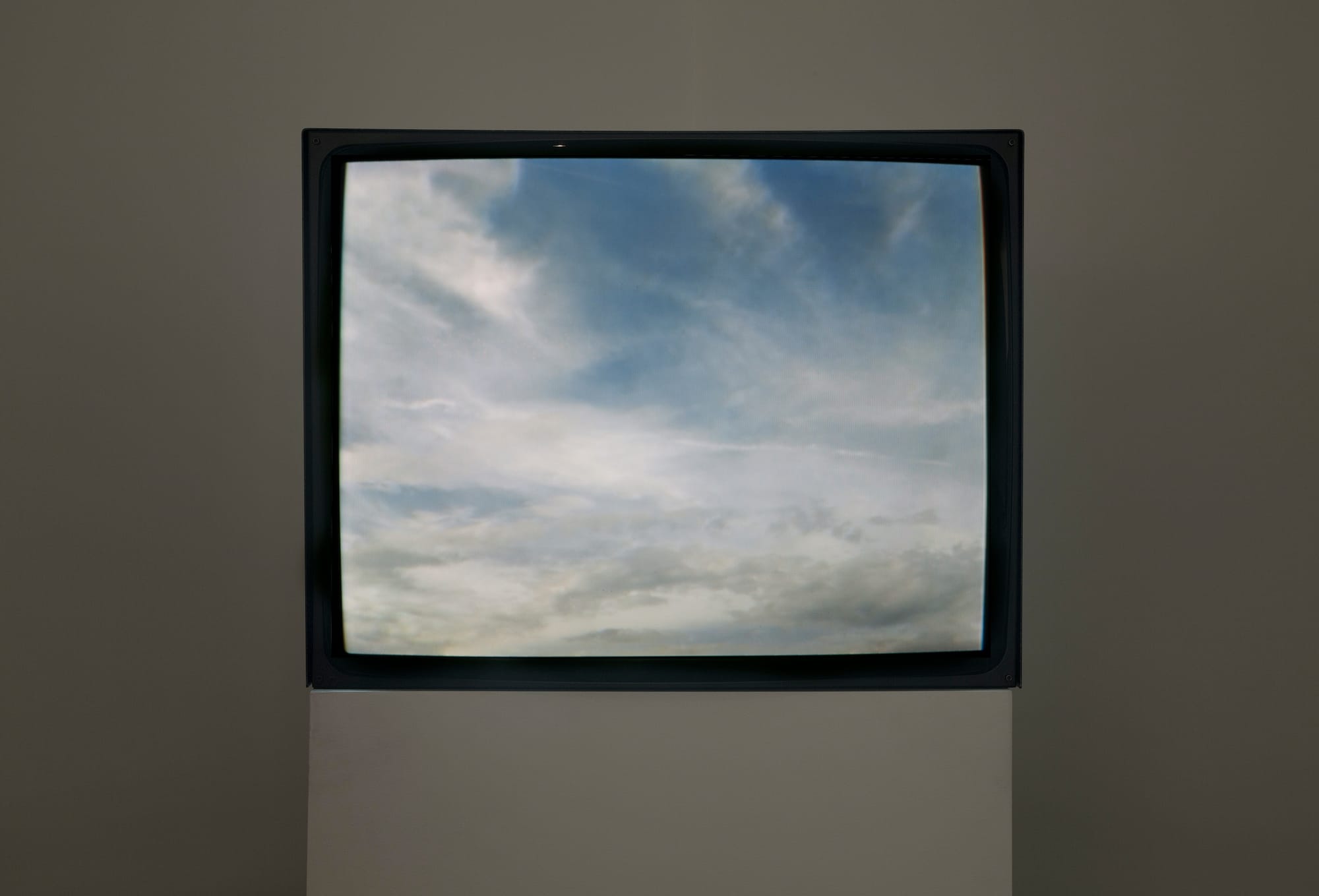
Their collaborations brought a mass audience that they effectively addressed in works such as “Bed-In for Peace” (1969), performed during their honeymoon. Ono carried on creating iconic works like “Film No. 4 (Bottoms)” (1966–67), close-up images of 200 naked, ambulating buttocks, and in 1970 to ’71, she and Lennon produced and scored the 25-minute film “Fly,” showing an intrusive fly meandering across a woman’s naked body. Until Lennon’s murder in 1980, outside The Dakota, the duo maintained a productive whirl. But the collaboration diminished Ono’s standalone female brazenness. Work that had blossomed on the margins was often ridiculed in the mainstream.
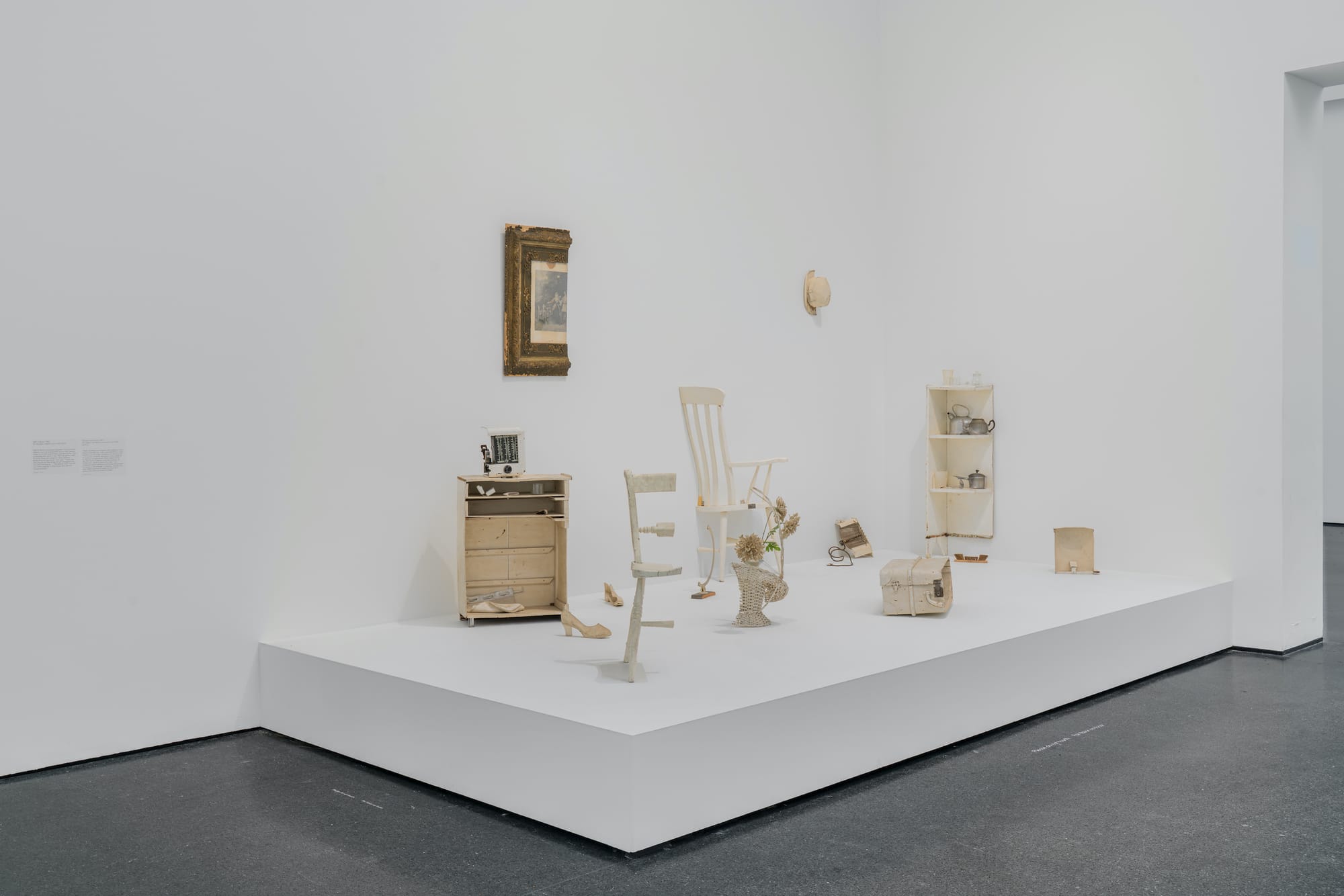
A room of tables strewn with broken white pottery shards, “Mending Piece” (1966), welcomes visitors to reassemble the objects with tape and string. Shelves of complete works speak of repair, care, and community healing. I taped, tied, and wrapped some shards. Yoko finally broke through my resistance. When I reached “Painting to Hammer a Nail” (1961) in the next room, I did not hesitate to pound a nail into the board. The noise resonated through the gallery as a deliciously insolent intrusion.
As soon as I exited the exhibition, I crossed the hall to head back in. This time I thrust my hand through the canvas hole and waited. No one approached. I felt awkward. Then someone with a large, warm hand grasped mine. The encounter was surprisingly touching, even if it was the museum guard not wanting to leave me stranded there. The experience felt significant, a gesture for humanity siphoned through the personal.
I took off my shoes and hoisted the black robe from “Bag Piece” over my head. I shuffled into the circle and slowly knelt. I could see enough to sense the room. I stretched, turned, shrunk down again as people watched. I thought I had momentarily transcended something, maybe myself, as Ono intended. She once said, “I’m trying to give something that is not the ultimate state of mind, but something that leads you into a different dimension of thought and state of mind.”
On my final exit I paused to write a wish for the “Wish Tree.” It still seemed a bit trite, but contemplating a wish is no small assignment. I scrawled something like, “I wish for the courage to not be held back by my insecurities.” I left the museum thinking that perhaps the avant-garde isn’t defeated after all. These innocent, collective acts, even six decades later, hold the ability to expand awareness, to defeat the scorch of fleeting thoughts. She makes it simple: “Light a match, watch until it goes out.” The implications continue to smolder.
Yoko Ono: Music of the Mind continues at the Museum of Contemporary Art Chicago (220 East Chicago Avenue, Chicago, Illinois) through February 22. The exhibition was curated by Juliet Bingham and Patrizia Dander.