10 Contemporary Artists Reckoning With Fatherhood
Immigrant dads, absent dads, flawed dads, fellow artist dads, adopted dads — these artworks explore all that a father figure can be.

You’ve seen Goya’s “Saturn Devouring His Son.” You can picture Frida Kahlo’s family tree. There exists a litany of Dutch masters’ renditions of domestic scenes, children crouching at the ankles of adults. What about depictions of dads today? Fatherhood endures as rich subject matter, and there are a whole host of contemporary artists playing with it, questioning it, turning it over lovingly in their hands.
On the occasion of Father’s Day, Hyperallergic has rounded up 10 artists making work that involves dads of all kinds: immigrant dads, absent dads, flawed dads, fellow artist dads, adopted father figures — or an imagined vision of what future fatherhood could be.
Arleene Correa Valencia
In 1996, Arleene Correa Valencia’s father left Michoacán, Mexico, embarking on a journey to find work in the US. Correa Valencia, her mother, and her siblings eventually joined him in Napa Valley, California. But in the interim period of separation, all they had were letters reminding each other of their love.
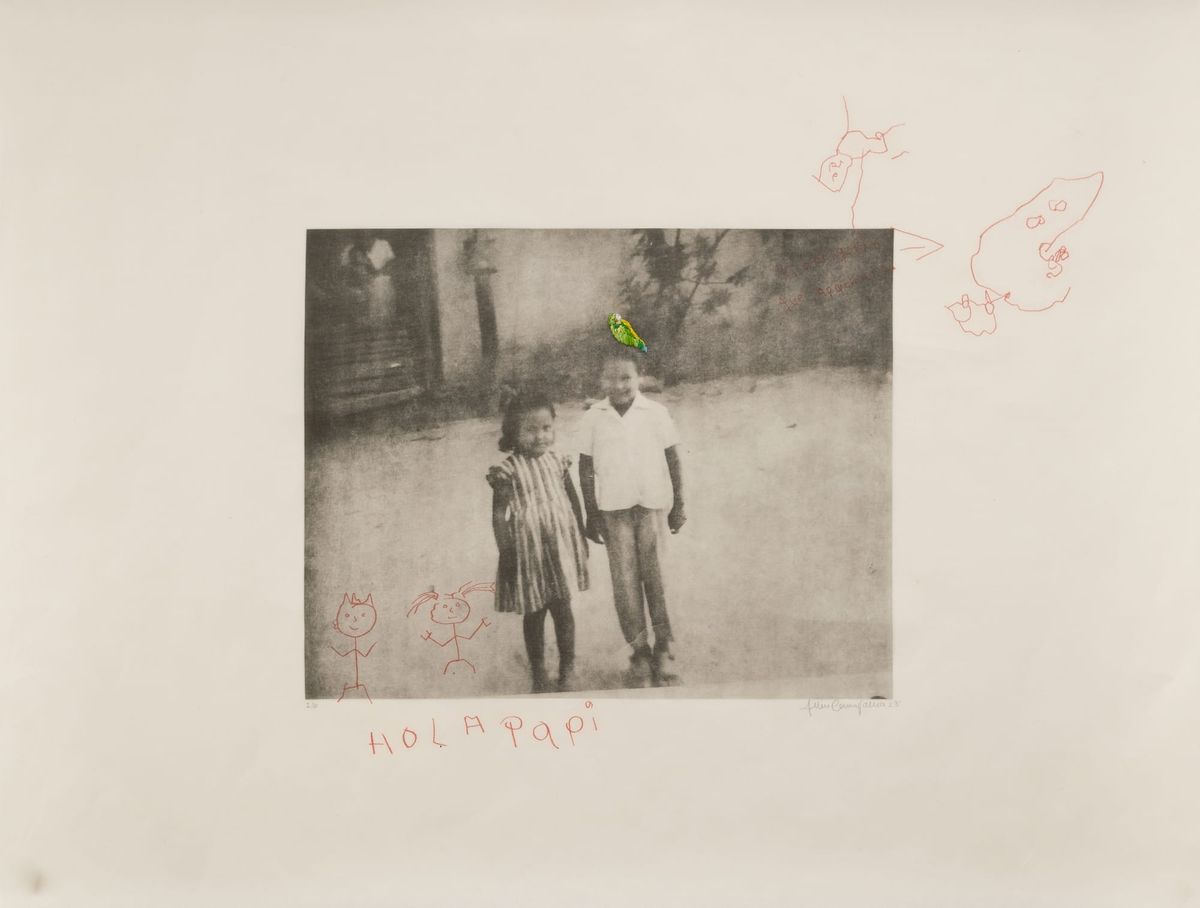
During a 2022 Federico Sevilla Sierra Printmaking Residency at Mullowney Printing in Portland, Oregon, Correa Valencia created Antes de mí, a series of six copperplate photogravures that combine family photographs, snippets from correspondence, etchings of traditional Mexica images, embroidery, and beading. Together, they are a textured chronicle of resilience amid upheaval both personal and political. In “Hola Papi,” Correa Valencia scanned portions of a drawing she had sent her father, which she layered as soft ground etchings: two smiling stick figures, childlike scrawl, and an abstract rendition of “el perequito” (the parakeet).
“Even though we were raised in the US, my father always made sure we knew our Mexico. He taught us to value our language, our ancestors, and to be proud to be brown,” Correa Valencia told Hyperallergic. “As a child, my Pa’s dream was to be an artist, and when we got to this country he realized that dream would never come true for him. I’ve always felt that I carry that dream inside me as well. Being an artist doesn’t feel like it belongs to me. It belongs to us.”
Amanda Ross-Ho
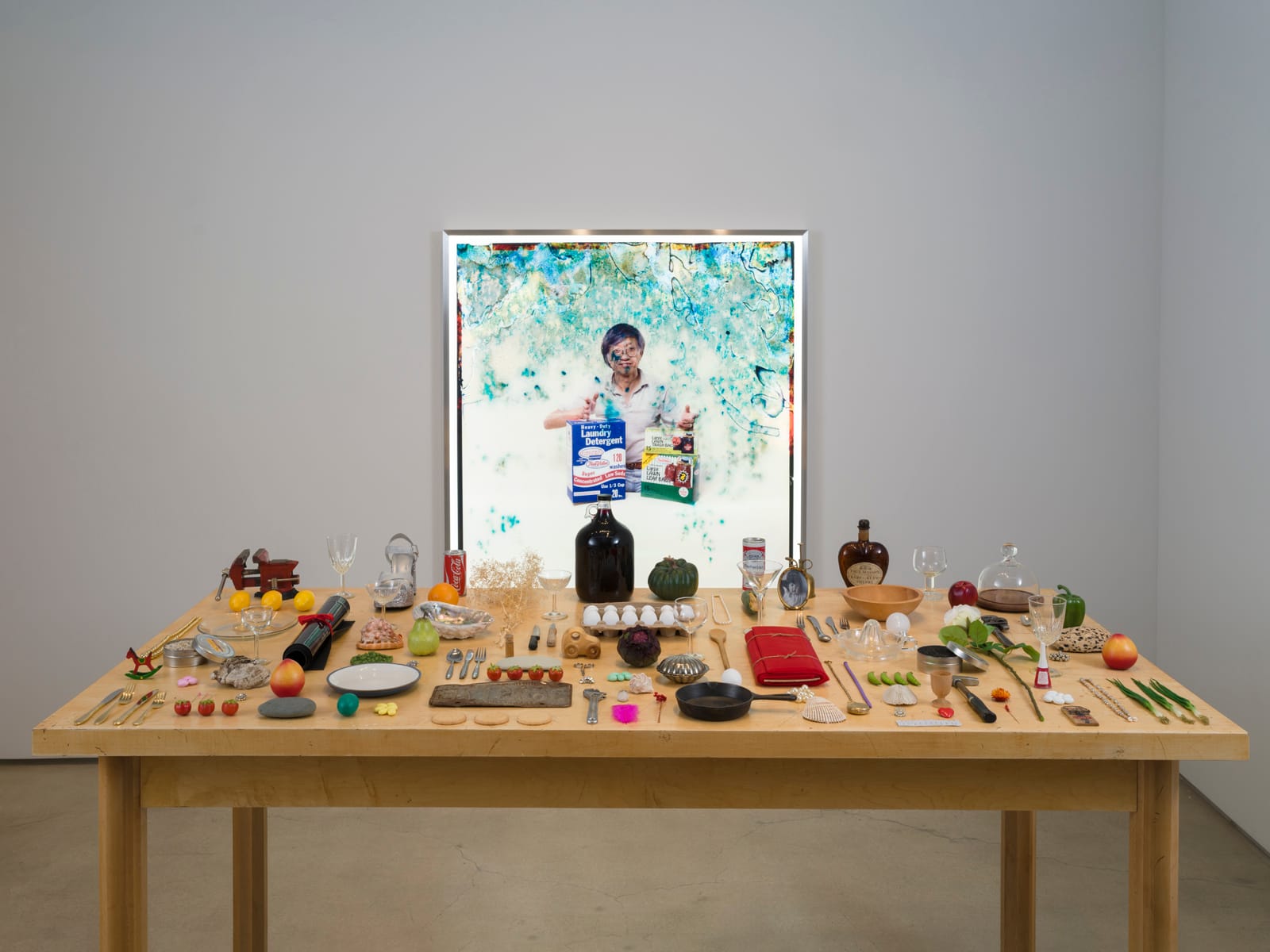
In the early 1980s, Ruyell Ho, a Chinese immigrant to the US, applied for a job at a commercial photo studio. He was an art school graduate, but had no experience photographing products. Ho gathered a selection of objects from around his home and produced a portfolio of 37 images that he used to apply (successfully) for the job. Decades later, his daughter, Amanda Ross-Ho, reverse-engineered those photographs to analyze his love for glossy American aesthetics and the “fake it ’til you make it” sentiment that many immigrants adopt by necessity.
“Untitled Prop Archive (THE PORTFOLIO)” is a sleek sculptural work that also functions as tangible evidence of the preoccupations and passions passed down through families. Ross-Ho was a professional prop-maker, a skill she drew on to make or source hundreds of distinct objects: fake fruit, vintage Budweiser cans, a string of pearls. What Ross-Ho calls “a visit to the memory palace” is underscored by the objects’ presentation on a scaled-up version of her childhood kitchen table, which also functioned as her father’s workspace. In a lightbox behind the table is a water-damaged transparency of Ross-Ho’s father, blown up to life-size, turning him into a quasi-religious figure presiding over an altar of consumption.
Larry W. Cook
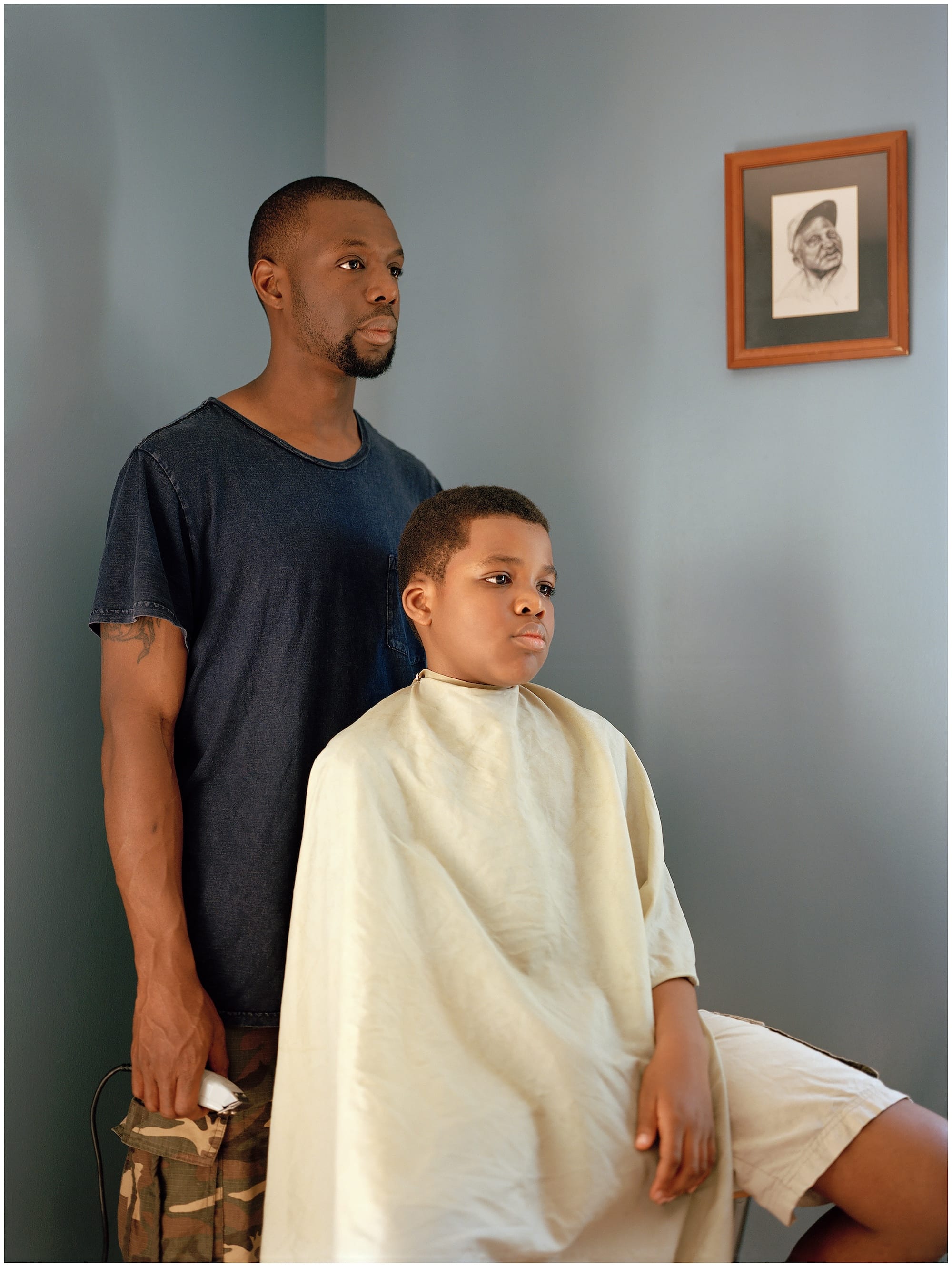
In an essay about his ruminations in the final hours before he became a father, his life changing irrevocably, Ta-Nehisi Coates writes, “A man who doesn’t raise his kids is only half a man.” Larry W. Cook’s photo series Fatherhood (2018) is an ode to everyday fathers and their twinned vulnerability and strength. A little girl’s arm splayed over a masculine chest, her pink backpack in his hand and a punching bag in the background. An electric razor. A Barbie doll. Neutral gazes that could be read as hard or soft.
Cook, an artist, archivist, and professor at Howard University, did not grow up with his father in his life. The subjects of this series are his family members, close friends, and father-like figures from his childhood who filled the gaps of a paternal presence. Cook uses the medium of portraiture to complicate the prevailing narratives about Black fatherhood, posing more questions about viewers’ preconceptions and biases than he gives answers.
Melissa Joseph
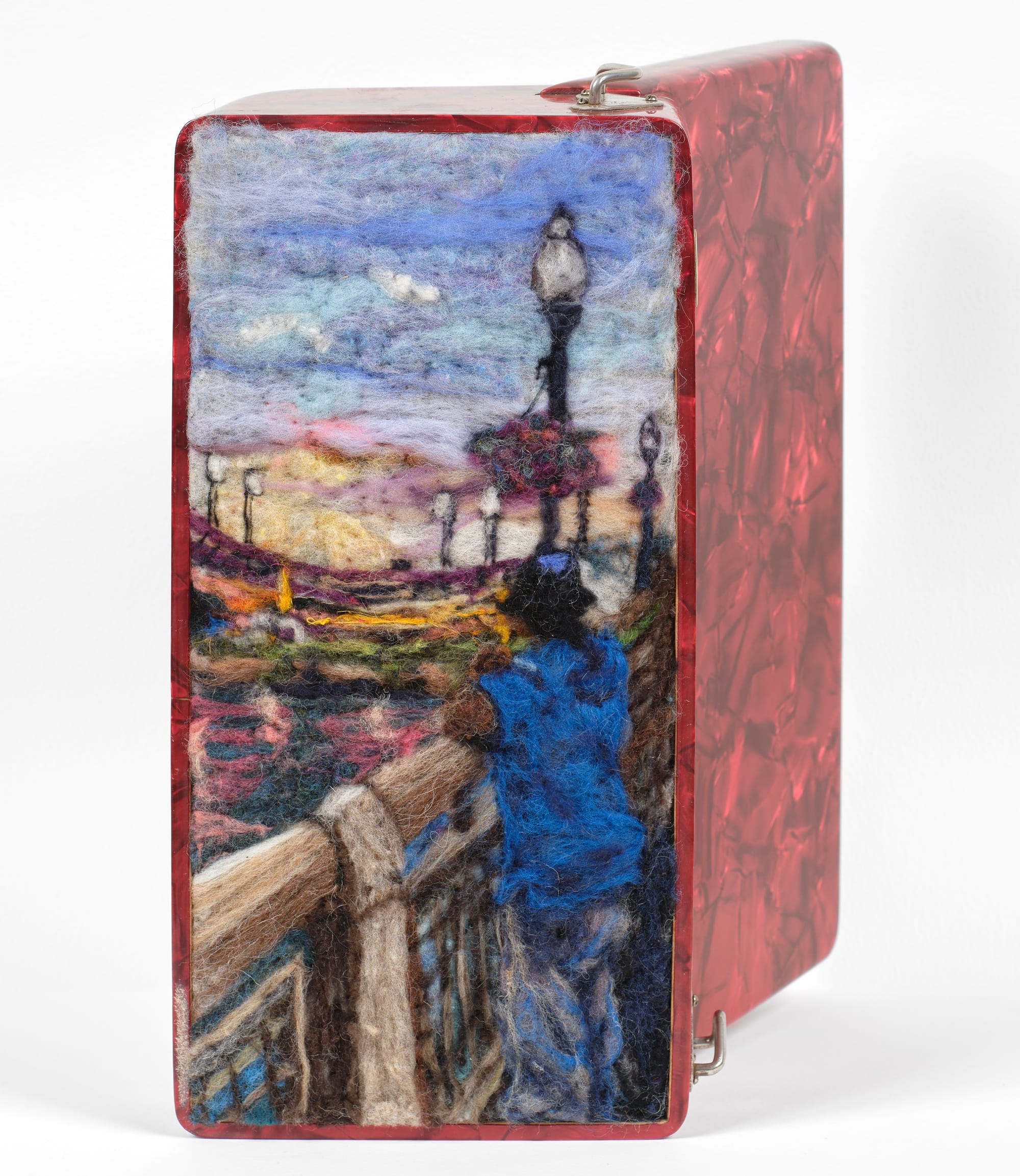
Melissa Joseph’s father was always making. “He was folding napkins into swans, scribbling on receipts — or sometimes on my drawings,” the artist told Hyperallergic. “He was sewing our dolls when they got holes in them, shaping crudite into small Keralan villages.” K.C. Joseph had wanted to be a plastic surgeon, but as an Indian immigrant in small-town Pennsylvania in the 1970s, he faced systemic prejudice against medical practitioners with international degrees. As a general surgeon, he was more often dealing with people’s insides — and, in fact, made an art practice out of staging patients’ just-removed gallbladder stones in front of torn-out pages from magazines in the hospital waiting room. Melissa Joseph exhibited those photographs at Soloway Gallery in 2022, seven years after K.C. died. It was also the event of her father’s premature death at age 67 that inspired Joseph to quit her teaching job and enroll in an MFA. She has since made numerous works that depict her family through the mediums of felt and found objects, lines of memory softened and blurred.
“You never know how grief will impact you. We didn’t have a perfect relationship. He was a complicated guy in many ways, carrying a lot silently,” Joseph said. “I think his last gift to me was that his death made me rethink the rest of the time I have left … I felt his presence in the studio, especially in those early days, and every time I made an image of him, it was like he came back for a second. And so I just kept making them.”
Mykolas Valantinas
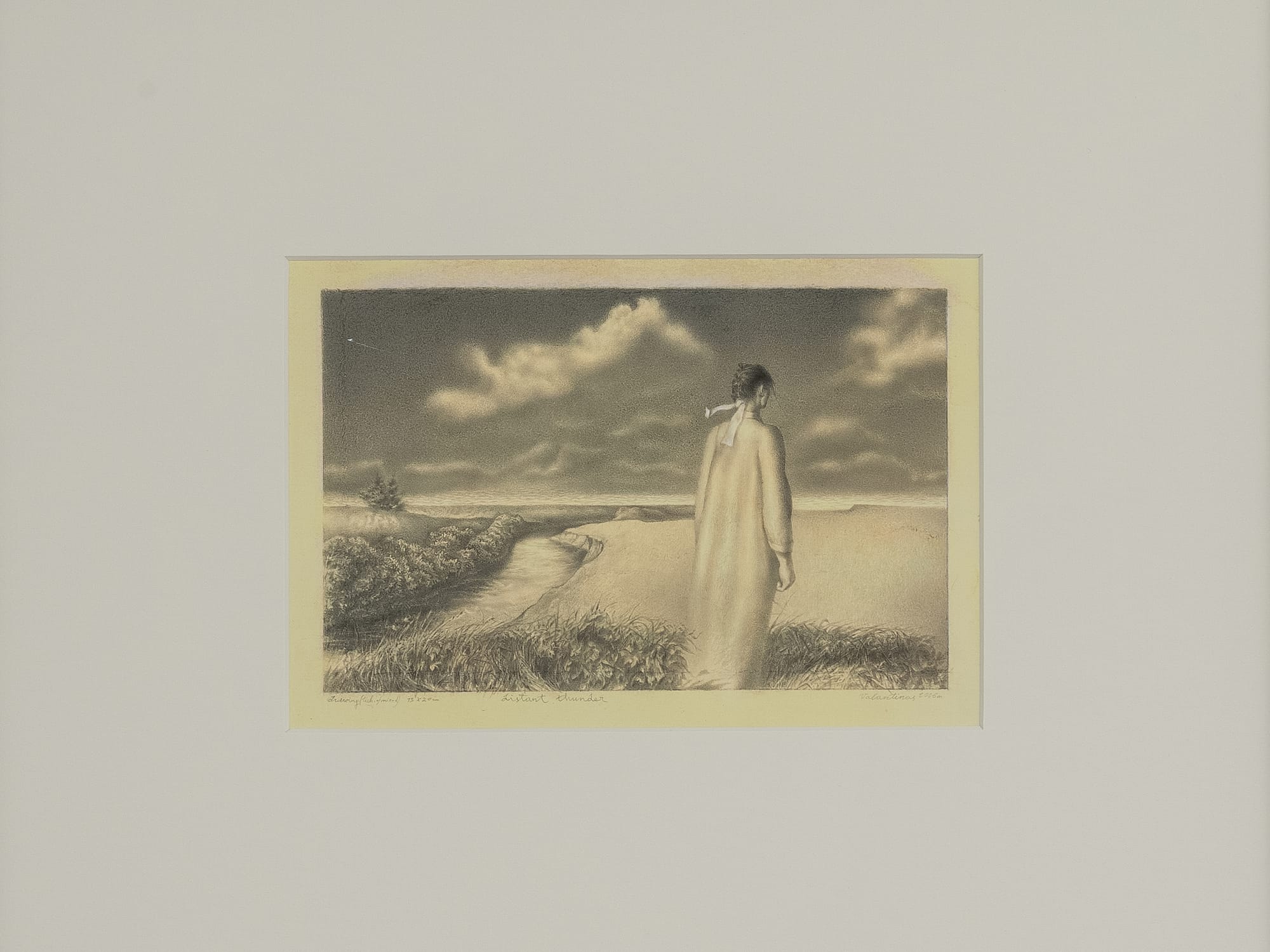
For some people, a father is not so distinct from a piggy bank. He writes the checks and his children cash them. Rytis Valantinas is an artist and a father who authored some of the first banknotes of independent Lithuania in the 1990s. In the exhibition Father II, which was on view at the Contemporary Art Centre in Vilnius in March, Rytis’s son, Mykolas Valantinas, reanimates and reconfigures an archive and a legacy by using AI to appropriate his father’s much-circulated designs.
Rytis’s litas notes are no longer a valid form of tender, since the country adopted the euro in 2015. To Valantinas, that makes them ripe for interpolation into imagined other dimensions. He makes the illustrated lynx that appeared on a provisional design strange and uncanny — just slightly off, the shadows not quite right. Ideas about imitation and independence swirl. Valantinas ultimately approaches money as a nationalistic symbol as well as a family relic, bringing a topic that one is told never to mention in polite company — not at a stuffy family dinner, at least — to the fore.
Lavar Munroe
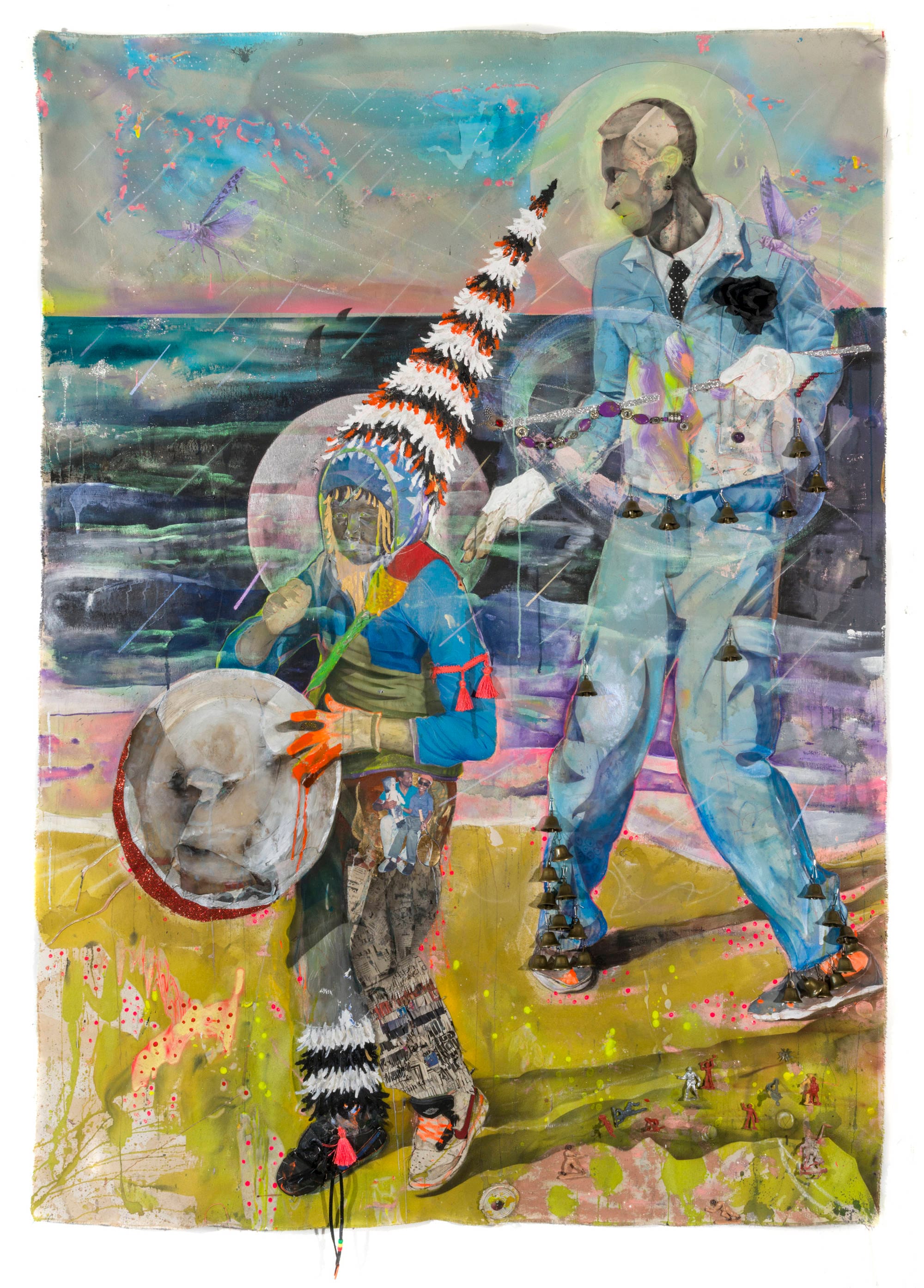
Not all fathers are biological. At the Bahamas Pavilion at this year’s Venice Biennale, Lavar Munroe incites an intergenerational dialogue between himself and the late artist John Beadle. When Beadle’s obituary suddenly surfaced from a stack of newspapers in Munroe’s studio one day, Munroe told Interview, “At that point I knew that there was a real connection between the spirit world, Beadle, and myself. Nobody can tell me otherwise.”
Munroe’s and Beadle’s practices are both visually and conceptually inspired by the traditions of Junkanoo, the Bahamian national festival known for its collective processions, elaborate masquerade costumes, music, and improvisational production. It’s this colorful cacophony that Munroe draws upon for his solo show at Monique Meloche Gallery in Chicago, DANCE WITH MY FATHER AGAIN, on view through August 1. Materials like boat rope, tassels, glitter, toy soldiers, and Air Jordan 1 shoes are collaged together on canvases that depict figures isolated from an imagined procession and against a fantastical ocean backdrop.
Ruby Neri and Manuel Neri
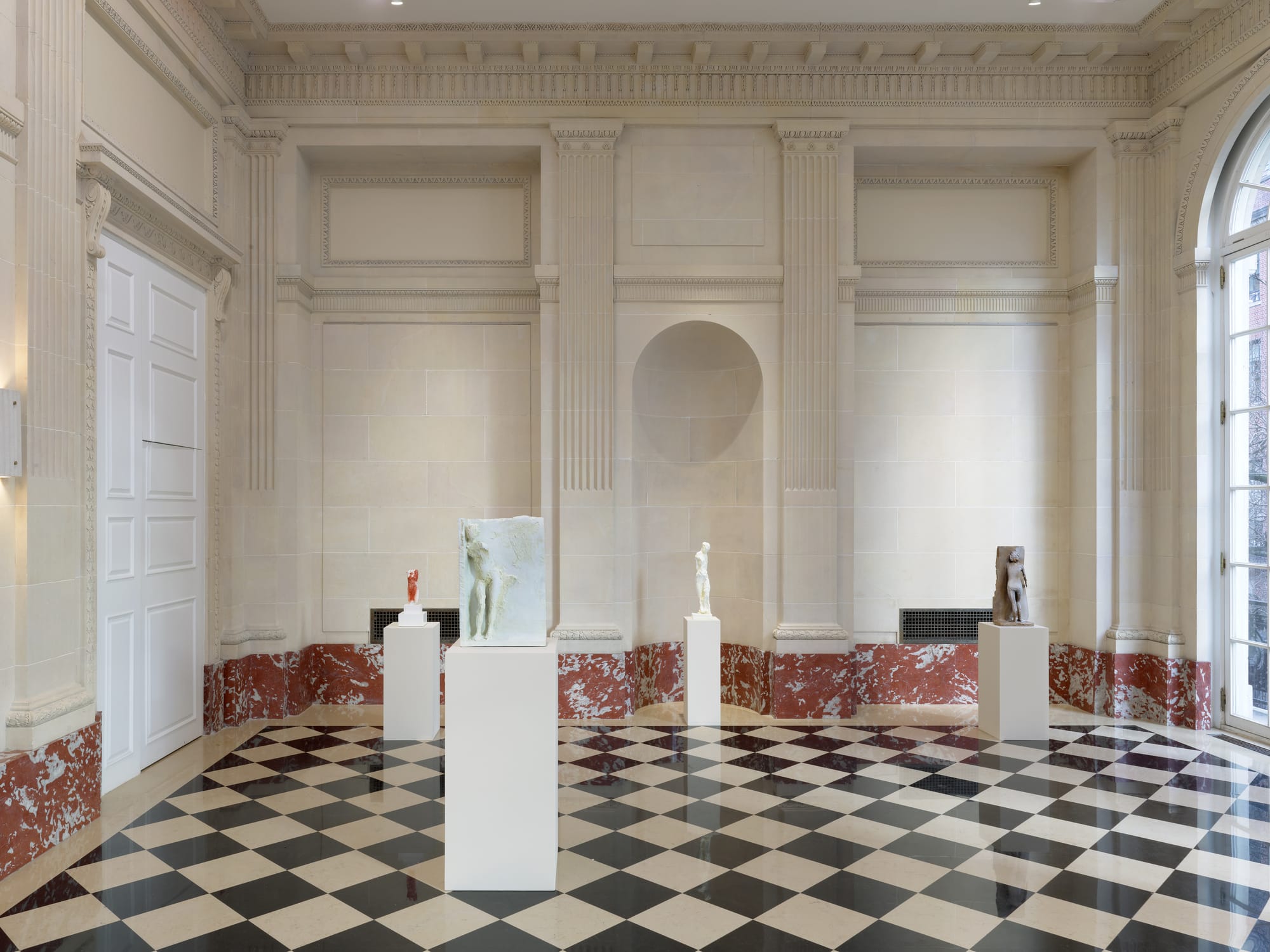
Ceramicist Ruby Neri curated a show of works by her late sculptor father Manuel Neri at Salon 94 and Andrew Kreps Gallery this spring. One of the defining figures of the Bay Area Figurative Movement, Manuel Neri rendered bodies out of plaster, marble, bronze, and clay while Abstract Expressionism was all the rage. “Romance, nostalgia, stories, and travel — my father had a rich world, and at times would allow us, his kids, glimpses of it: his stories of being among the Beat poets, traveling in Mexico, being left on desolate islands in the Adriatic Sea with little food, or flying over the Nazca lines in a biplane,” Ruby Neri wrote in a text accompanying the show. “All of these stories sounded fantastical and wondrous to us — a life I came to naturally expect for myself as well.”
Alex Westfall
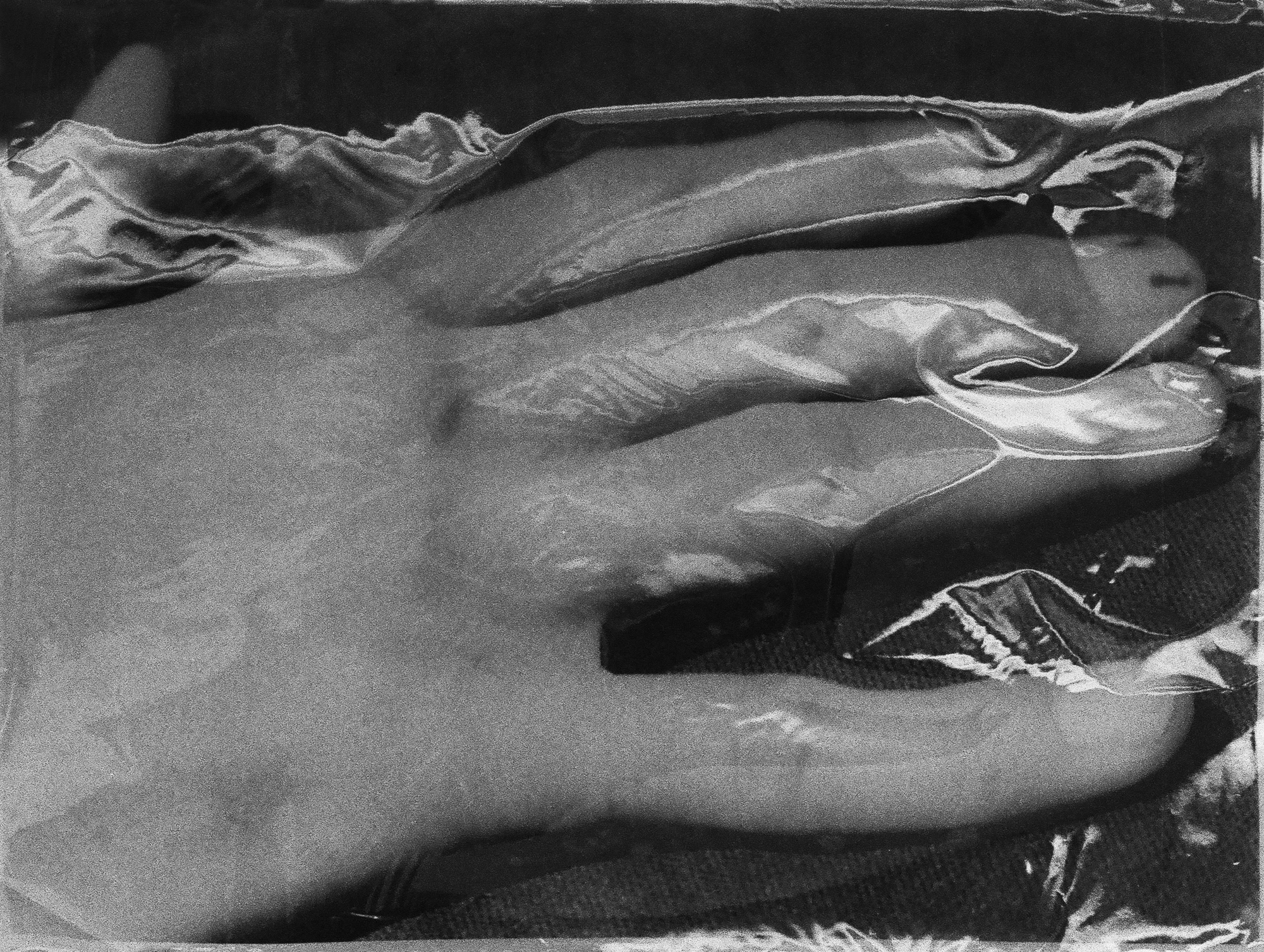
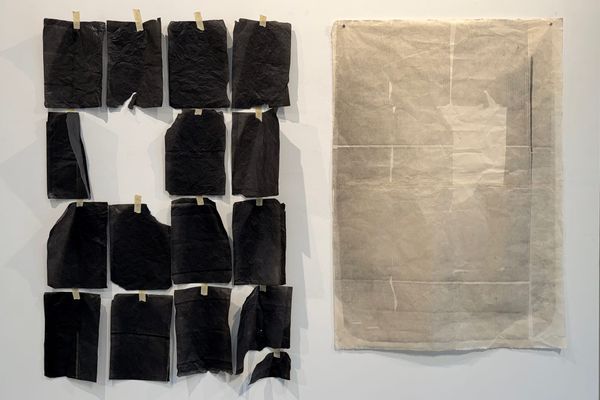
Alex Westfall’s debut photography show See Through arranges more than two dozen images inside Isolde Gallery, a new artist-run space in New York, like an advancing and unwinding roll of film. Three generations of family photographs — spanning 1978 to 2026, from Manila to Los Angeles — refract and reverberate, offering surprising iterations. Westfall temporarily reunites with her grandmother when she steals her shadowy silhouette from an Instagram post, giving it the appearance of age through an intensive darkroom practice that involves manipulating prints with ice water or tearing them apart and piecing them together again.
Many of Westfall’s complicated works include negatives her father, Matthew, shot during his high school years in Brookline, Massachusetts, in the 1970s. They had a small darkroom in their house, and Matthew saved up money from waiting tables to buy a zoom lens, becoming an “impromptu yearbook photographer,” as he told his daughter in a companion booklet to the exhibition. “I’ve always had a camera in my hands, or if I haven’t, I’ve longed for it,” Matthew said.
His negatives were stored in Westfall’s grandfather’s basement, and got damaged during a flood. But Westfall found and preserved them, imperfections and all. By layering them with her photographs, she creates an image that can crisscross time and space. She sees the show, on view through July 19, as her dad’s as much as it is hers.
Ei Arakawa-Nash
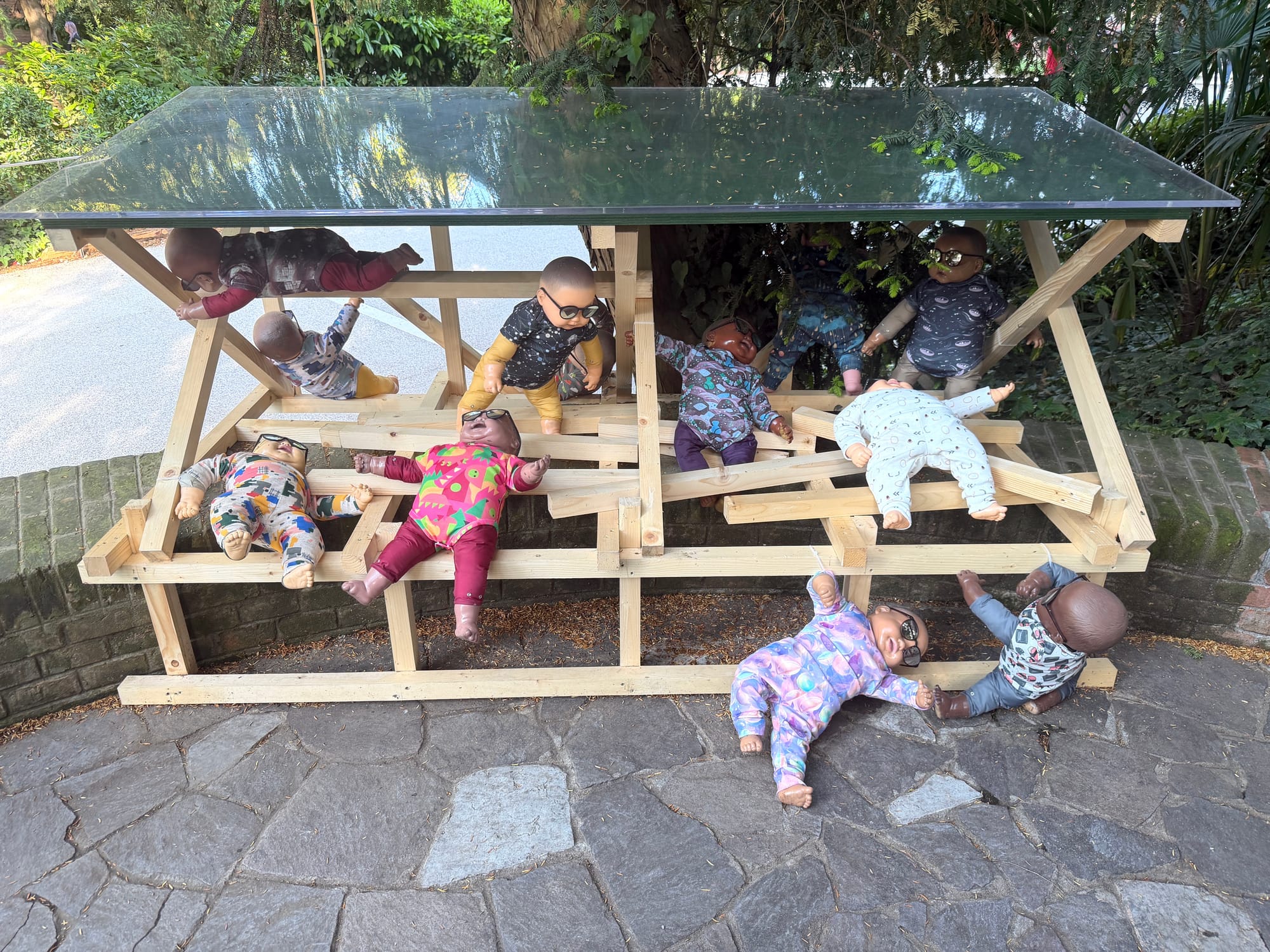
Artist Ei Arakawa-Nash and their partner, Forrest, decided to have children during the COVID-19 pandemic, knowing full well how hard it is to exist as a person in the world today. But their desire prevailed. Arakawa-Nash’s Grass Babies, Moon Babies, Japan’s pavilion at this year’s Venice Biennale, is a deeply optimistic vision of how we might coexist. Visitors are invited to hold one (or two — Arakawa-Nash has twins) of the more than 200 sunglasses-wearing baby dolls strewn across the garden and interior. The act of collective care culminates in changing a baby’s diaper to reveal a QR code that delivers a unique poem. A little quirky, but that’s the point. You put things into perspective when you have a baby in your arms.
David Hockney
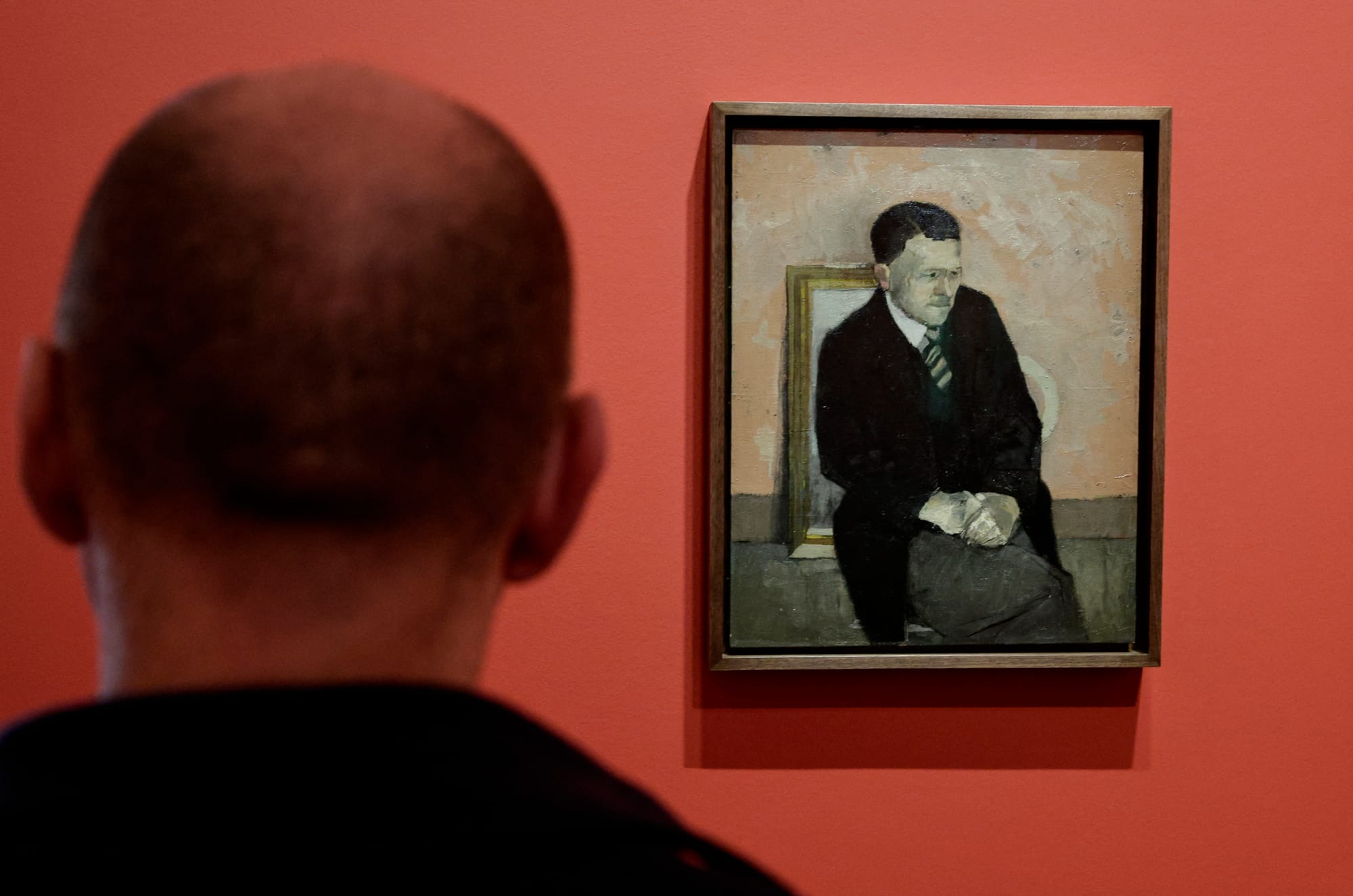
The first work David Hockney ever sold was his painting “Portrait of My Father” (1955), exhibited in a show of Yorkshire artists at Leeds Art Gallery in 1957. “My father, who'd bought the canvas, set up the easel and then set up a chair for himself, and he set mirrors round so he could watch the progress of the painting and give a commentary. And he would say, ‘Oooh, that's too muddy, is that for my cheek? No, no, it's not that color,’” Hockney recalled. “I had this commentary all the time, and I'd say, ‘Oh no, you're wrong, this is how you have to do it, this is how they paint at the art school,’ and I carried on.” The British artist, who died earlier this month at the age of 88, went on to warmly portray his family members seated at home for the rest of his career.