A Look Into Frank Stella's Mesmerizing Collection of Diné Textiles
The late artist's trove of Navajo weavings is on public display for the first time at Arader Galleries in NYC ahead of a sale.

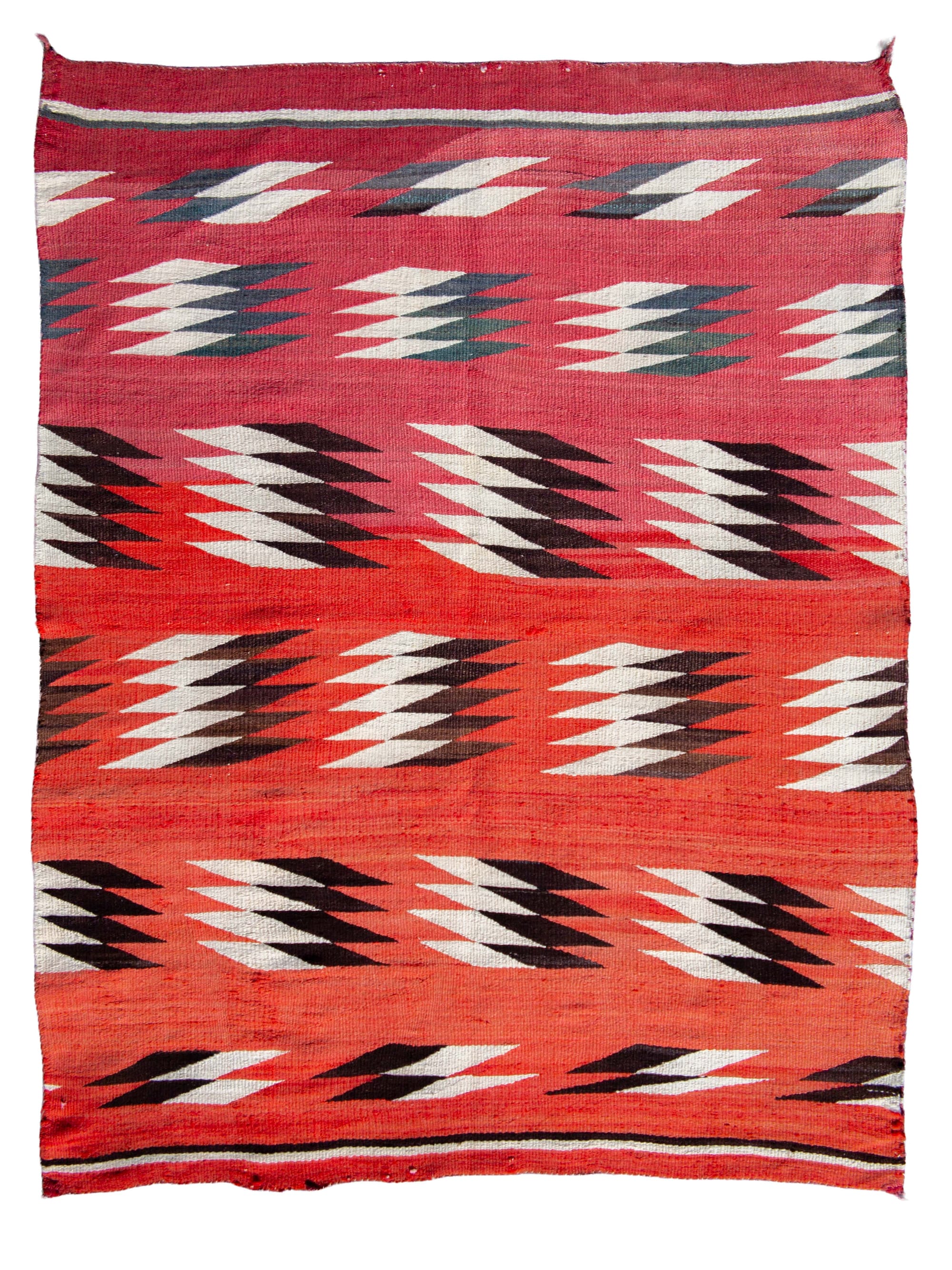
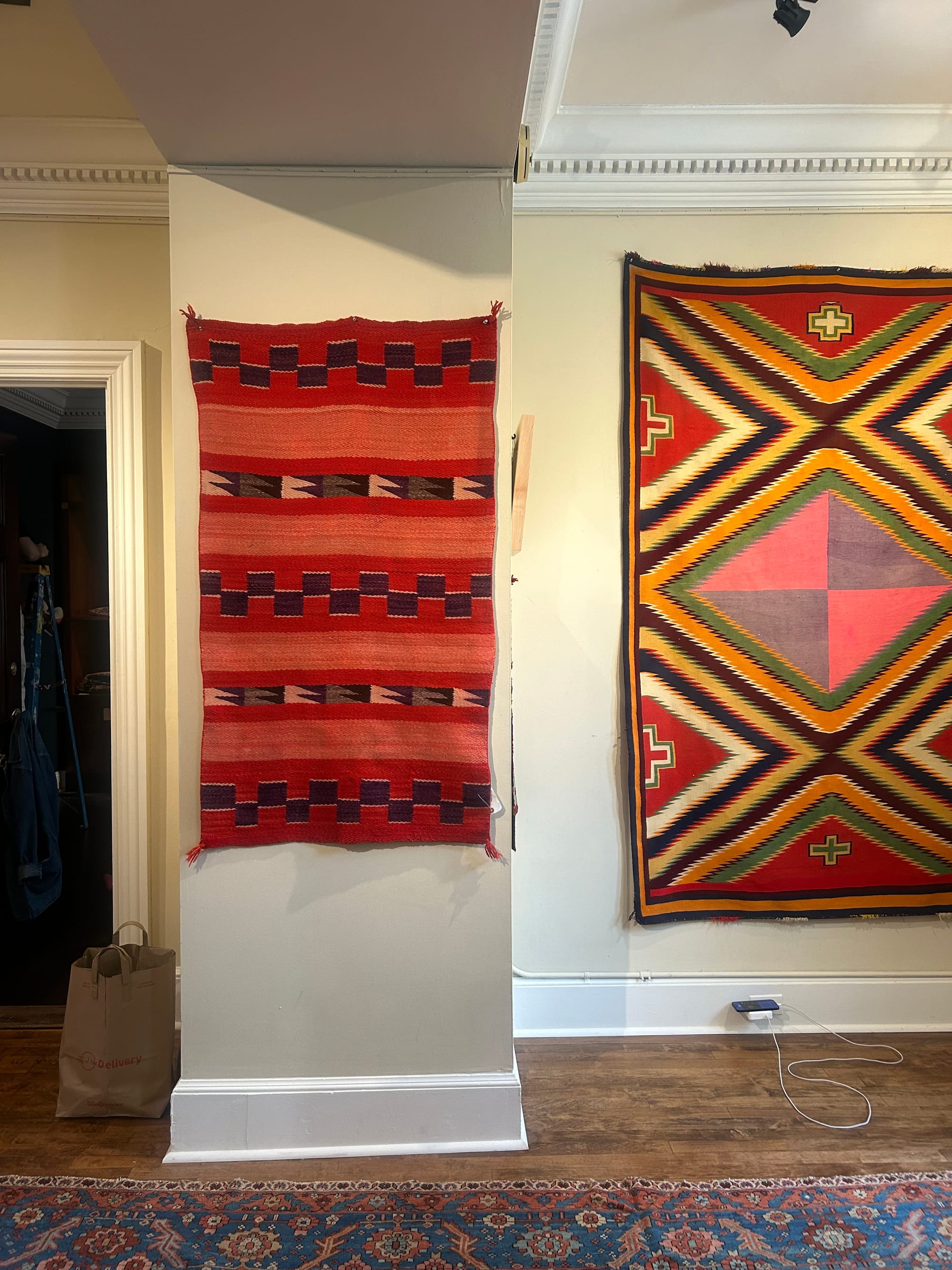
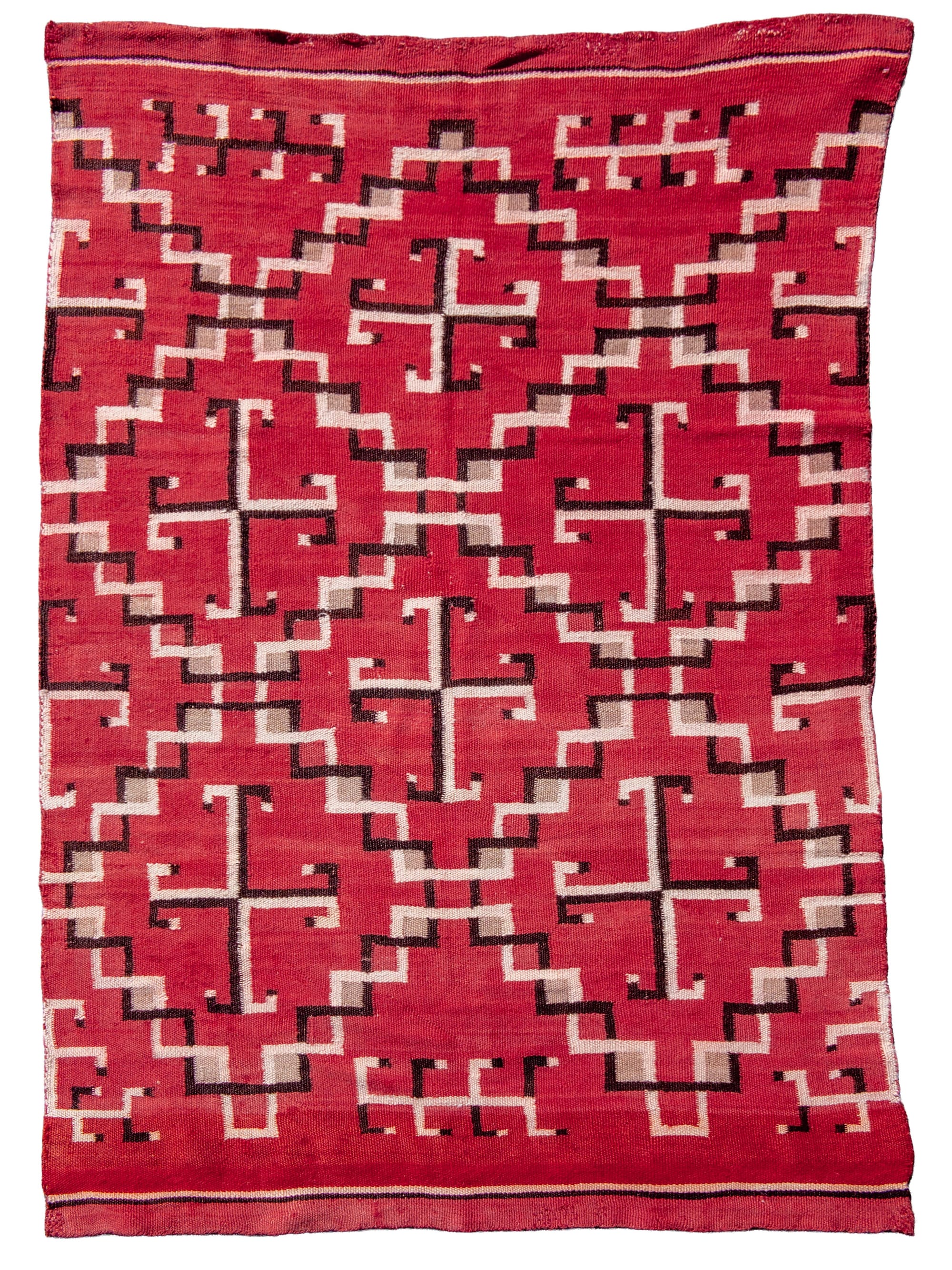
Assembled over decades, the late abstract artist Frank Stella’s breathtaking collection of textiles made by Diné women enters the spotlight for the first time in a selling exhibition traveling from New York City to New Hampshire. Stella developed the selection of 40 weavings from the 19th and 20th centuries according to his personal taste for bold color palettes and dynamic geometric patterns, shirking the typical collecting benchmarks for Diné textile scholarship.
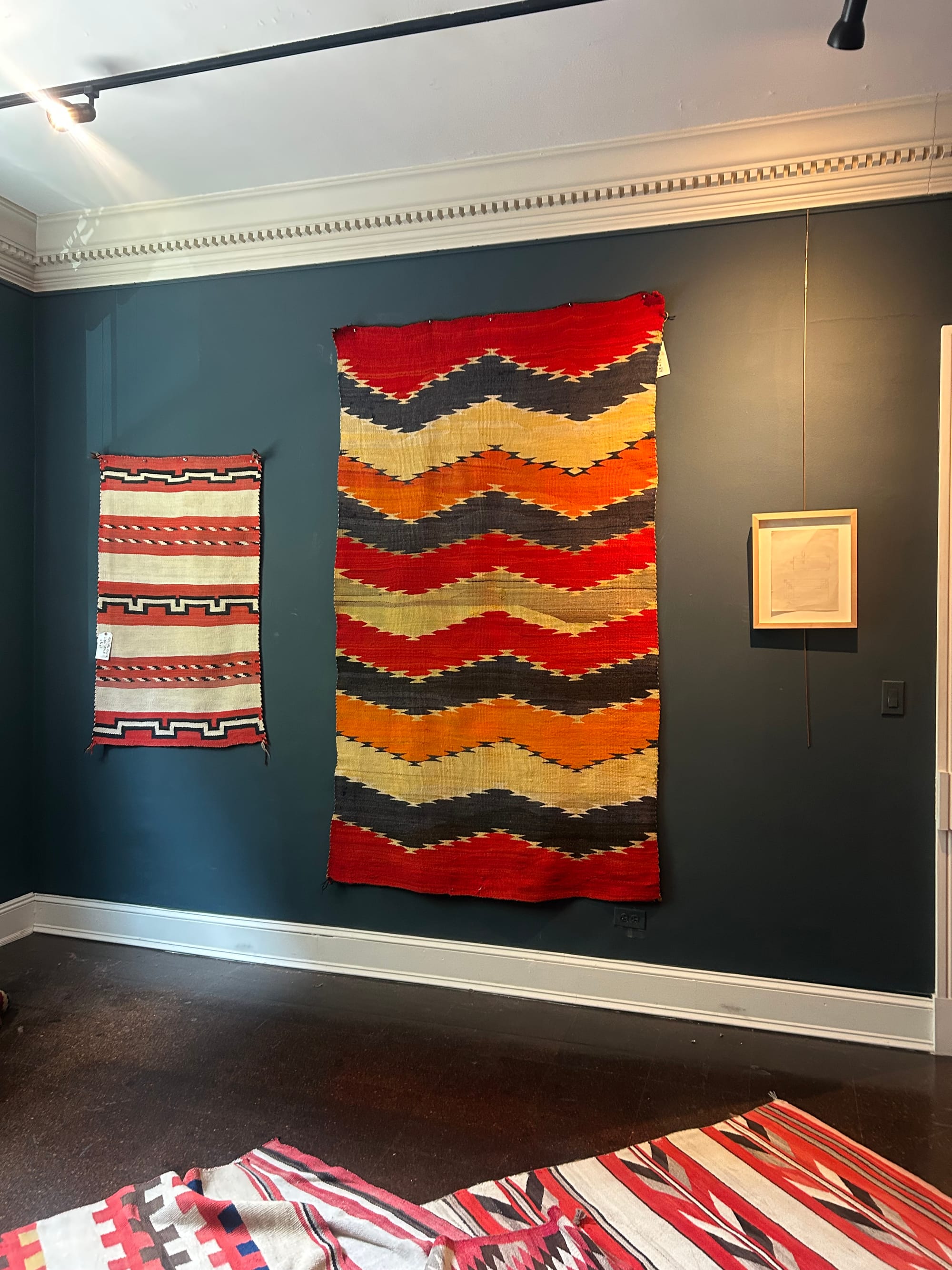
Organized by antique rug and textile expert Peter Pap, Stella's collection is on display through June 10 at Arader Galleries on Madison Avenue alongside a rare selection of the artist's early geometric drawings, establishing the connection between Diné weaving history and Stella's own visual language. The selection will also be presented at Pap's store in Dublin, New Hampshire, later this summer.
Harriet McGurk, the artist's wife, said in a phone call with Hyperallergic that Stella acquired the bulk of his collection in the mid-1960s through artist, dealer, and curator Tony Berlant, to whom he was introduced by fellow artist and Navajo textile collector Donald Judd. Berlant even included one of Stella's acquisitions in Navajo Blanket (1972), a traveling exhibition he co-organized with the Los Angeles County Museum of Art's textiles curator Mary Kahlenberg.
Aside from Navajo Blanket, McGurk specified that Stella never really exhibited his beloved collection.
“ He would wrap himself up in one in the living room when it was cold, and we hung another up in our house, but they were not on display to other people,” she said.
“ What Frank admired so much was the workmanship and the artists who made them, because their sense of geometry resonated a lot with him,” McGurk continued. “They were just so natural and so direct, but really inspired. Frank liked more of the design, the look, the feel, and the idea of the person who made it, rather than the condition.”
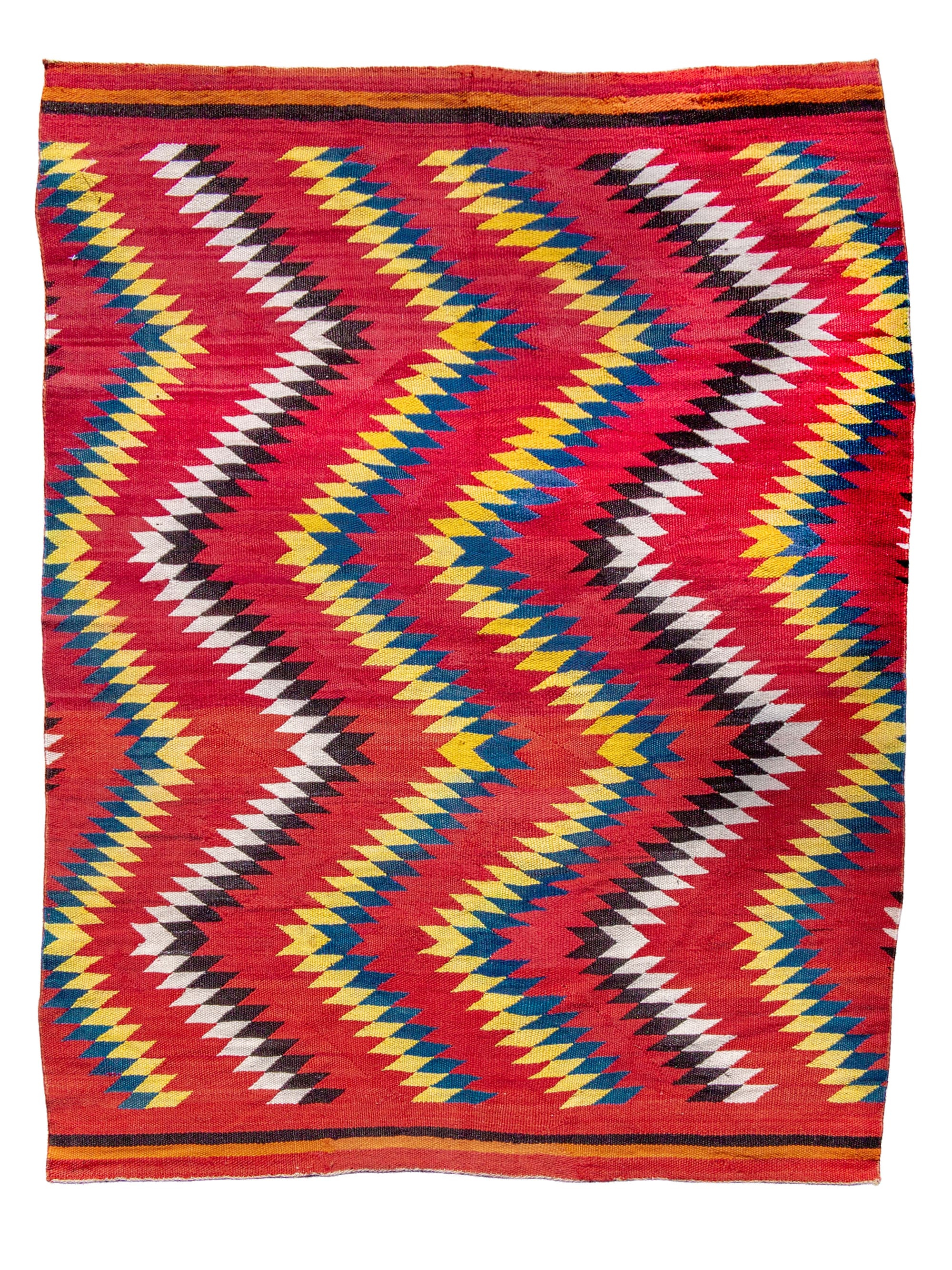
The exhibition is bolstered by new research by Jill Ahlberg Yohe, a leading Navajo textiles scholar and curator at the Cafesjian Art Trust Museum, who noted that Stella's holdings diverged from the cultural and historical benchmarks that inform most other private and institutional collections, as the artist preferred examples of creative innovation.
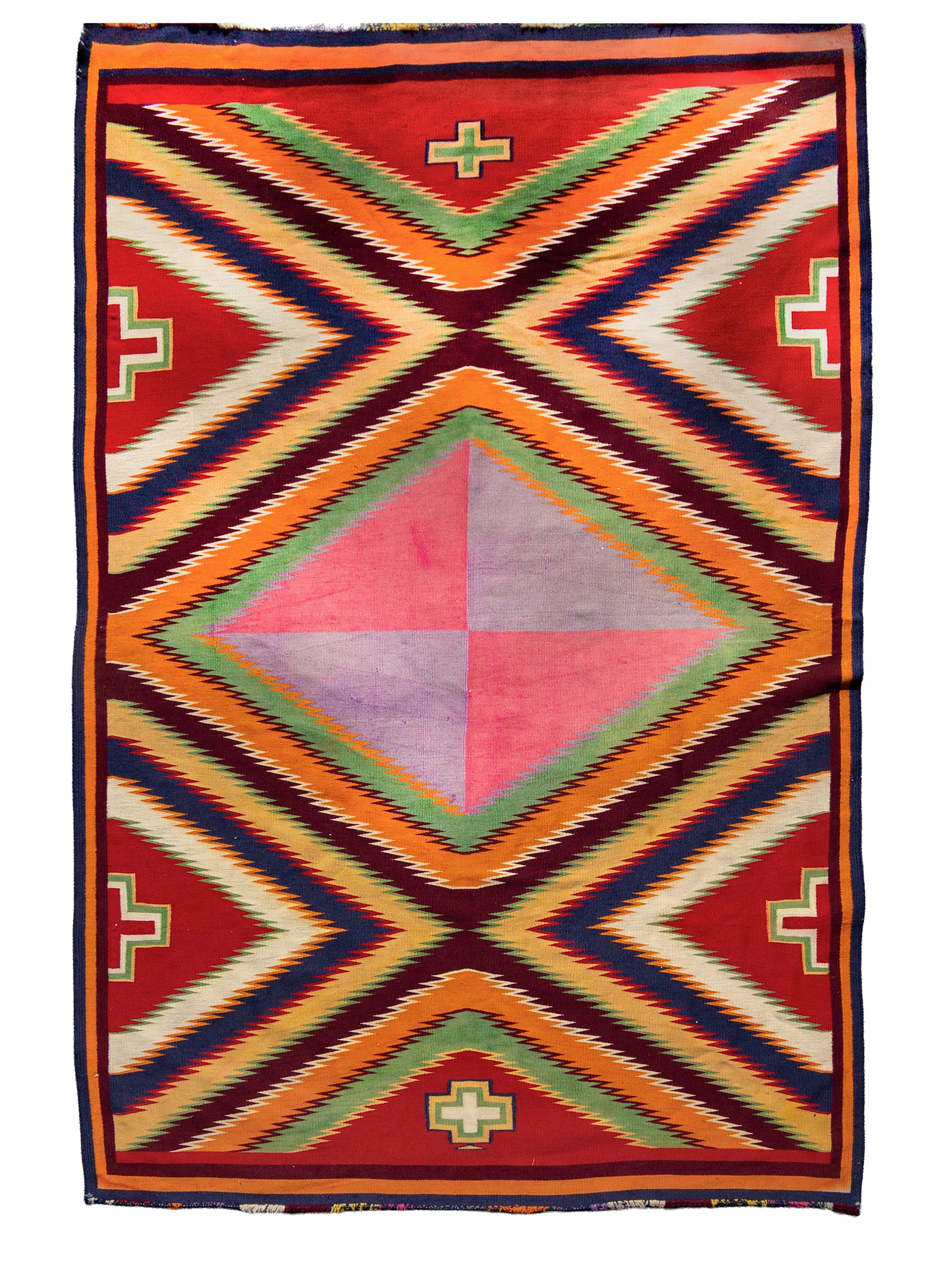
Ahlberg Yohe said that most of the objects were categorized as Transitional Period/Era weavings (c. 1880–1910). These are marked by a period of major change in Diné life and artistic tradition due to the emergence of an Anglo market through trading posts, the importation of synthetically dyed yarn, and the consumer shift to rugs, wall-hangings, and decorative pieces over the intertribal preferences for classic blankets known for their durable and meticulous craftsmanship.
“Weavers of this era created textiles with novel design combinations, bold new colors, and illusionistic play, and the varieties of individuality,” an excerpt from Ahlberg Yohe's research reads.
“This originality has confounded Navajo weaving scholars for more than a century,” the text continues. “Diné textile scholarship — built in anthropology rather than in art history — looks for cultural generalization and material-based technique over creative impulse. The more unusual and individualistic a textile is, the less attention it gets paid.”
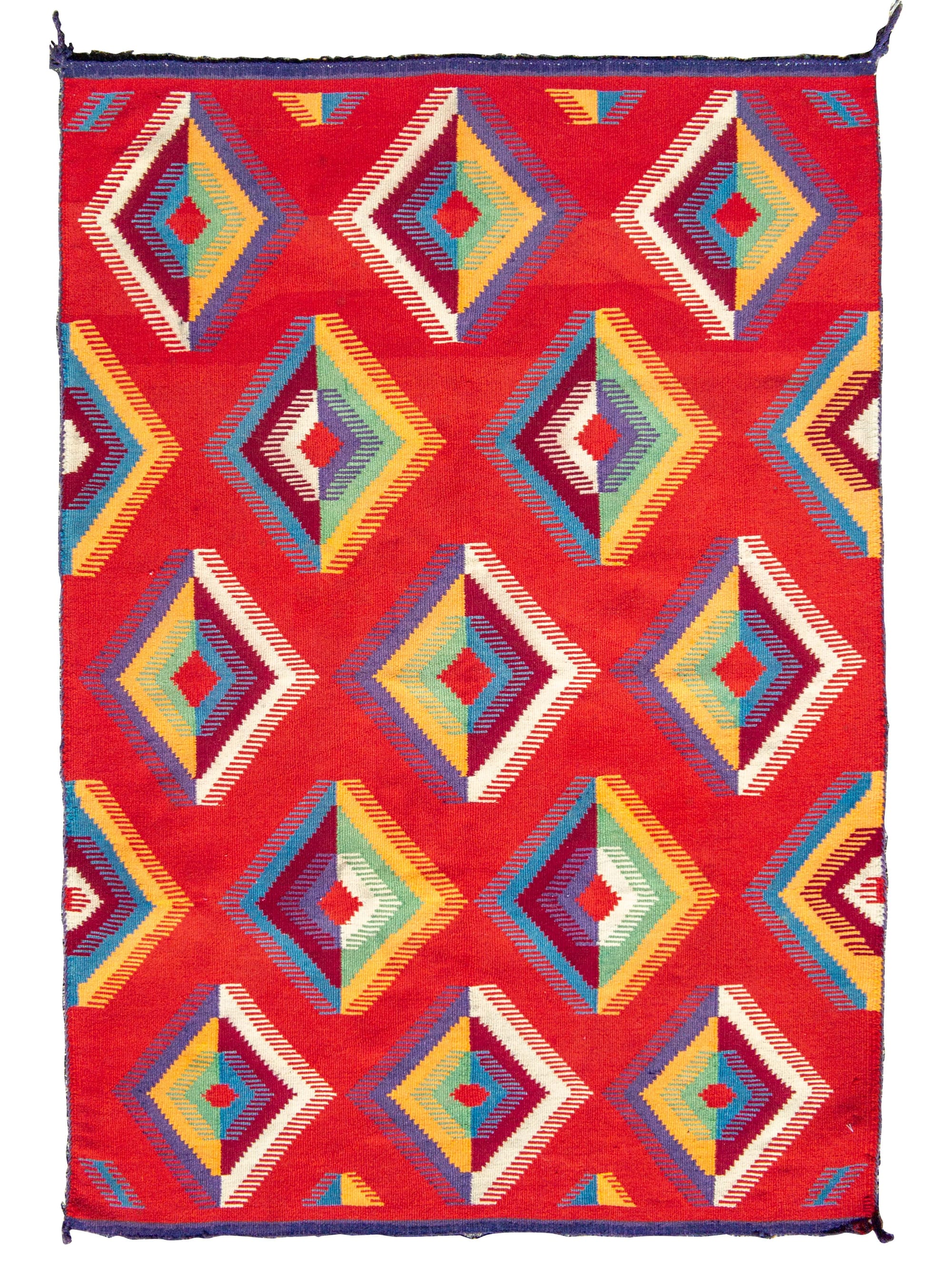
Many pieces in Stella's collection have been identified as Germantown-style blankets and Eyedazzler textiles — two incredibly significant shifts in Diné weaving defined by bright, saturated colors and pulsating zigzag patterns that functioned as optical illusions. These styles emerged during the aftermath of the government's deadly deportation of the Diné from their ancestral homelands to the Bosque Redondo reservation in 1864. Having killed off a majority of their sheep and livestock in the scorched-earth method of ethnic cleansing, the government provided the Diné with synthetically colored ply yarn spun in Germantown, Pennsylvania, after the treaty that conditionally recognized the Navajo Nation was enacted in 1868.
“This era and [the textiles] in Stella’s collection defy established categories and analysis, leaving them outside of the reach of canonical scholarship and further depriving them of their rightful place in art history and in important collections,” Ahlberg Yohe said in her research essay.
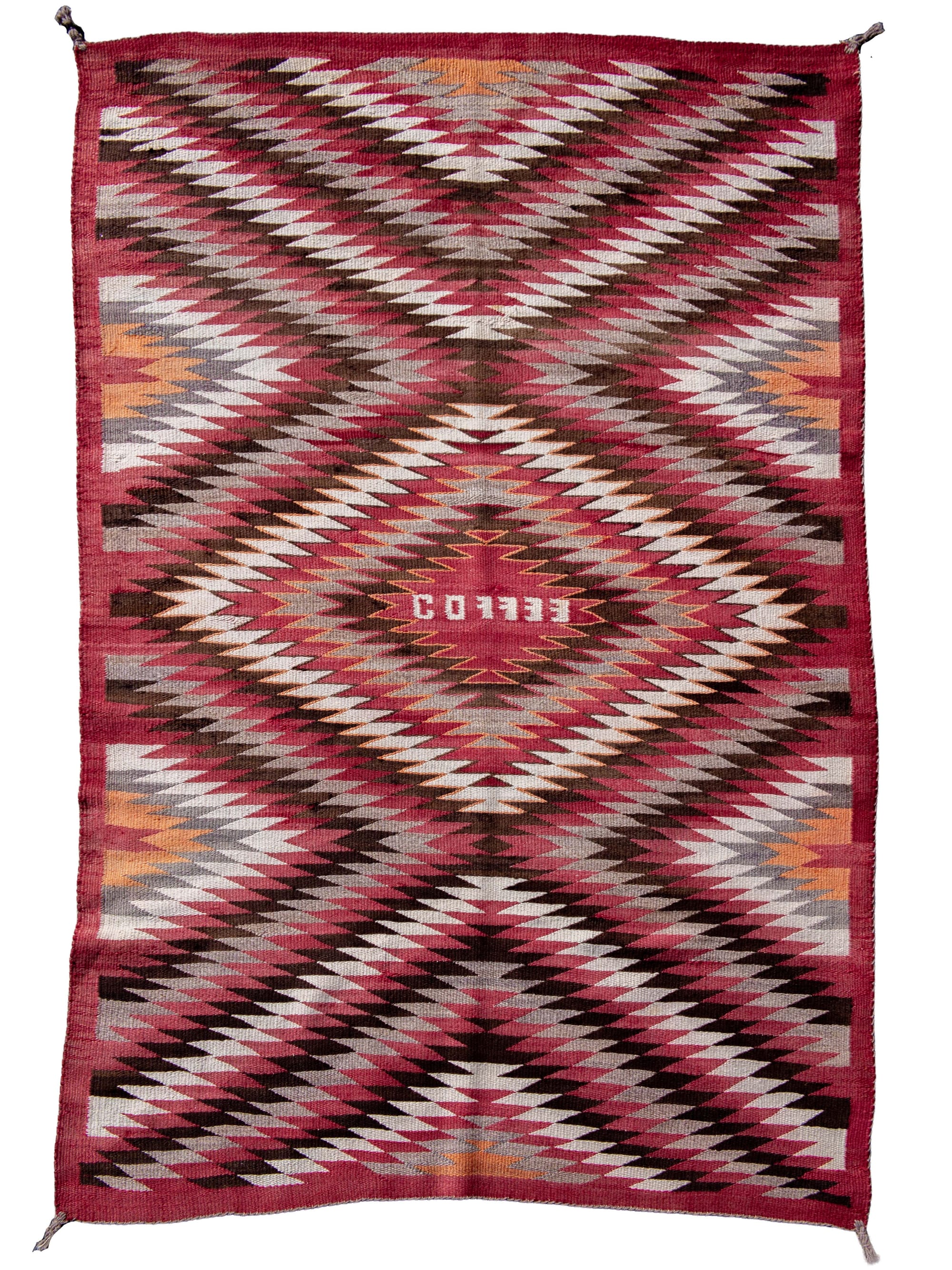
Once the show moves to Pap's business location in Dublin, New Hampshire, Ahlberg Yohe will lead an onsite symposium with Jamie Powell, the Hood Museum of Art's Indigenous Arts curator, about the role of Diné textiles in the Western art canon, on Sunday, July 12.