A View From the Easel
“Entering the studio, my ritual is to transform the space by turning on all the lights.”

Welcome to the 231st installment of A View From the Easel, a series in which artists reflect on their workspace. This week, artists meld music and sculpture, swap sun for LED light, and venture into acrylics after decades with oils.
Want to take part? Check out our new submission guidelines and share a bit about your studio with us through this form! All mediums and workspaces are welcome, including your home studio.
Rain Worthington, Nassau, New York
How long have you been working in this space?
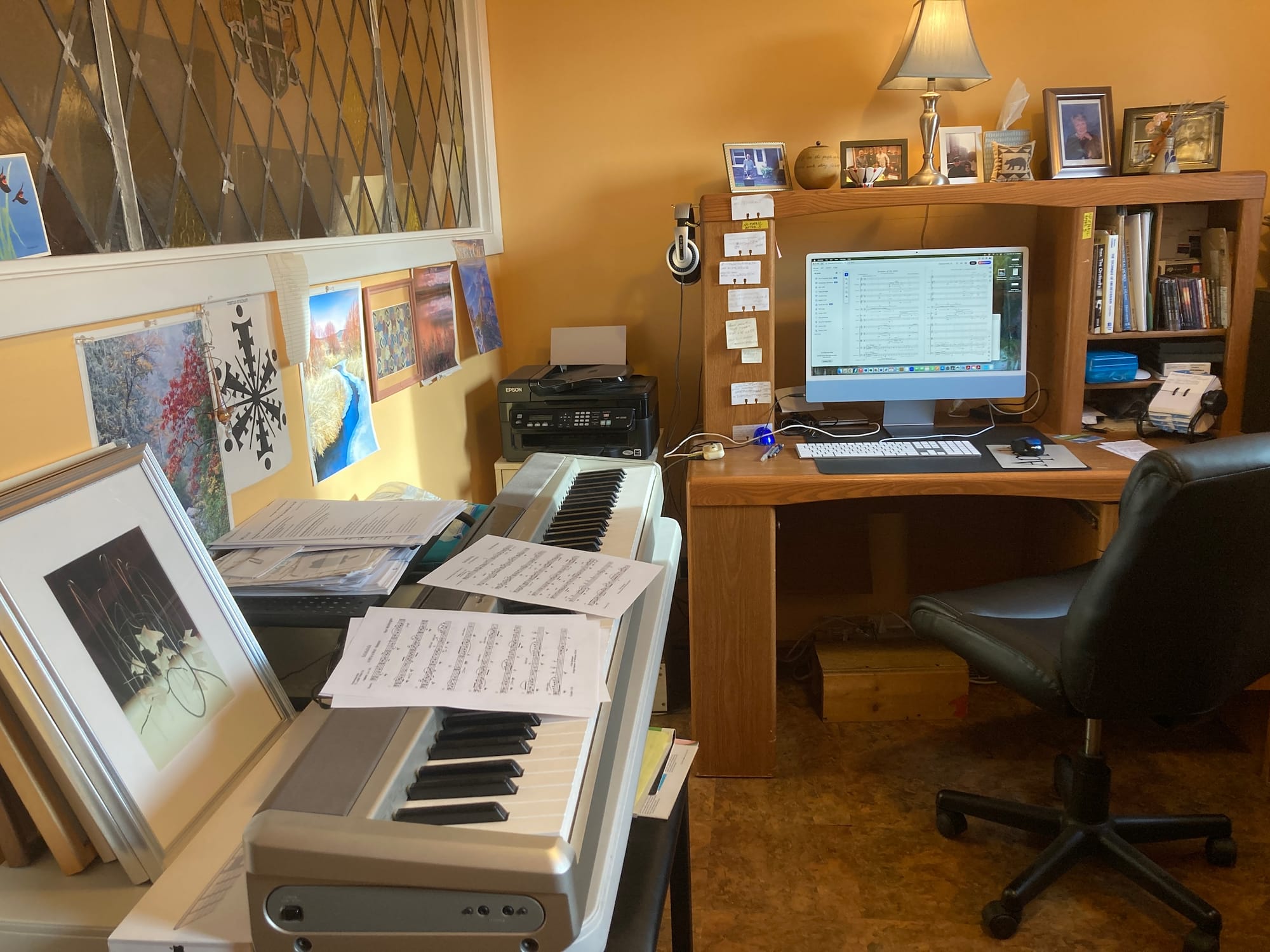
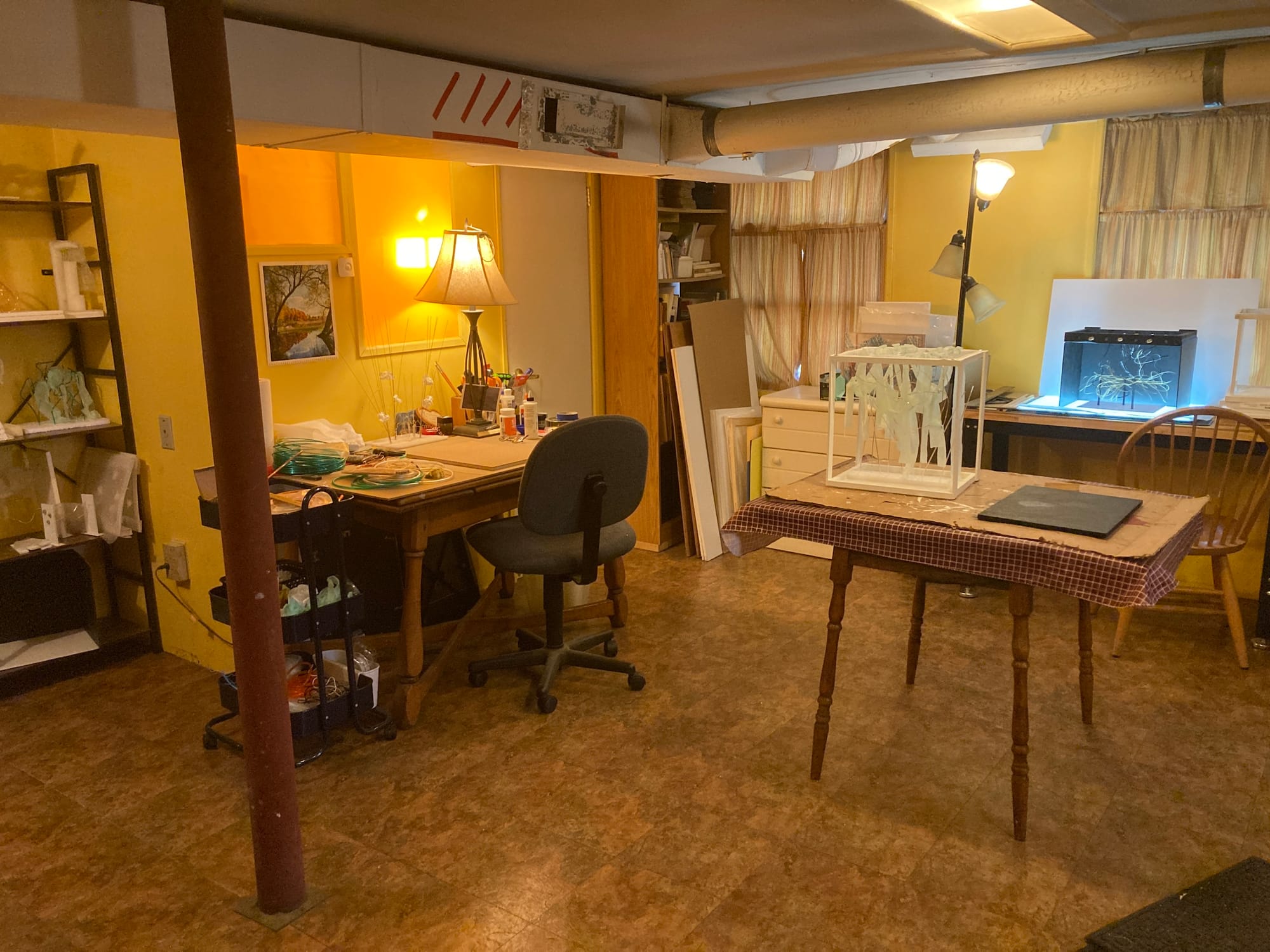
In 2023, expanding from my years as a composer of concert music, I re-embraced an earlier passion for sculptural spaces. My creative workspace has now evolved into two spaces: my music studio of 20 years and a new sculptural studio. The music studio is a small room on the main floor of the house, while the sculptural studio is in a partially finished lower basement level. It has windows, a low ceiling, exposed pipes, heating ducts, and its own entrance.
Describe an average day in your studio.
I don’t follow a set routine. I work on several projects, moving between my music studio and sculptural studio. I often change into work boots and a loose t-shirt and work in silence, while creating small-scale concept mockups for large-size installations. These are documented with photographs and/or videos, which can be set to an audio excerpt from an original orchestral or chamber composition. Through the documentation I try to convey an emotional sense of spatial immersion and realization scale.
How does the space affect your work?
In creating installation models, I become completely absorbed in a small-scale focus. Within this mindset, the size of my studio doesn’t influence the work itself. The aspect of the studio that most emotionally influences the start of my work process is the illumination of the space. Entering the studio, my ritual is to transform the space by turning on all the lights.
How do you interact with the environment outside your studio?
In 2003, I moved from the urban density of NYC, where I had lived for several decades, to a house in a rural area upstate. I’m often outside working on the land, driving a lawn tractor, tending the vegetable garden, or watching the many birds and animals that also make the land their home. In 2023, I was accepted to participate in the Critical Forum program at the Arts Center of the Capital Region in Troy. With art philosopher and theorist Taliesin Thomas and a terrific cohort of area artists, this turned out to be a life-changing, nurturing induction into the vibrant upstate arts scene.
What do you love about your studio?
I love the brightness of the studio with the yellow walls and abundance of lights, lamps, tracing light bases, and the afternoon glow coming from a west-facing window.
What do you wish were different?
My only wish would be for more cabinets, drawers, and shelves for organizing materials in my studio, and storage space.
Kay Whitney, Venice, California
How long have you been working in this space?
Fourteen years.
Describe an average day in your studio.
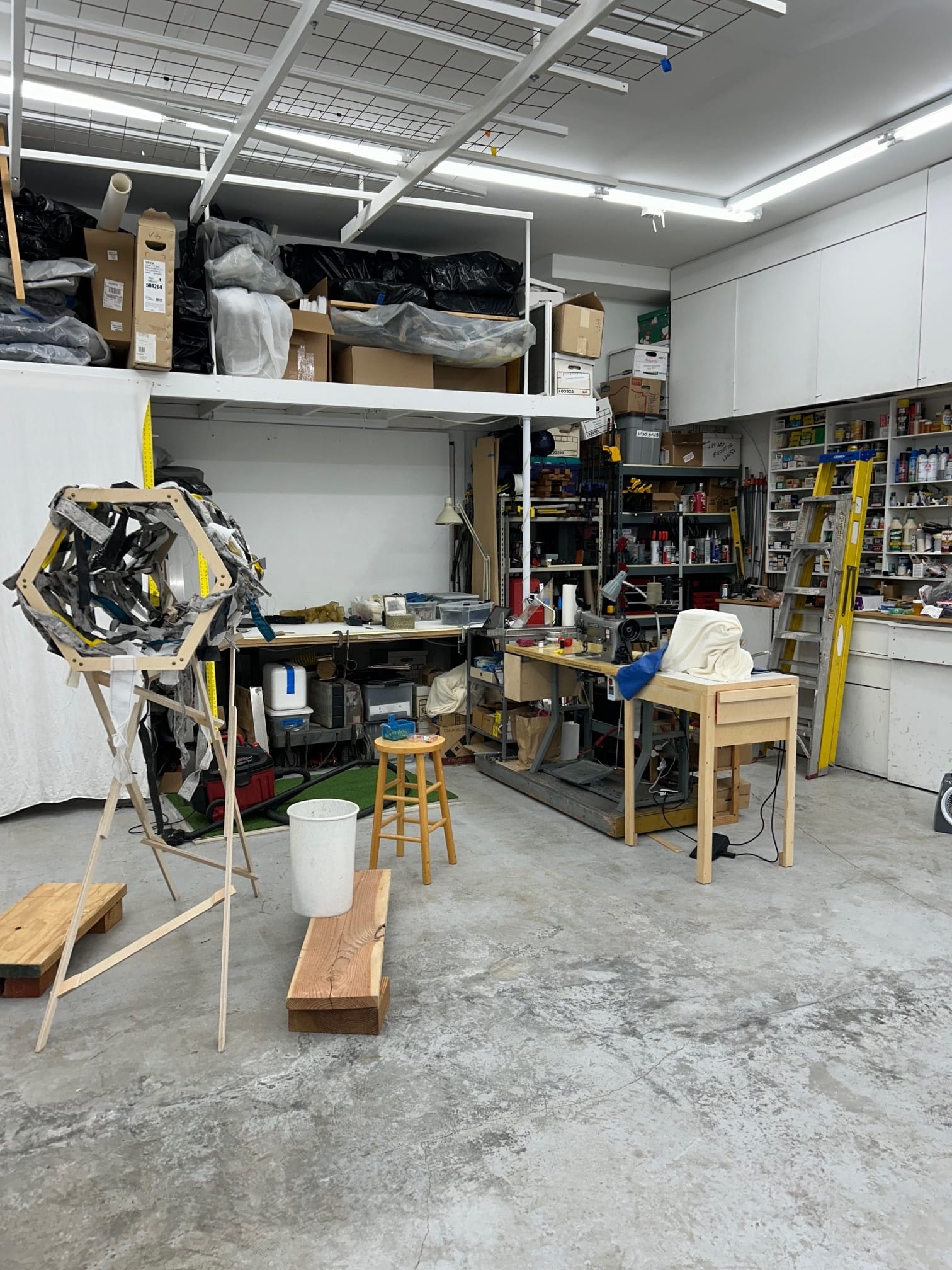
I work irregular hours but always about four to six hours a day/night. I like the blur of a barely audible podcast or if I want to dance, R&B. I work on pairs of sculptures always large scale (at least my height or bigger).
How does the space affect your work?
Because of the 12-foot ceilings, I can suspend work from the ceiling and work at a large scale. I've got a good range of LED light so the space is always "sunny." Everything I fabricate breaks down and there's room for storage under the ceiling above my work table. There's enough room for my industrial sewing machines, welding equipment, worksite table saw, drill press, and tons of hardware and tool chests.
What do you love about your studio?
We built this two-story, 1800-square-foot place in the late ’80s. I know where every nail is. I can weld or saw outside.
What do you wish were different?
If the neighborhood were less gentrified, I'd be able to weld more without complaints. Of course, I wish I had more storage.
Norbert Marszalek, Chicago, Illinois
How long have you been working in this space?
Nine years.
Describe an average day in your studio.
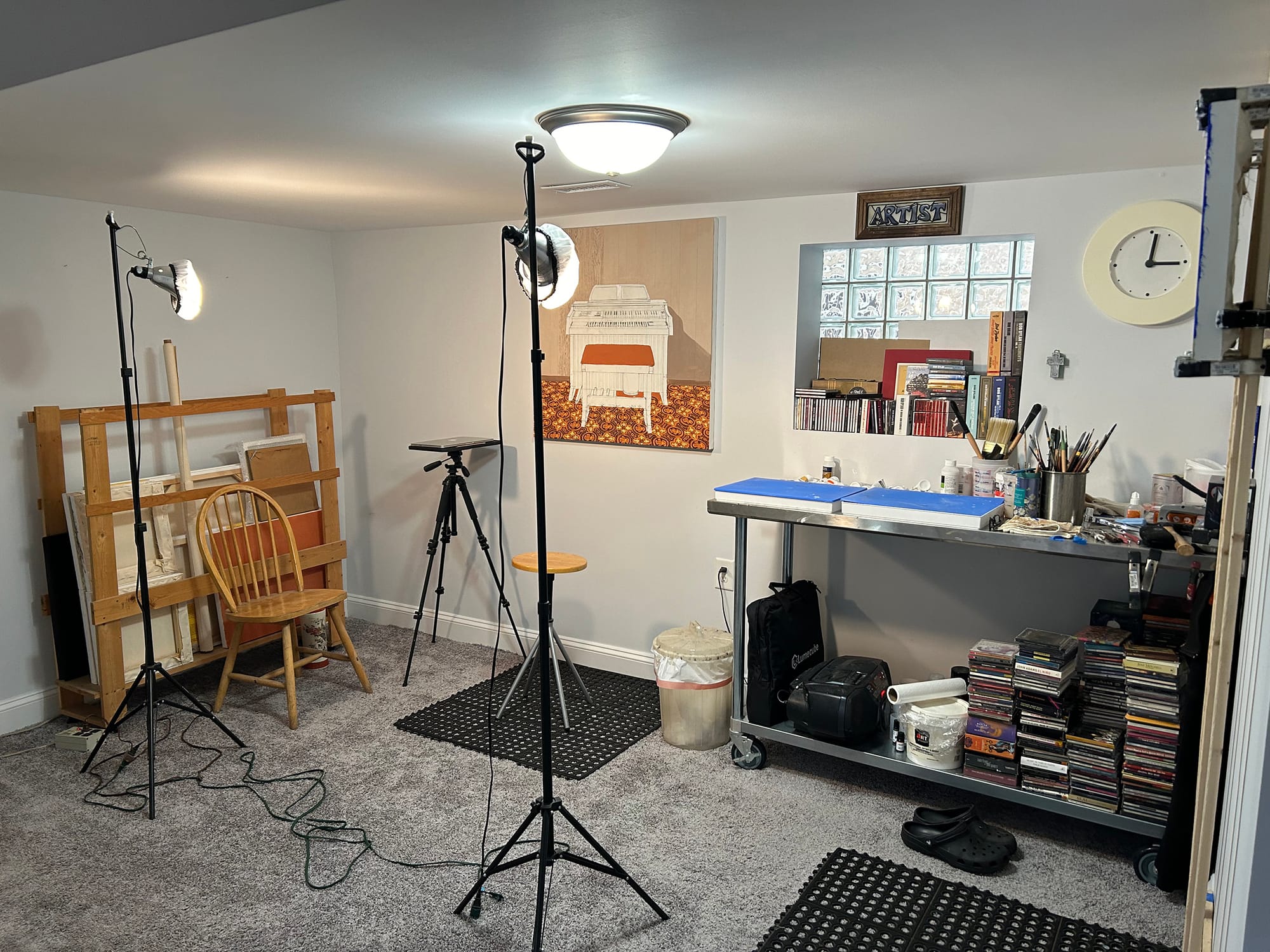
I usually start working around 11am and end in the early evening. I try to meditate and work out first thing in the morning, but if that doesn't happen then I make sure to fit in a brisk walk in the late afternoon. Music is always on in the studio — if not streaming then with my old boom box and CDs.
How does the space affect your work?
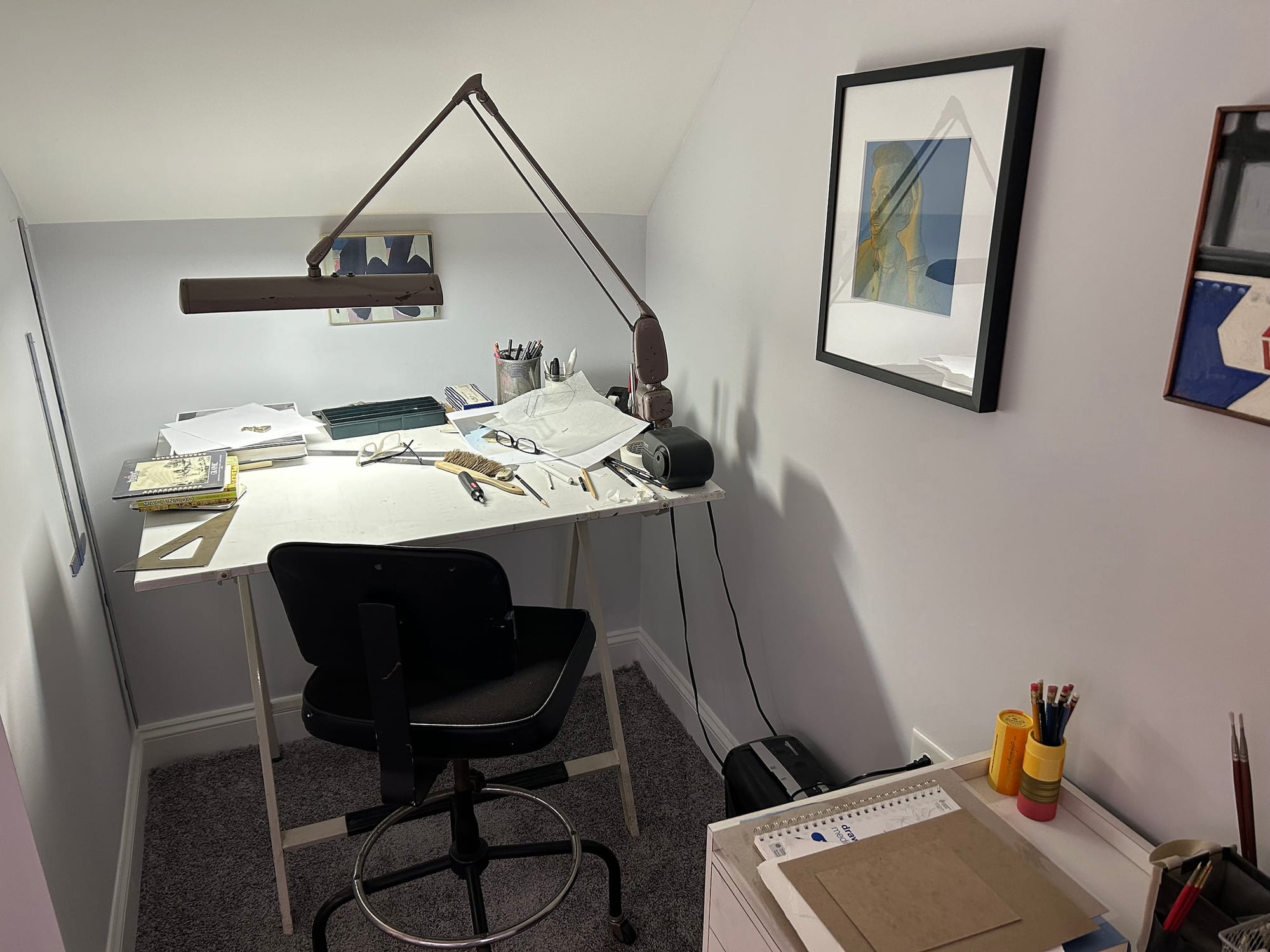
My home studio is somewhat small but it's well organized. I have four workstations: two for painting, one for drawing, and one for researching, proposals, and any digital imaging. I do enjoy working on several pieces or projects at one time and having these separate stations makes it seamless. Before working from home, I had several studios in large art buildings. Befriending other artists over the years was a joy but sometimes the everyday noise was distracting.
How do you interact with the environment outside your studio?
There is a large art community in Chicago so there is always something going on. I find it inspiring to visit galleries and art museums with other artists and engage in endless conversations. And I still enjoy going to openings.
What do you love about your studio?
It's peaceful and I have everything I need.
What do you wish were different?
Nothing.
What is your favorite art material to work with?
I started working with acrylics after using oils for over 30 years and just love it!