Akira Ikezoe’s Frogs and Bears Have Something Urgent to Tell Us
The cartoonish earnestness of both artist and artwork belies a sharp attentiveness to the catastrophes unfolding around us.

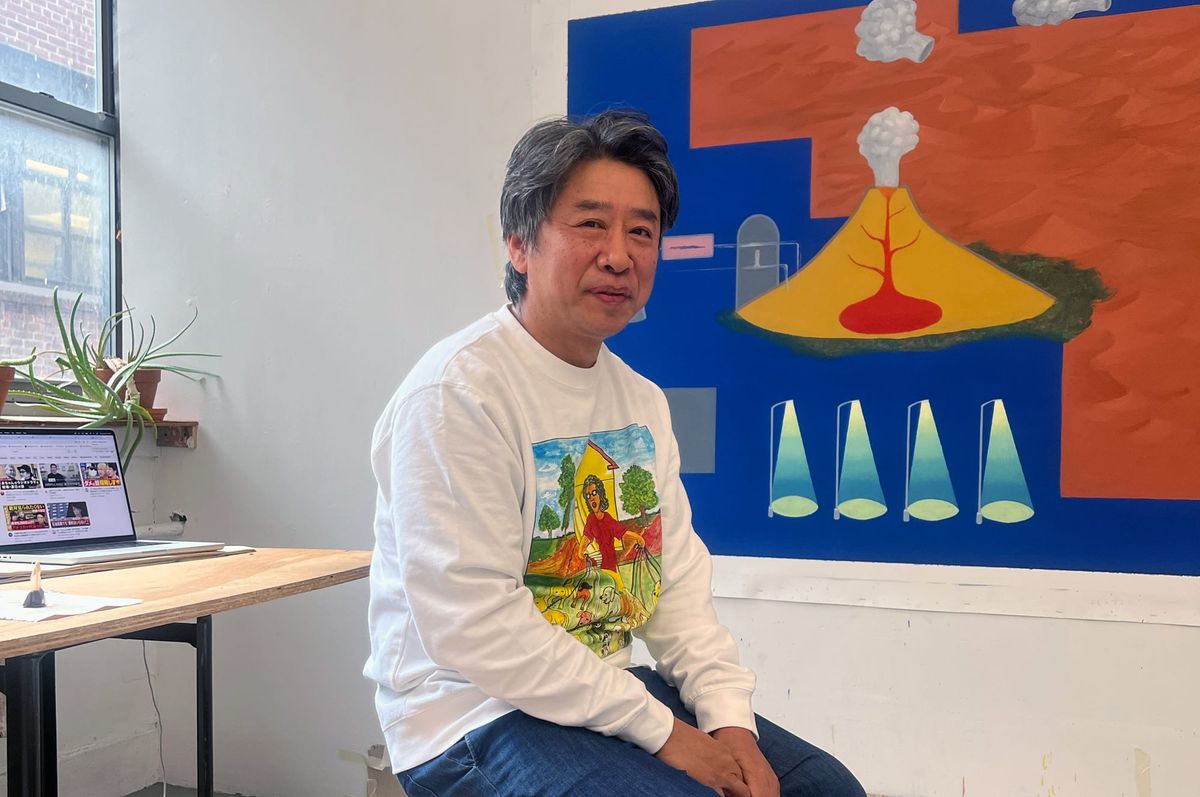
Akira Ikezoe welcomes me into his studio wearing a long-sleeve t-shirt made by the Cevallos Brothers, with whom he was recently featured in the Greater New York survey at MoMA PS1. That is just one of several large-scale exhibitions and international biennials Ikezoe has participated in over the last few years, including the Sharjah Biennial last year and this year’s Whitney Biennial. As a result, his studio is sparse, save for a few paintings in progress.
Ikezoe offers me tea as we recall meeting in 2023 at the Rehearsal Art Book Fair, co-organized by Bungee Space and Accent Sisters. There, Ikezoe introduced me to his Baby Recipes series (2022), in which babies’ body parts become ingredients in illustrated, comic-style cooking guides. In the studio, I ask where the idea came from.
“Frustrations around raising my three-year-old son,” he responds.
I ask whether his wife was concerned when she first saw the drawings.
“No, she was enjoying them. She understood what I was feeling.”
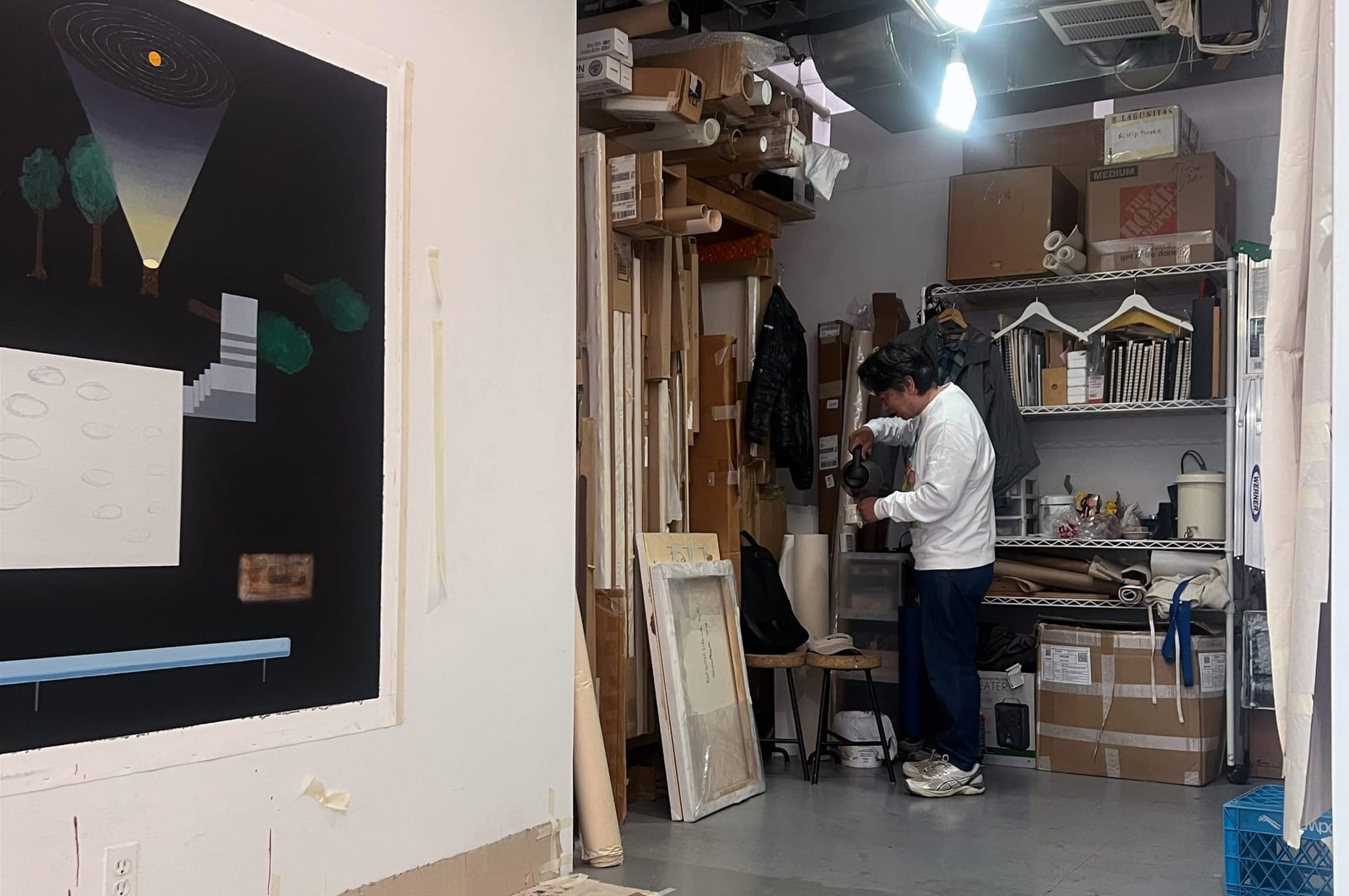
We laugh. It is precisely this dark humor that initially fascinated me, and it continues to suffuse Ikezoe’s work, which deals with energy systems, resource extraction, and the ambiguities of natural and industrial cycles alike. Laughter comes easily with Ikezoe, whose frankness about morbid subjects is immediately disarming. The cartoonish earnestness of both artist and artwork belies a sharp attentiveness to the environmental and human-engineered catastrophes unfolding around us. Humor becomes the concealed vessel for his satire.
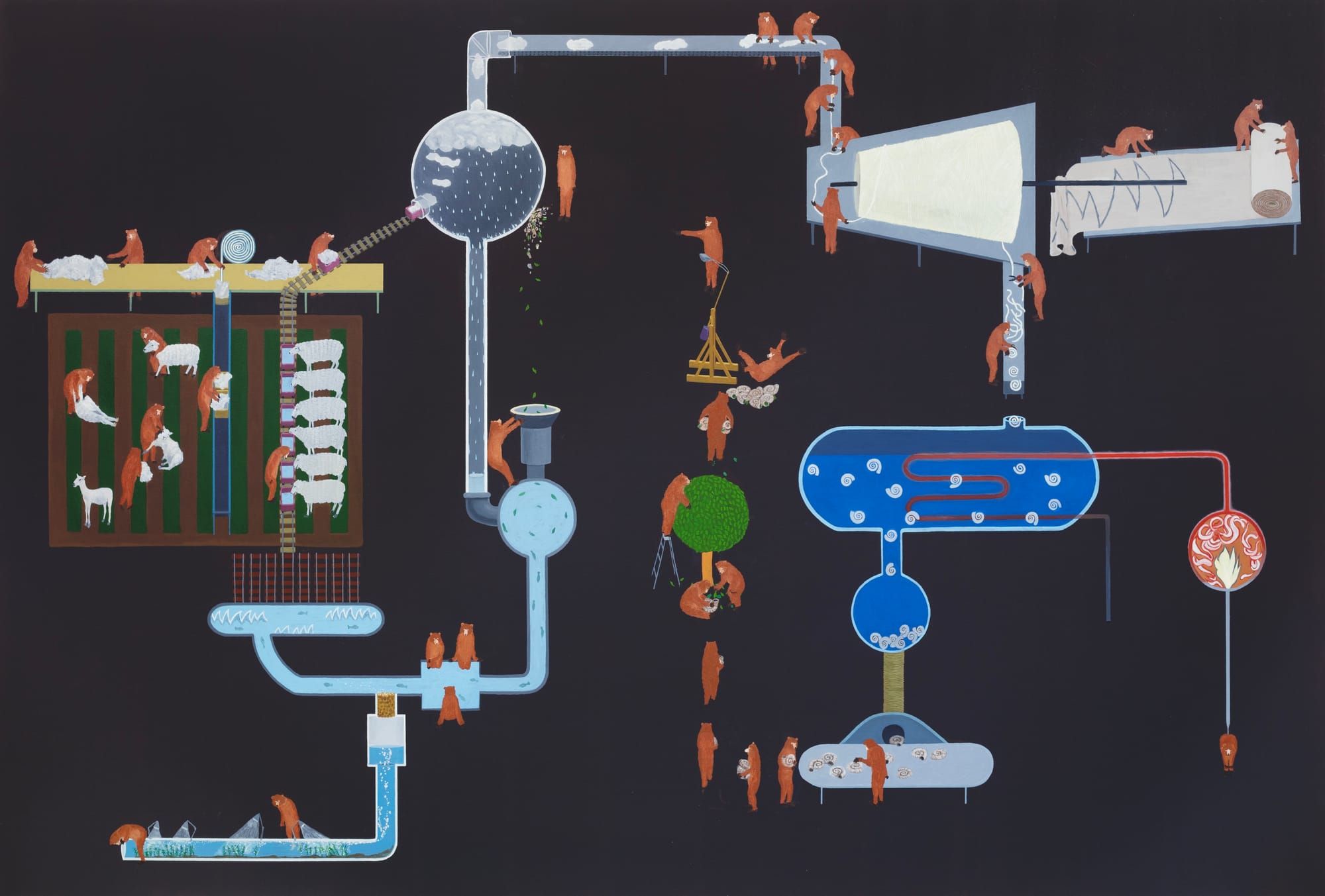
Ikezoe’s meticulously detailed oil paintings — the works that catapulted him to prominence — depict anthropomorphic frogs, bears, raccoons, and monkeys engaged in industrial workflows, hallucinatory labor systems, and sequential transformations unfolding across flat, diagrammatic backgrounds viewed from above. For years, his compositions drew directly from found flowcharts and blueprints, materials he notes are typically excluded from the realm of art. That’s particularly true for the work he showed at Sharjah, for which he paired diagrams from nuclear power plants that have experienced serious accidents with animals native to those ecosystems. In these paintings, Chornobyl is operated by bears; Three Mile Island teems with raccoons. He explains that his earlier works depicted mostly naked humans, but because nudity could not be shown in Sharjah, he shifted to animals — and the imagery stuck.
“I love frogs,” Ikezoe said. “My grandparents were farmers, and when I visited their home, the frogs were so noisy at night. Their rice fields were filled with water — a really nice house for frogs.”