Amoako Boafo Takes His Studio on the Road
His new exhibition "I Bring Home With Me" combines portraits with seating areas and a model of his studio, inviting visitors to stay awhile and get comfortable.

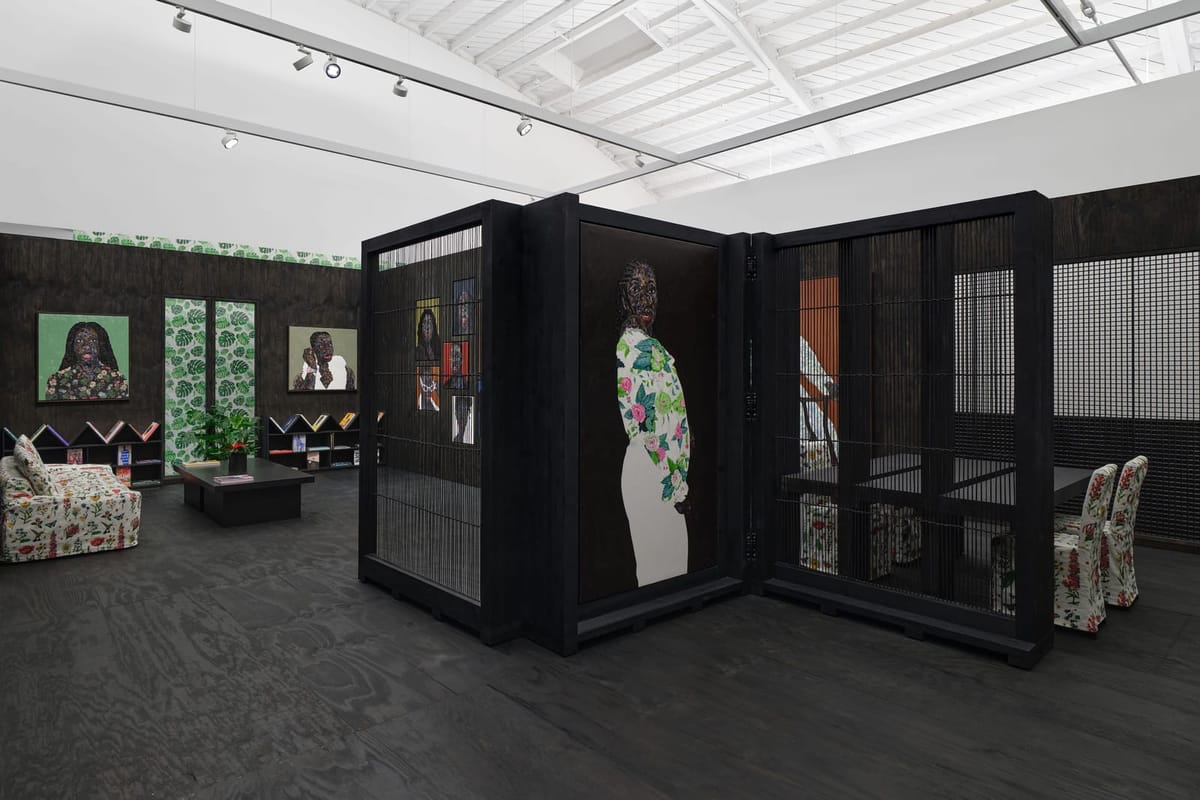
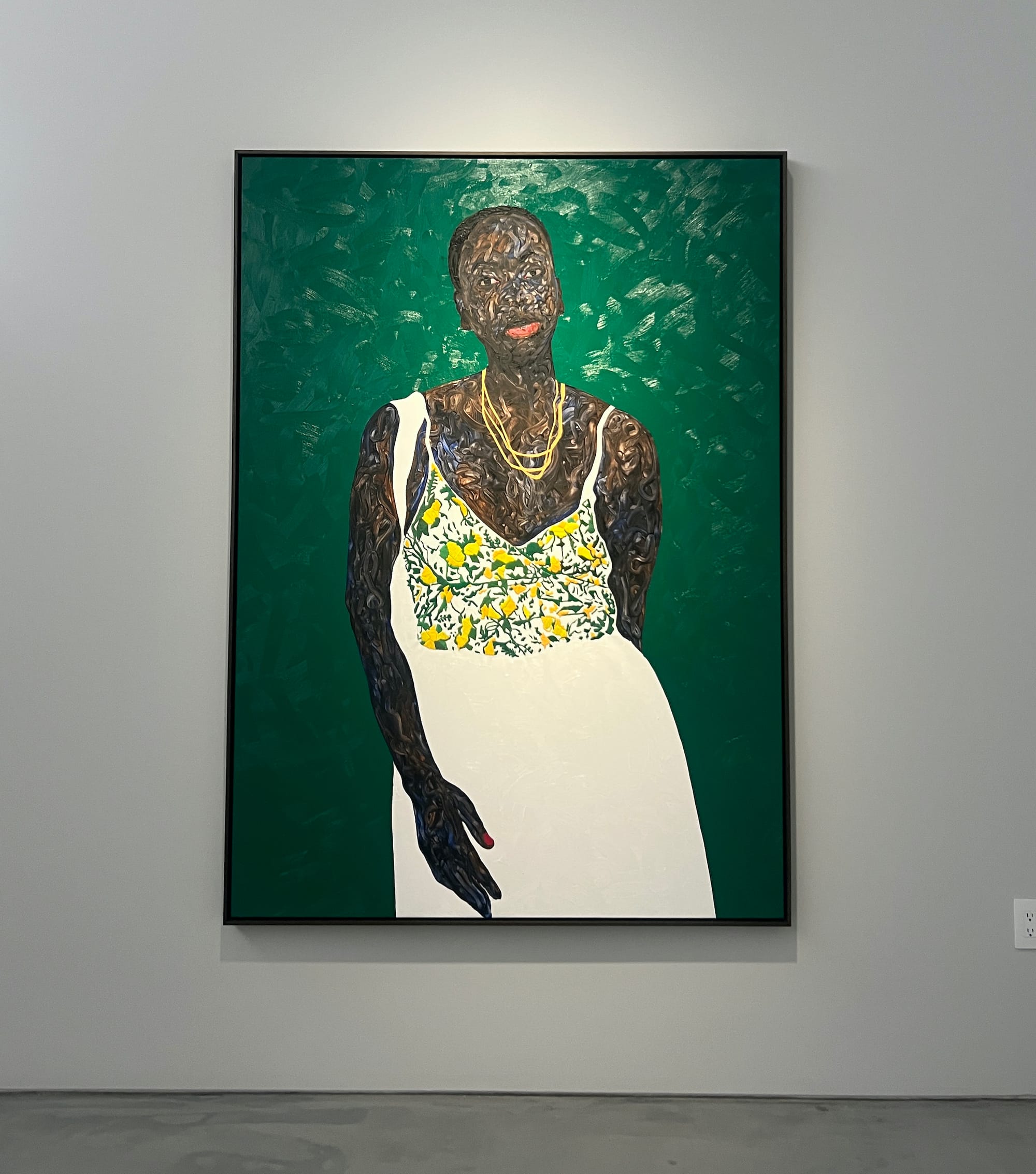
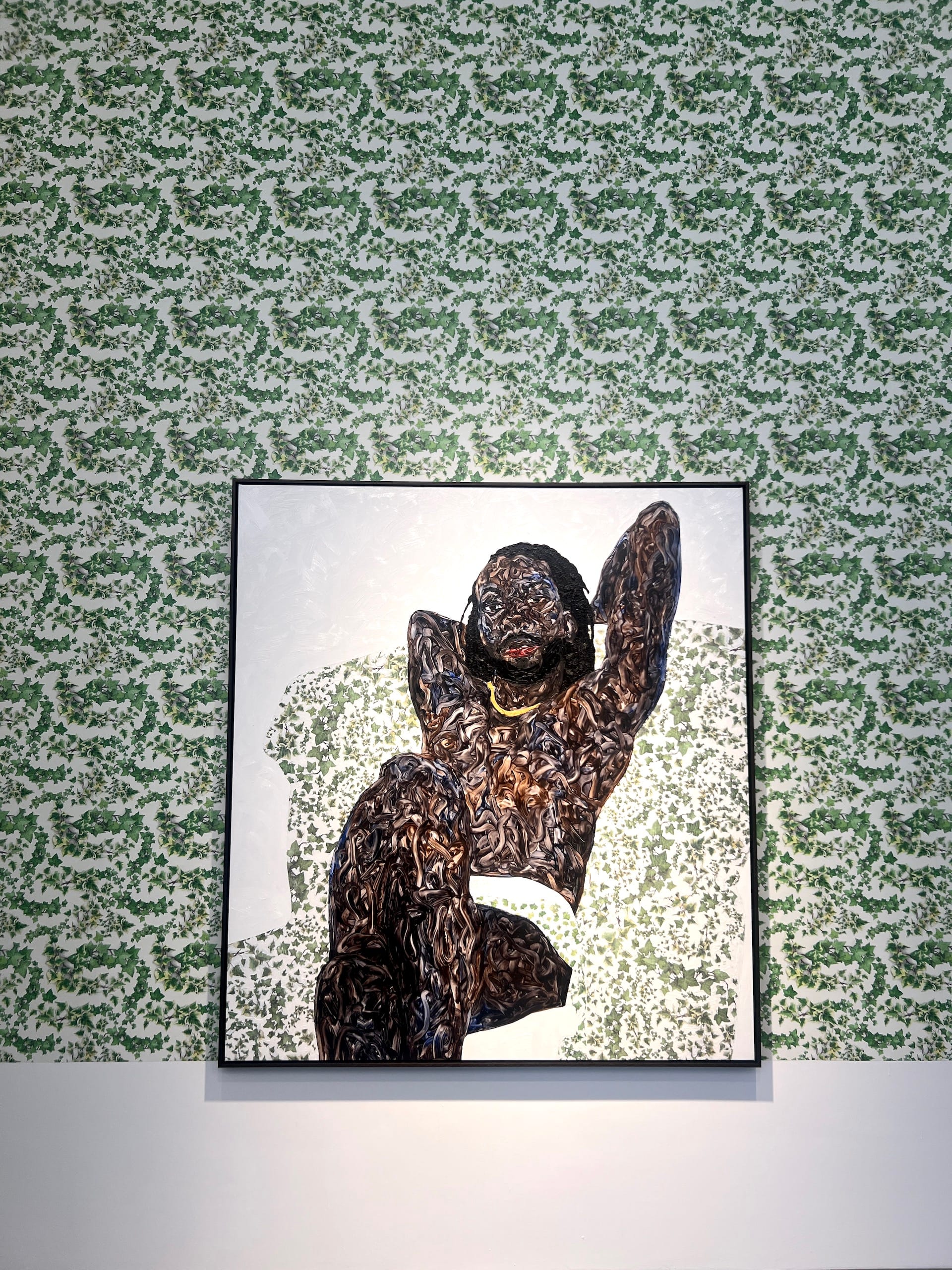
LOS ANGELES — In the heart of Los Angeles, Amoako Boafo's I Bring Home With Me at Roberts Projects offers a respite from the chaotic energy of nearby Hollywood and all its thirsty worshippers. The new exhibition of lauded painter Amoako Boafo is a portal to a different city, in a vastly different part of the world: his hometown of Accra, Ghana. Through 22 portraits, including three of himself, done in his signature elegantly rustic style of collaged finger trails instead of typical brushstrokes, the artist introduces viewers to the people, faces, and patterns shaping his sense of place.
This exhibition features some firsts for Boafo’s US audience. It is the first time we’ve seen him incorporate embroidery into his portraits, adding dimension to his immortalized subjects. More notably, it is his first stateside partnership with Glenn DeRoche of DeRoche Projects, an Accra-based architecture and design firm. DeRoche produced a to-scale recreation of Boafo’s Accra studio within the Roberts Projects exhibition space. The intention was to utilize exposed Ghanaian teakwood, but turbulent international tariffs waylaid that plan. Instead, the structure is constructed of local plywood painted black. I visited the show twice — once for the press preview and again 12 days later. This second time, I was struck by how the atmosphere had transformed. Given time for the installation to breathe, a wooden, earthen musk permeated the gallery. Though I’m sure it’s not the scent of Ghana, it helped me to leave Los Angeles behind, to slow my breathing and receive the work differently.
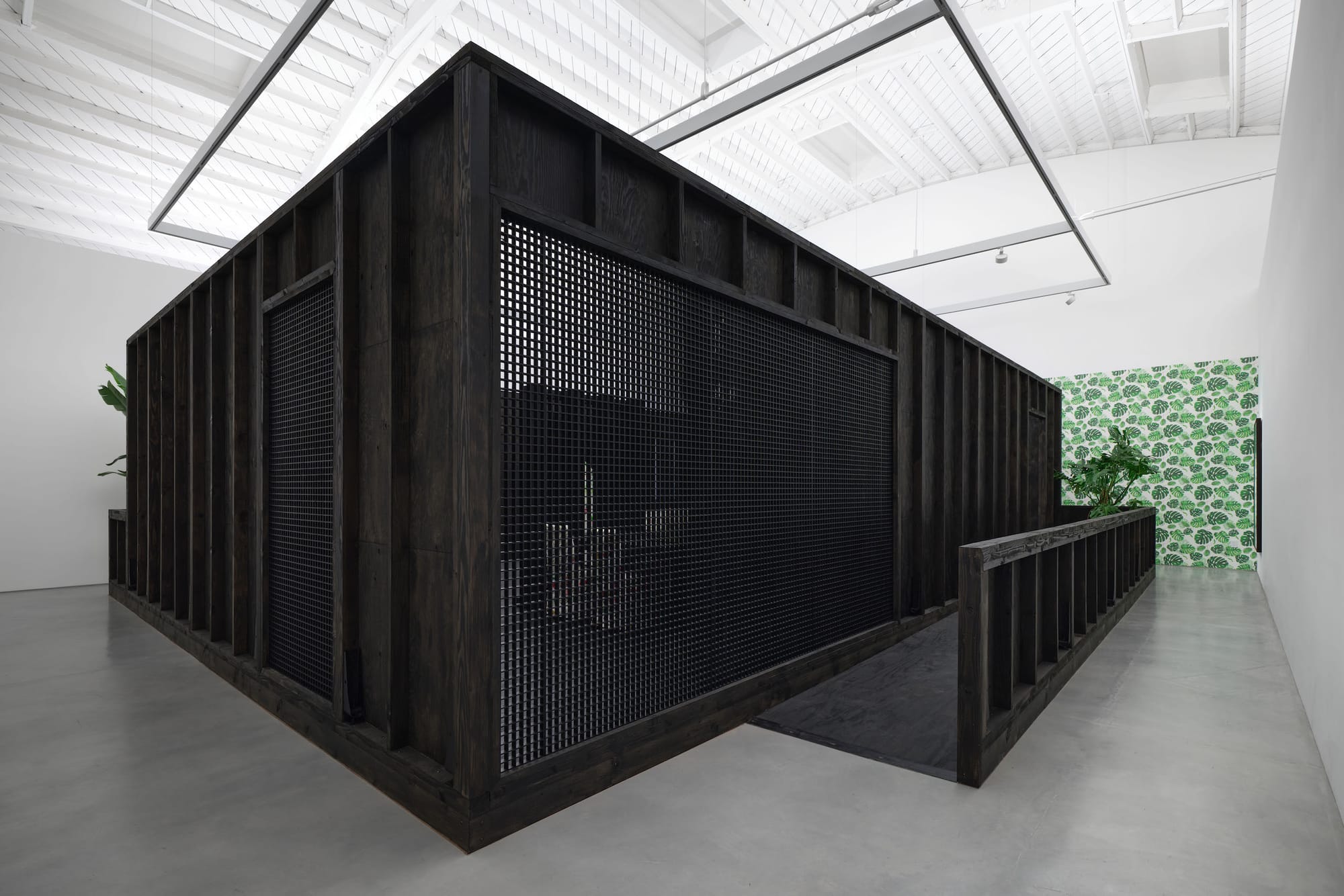
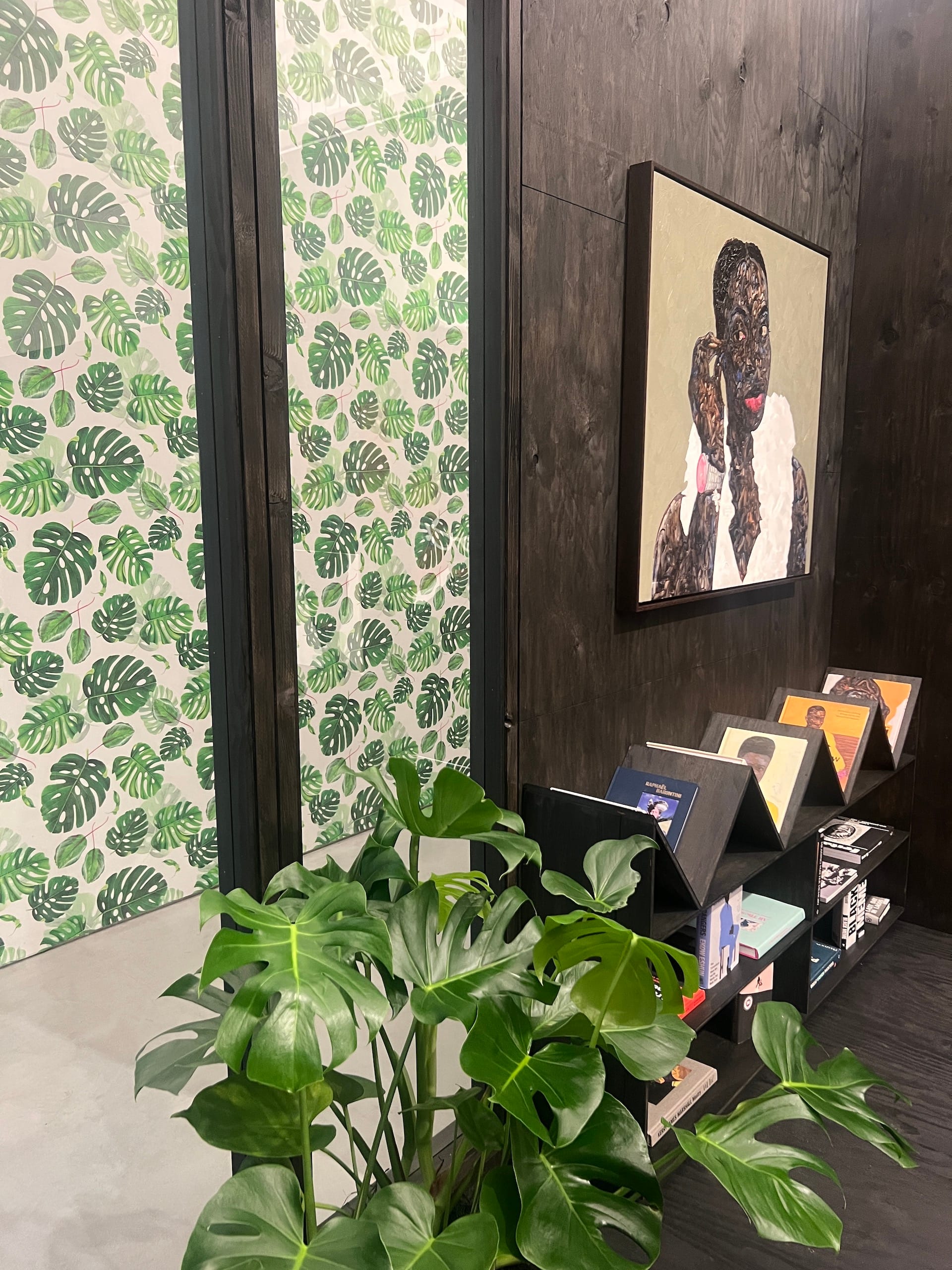
DeRoche’s structure mimics Boafo’s studio but also evokes a communal gathering space, with a family table area scattered with playing cards displaying Boafo’s work and a seating area recalling a living room — its furniture covered in fabric printed with Boafo’s previous works. “A Living Space,” a poem by Ghanaian-born poet Yielu, plays on a loop. Visitors can flip through books on Boafo’s artistic contemporaries and inspirations from home and abroad. It all suggests that one stay awhile, get comfortable.
Boafo’s techniques bring a physicality to his paintings that mirrors the tactility of the space. When working on his subjects’ faces and flesh, he paints with his fingers, the visceral texture deepening the humanity of each portrait. Much as we are formed by and within bodies, these likenesses by Boafo come to life in a similar manner. Blues, blacks, browns, and grays coalesce through the artist’s fingertip to emulate the kaleidoscope effect deep skin tones can often hold. His hand rendering of their features makes the show’s title that much more apt and profound.
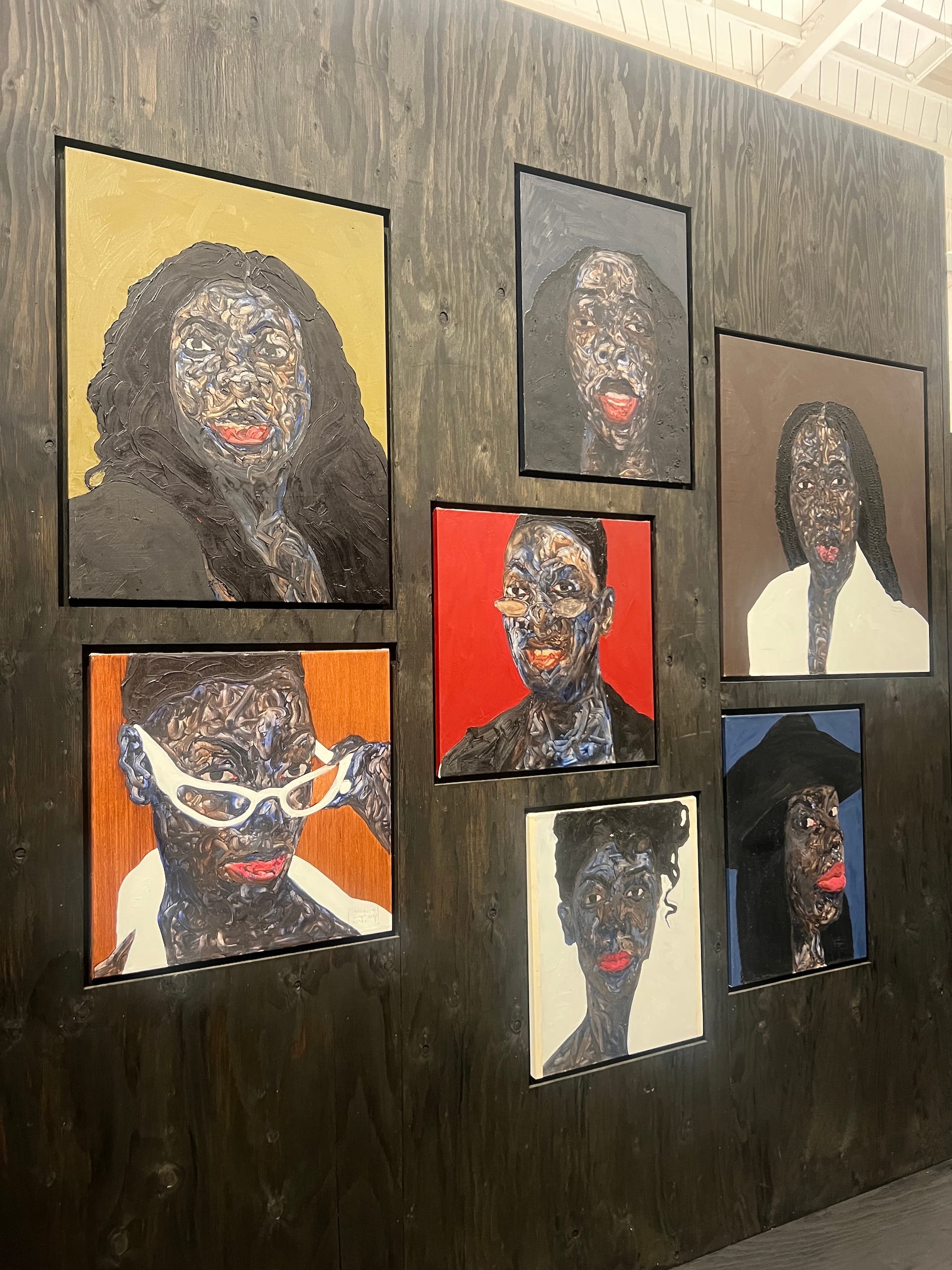
Dominating the show are regal portraits of femme subjects. From their frames flows a feminine resiliency and commitment to duty, place, people that enables simple rooms to become safe spaces, for groups to be transformed into community. I feel that Boafo is honoring that femme entity in homemaking — in the portraits of himself along with those of the others. Each work projects the willful act of welcoming to create a sense of home — particularly “Floral Shirt,” which looked over me while I eased into the living room, her face framed by voluminous hair, her swirled-finger-trail-skin coming across as 3D as she kept me company on the couch. Shifting my gaze, I found a wall of seven other women doing the same: meeting my eyes and acknowledging my presence in their world.
This observation of homemaking is also code for those who are part of a diaspora. Whether they have traveled by necessity or choice, the recreation of home is a part of each person’s tale. Here, Boafo crosses land and sea and puts color to canvas to lay bare his origins for us. He invites you to sit down in his home and greet the people there as they look back at you.
Amoako Boafo: I Bring Home With Me continues at Roberts Projects (442 South La Brea Avenue, Hancock Park, Los Angeles) through March 21. The exhibition was organized by the gallery.