Cannupa Hanska Luger’s Truth About America
The beauty of the Native artist’s forms seduces, but the visual history of destruction is embedded into each element.

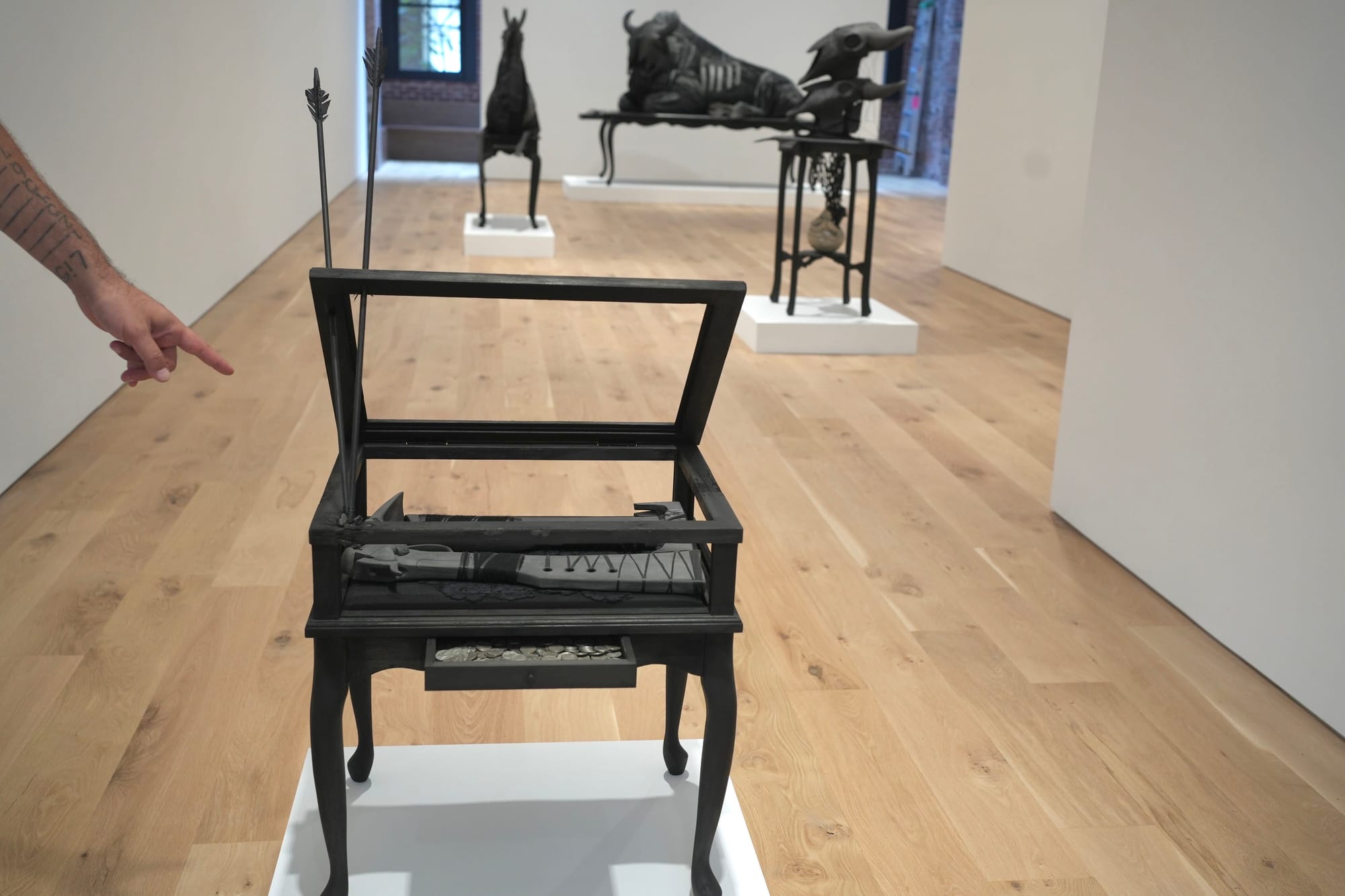
Two years ago, I encountered the infamous 1892 image of two men with a hill of buffalo skulls at the Baltimore Museum of Art. It was covered by a small wall-mounted curtain designed by Yurok artist Stormi Turner, and it gave the image, still shocking after over a century of circulation, the depth of tragedy that it warranted. Part of the Preoccupied: Indigenizing the Museum exhibition, it was a way of acknowledging the care that such a crime demands, in the same way that human remains are shown in museums today, often with warnings, behind doors you must open, or under covers that you must actively remove to see. Turner’s intervention was a way to honor an animal that many Native American groups and communities lived in symbiotic relationship with for millennia. That image came back to me when I walked into Cannupa Hanska Luger’s newest exhibition, American Traditional, at Garth Greenan Gallery in Soho, where the artist sets aside the participatory, ceramics-heavy projects he’s best known for and arrives at something more declarative — a synthesis of wood, ink, and archive that is his strongest work yet.
In Mari Sandoz’s The Buffalo Hunters: The Story of the Hide Men, first published in 1954, she explains that North American bison, also called buffalo, were far more numerous than humans on the continent and there was “apparently no disease on all the continent that threatened the buffalo in any number.” That charmed existence for the largest land animal on Turtle Island was interrupted by the eventual arrival of European settlers, who with their horses, guns, and railroads made their slaughter into an industrial-scale activity.
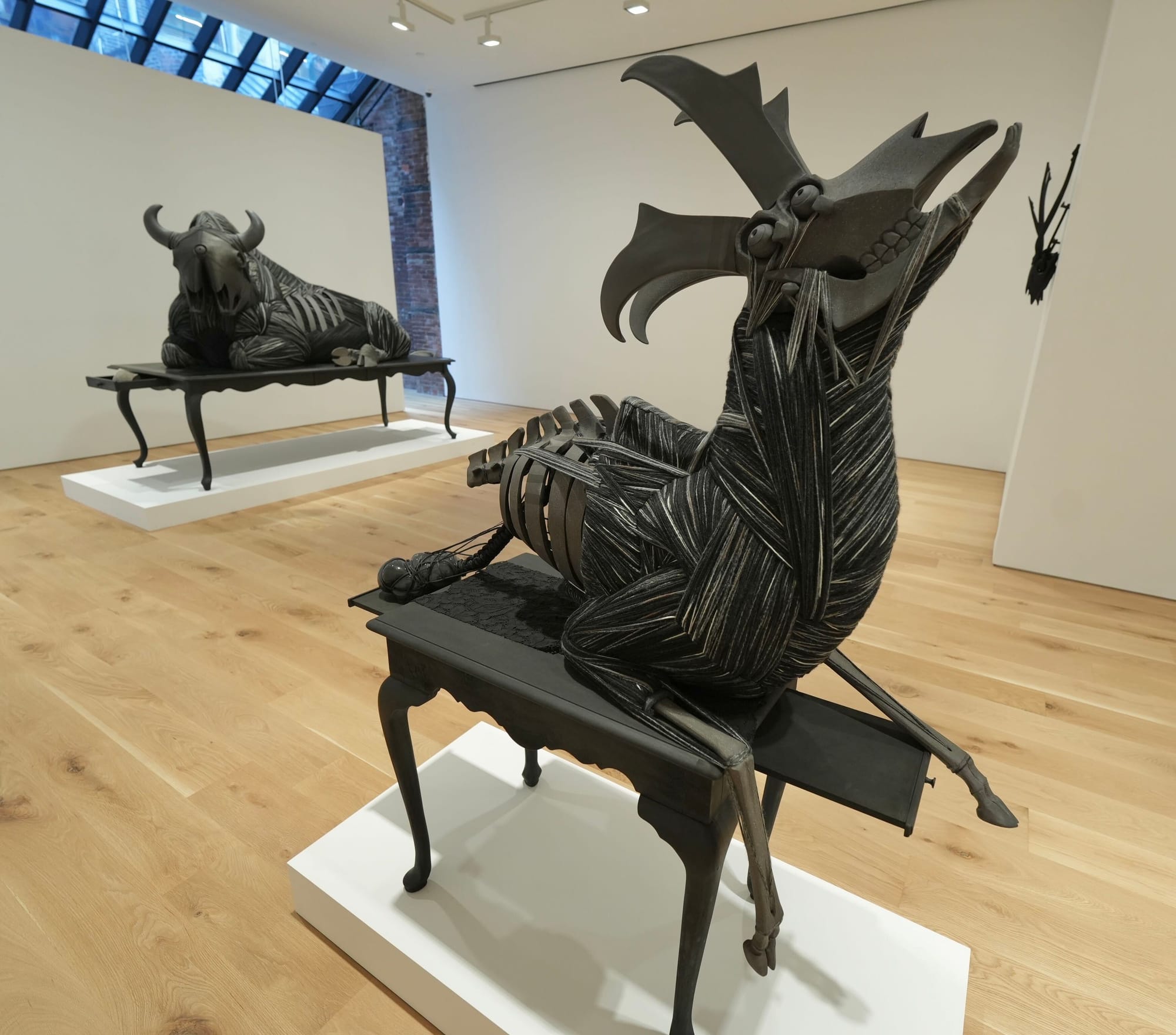
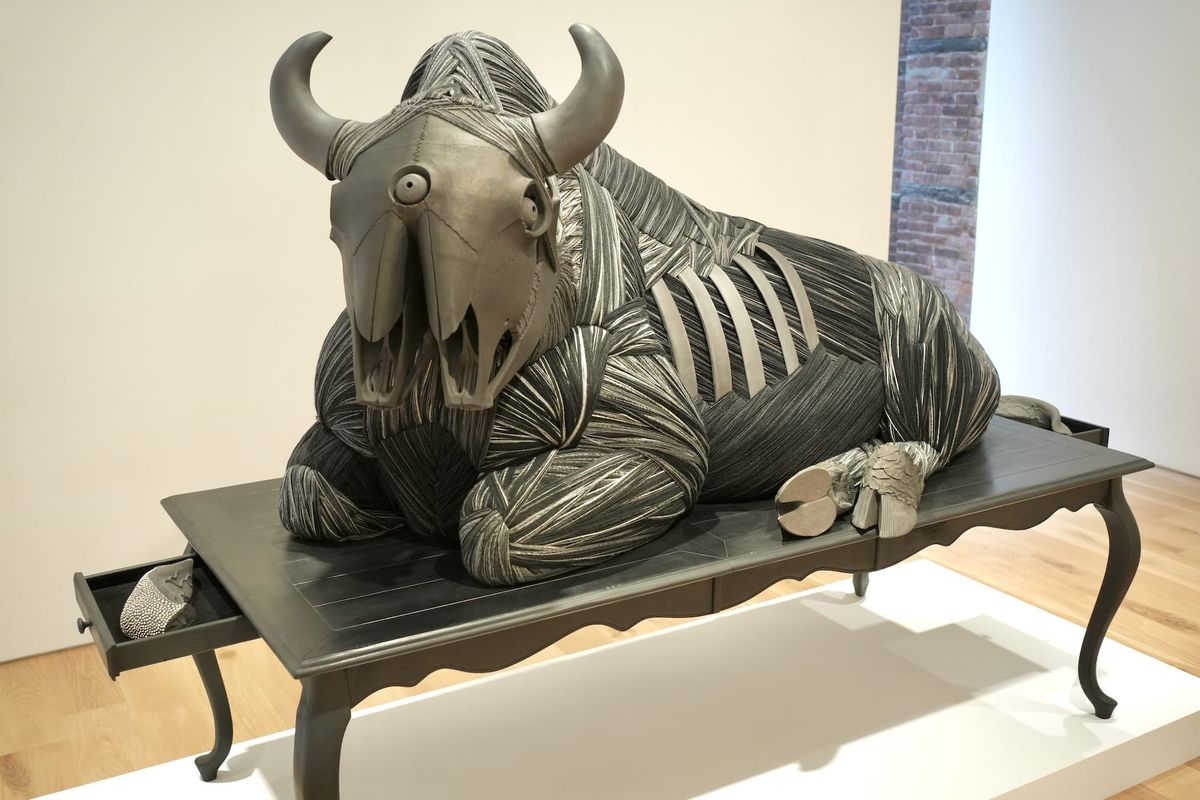
Luger, who was born on the Standing Rock Reservation, places a black abstracted bison atop a blackened rendering of a 19th-century American wood dining table. An enrolled citizen of the Three Affiliated Tribes of the Fort Berthold Reservation, he has deep roots on the Great Plains, and he knows the history of destruction that tore the bison from the tribes of the region that was, as Sandoz put it, “almost the sole subsistence of the Plains Indian — his shelter, clothing, food and fuel.” The Cree scholar Tasha Hubbard goes further than Sandoz was able to. For Plains nations the buffalo were kin, part of the First Peoples rather than a separate species, and the campaign against them was, in her account, a genocide carried out by proxy and a “second major wave of trauma for Plains Indigenous peoples,” after epidemic disease. The army said as much. Hubbard quotes Colonel Richard Irving Dodge’s advice to hunters — “every buffalo dead is an Indian gone” — and General Philip H. Sheridan understood it before the historians did. In 1875, when the Texas legislature proposed a bill to protect the bison, buffalo hunter John R. Cook recorded Sheridan’s objection: “These men [the buffalo hunters] have done more to settle the vexed Indian question than the entire regular army has done in the last thirty years … Send them powder and lead if you will, but for the sake of a lasting peace let them kill, skin and sell until the buffalo are exterminated.”