Charles Seliger Painted Nature’s Invisible Architecture
One of the youngest Abstract Expressionists, the artist charted an independent path guided by the beauty and intricacy of cellular structures.

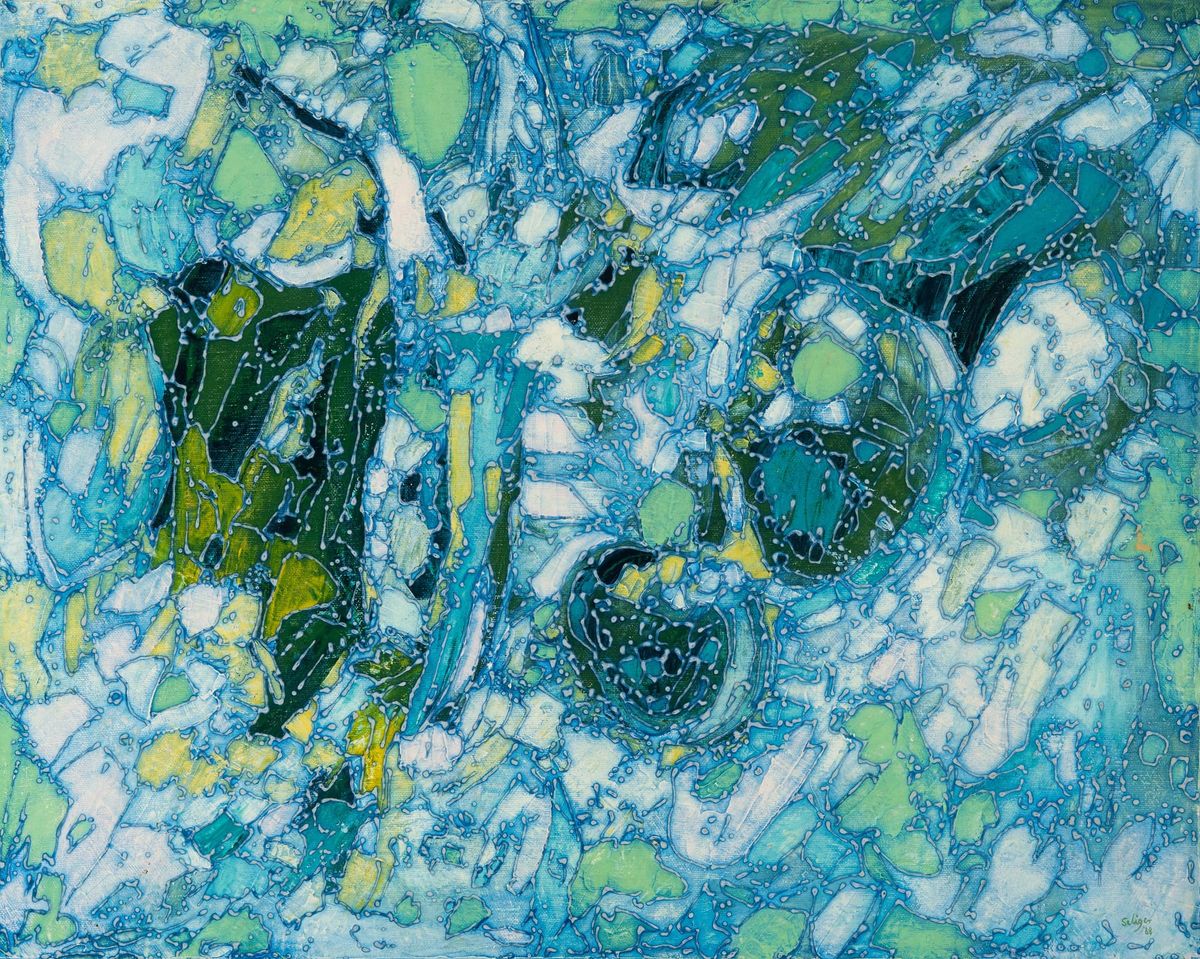
At age 19, Charles Seliger received his first solo show at Peggy Guggenheim’s gallery The Art of This Century in 1945, and was one of the youngest artists associated with the emergence of Abstract Expressionism. However, unlike most painters in this nascent movement, he never worked on a large scale, nor did he become a gestural or geometric painter. Devoted to nature and Surrealist automatism, he remained a maverick. That independence explains why he is seldom included in surveys of Abstract Expressionism, especially if they focus on stylistic similarities.
In 2010, the year after Seliger died, his then-dealer Michael Rosenfeld presented Charles Seliger: A Memorial Exhibition. Since then, his work has largely flown under the radar. Charles Seliger: The Structure of Matter, A Centennial Exhibition at Hollis Taggart brings overdue attention to this wonderful artist, who saw beauty in the invisible structures and patterns governing the visual world.