Elucidating the Esoteric with Hilma's Ghost
Through research and collaboration, a feminist art collective reclaims the place of alternative spiritualities in art history.

It’s been almost eight years since Swedish painter and occultist Hilma af Klint’s retrospective Paintings for the Future at the Guggenheim Museum in New York tore a hole through the canon of abstraction in art history. With its record-breaking attendance, the show catapulted the late mystic from the throes of relative obscurity in North America and established her as a pioneer of the movement who had slipped under the radar in part because of her devotion to spiritualism and Theosophy.
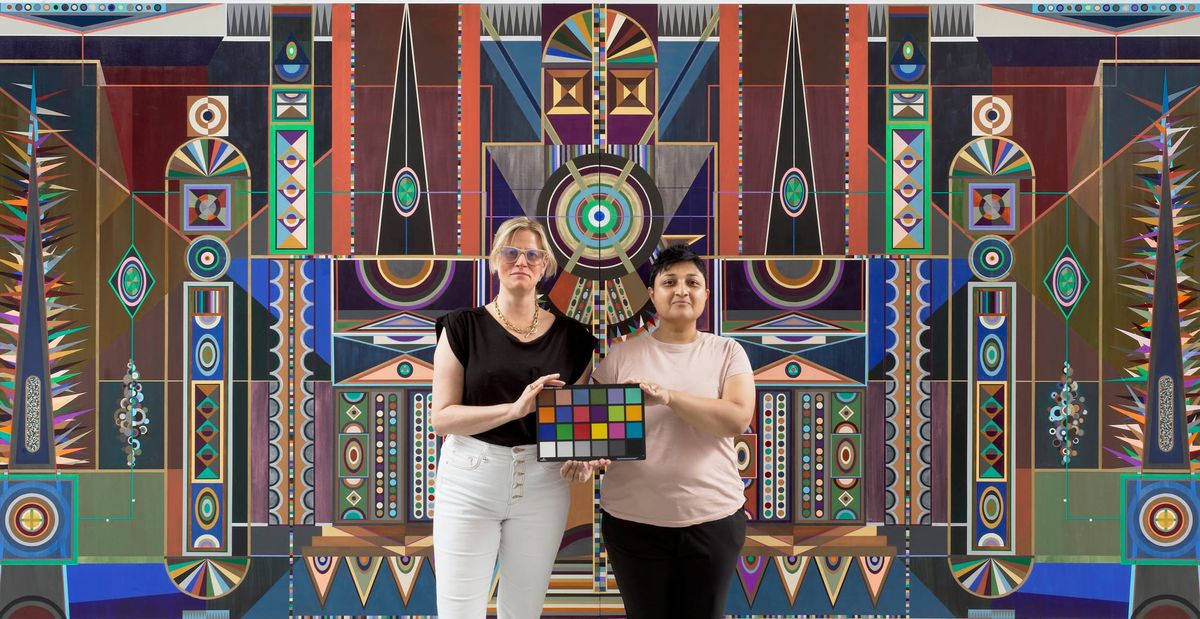
Although contentious, the newfound spotlight on af Klint stimulated public interest in the sacred and the supernatural, invoking a new feminist artist collective that both questions and resists the sidelining of alternative histories. Artists and educators Dannielle Tegeder and Sharmistha Ray came together to form Hilma’s Ghost, an experimental manifestation of feminist research and esoteric practice expressed through artmaking and community building.
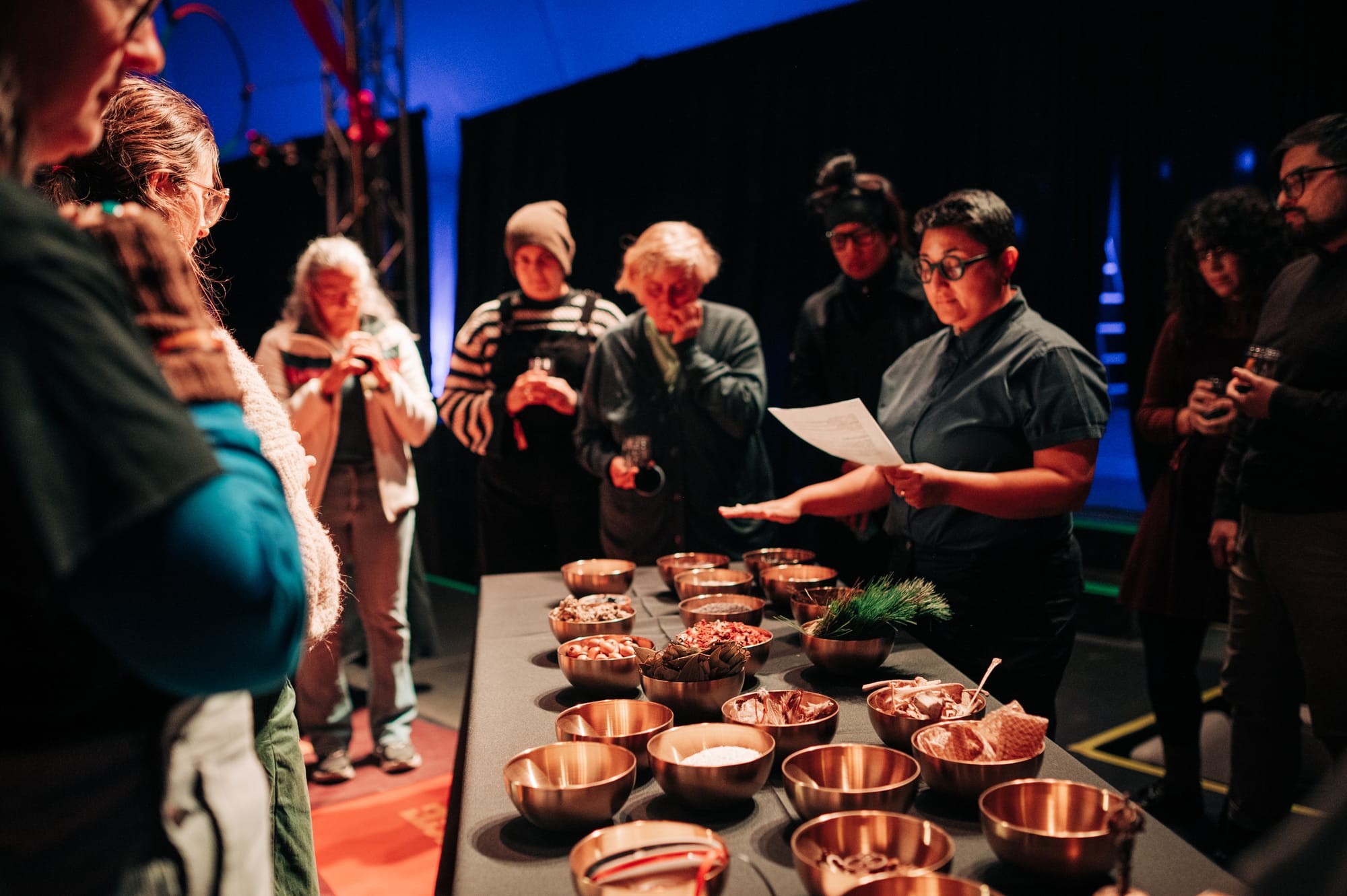
The seed for the collective was planted at the Guggenheim exhibition in 2018, but it came to fruition during the height of the COVID-19 pandemic. While displaced from their neighboring studios at the Elizabeth Foundation for the Arts in Manhattan, Tegeder and Ray began to convene remotely with questions and reflections on mortality, which inevitably led to conversations about the power and erasure of alternative spiritualities and the occult.
A professor at the City University of New York’s Lehman College, Tegeder has read tarot and practiced witchcraft since she was a teenager, and her independent practice pursues the concept of utopia by abstracting the visual language of schematic draftsmanship (inherited through her family trade of steamfitting). Ray, who teaches at Carnegie Mellon University, is a diasporic Bengali artist whose practice bridges queer alienation and experiences of migration through neo-tantric cosmologies. For Ray, Matrika worship (the practice of worshipping seven Hindu goddesses), idol worship, and ceremonial pooja rituals are among the prominent characteristics of Hinduism that overlap with the Western designations of the occult.
“ We never intended to make work together,” Ray admitted while speaking with Hyperallergic, noting that Hilma’s Ghost primarily set out to explore how women and queer artists were erased from the art historical canon for their unconventional modes of working.
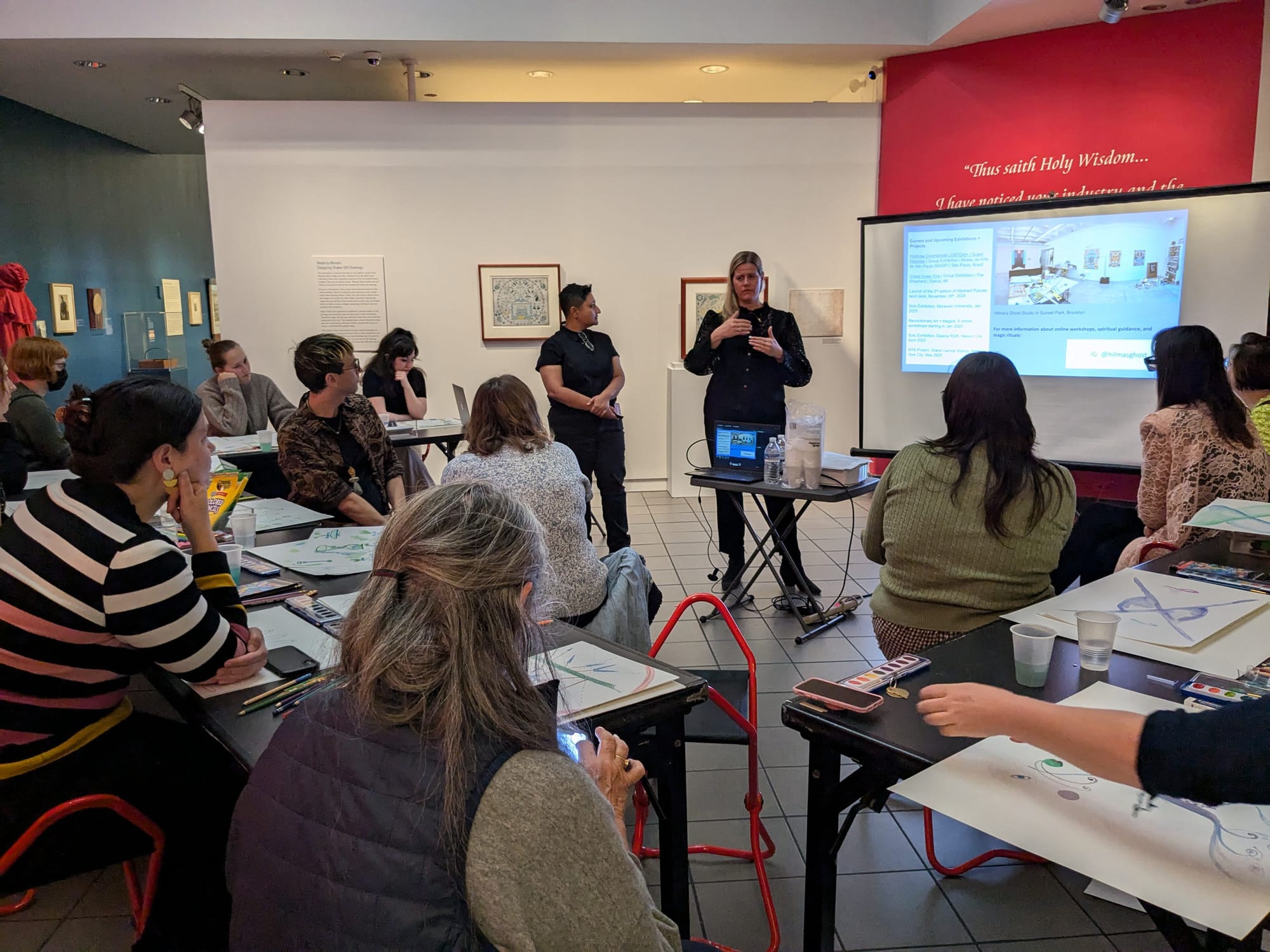
Early on, the collective hosted free online workshops led by expert practitioners well-versed in ancient cosmologies, witchcraft, spellcasting, tarot, and automatic artmaking. Both educational and participatory, the workshops attempt to demystify and destigmatize these esoteric practices by honoring marginalized artists and practitioners.
Per the collective, the workshops provide extensive historical context while also offering a platform for cautious curiosity, practical inquiries, and the acknowledgment of doubt.
“We say that we’re believing skeptics,” Tegeder told Hyperallergic. “Skeptics are very common in every single workshop we’ve conducted. People are really afraid, and that's always amazing to me since it's always a pretty liberal audience,” she added.
“But this fear just means that the patriarchy and the church have done their jobs. They needed to make women, queer people, and people of color afraid in order to stay in power,” Tegeder continued. “And there are still real ramifications to being found out as a practitioner, especially with the reputation of invoking the devil.”
Regardless, Hilma’s Ghost workshops have generated a steady stream of interest, especially since their switch to in-person sessions and the recent rise in the popularity of tarot and other esoteric practices. Working itinerantly over the last four years, the collective has led and organized dozens of pedagogical workshops in museums, universities, and other learning spaces across the United States.
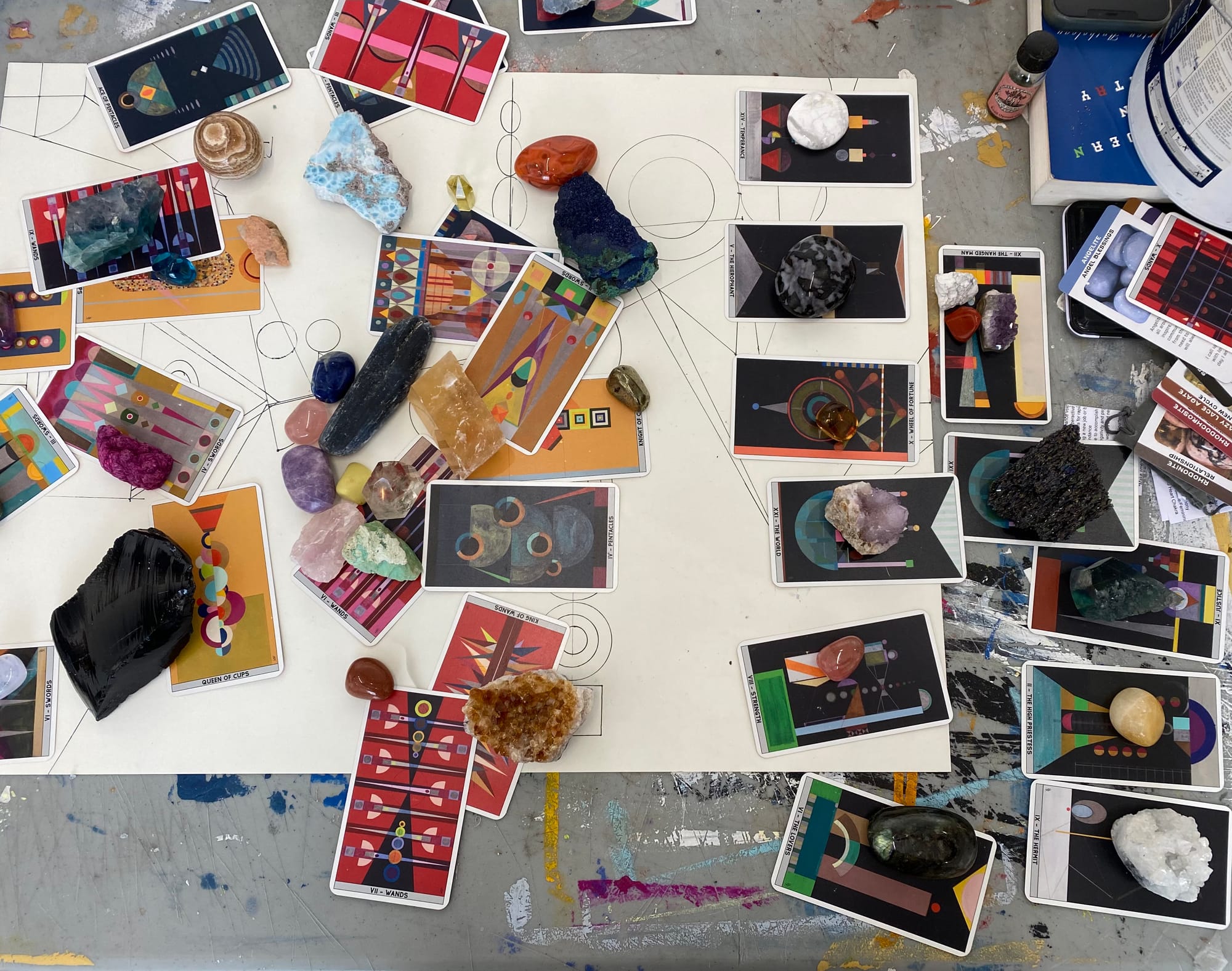
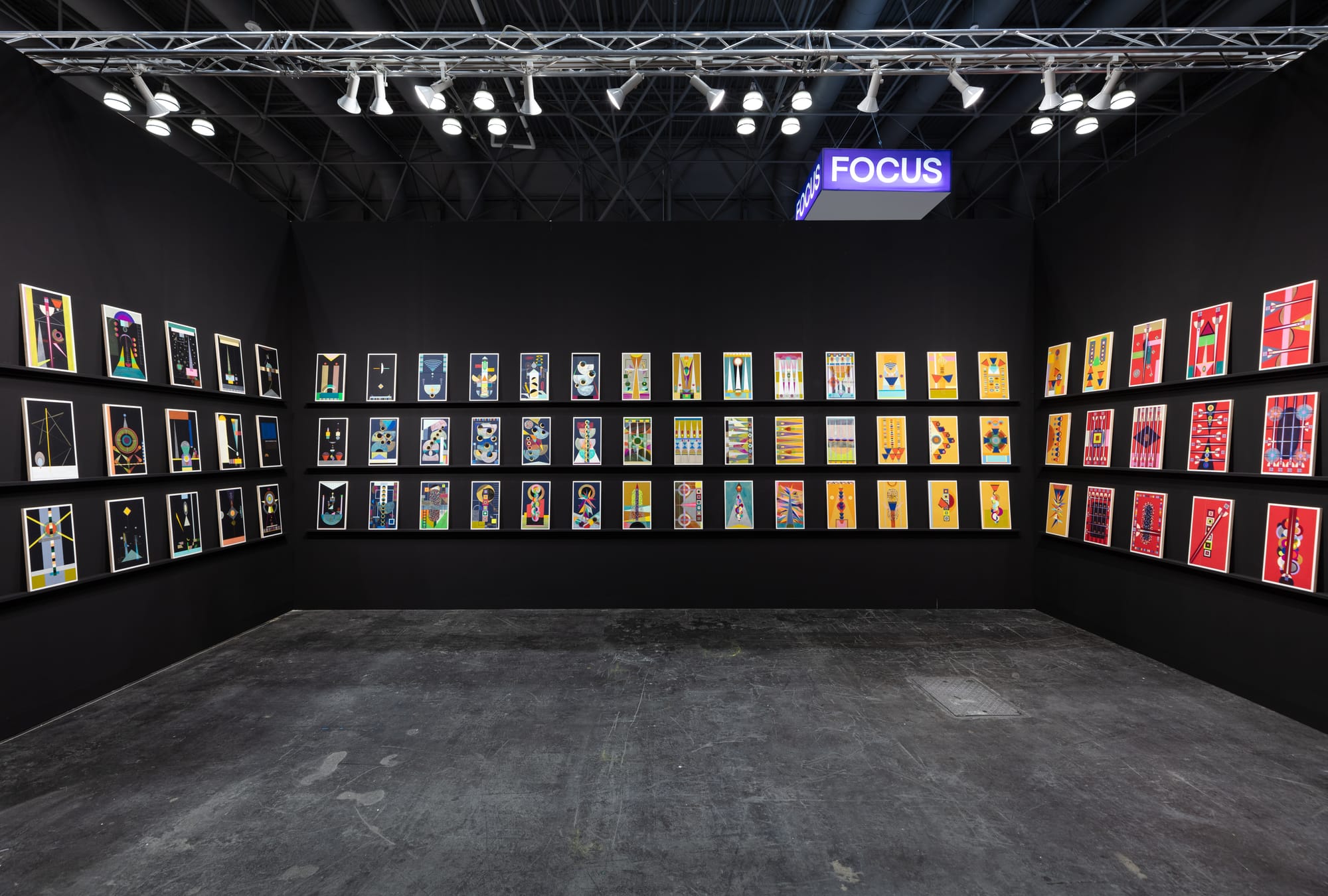
The pair’s collaborative artmaking process is as involved as its workshops. Ray and Tegeder’s first project came together in 2021, when they developed “Abstract Futures Tarot.” The series consisted of 78 individual drawings that assembled to form the cards of a limited-edition namesake tarot deck, and five large paintings whose compositions were informed by card readings from the deck. “Abstract Futures Tarot” made its debut in an enrapturing and participatory display at the Carrie Secrist Gallery booth during the 2021 Armory Show. Born from over 600 hours of work, supplemented by extensive research and divination’s helping hand, the deck’s major and minor arcana cards seamlessly integrate hard-edge geometric abstraction and sumptuous palettes with an otherworldly energy translated across the suits (in other words, everyone wave and say hi to Hilma …).
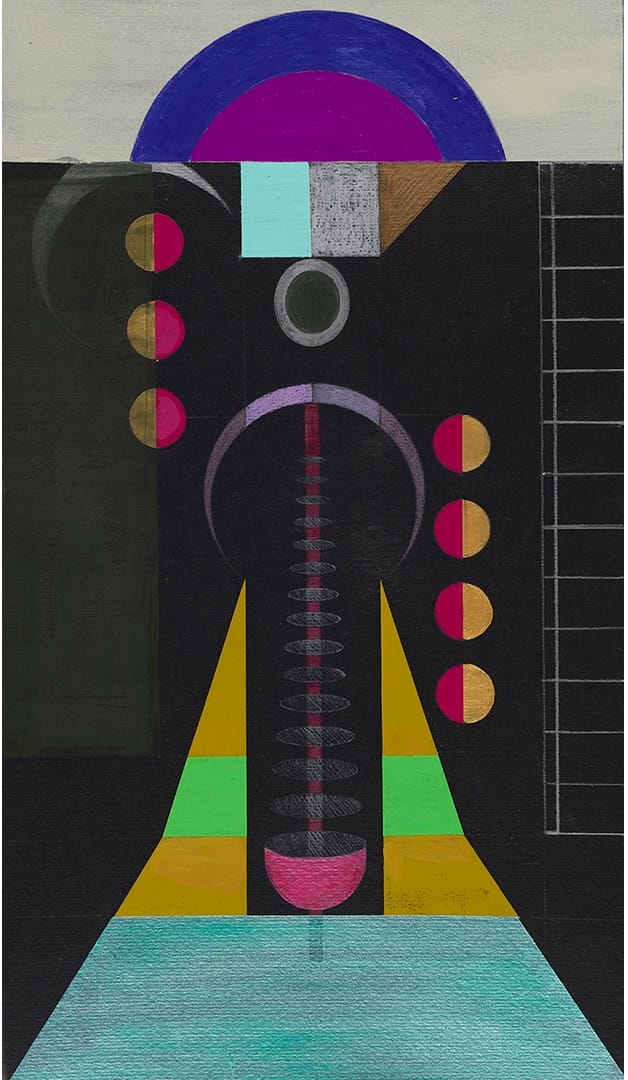
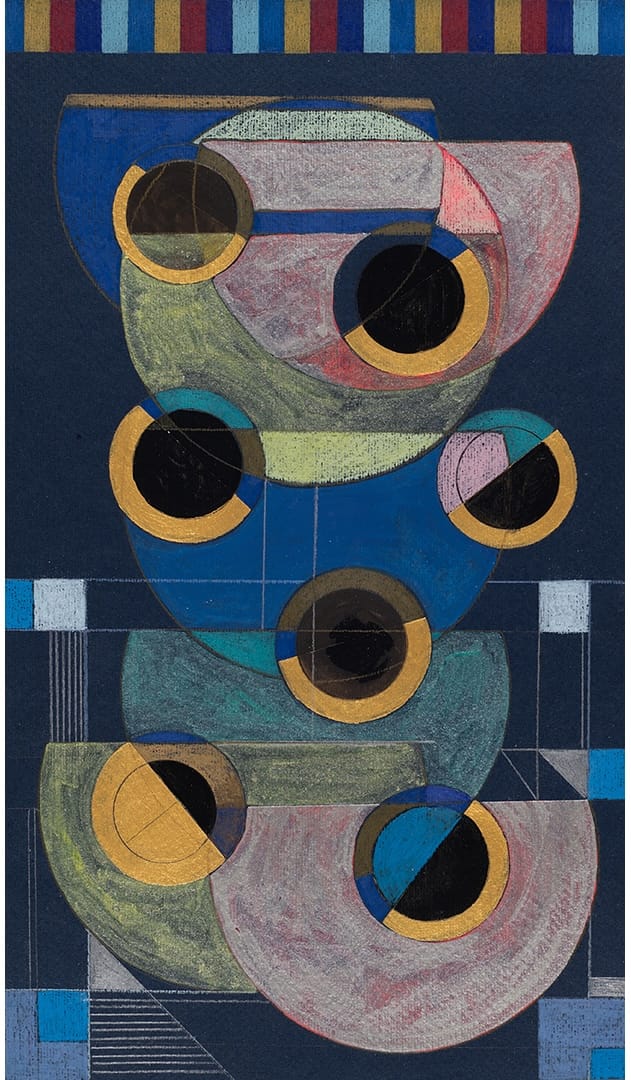
Left: Hilma's Ghost, “The High Priestess” (2021), from Abstract Futures Tarot Right: Hilma's Ghost, “VII-Pentacles” (2021), from Abstract Futures Tarot (images courtesy Hilma's Ghost and Secrist|Beach, Chicago)
“Abstract Futures Tarot” also taps into the unsung legacy of Pamela Colman Smith, who illustrated the Rider-Waite tarot deck that is arguably the most famous design in circulation to date, along with that of Lady Freida Harris, who independently painted the cards in the popularly distributed Crowley Thoth deck. Likewise, Ray and Tegeder highlight the decks of Surrealists Leonora Carrington and Ithell Colquhoun within the same project.
As the deck has made its way around the world, Hilma’s Ghost has also taken hold right here, in Manhattan. Anyone taking the 7 train has most likely stopped in their tracks (no pun intended) upon encountering the massive “Abstract Futures” mosaic at the 42nd Street entrance to Grand Central Station. Commissioned by the MTA Arts and Design program and fabricated by master mosaicist Stephen Miotto, the glass tile mosaic was installed last spring as part of the Grand Central rehabilitation project.
The design interpolates the deck’s major arcana through a storytelling lens, across 600 square feet of curved walls, yielding an intricate, immersive mural that envelops travelers in a harmonious symphony of colorful geometry.
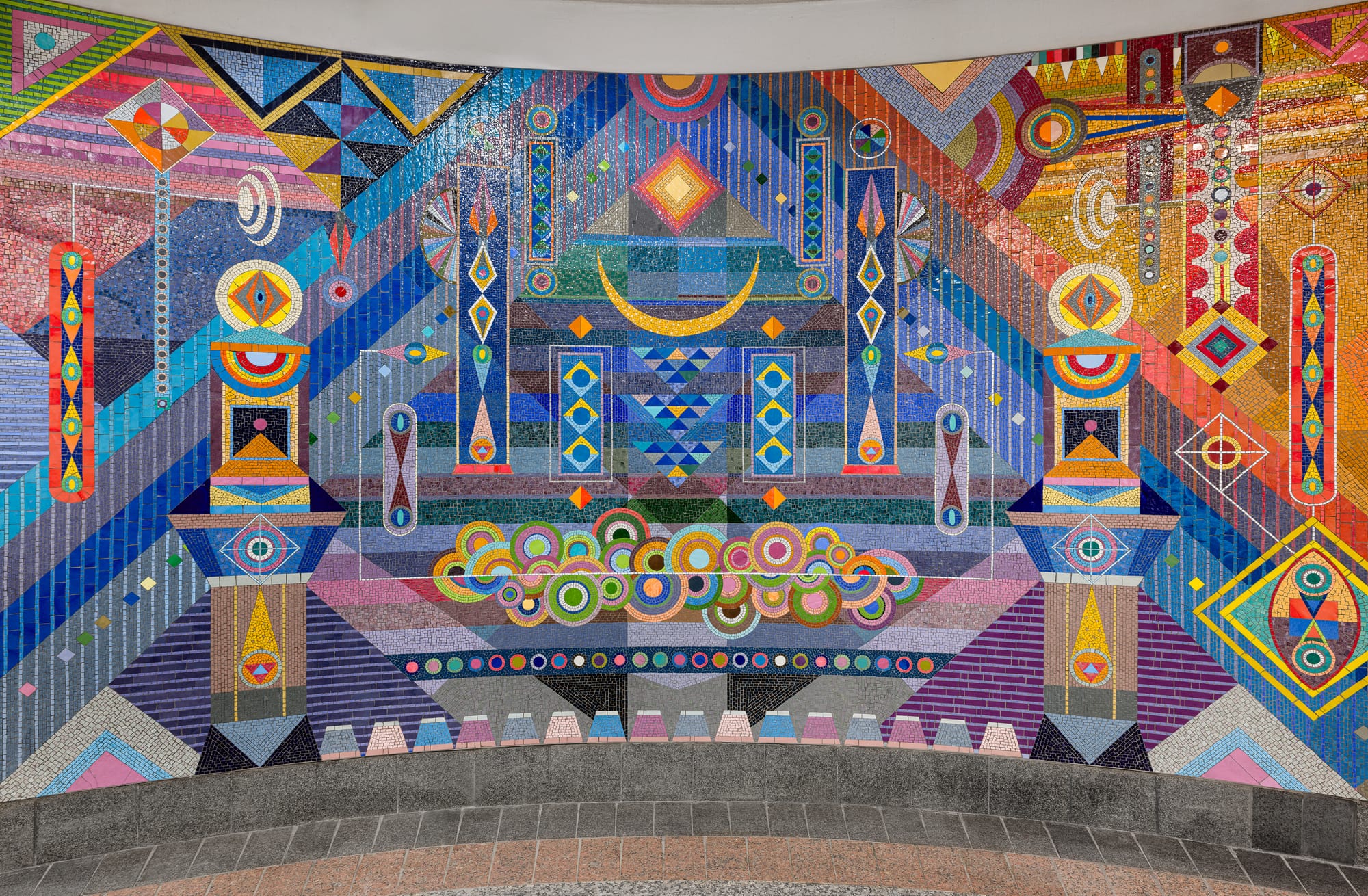
Although Ray is based in Pittsburgh and Tegeder is in Brooklyn, Hilma’s Ghost continues its mission through public activations and exhibitions.
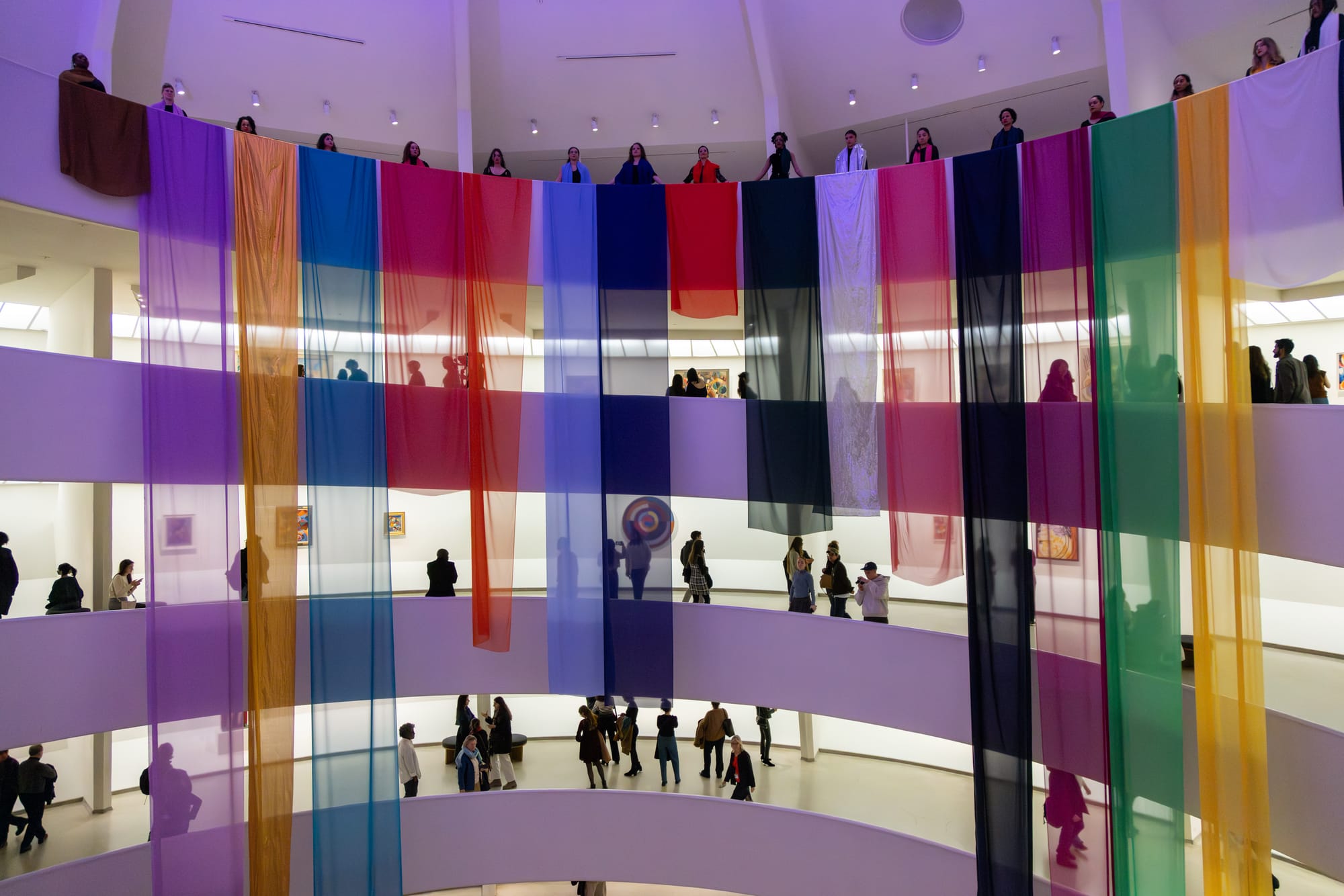
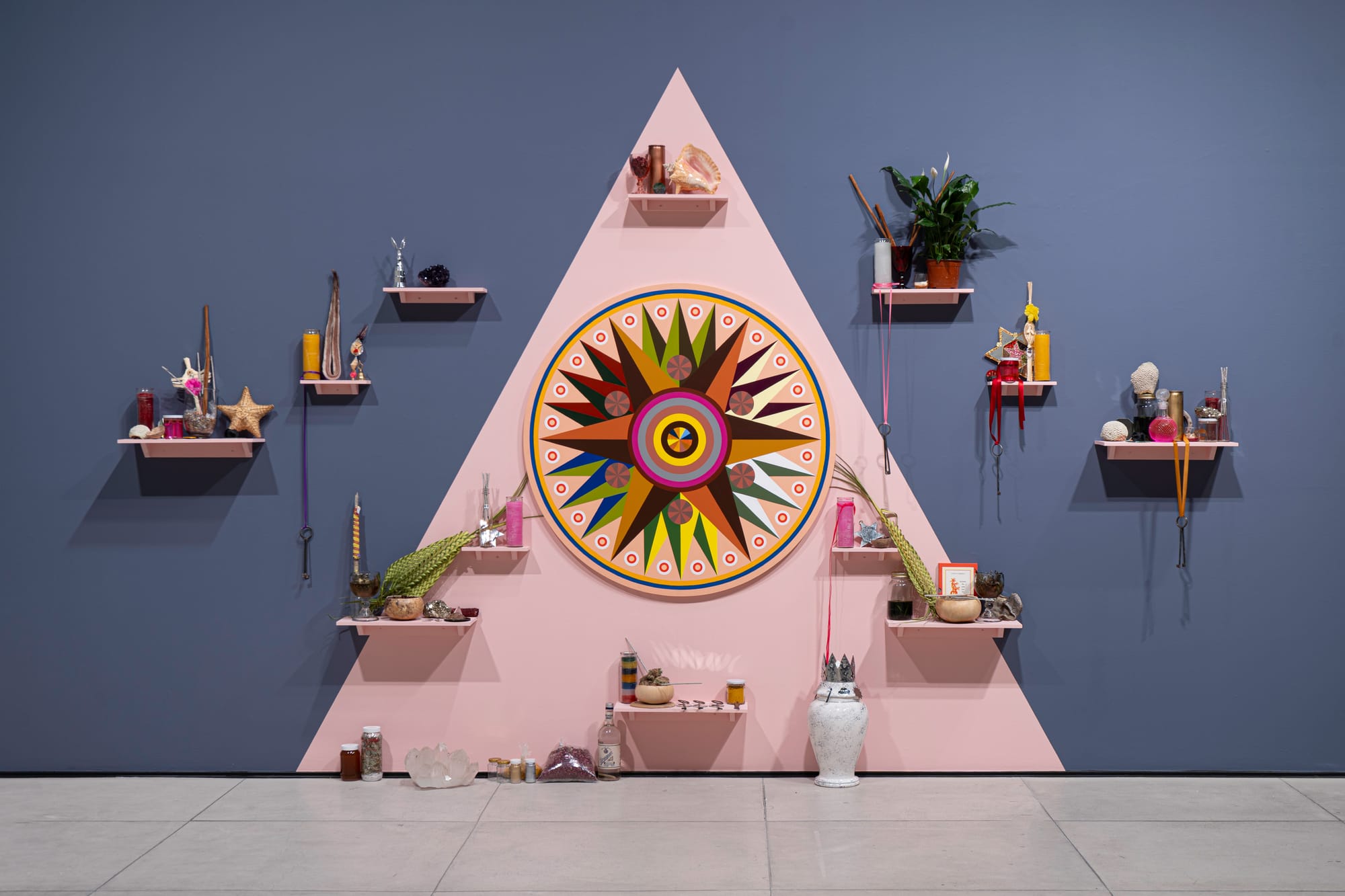
Last year, the collective brought af Klint’s spirit back to the spiral architecture of the Guggenheim in a somatic meditation that also honored the museum's co-founder, Hilla von Rebay. Later in June, the duo led a summer solstice ritual at the Olana State Historic Site in Hudson. In addition to solo shows in Mexico City last year, Hilma’s Ghost has an ongoing exhibition on view through September at the Museum of Contemporary Art Tucson.
Though it was born from af Klint’s exhibition, Hilma’s Ghost really isn’t just about the misunderstood mystic.
“We want to inspire people to also work in an experimental way, to collaborate, and to do their own research in their different positions — I mean, really look in the cracks — to uplift people of color, women, and trans artists,” Tegeder told Hyperallergic.
“We were never working in isolation,” Ray said. “There was always a village.”