How Betye Saar Came to Be
“You just have to pay attention to how you put things together,” the artist told Hyperallergic shortly before her death. “They’ll tell you if they fit."

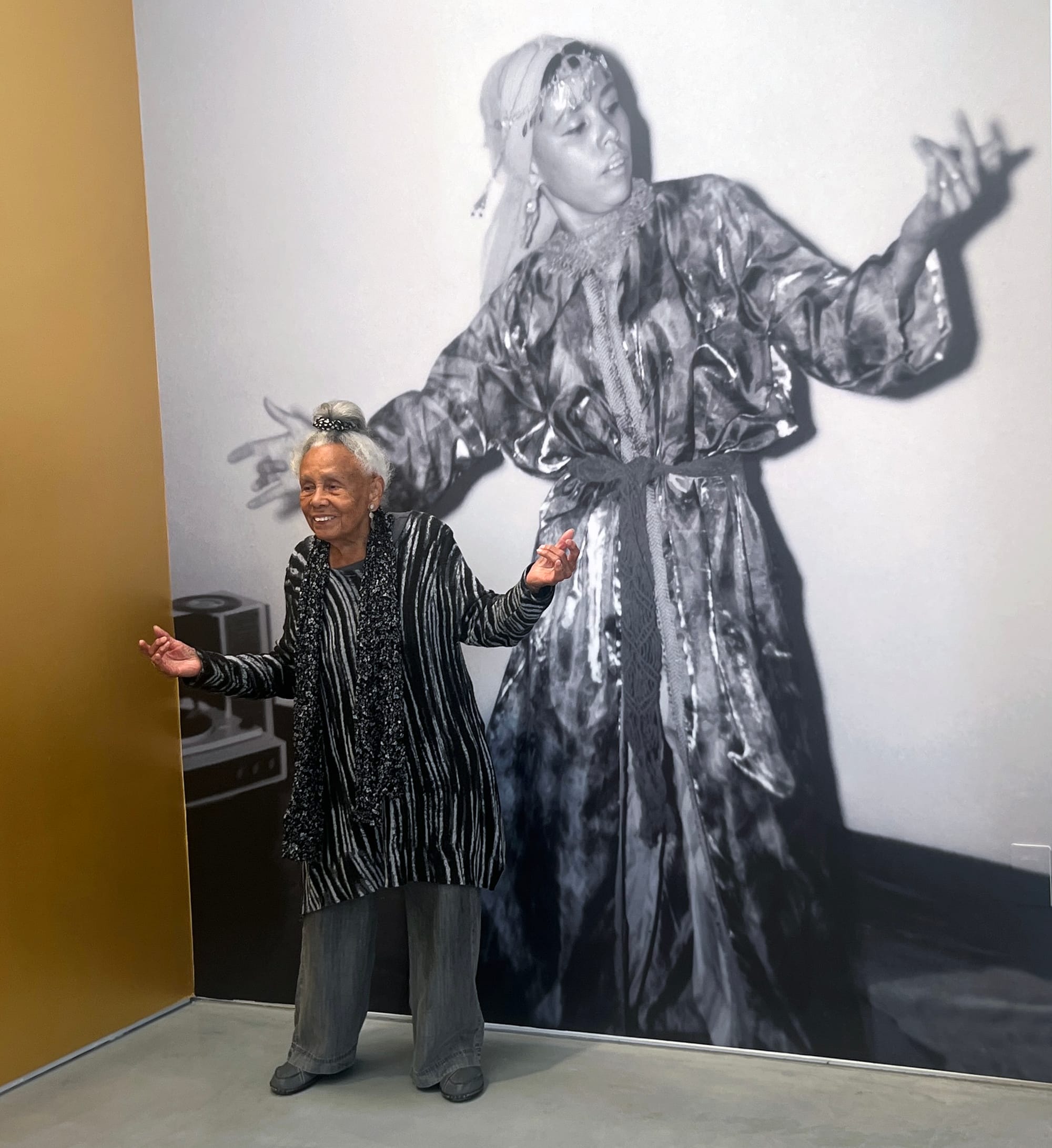
LOS ANGELES — There is an African Adinkra symbol, “Sankofa,” that means “go back and get it.” It’s intended to preach the importance of looking to the past when shaping the future, and to share wisdom between generations. On the occasion of her 100th birthday, Roberts Projects in Los Angeles organized an exhibition to recognize the earliest professional works of Betye Saar — the prolific assemblage artist who prodded the psyche of the Black American experience for over seven decades before her death last month. The show sheds light on a lesser-known facet of her canon: costume design.
Through the over 200 archival objects in the show, one gets a good sense of the multiple pots Saar had her fingers in at the beginning of her career. Costume design, dancing (a full-wall photo of a young dancing Saar acts as the exhibition greeter), photography, drawing, jewelry, garments, greeting cards, album covers, and more are on view. The range depicts Saar’s broad curiosities, but it also underlines her particular skill in identifying various potentials and fitting them together.
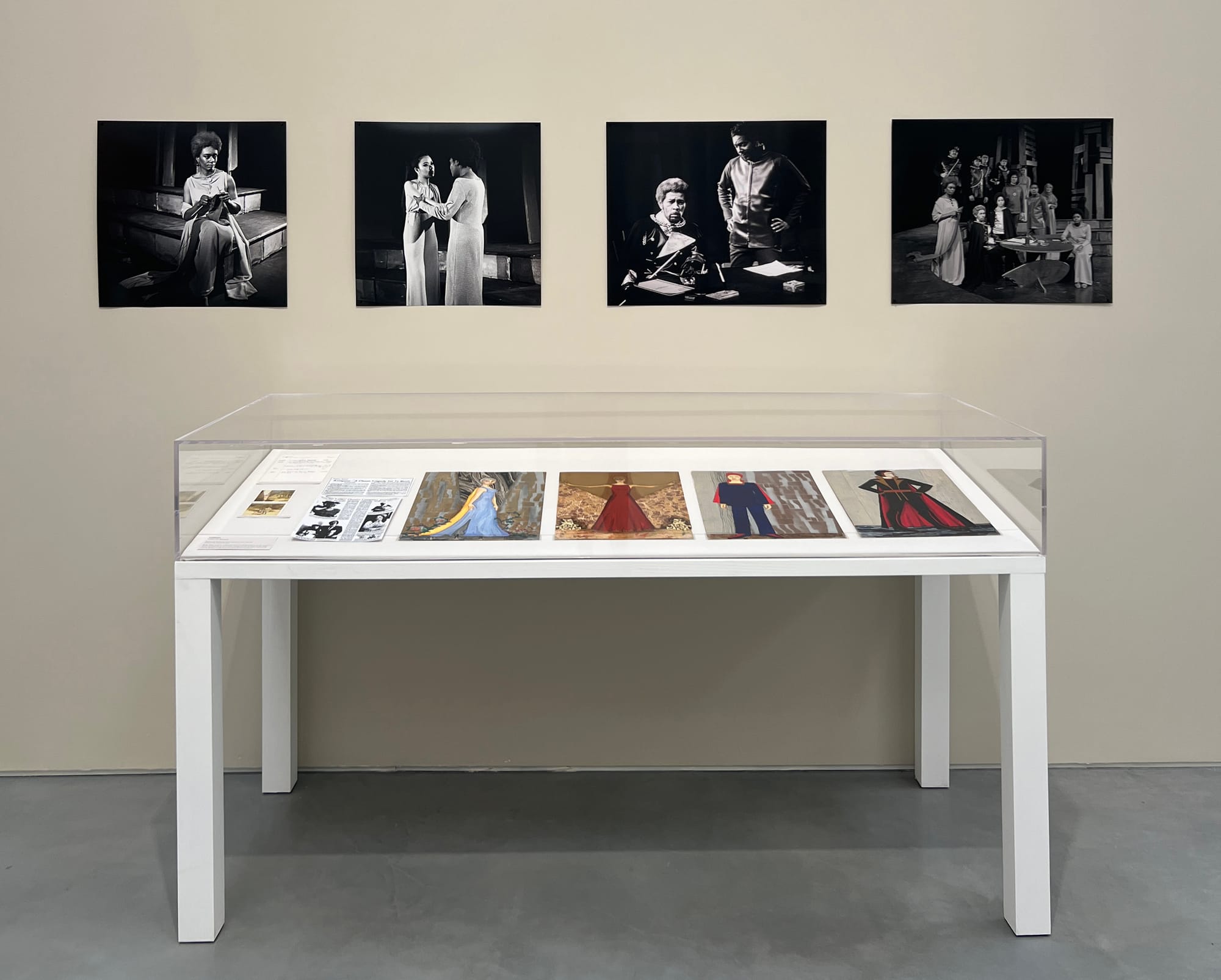
Some of the first archival photographs in the show are costume and set designs for a 1970 production of Antigone at the Inner City Cultural Center (ICCC), then located at the intersection of Washington and Vermont in Los Angeles. Saar worked on the costumes for the play but also did the backgrounds; the wallpaper was her first foray into collage work. “I just love materials,” Saar said during a press walkthrough of the show. “This was one of the first times I really got to play with that sort of collage work long before I knew what assemblage was.”
In fact, this entire exhibition is an ode to Saar discovering the practice of mixing media for which she would become internationally recognized. In her costume work, she reimagined second-hand clothes into abstract garments for the stage or gathered found materials to fashion into accessories. Her sketches and fabric swatches are displayed in vitrines underneath photos of the designs in situ. With certain productions, she explained during the walkthrough, she would “often break down some of the stage work to a smaller scale to sell in the gift shop.” That idea is reminiscent of her classic assemblage work “Black Girl’s Window” (1969), made around the same era. In addition to the early costumes, the exhibition highlights Saar’s domestic creations for her three daughters — Lezley, Alison, and Tracye (plus Tracye’s stuffed bear “Tutti”) — and homemade outfits for the very first years of the Renaissance Pleasure Faire.