IDF Soldiers Hide From Our Gaze
Official portraits show Israeli soldiers turning their backs on the camera, ostensibly to protect them from prosecution for war crimes. The gesture is a tacit admission of guilt.

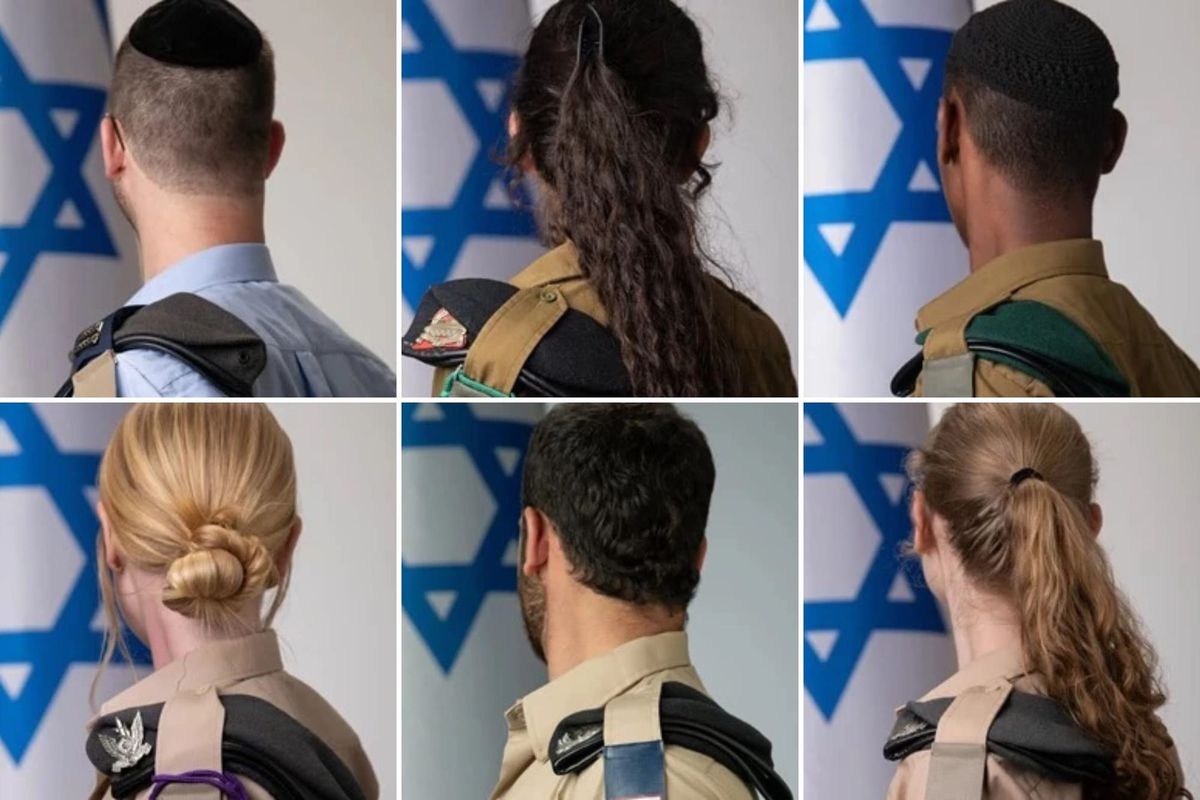
Hiding serves abuse. Nowhere is this vile gesture more embodied than in official portraits of Israeli soldiers with their backs to the viewer. Troops turn their backs on the camera as they have on human rights, exhibiting a cover-up in the most literal sense of the word. Hiding so as to avoid identification and prosecution for war crimes in the occupied Palestinian territories, these soldiers weaponize the same algorithmic surveillance and facial recognition software they utilize to harass others; concealing the abuser while unveiling the abused.
Technologies such as these are now operating outside the domain of militaries and governments, having migrated into the most prosaic moments. Perverts worldwide delight in these innovations, donning smart glasses that breach privacy and consent. Now all it takes is to hit record and transform strangers into reluctant public goods. Faces are no longer unique sites of emotional nuance; recording them is tantamount to acquiring personal information, biometric codes, or a home address. Distinction is what has become danger as private and public melt into one. With the psychological and social toll of mundane surveillance becoming ever higher, looking and looking back became synonymous with crime and punishment. Vulnerability is no longer earned as much as it is invaded.
The implications are huge. Nothing short of how we depict ourselves is on the line as technological threats alongside beauty standards dictate our personal visual presentation. Unlike those of Israeli soldiers, most portraits grant a breathing space that many social environments no longer allow: a rare permission to look at others. Portraits enable spectators to become moral detectives. Gazing at someone else means collecting clues about them. Yet this poses grave problems. Deciding who is highlighted and who remains in the shadows is the crux of domination.
Half of our bodies are turned to the back as it is. Now, however, it is a matter of control and oppression. More than ever before, retaining the right to turn back and hide one’s face is paramount in protecting digital and civil rights. In the case of the Israeli soldiers, it is also an admission of guilt. Becoming a mass of known unknowns is a means of intimidation. The same logic holds true in images coming out of American ICE detention facilities in El Salvador or of masked police officers in protests: vulnerable detainees exposed, agents concealed. Because these abusers cannot be identified as someone, they could be anyone.
Presenting the unpresentable, counterportraiture introduces those who remain unobservable even as they observe others. Turning their backs and without any discernible qualities, the counter-portraits of the soldiers are not of a specific oppressor but of oppressors as a faceless mass; a generic social category. Protected from intrusion and presented with an unreciprocated look, the specific became the general; anonymity into alarm. Counterportraiture does not celebrate individual distinction as is conventional, but rather determines the uniform. Getting a glimpse of these soldiers from the back presents all the basic trappings of portraiture without its actual essence — intimate contact that the spectator and subject commit to. Unlike conventional portraits that are meant to distinguish the self, counter-portraits serve as camouflage. Without visible and distinct features, counter-portraits of sadists do not use the medium as a bridge presenting the self to a public, but as a barricaded fortress against it. Like the Medusa, vanquishing the violent machinations of the Israeli military would first require it to confront the sight of itself. Until that point is reached and the gaze at long last reclaimed, there should be no turning back.