In a Volatile Market, Art Basel Galleries Bet on Our Attention
For most exhibitors at the Swiss art fair this year, the answer is not spectacle, but rather laser focus.
BASEL — Ahead of Art Basel’s flagship fair this week, the Financial Times ran a headline: “Only the spectacular will do.” The statement underscores the immense pressure on galleries at the Swiss art fair, running June 18 to 21, to stand out in a volatile market with high prices and reportedly fewer buyers. The event opened within weeks of Pace Gallery’s massive downsizing and claims that the market was “broken”; meanwhile, among the exhibitors not returning to Basel this year, Tim Blum shuttered his gallery in Los Angeles and Tokyo last summer, and Nice’s Air de Paris, founded in 1990, declared bankruptcy.
Against this backdrop, the obvious question is how participating galleries, 290 this year, will get noticed here. Among the 21 newcomers, the approach, as told to Hyperallergic, was far more nuanced than headlines would suggest. For most, the answer was not spectacle, but rather laser focus.
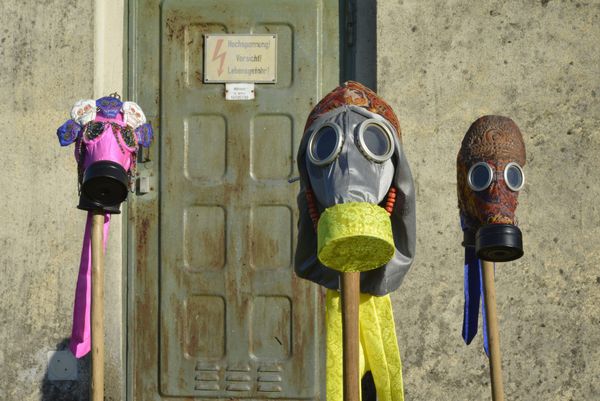
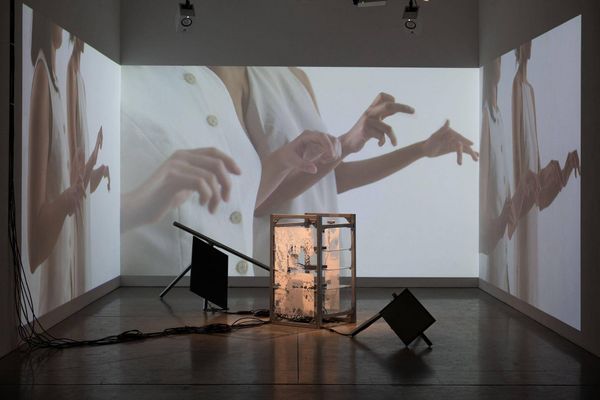
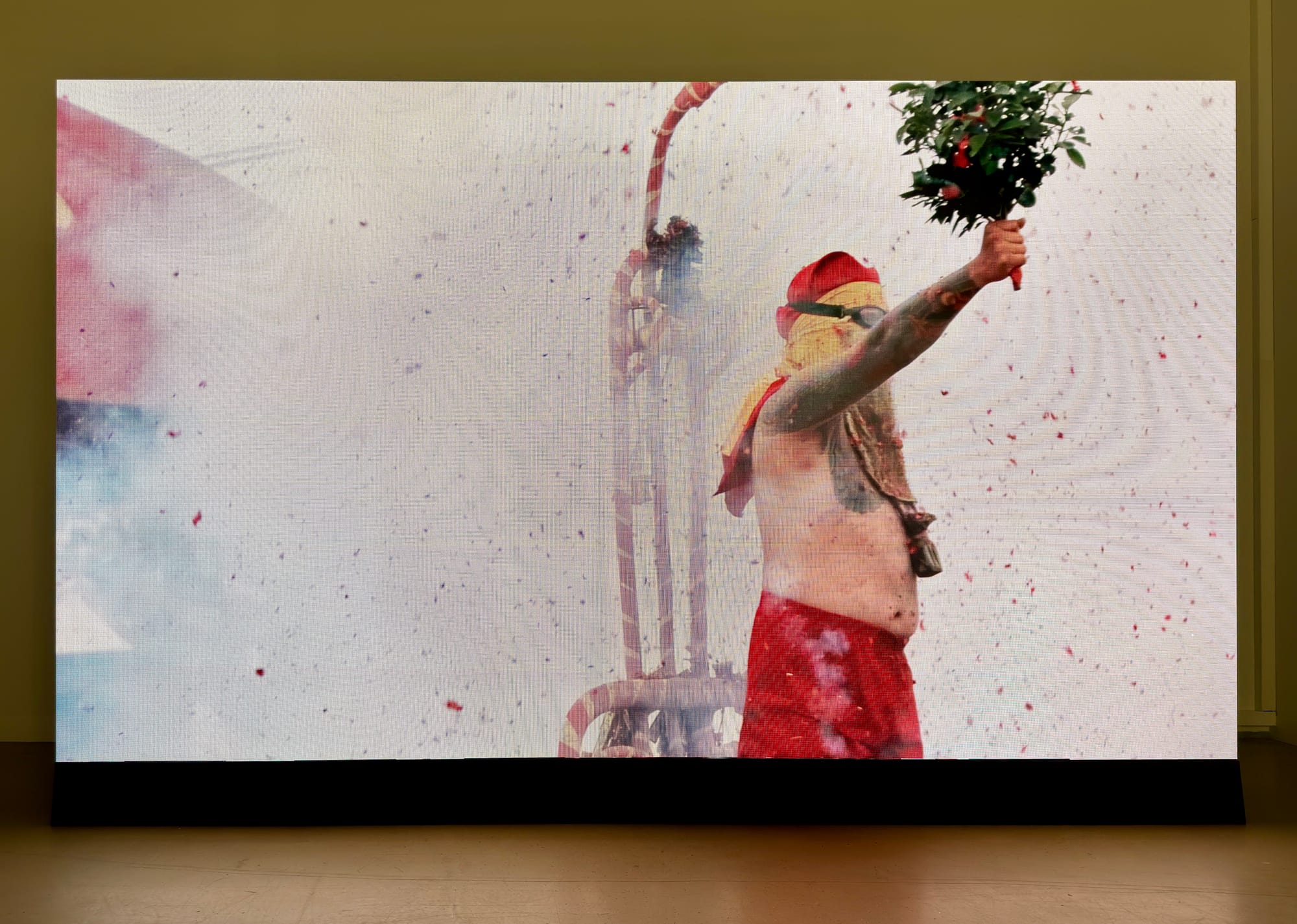
In the Statements sector, launched in 1996 for solo presentations by up-and-coming artists, Marie-Christine Molitor of Berlin’s Galerie Molitor — at the fair for the first time — told Hyperallergic that she hoped to stand out as one of the few galleries showing video. In Molitor’s booth, Yalda Afsah’s theatrical, smoke- and color-infused film “Heat” (2026) documents fiery firecrackers at the Blasting Handan Festival in Taitung, Taiwan, a third installment in the artist’s ongoing series on rituals. “We hope to encourage broader engagement with digital and time-based works among collectors,” Molitor added, underlining that the fair remains a unique opportunity to build Afsah’s growing base of collectors and institutions.
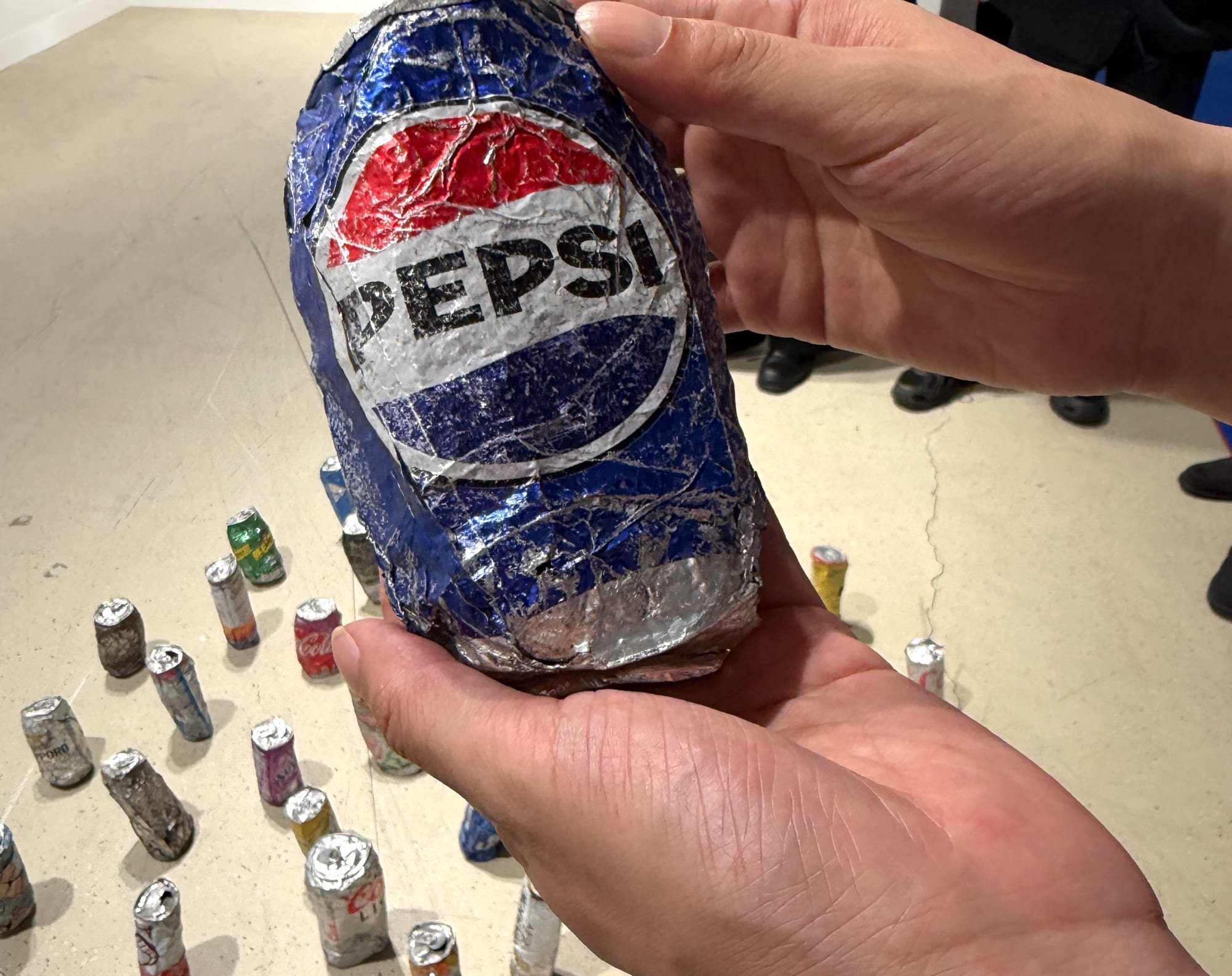
A few galleries in the Statements sector, where booths cost roughly $13,000, among the cheapest at the fair, had graduated from Basel’s Liste fair. After showing at the independent, parallel fair five times (and at Art Basel’s site-specific, experimental Social Club), Berlin’s Noah Klink is presenting a booth of Sebastian Jefford’s playful drawings depicting everyday scenes turned macabre. Fitted with a black and white bench and a green fence (by Jefford and for sale), the booth becomes a kind of horror movie playground. New York’s Silke Lindner is showing Sylvie Hayes-Wallace’s “brain cages,” small wire boxes capturing the artist’s mental states, the booth floor covered in tape and magazines that recreate the intimacy of the artist’s studio. At Canal Street’s Kai Matsumiya Fine Arts, another Liste grad, scrappiness combines with care: “I collect the voices of New York,” said Nobutaka Aozaki, whose works include crushed soft-drink cans found in the street and “restored.” All three galleries reported selling several works priced between $3,500 and over $9,000 ahead of the public opening.
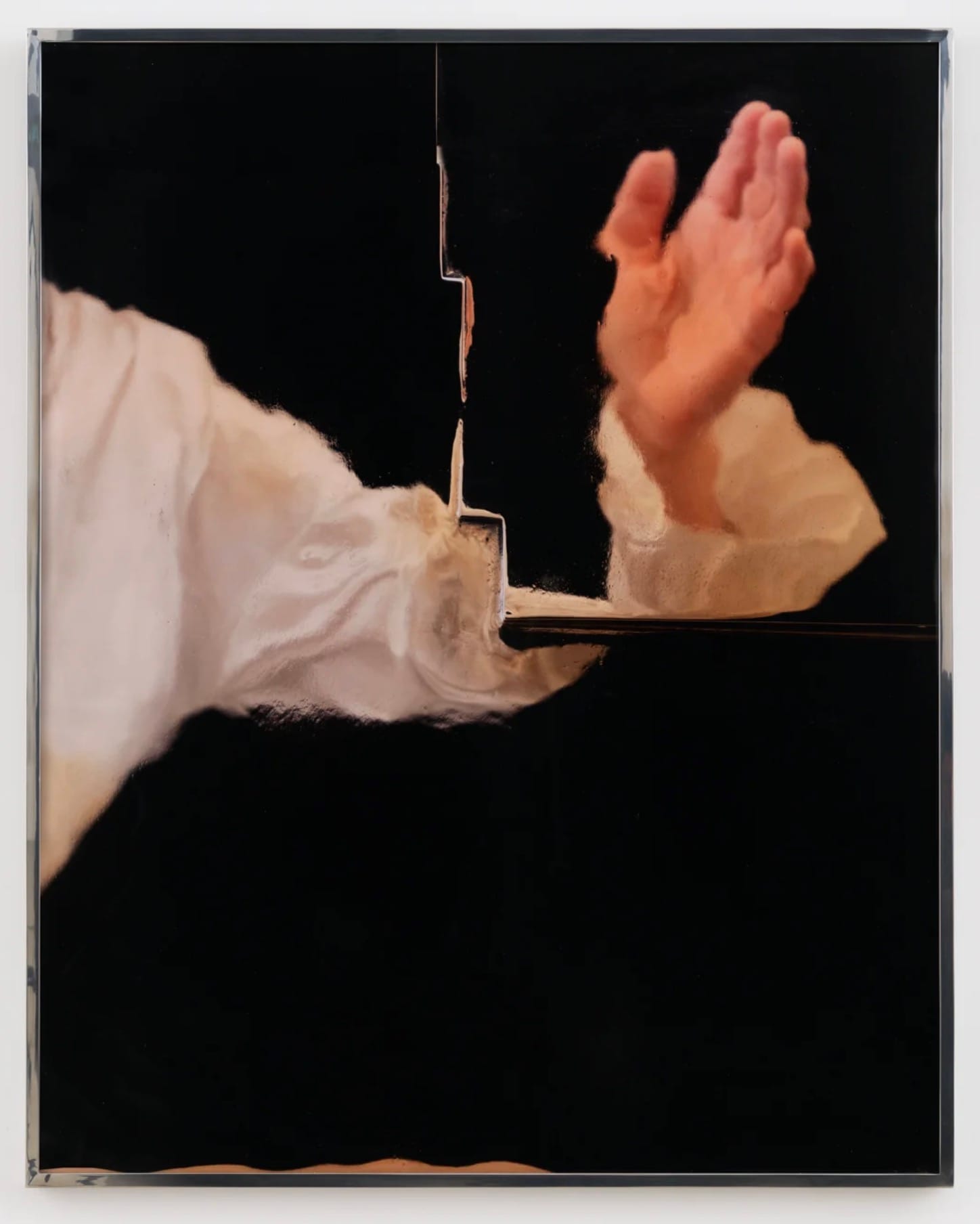
Asked about the decision to participate in the Premiere sector for works created in the past five years, where booth fees more than double, newcomer Olivia Smith of New York’s artist-run Magenta Plains said that “a fair booth can be as intentional and poetic as any exhibition we present in the gallery setting.” In Basel, Smith’s conviction is borne out by Josephine Meckseper’s delicate acrylic and UV pigment work, Jennifer Bolande’s trompe l'oeil C-prints, and two abstract oils by Liza Lacroix that were presold at $40,000 each — all seductively murky and layered. (Bolande’s works in particular make one wonder why this bold post-conceptual artist isn’t better known.)
“The [works] are impossible to grasp via jpeg, so we’re leaning into the physical encounter, the experience of transportive discovery that comes from moving your body around work that can simultaneously repel and draw you in,” Smith told Hyperallergic.
No sector in Art Basel is more driven by spectacle than Unlimited, introduced in 2000 for monumental, museum-scale installations. Given its enormous costs, the sector historically privileges the most monied dealers. White Cube installed Tracey Emin’s huge “Knowing My Enemy” (2022), a hut on mega-tall wooden stilts that, according to a wall label, is a monument to her hometown, Margate, and based on accompanying framed texts, to her thorny relationship with her father. But in an age of ecological demise, the ramshackle readymade felt weirdly inflated, locking viewers in the artist’s ego chamber rather than opening up onto the wider world.
Similarly, a number of flat-mounted large works, such as Thomas Ruff’s highly pixelated photographic series Jpegs: The September 11th Photographs (2004–07) and Luc Tuymans’s two oil paintings “Heat & Musicians” (2025), were thwarted by the space’s bland hangar-like vastness. It’s a shame, as Ruff’s works are particularly poignant, underscoring that the violently policed, tech-surveillance-driven nation-states we live in today are the result not just of the events the artist captured, but also of how they were disseminated.
Overall, however, MoMA PS1 Director of Curatorial Affairs and Curatorial Chief Ruba Katrib, who spearheaded this year’s Unlimited, seemed to offset monumentality with textural discovery and thematic interplay, mostly around the theme of care. As she told Hyperallergic, monumental does not always mean massive. Indeed, works such as Benoit Pierón’s “Cairns” (2026), commissioned for the fair and based on the artist’s experience of illness, convey tactile vulnerability, despite their scale. The piece consists of mound-shaped piles of pastel-colored used hospital bedsheets, with embedded ceramic eyes that peer at viewers. Its rhythmic staggering creates a sense of shared space rather than isolation.
Among the 59 presentations chosen by Katrib, Sultana Gallery, representing Pierón, is new to Unlimited, as is Voloshyn Gallery, showing the Ukrainian artist Nikita Kadan. The latter’s sound installation “Tryvoha (The Sirens and the Mast)” (2023), an opera singer’s interpretation of a crescendoing siren, is immaterial yet insistent. Referencing the war in Ukraine, the artist’s use of a human voice, rather than a mechanical sound, imbues the piece with a sense of bodily closeness.
A similar physicality permeates Berni Searle’s series Profile (2002), in which she photographed her own face after pressing objects charged with symbolic meaning, like a Christian cross and cloves referencing colonial trade, leaving a mark. Hung from the ceiling, the individual translucent images overlap and permeate one another, casting deep shadows. The installation underscored the subtle yet persistent interplay between violence and tenderness drawn out by Katrib. The presentation was also a tactical choice by Berlin’s PSM (last year in Statements), which, as its owner Sabine Schmidt said, wanted to highlight Searle following her presence in this year's Venice Biennale.
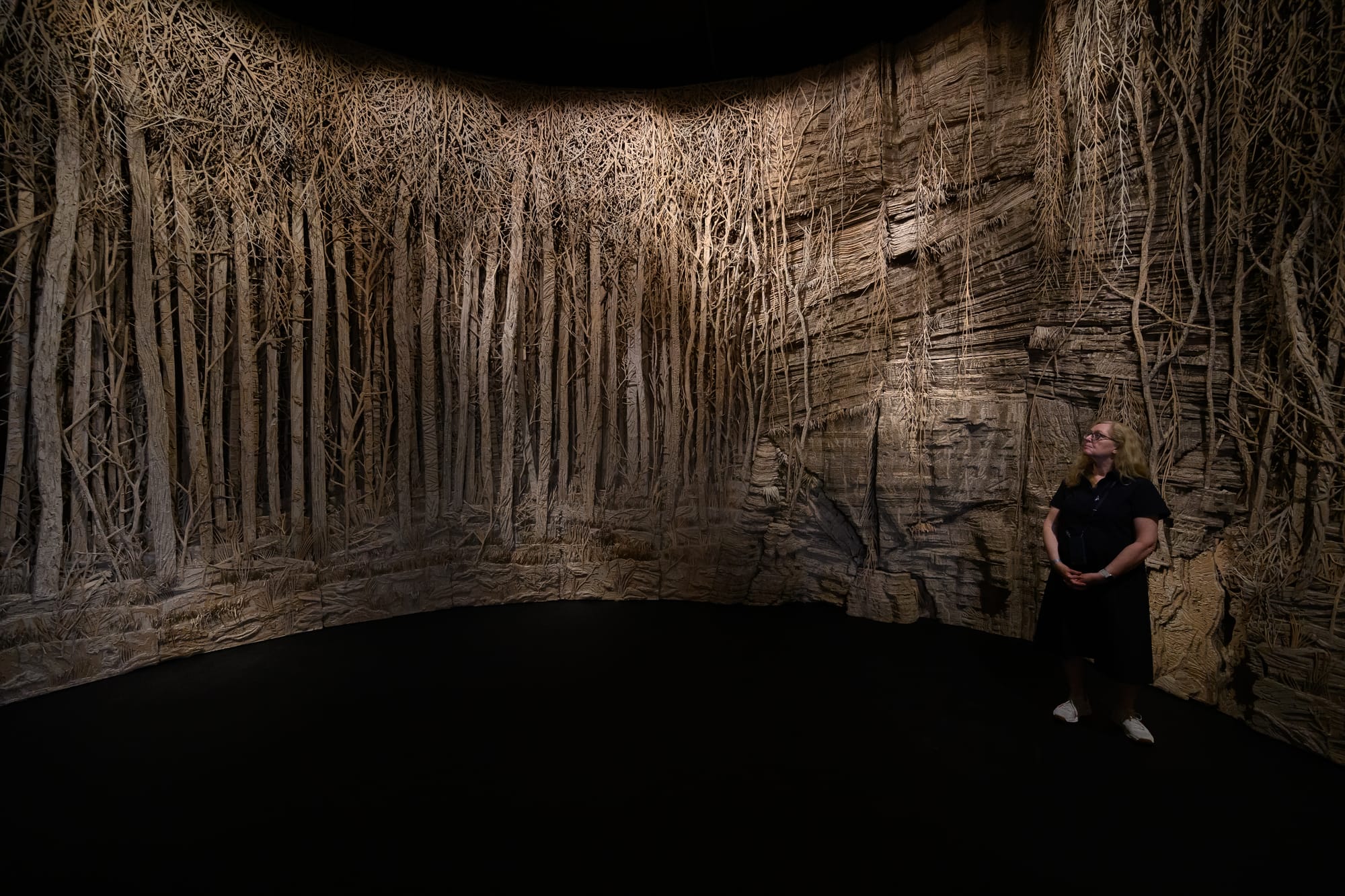
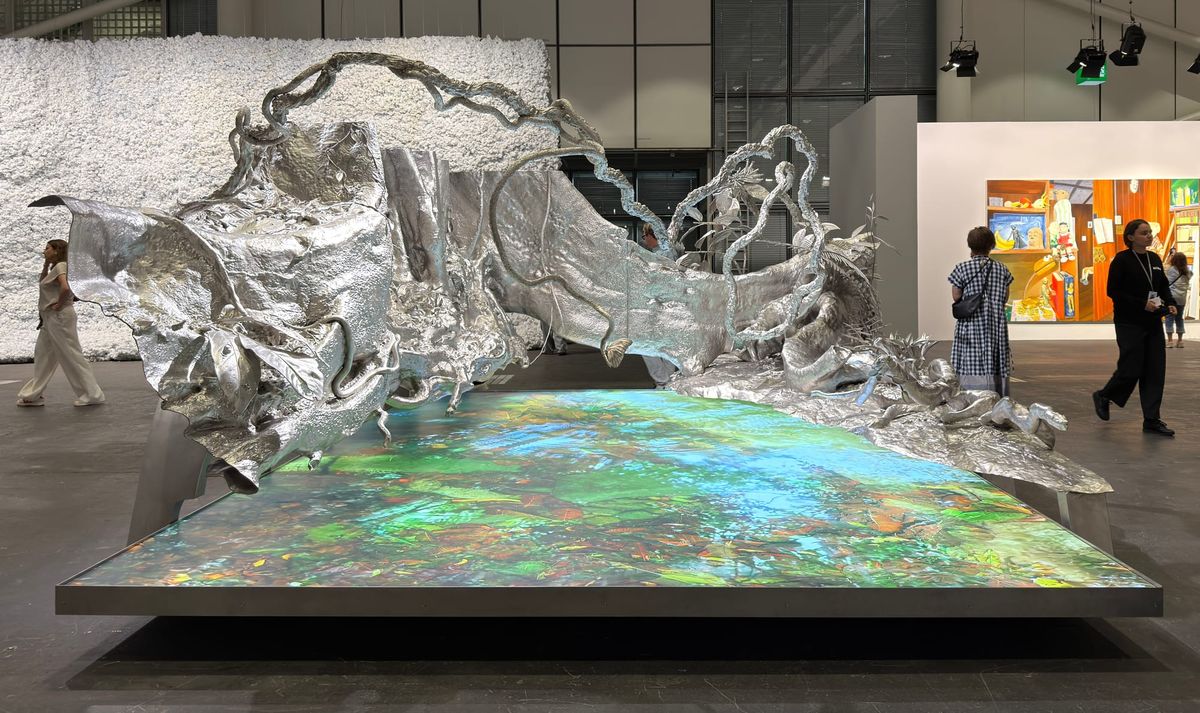
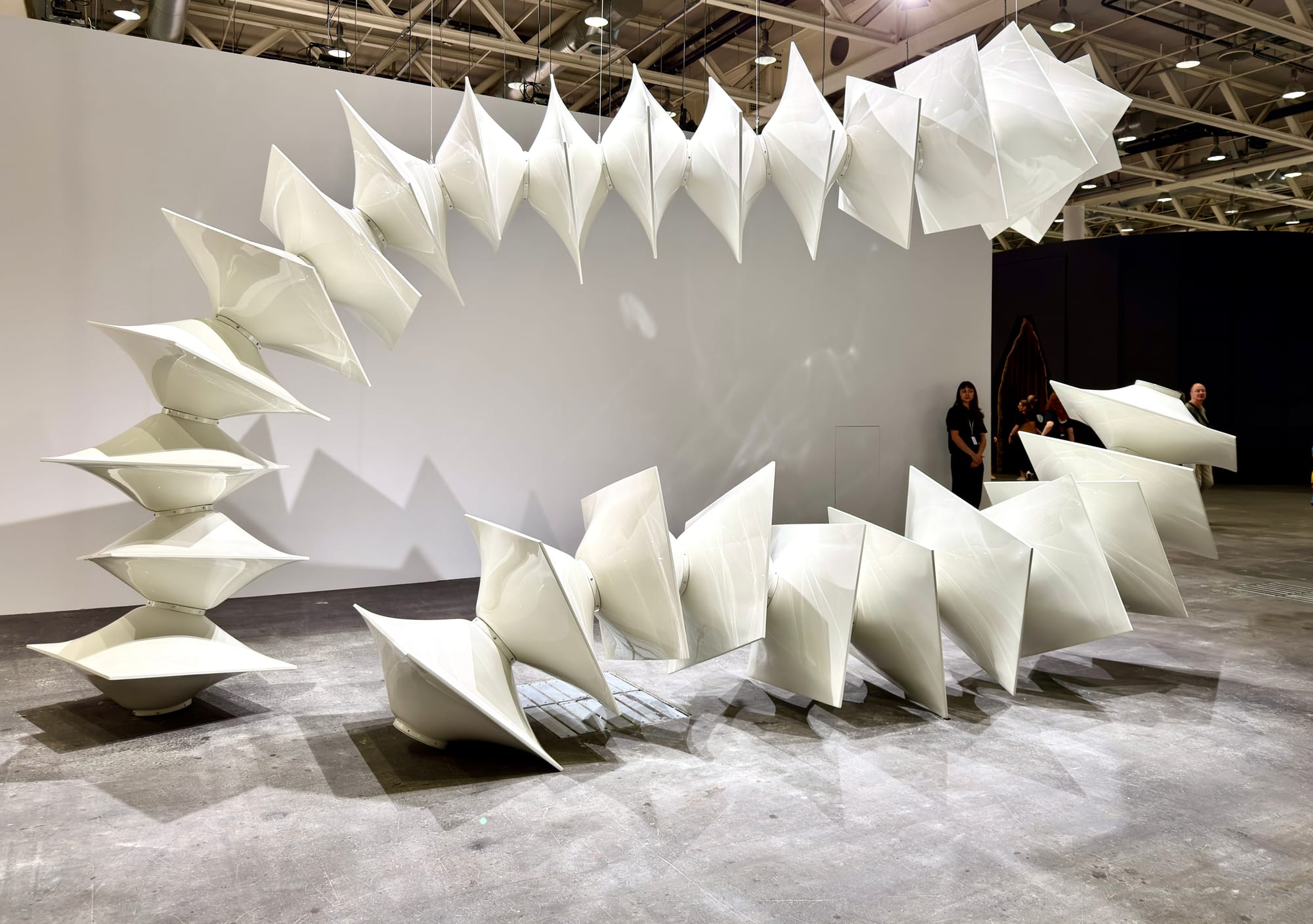
Elsewhere, Agostino Bonalumi’s “Struttura modulare bianca” (1970), a fiberglass and nitro sculpture, unfolds worm-like, seeming almost organic. In Timur Si-Qin's “Mariposita” (2026), stainless-steel leafage and shimmery images of vegetation, the latter displayed on an LED screen, create an entrancing space that transits between the real and the artificial; and in Eva Jospin’s “Panorama” (2016), an enclosed round space resembling roots turns out to be mostly intricately woven cardboard strips. Together, these works capture the power of art to slip into liminal spaces, imagining organisms and bodies that collapse boundaries between fantasy and reality, technology and biology.
In the end, the works that truly stand out at Art Basel are not thanks to spectacle, but rather due to the artists’ genuine curiosity about how the manmade and the organic, including bodies, alter the space they inhabit and our evolving sense of it. The very best, such as Bolande’s “Museum” (2025), a polished bronze reflecting its surroundings, also shown by Magenta Plains, implicates the art system, the fair visitors, and buyers in this instability.