Pace Cuts 50 Workers and 50 Artists, Citing a “Broken” Gallery Model
The layoffs and reductions come amid ongoing market uncertainty and the disastrous collapse of crypto-backed art ventures, of which Pace was an early adopter.


Just years after inaugurating its $100 million flagship building in Manhattan’s Chelsea neighborhood and positioning itself as a leader in the crypto art space, Pace Gallery has cut 50 artists from its roster and laid off 50 staff members in what CEO Marc Glimcher characterized as a “model correction.”
The gallery’s roster of artists will decline by 30%, while staff will be reduced by about 20%, from 250 to around 200 employees, as reported by the New York Times and confirmed by Hyperallergic.
In a statement shared with Hyperallergic, Glimcher claimed that “the current gallery model isn’t only broken, it’s unfixable.”
“Every gallery is currently making temporary fixes and compromises to prop up a system that no longer works,” the CEO said. “But there’s another option: we can free ourselves from what’s holding us back and channel our resources into a new model entirely, one built around the future needs of our artists and collectors.”
Glimcher stated that Pace will represent around 80 emerging and established artists and estates moving forward, noting that the “mega gallery” model, which he said Pace “invented,” was strategically viable at a different time in the market. Today, however, he said that the resources diverted to management and expansive rosters made it “virtually impossible to have a program that presents a strategic, unified vision.”
The gallery declined to comment on the staff cuts or issue a list of affected artists, citing the sensitive nature of the reductions. A February snapshot of Pace’s website listed 28 artists who are no longer named on its roster, including French photographer JR, painter Damian Loeb, and media artist Rafael Lozano-Hemmer. Several estates have also been removed from the list, including those of Richard Avedon, which is represented by Gagosian, and Keith Sonnier.
Sources told Hyperallergic that the news came out before Pace had a chance to formally announce the layoffs, leading to chaos and confusion.
A current gallery staffer who asked to speak on condition of anonymity said that “the roster shrinking was not a secret,” but the scale of the cuts came as a shock.
"They needed to be more realistic with the amount of attention and resources they can actually give to an artist, and when there’s over 100, it’s just impossible to give that care,” the staffer told Hyperallergic.
“With that, there were mumblings about what would happen to the dealers/artist liaisons/registrars that only work on X artist account, but nobody knew exact numbers of anything, so when the Times spelled out 50 artists, 50 staff, it was immediate panic,” the staffer continued.
Pace's downsizing move jars with the bullish public image it has cultivated over the last decade, marked by multiple ambitious ventures in experiential art and blockchain technology.
In 2019, the gallery moved into its eight-story headquarters on West 25th Street, which required a multimillion-dollar renovation and now reportedly costs about $9 million a year in rent. That same year, it launched “Pace Live,” a performance series that has since presented over 100 live events around the world.
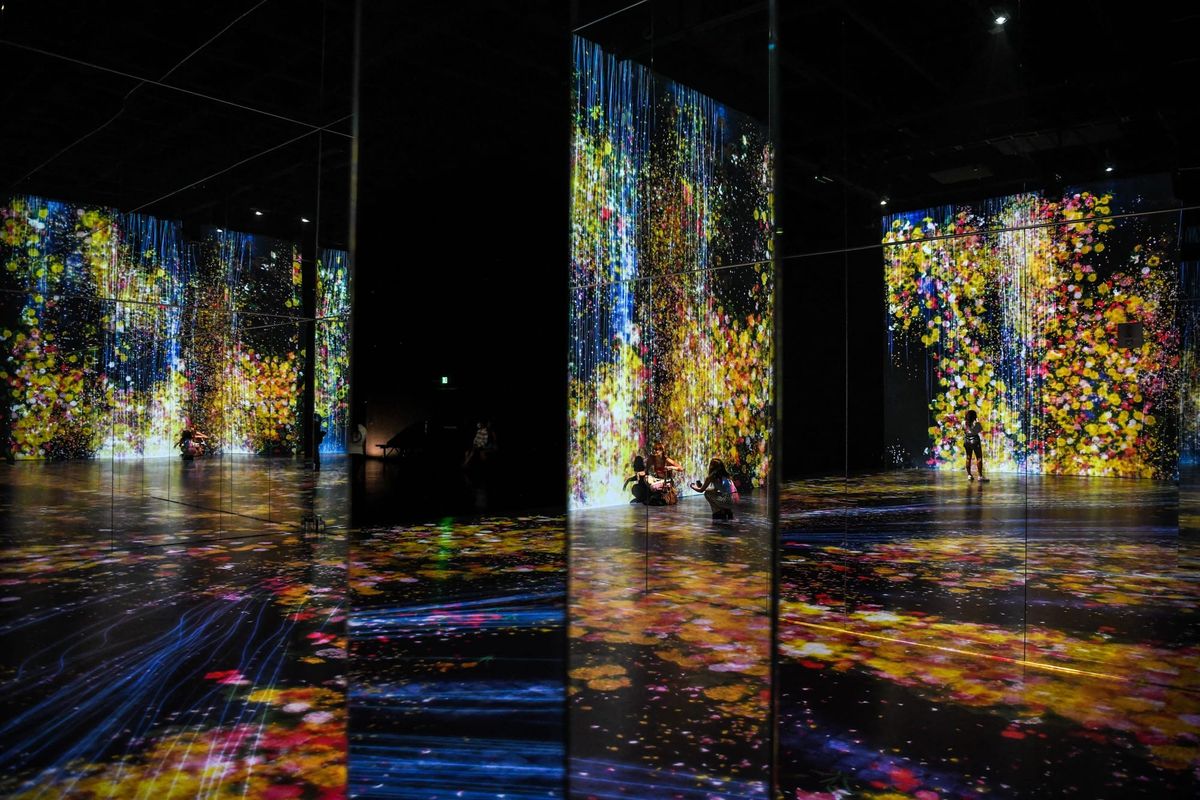
In August 2020, the gallery announced yet another new initiative, Superblue, which sought to tap into the immersive art craze with a flagship location in Miami’s Allapattah. The gallery charged about $40 for admission, raising eyebrows in the majority working-class, gentrifying neighborhood. A London space shuttered after just one show, however, and planned New York and Houston branches never materialized. Among the artists who appear to have been cut from Pace’s roster is the art and technology collective teamLab, which was key to Superblue’s early vision.
Another artist apparently affected by the cutbacks is Glenn Kaino, who was part of Pace’s early incursions into digital art and the blockchain. In 2021, the gallery launched its custom-built NFT platform, Pace Verso, with a new project by Kaino, and offered NFTs by the artist at its Art Basel Miami Beach booth. Trading volume for the crypto tokens has since plummeted.
The gallery’s physical expansion into the Asian market has also been hard-held — only the Seoul and Tokyo locations remain after Pace closed its Beijing space in 2019 and its Hong Kong space in 2025, both after 11 years. Artists Liu Jinhua, Xiao Yu, Sui Jianguo, and Hong Hao, all of whom almost exclusively showed at the two defunct locations, also appear to have been included in the reductions. Additionally, Pace shuttered its Palo Alto branch in 2022 after only six years in Silicon Valley.
Just weeks ago, Pace announced its representation of the Constantin Brancusi Estate, perhaps a harbinger of the gallery’s embrace of tried-and-true, established artists with robust secondary markets. In his statement today, Glimcher said the gallery is “returning to our roots, recentering and reasserting our historic mission: We’re going back to the future, connecting younger artists to their spiritual fathers and mothers and building upon our 66-year history.”
News of the reduction at Pace has turned up the volume on the ongoing trend of declining profits, gallery closures, and consolidations sweeping the art market in recent years. Last year, Almine Rech shuttered its London location, and in New York, Cheim & Read, Clearing, Mitchell-Innes & Nash, Betty Cunningham, and Alexander & Bonin have all closed their physical spaces over the last two years.