In the Studio With Rama Duwaji
Surrounded by her drawings and ceramics, we discussed her evolving art practice and new life as NYC first lady.
My first encounter with Rama Duwaji's art was while waiting in line for the restroom at the Levantine bistro Huda in East Williamsburg back in 2024. It took me a second to realize that I was looking at an NYC-mandated first-aid poster, transformed into a stunning artwork in what I can now recognize as Duwaji's signature style.
The Texas-born, Syrian-American artist has created illustrations and animations for the New Yorker, Tate Modern, and BBC, among other outlets and institutions. Last November, Duwaji became a household name after her husband, Zohran Mamdani, swept the New York City mayoral race in a historic victory that inspired and delighted millions. A private person by nature, she was catapulted into the spotlight, finding herself cast as a tastemaker and Gen-Z role model on the left, and a Muslim boogeywoman on the right.
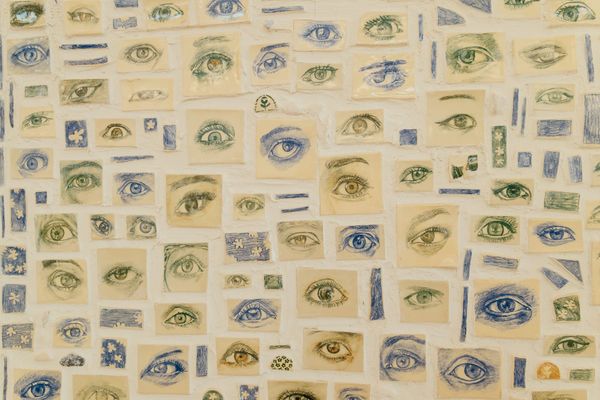
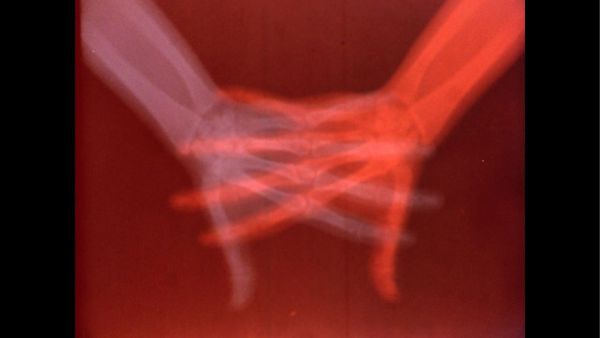
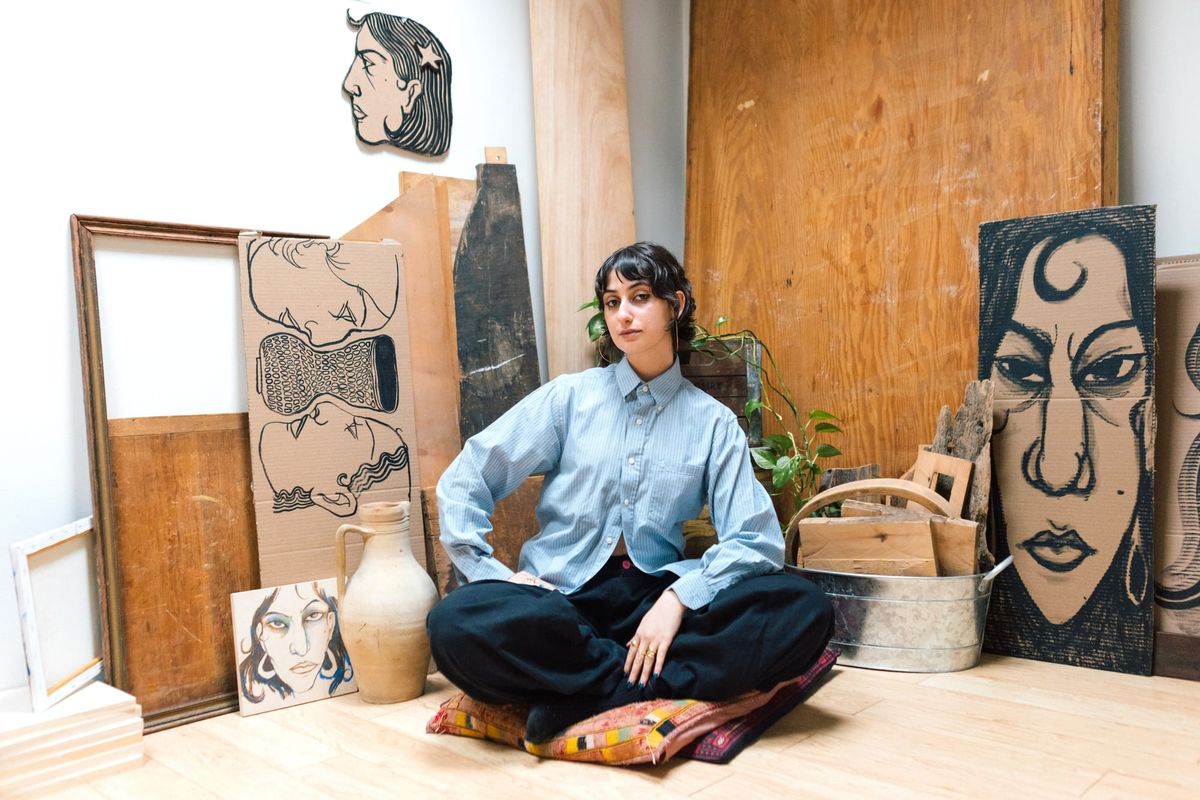
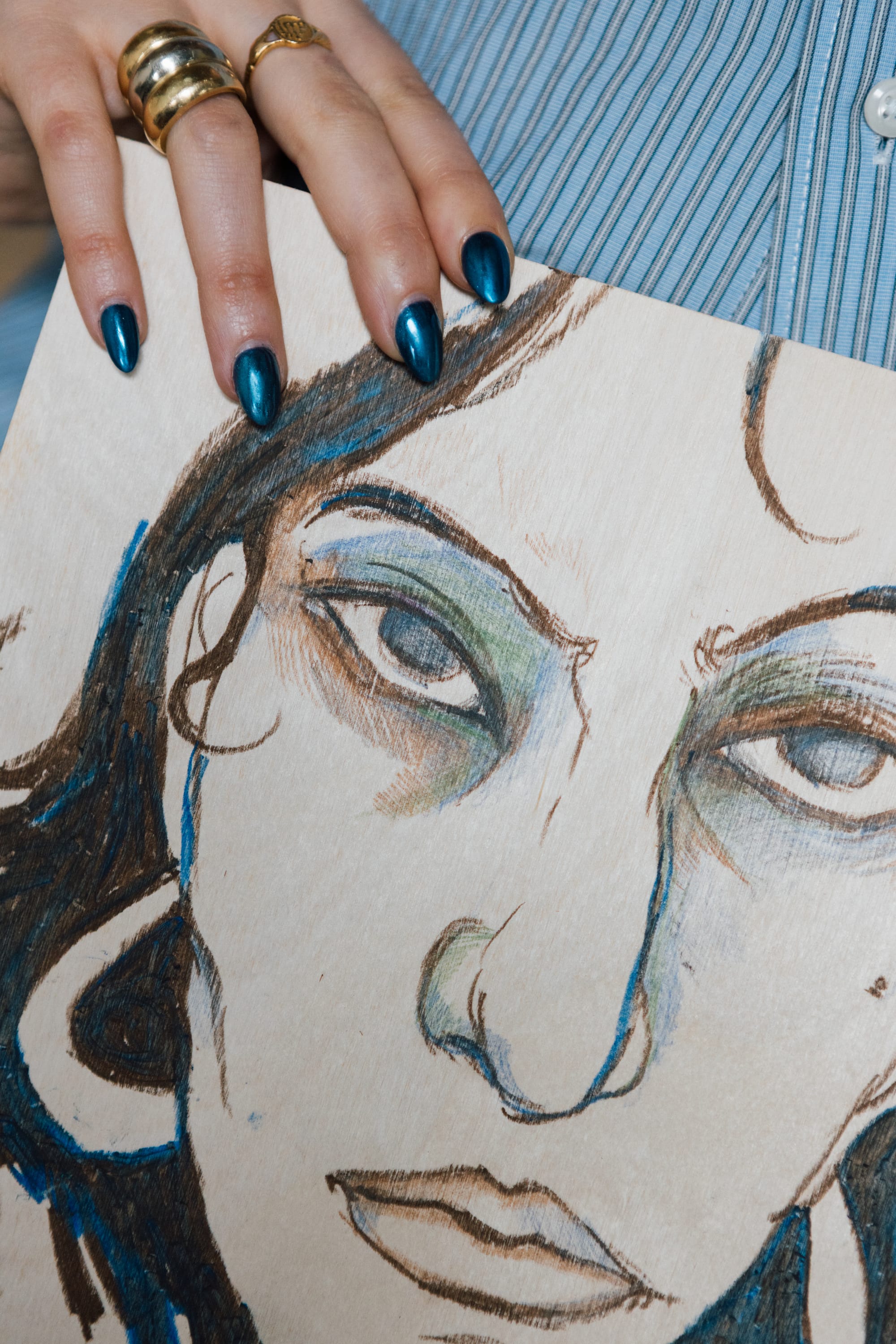
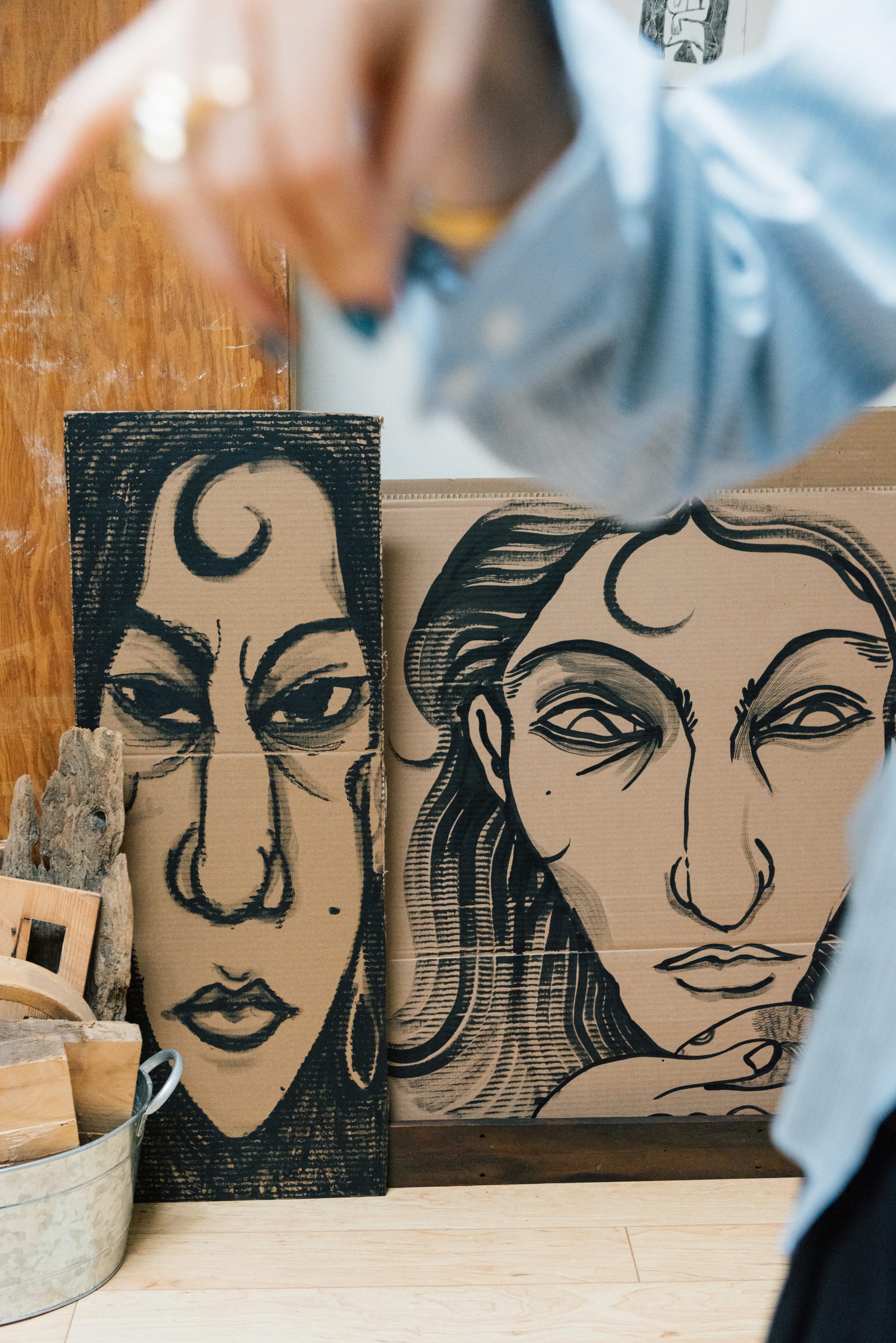
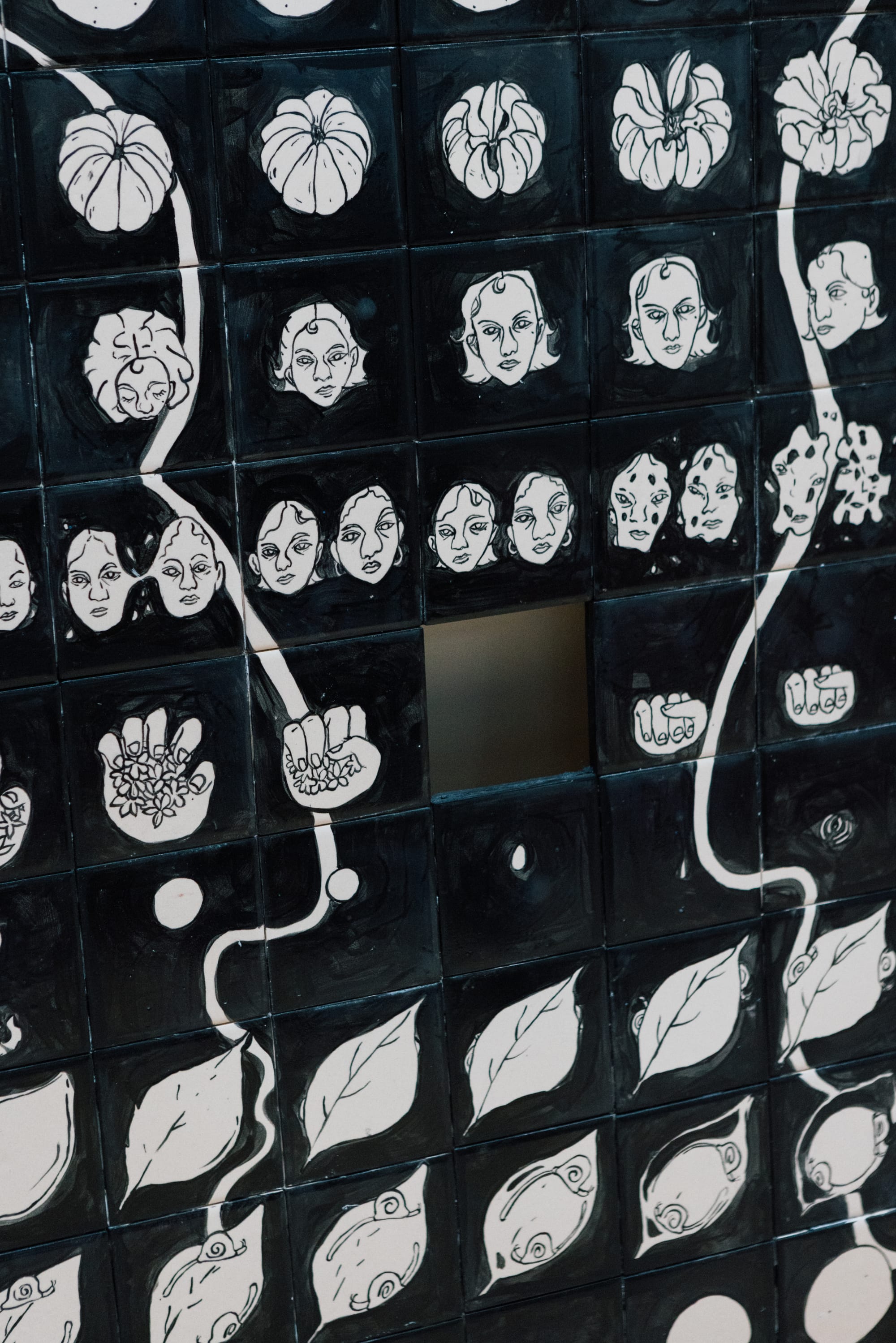
Last week, I met Duwaji at Gracie Mansion in Upper Manhattan for a wide-ranging conversation about her art practice and her life as first lady of New York. We were surrounded by her hand-drawn animation frames, paintings on found wood panels and cardboard, and charming ceramics. She left a strong impression as a thoughtful and ethical artist, keen on remaining true to herself amid intense media attention and ready to break into a new stage of her art practice. The following are lightly condensed snapshots of our meeting.
Hyperallergic: Let’s start from the beginning: How did you become an artist?
Rama Duwaji: Stubbornness, probably. I knew I never wanted to stop drawing so I just had to figure it out because I honestly couldn’t picture doing anything else.
H: What drew you to illustration and animation? Did it seem like a more practical choice compared to so-called "fine art" — something you can actually make a living doing?
RD: It was less about practicality and more about accessibility. Fine arts always felt like something that requires a studio, expensive tools, permission. Illustration was something I could practice in the margins of my notebooks or on the subway.
My take is that there is no real difference between illustration and fine art. An oil pastel drawing for a children’s book is no less of a drawing than an oil pastel piece in a frame hung in a gallery, it’s just marketed differently.
H: By definition, illustration depends on another source material — usually interpreting or giving another dimension to text. However, your illustrations present their own worlds. What makes a good illustration, in your opinion?
RD: I love illustration because you’re working within a guideline, and the best work comes from limitations. It’s a puzzle to solve; how do I best convey an emotion or story, and compose everything in one frame, while still maintaining my own visual language and style? A good illustration is true to them and true to you.
H: You’ve lived in Texas, Dubai, Qatar, New Jersey, and New York — how did these varied backgrounds shape your personality and your work? Did they turn you into an eternal outsider, or someone who can fit in anywhere?
RD: It gave me the ability to relate to more and different kinds of people. It makes for moments like bonding with a stranger I met in Washington Square Park over a mutually loved bakery in Beirut or chatting about my favorite street in Astoria with someone I met in Doha. I’d like to think this translates in the art I both share and make.
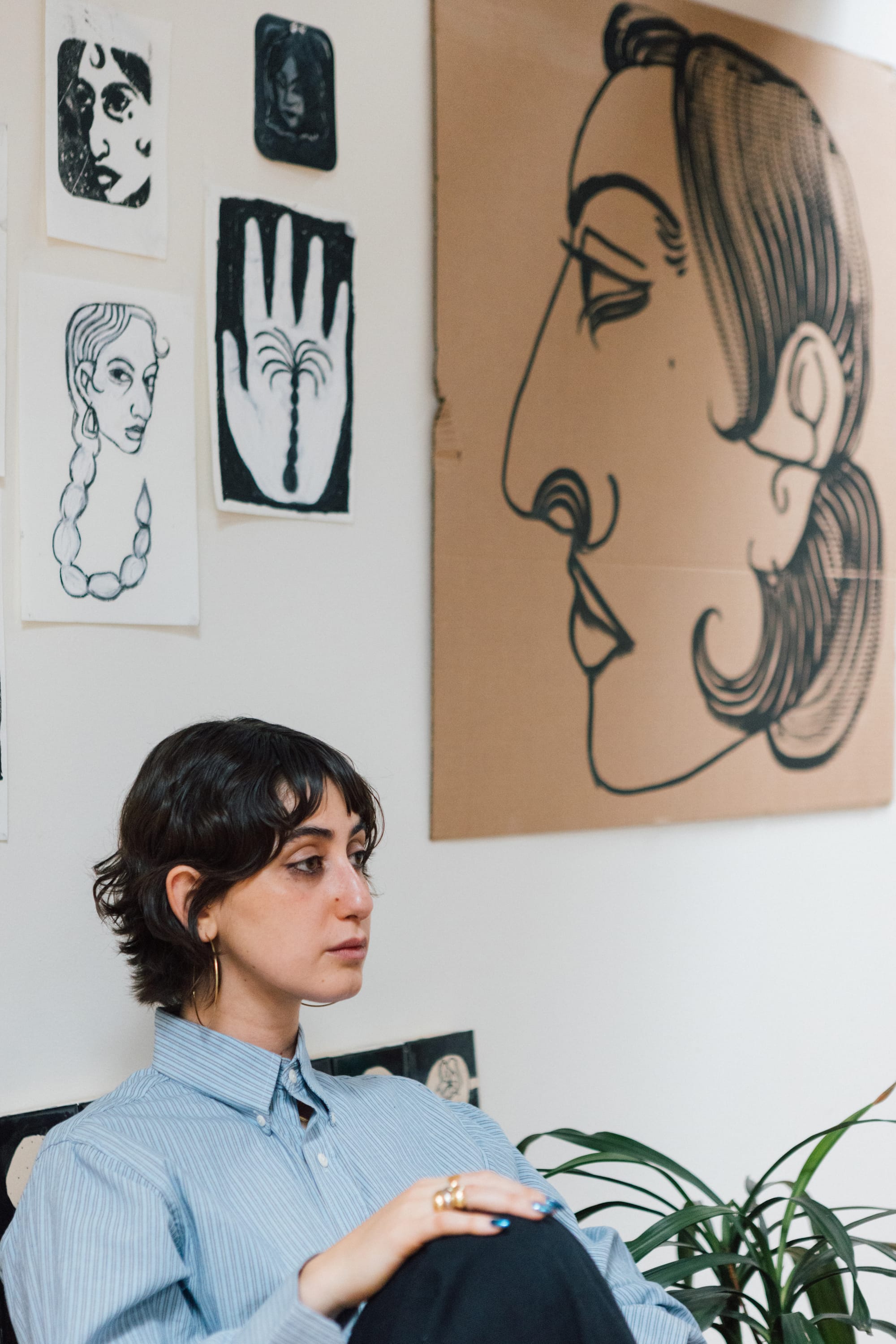
H: Your art has always been political. How does your new position as first lady of New York City impact your freedom to make more of this kind of work?
RD: Everything is political: what we choose to show, what we choose to omit, the stories we highlight and the ones we leave in the margins. It has and will continue to be important for me to reflect the times around me as an artist. If anything, having this position makes me more committed to being honest and attentive, to making work that is complex. It feels like it would be doing it a disservice to not be the artist that got me to this point.
H: Becoming a public figure over the last year has changed your life drastically. Did it also change you as a person?
RD: This experience has absolutely changed my life. I am still figuring out how it applies to me as an artist and as a person, both thinking of the future and the past. It has forced me to confront how much I’ve changed, even before this moment. When a tabloid recently published old tweets I wrote as a teenager, I felt a lot of shame being confronted with language I used that is so harmful to others; being 15 doesn’t excuse it. I’ve read and seen a lot of what others have had to say in response, and I understand the hurt I caused and am truly sorry. My focus isn’t on being a public figure, but continuing my work with care and responsibility, and allowing my art to speak for itself.
H: How much are you present in your own work?
RD: My work has been an archive of different moments in my life and what was moving me at the time, which I’m sure a lot of artists relate to. The news I read, the protests I’m at, the conversations I had with friends, the architecture I was surrounded by, or something I saw on the way home that day. It all seeps in, whether I mean for it to or not.
There’s also a kind of humor in animating and making things move that feels very me. The playfulness in trying to find personality in things that are usually quiet or still. I find it balances things out when the work feels heavy and brings an openness to difficult conversations. It’s been a way for me to process things as I go.
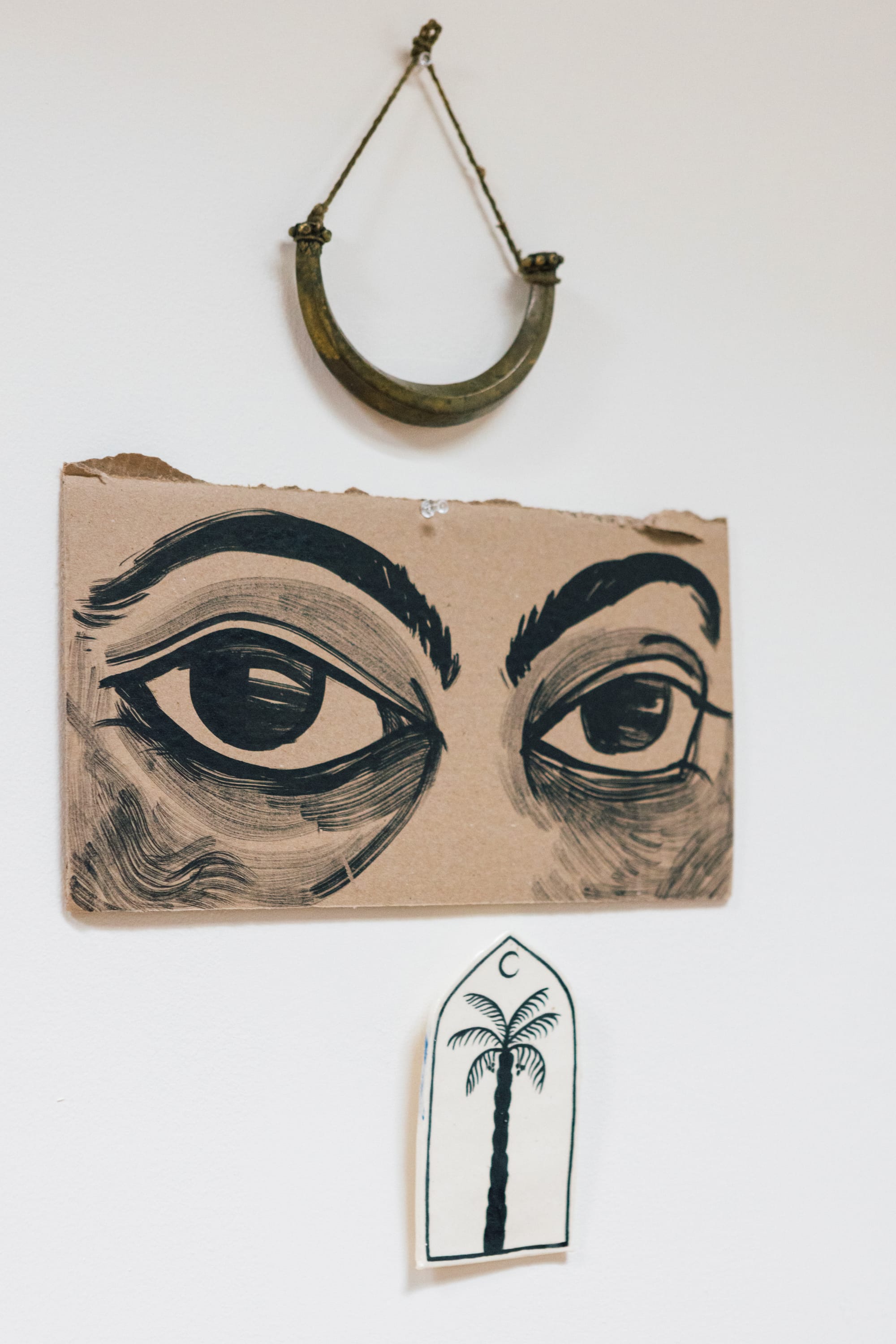
H: You also mention sisterhood as a theme in your work. Can you share more about that?
RD: It would have been impossible to have done the last year of my life without my girls. Sisterhood and platonic love in my friendships are so essential to my life and as my art reflects so much of my life, it’s the most natural step that female friendships are centered in my work. It’s an ode to the specificity and power of these friendships as I experience it and a reflection of what carries me forward and shapes the way I see the world.
H: Can we talk about your ceramics? Is that a new development in your work, and how does it interact with other mediums you use?
RD: I’ve been doing ceramics for the past five years. Having on-and-off access to kilns and resources has made it an inconsistent part of my work, but it’s always been a grounding medium that forces me to think beyond the usual 2D of illustration.
H: How do you hope to grow your practice in the future?
RD: My favorite work is in the intersection of ceramics, illustration, and animation; now that I have a studio, I’m looking forward to returning to that intersection and pushing it to see what else it can become.
In the meantime I’ve been really drawn to other accessible (and affordable) mediums I have lying around, whether it’s printmaking using to go container tops, or ink drawing on flattened cardboard moving boxes, or carving and drawing onto scraps of wood picked up at an artist estate sale, or large-scale black-and-white oil pastel drawings on a secondhand large roll of paper, or sculpting with leftover clay with no rush to fire any of it.
I am excited about being experimental and seeing how my work translates in different mediums and finding what lessons I learn from the repetition.