Is Betting on the Art Market a Terrible Idea?
The prediction platform Kalshi is launching a dedicated art category amid heightened scrutiny over insider trading in wagers across industries.

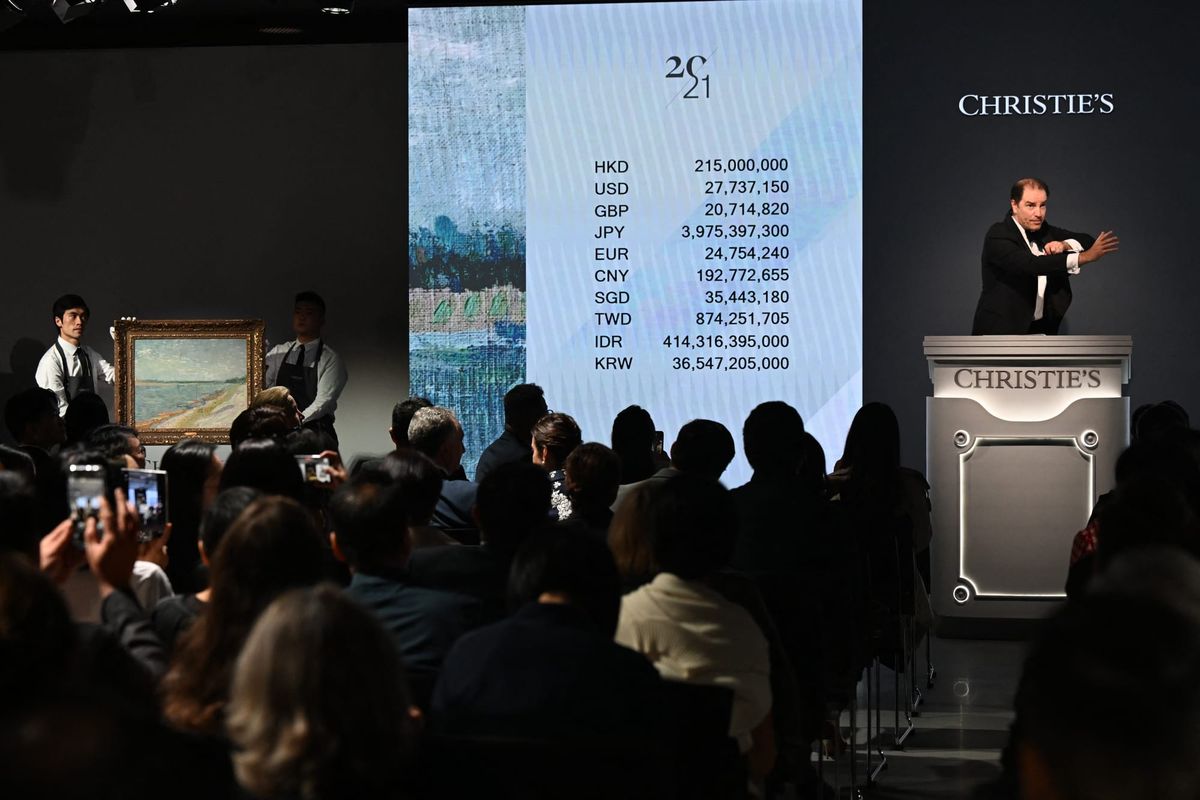
Amid heightened scrutiny over insider trading and state gambling regulations, the prediction market platform Kalshi has ventured into the rarefied space where fine art and big money meet, launching a section dedicated to art markets.
In addition to gambling — or engaging in “trading on the outcome of future events,” as Kalshi puts it — on who will be elected LA’s next mayor, or which team will win the World Cup, users can now bet on whether or not Andy Warhol will break his auction record this year, if Gustav Klimt’s “Portrait of Gertrud Loew” (1902) will sell for more than $40 million at a Sotheby’s auction later this month, or other auction results for works by blue-chip artists including Francis Bacon, Pablo Picasso, and Amedeo Modigliani.
“For devoted art fans, this represents one of the only ways to use expertise to make money,” read a May 26 announcement from the company. “Art, especially art sold through the major auction houses, is a famously inaccessible and illiquid asset class, which the majority of the population is priced out from speculating on. With derivatives on Kalshi, investors of all financial backgrounds can now access the asset class.”
Though very different in concept, this vaguely democratizing rhetoric is redolent of the ethos behind another online platform, Masterworks, which lets people purchase fractional shares in works of art — boasting to be “the first company to offer art investment products to the retail investing public.” And that pitch is not so distinct from the language of “disruption” that accompanied the now mostly defunct NFT hype.
Despite the fanfare surrounding the launch, Kalshi’s competitor, Polymarket, has hosted occasional art auction predictions for years now, as Tim Scheider recently observed. However, Kalshi is regulated by the US government, unlike Polymarket, which is run by an offshore entity, a distinction that might make the former more approachable to US-based users. Polymarket does not have a dedicated art betting product.
Since the launch, the volume of trading on art predictions has so far been much smaller compared to Kashi’s other markets, with about $43,000 being wagered on the price of the most expensive work to be sold at auction this year. Meanwhile, guesses on the outcome of a Lucian Freud masterpiece coming up at Sotheby’s have brought in just $3,124.
By comparison, the question of whether Taylor Swift and Travis Kelce’s wedding would occur in New York or Rhode Island has a trading volume of $1.35 million.
Independent curator Carlye Packer was skeptical that the numbers would increase. “People who care about Degas and Monet aren’t on these sites,” she told Hyperallergic, though she recognized the potential for crossover appeal. “If the problem is making new collectors, maybe this will get more kids into art.”
Throughout Donald Trump's second presidency, traders have been wagering millions ahead of major announcements. Meanwhile, Trump has continued to push for federal control over betting markets, challenging state efforts to rein in the platforms. In a post on Truth Social last month, he stated that Kalshi and Polymarket "will thrive" under his presidency. Trump's son, Donald Trump Jr., is a strategic advisor to Kalshi.
There has been some concern over insider trading coming from art market pundits, given alleged incidents in other prediction markets, such as the US invasion of Venezuela earlier this year. Auction houses Christie’s and Phillips told Hyperallergic that their rules prohibit their employees from engaging in such actions. “We have longstanding policies governing employee conduct, including strict controls around the use of confidential information and participation in activities that could create real or perceived conflicts of interest,” a Phillips spokesperson said.
Media entrepreneur and co-founder of the Felix Art Fair Dean Valentine told Hyperallergic that the insular and opaque nature of the art world, combined with the lack of regulation in prediction markets, could furnish “vast opportunities for abuse.”
“A pretty small number of people are actively engaged in [the art market]. Stocks are massive markets with millions of participants. Imagine the stock market if it was controlled by five guys,” he said. “For the average art person, this is just a form of entertainment, like playing the ponies.”
Although auction houses are not directly involved in business with the prediction market platforms, they may have something to gain from them, says artist Maura Brewer. Her work reveals the often unseen machinations of global art and finance, which have less to do with the whims and desires of a small coterie of the uber-wealthy — that one could potentially break into through shrewd prognostication — than with larger systems intent on proving constant economic growth.
“The raising of the paddle is theater,” she told Hyperallergic. “These are fixed markets, at least some percentage of the time, especially the high-visibility ones that Kalshi is trading on.”
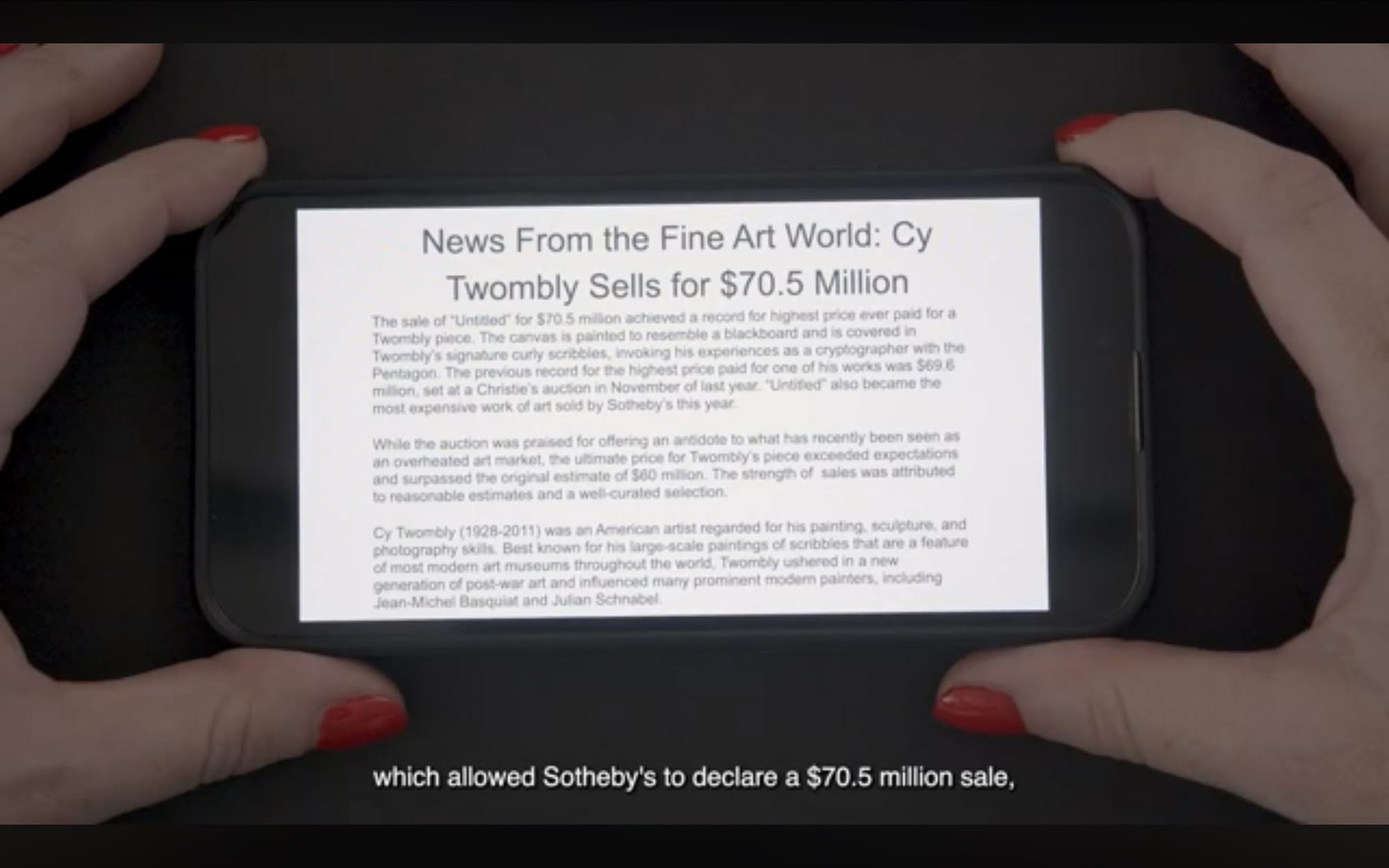
Brewer’s single-channel video installation “Leverage” (2024) zooms in on investment banker Daniel Sundheim, who consigned seven works to Sotheby’s in 2016 in exchange for Cy Twombly’s “Untitled (New York City)” (1968) in an art swap that guaranteed a new “auction” record for Twombly of $70.5 million, even though it was the result of a backroom deal rather than a bidding war.
“This is just a way for auction houses to continue to mythologize that anything is up in the air at all,” Brewer said.
Kalshi did not respond to Hyperallergic’s request for comment.
Valentina Di Liscia contributed reporting.