Jack Halberstam’s Trans Theory at a Slant
Hyperallergic spoke with the scholar about transness, architecture, and how we can make a better world by first unmaking it.

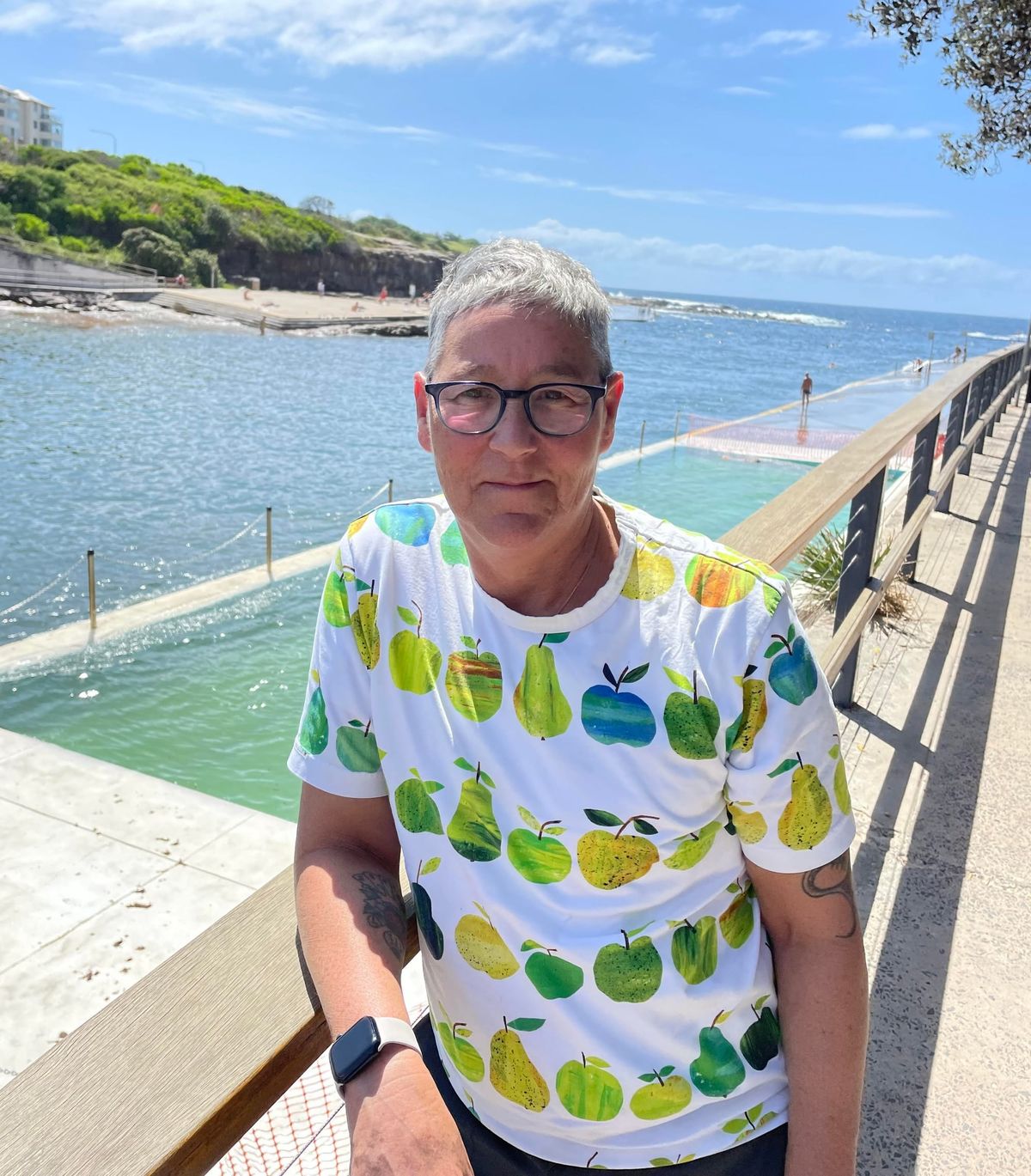
For the past three decades, pioneering gender and queer theorist Jack Halberstam has redefined his fields of study through unconventional perspectives and cultural forms — as he puts it, “tell[ing] stories slightly differently than the way they’ve been told in the past.” In his seminal 1998 book Female Masculinity, he argued for masculinity in people other than cis men as a category all its own rather than a quality inherent to “maleness.” Since then, he has examined the myriad ways that queerness and gender nonconformity manifest in our surrounding world through subjects as diverse as Lady Gaga and Maurice Sendak’s Where the Wild Things Are (1963).
For his forthcoming book, Anarchitecture After Everything: A Trans Manifesto (MIT Press, 2026), Halberstam shifts his attention to the built environment with a focus on radical architectural and bodily interventions by visual artists, including Gordon Matta-Clark and Cassils. In exploring the concept of anarchitecture — a term Matta-Clark coined to describe the dismantling or deconstruction of structures — in relation to transness, Halberstam asks readers to imagine how we can make a better world by first unmaking it.
This interview has been edited for length and clarity.
Hyperallergic: I should start by asking you about your new book. How did you get to the idea of anarchitecture and its relationship to transness?
Jack Halberstam: I came across Gordon Matta-Clark about 10 years ago when there was a big retrospective of his work at the Bronx Museum. I didn't have any particular expectations about this show because I didn't know much about him, and I didn't see how it would relate to my own interests. But I had been given the ARCAS prize to write about sexuality in the built environment, and this seemed like it might help me think about how to approach that topic. I went back several times over the course of the show, and by the time I was finished really sitting with the work, I felt like I had caught a glimpse of a new language, a different language.
What stayed with me is that when Gordon Matta-Clark was creating these shapes in abandoned buildings, I felt like he was inscribing some kind of hieroglyphic script across the city, and in that script there's a narrative about transness, that's one way of saying it. The narrative is something like this: If conventionally the house has been cast as a kind of female entity, a body that houses people, and the architect is conventionally — within architecture itself, but also in the works of people like Ayn Rand in The Fountainhead — cast as not just a man, but a superman, an übermensch, who knows how to build the world, then this counterintuitive action against the house that Gordon Matta-Clark takes could be read as a kind of sex reassignment surgery, to put it in the most basic terms.
I published an article called “Unbuilding Gender” in Places Journal as a result of the ARCAS prize. After I finished that article, I realized I was not at all done with this topic and with this gift of anarchitecture. Now I have a whole book exploring the logic of anarchitecture, the relationship between its understanding of the city and the politics of urban gay and lesbian life in the city, and ultimately the rendering of transness that is available to us through anarchitecture, which is radically different from the rendering of transness that we get through the law or through the analysis of medical discourses and so on.