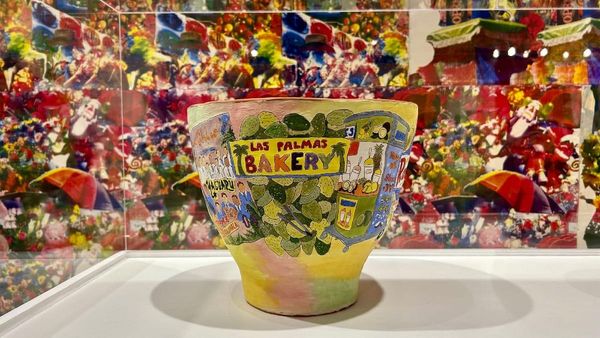
Kenzi Shiokava Did It for the Love of It
He modeled what a life in art can amount to without acclaim, celebrity, money, and all the other trappings we tell artists are required.

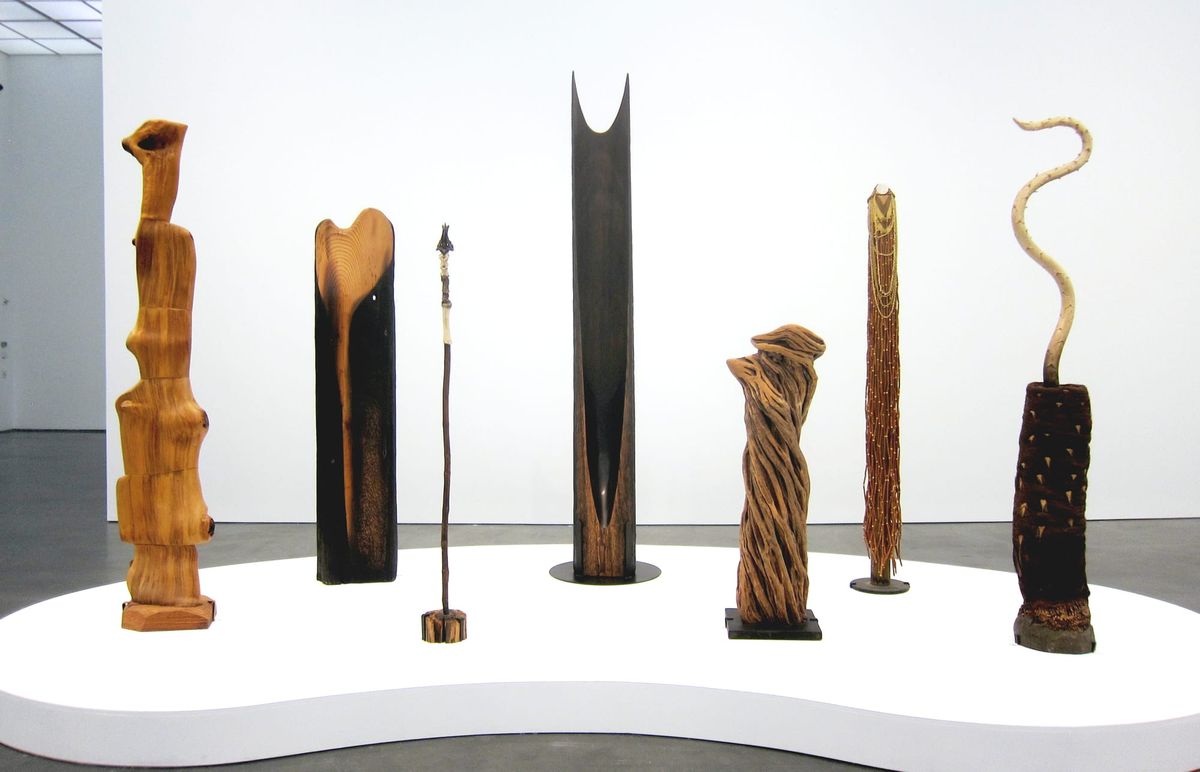
CHICAGO — If you’ve ever been enraptured by a piece of driftwood, awed by its organic intricacy, its improbable whorls, its magical provenance, then the Kenzi Shiokava exhibition at the Museum of Contemporary Art Chicago is for you. (If you’ve never felt this way, I honestly don’t know what to say.)
Shiokava died in Los Angeles in 2021, shortly before his 83rd birthday. Raised in Brazil by shopkeeper parents who had immigrated from Japan, he followed a sister to LA at the age of 25 and never left. In 1968, he entered the Chouinard Art Institute, earning a BFA, then went on to get an MFA from Otis. He rented a studio near Watts, where the largest urban rebellion of the Civil Rights Era had erupted just a few years prior, and became neighbors with a community of Black assemblage artists flourishing around the Watts Towers Arts Center. As one of the Center’s resident artists, he showed in its gallery a few times over the years, including a solo turn in 1994, a highlight of a humble but deeply dedicated career on the margins of the Southern California art scene. He earned a living as a gardener, working for Marlon Brando for 20 years, and eventually moved into a warehouse in Compton, where he slept, ate, and sculpted amid acres of collected materials, most of it chanced upon in the streets and junk shops. He never married. He loved to dance.
Finally, in 2016, Shiokava experienced a half-decade of late fame after being featured in that year’s Made in L.A., the Hammer Museum’s biennial. International media coverage followed, plus invitations to participate in shows near and far. The attention continues posthumously in this, his first solo museum exhibition.
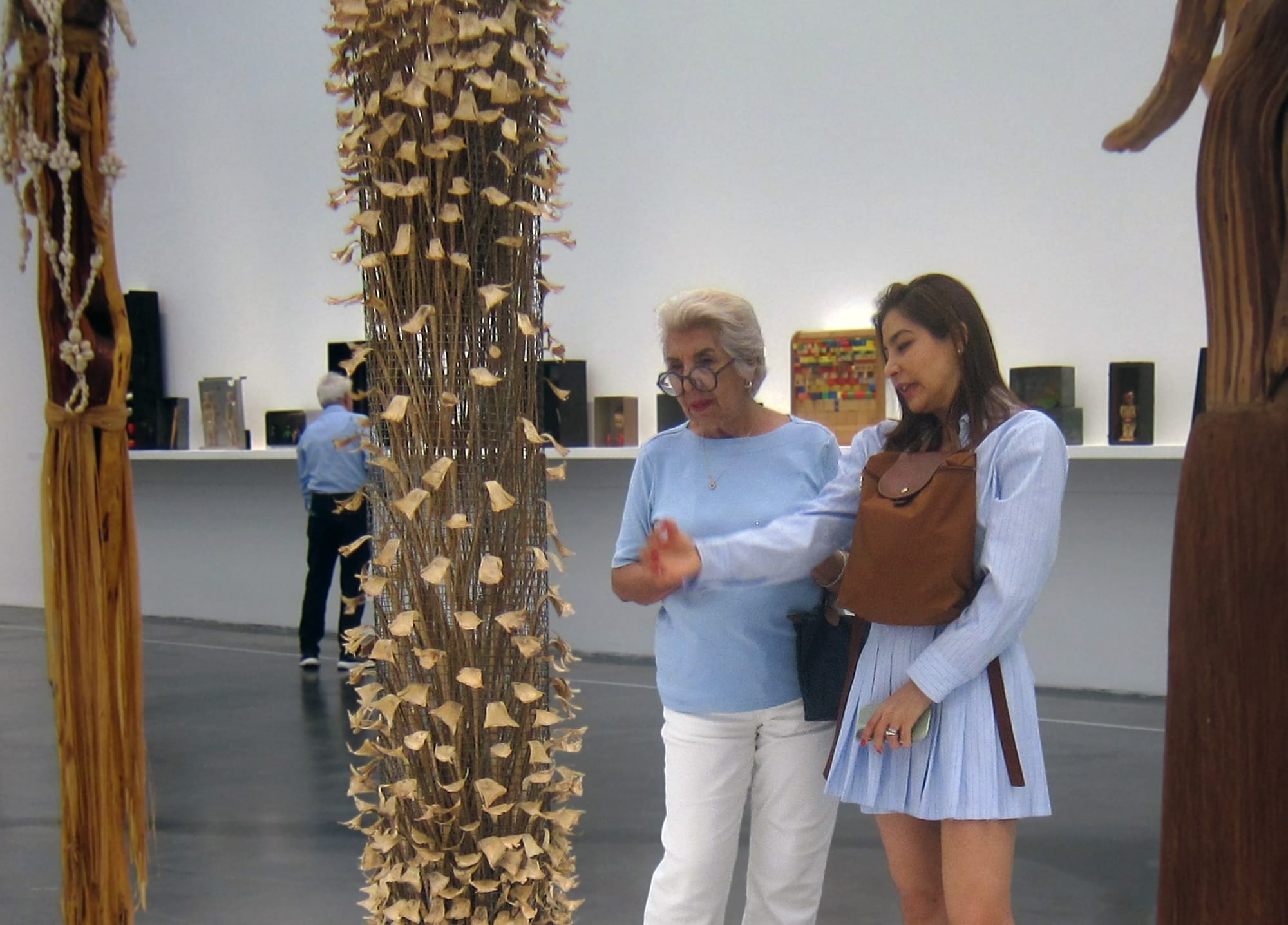
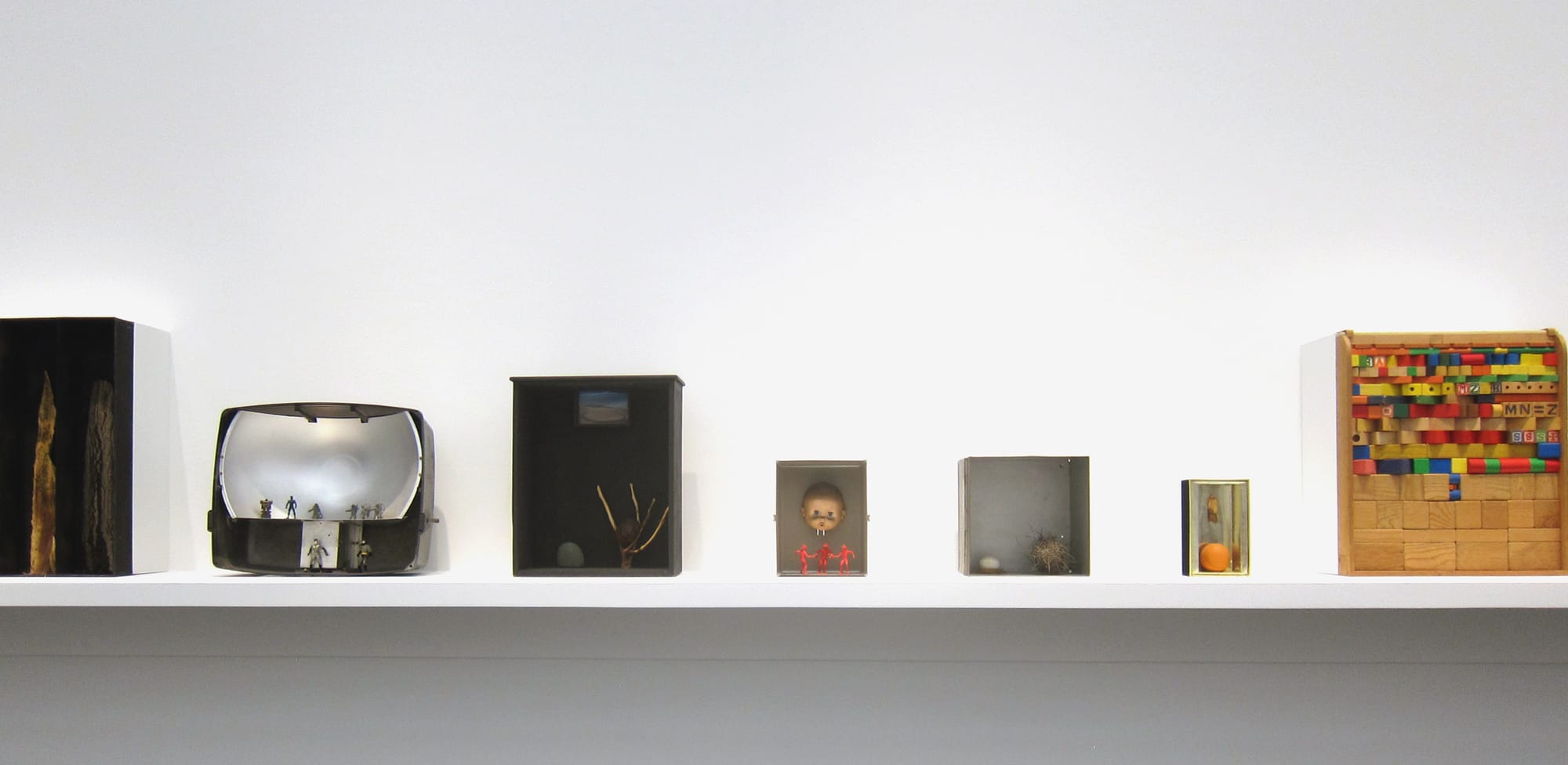
The presentation at the MCA includes a few distinct types of work. On the walls hang a handful of constructions assembled from dried leaves, old photographs, bits of glitter, and other found stuff. These are fine but nothing special. On a long shelf sit a dozen-plus old metal and wood boxes, most containing a spare arrangement of toy figurines and plant matter. Laid out in an orderly, well-spaced fashion, they feel lonely, lacking the congenial density of an earlier show where Shiokava displayed them in a crowded stack. In his home, they provided environmental companionship, lined the walls, framed his sink, encased his toilet. Also on view are a selection of personal photographs and gallery ephemera from over the years, a large array of the artist’s traditional wood hand-carving tools, and an eight-minute video from 2017 documenting Shiokava in his studio, using those tools to patiently gouge away at an enormous tree trunk. I wish it were eight hours long.