Madrid Museum Puts Picasso in Dialogue With "African Guernica"
Dumile Feni’s monumental drawing is part of the Museo Reina Sofía's new program "History Doesn’t Repeat Itself, but It Does Rhyme."

MADRID — Spanning over 25-feet wide and 11-feet high, Pablo Picasso’s painting “Guernica” (1937) is as monumental in size as it is in cultural significance. Its startling depiction of state brutality against civilians has made it an emblem of post-war Spanish identity, and its cry against violence has resonated with besieged people worldwide — from Vietnam to Gaza — throughout the past nine decades.
A new annual exhibition series at the Museo Reina Sofía in Madrid, which has served as the canonical work's permanent home since 1992, places “Guernica” in dialogue with other artworks. The new program, titled History Doesn’t Repeat Itself, but It Does Rhyme, partly aims to revisit the universal political impulses behind the anti-war painting — but its first iteration also exposes race as an urgent issue for contemporary art institutions in Spain.
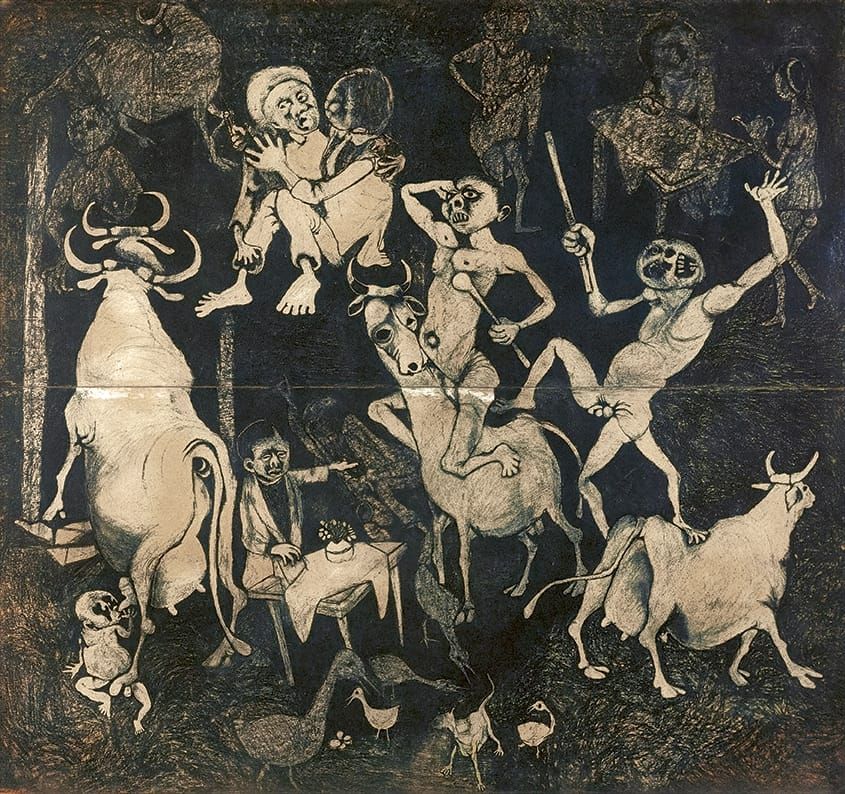
The inaugural installment sees Picasso’s masterpiece paired with the late South African artist Dumile Feni’s “African Guernica” (1967), a large-scale charcoal drawing that evokes a similar spirit of protest and anguish. While the former responded to the bombing of the eponymous Basque town by fascist forces on April 26, 1937, during the Spanish Civil War, “African Guernica” emerged from the insidious, pervasive violence of racism during South African Apartheid.