Mary Lovelace O’Neal, Painter and Civil Rights Luminary, Dies at 84
The beloved artist was best known for monumental canvases and inventive, gestural “lampblack” works.

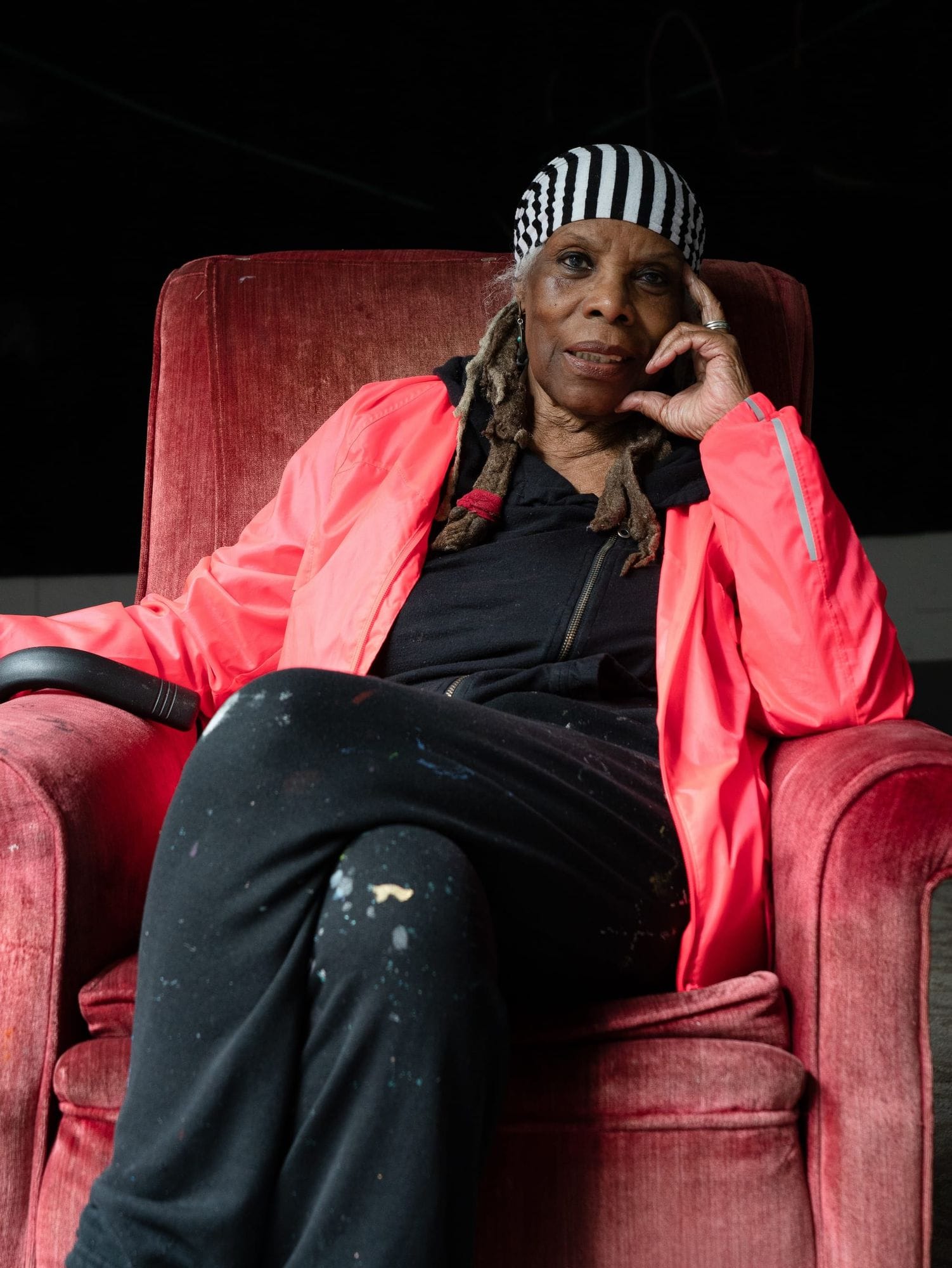
Painter, educator, and Civil Rights activist Mary Lovelace O’Neal died on May 10 at age 84 in Mérida, Mexico. Her galleries, Jenkins-Johnson and Marianne Boesky, announced her death yesterday. She is survived by her husband, Chilean-American artist Patricio Moreno Toro, with whom she divided her time between Mérida and Oakland, California.
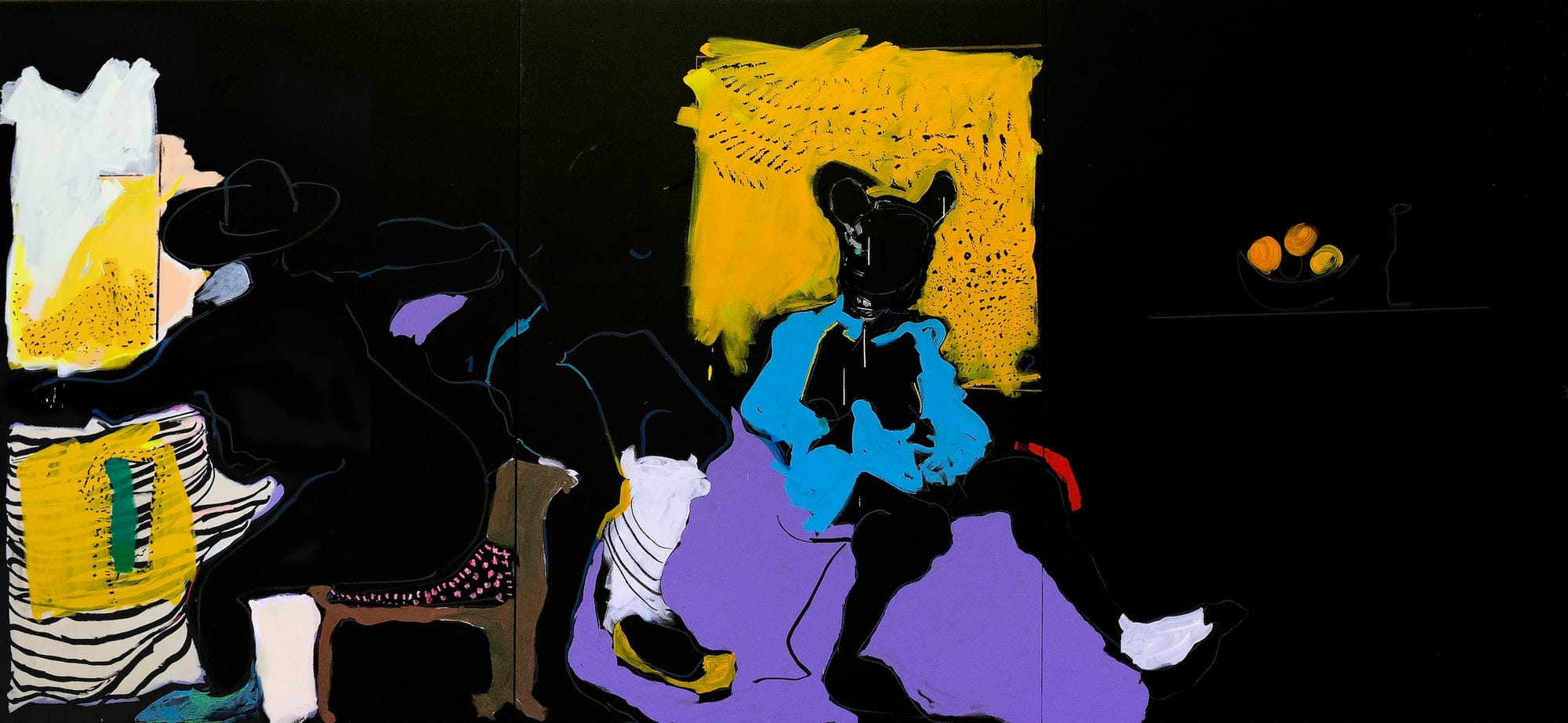
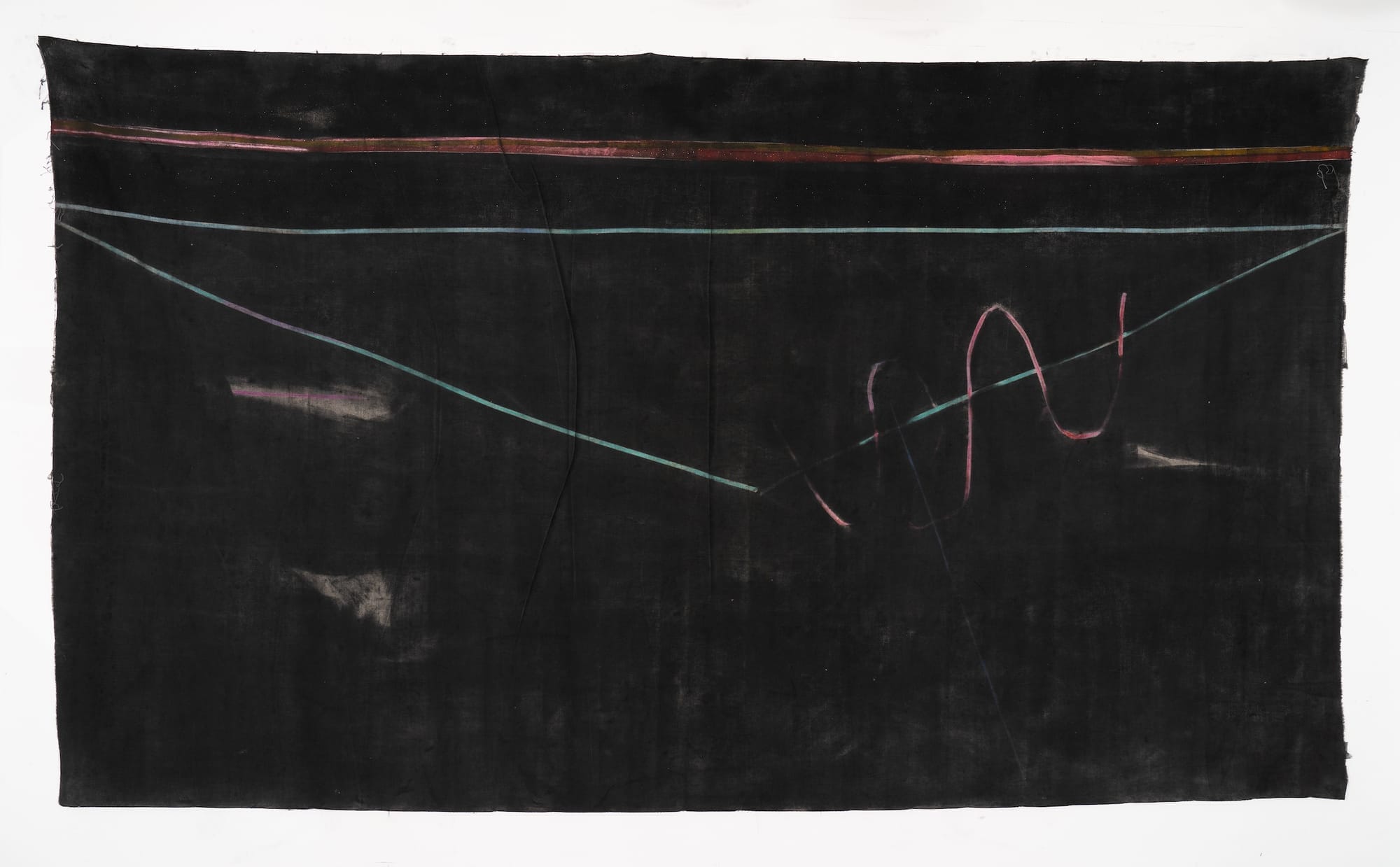
Lovelace O’Neal’s monumental paintings, which move fluidly between abstraction and figuration, are characterized by large gestural marks and explosive energy. She was perhaps best known for her Lampblack paintings, in which she applied layers of loose black pigment to her canvases and used a chalkboard eraser or her hands to punctuate the surface with thin white or colored lines. They are insistent declarations of Blackness and presence in spaces where Black families and women have historically not always been welcome.
In a statement to Hyperallergic, art historian and curator Katy Siegel called her work “milestone statements in the recent history of painting.”
“They aim still higher, touching the metaphysics of life and the natural world,” Siegel added.
Born in 1942 in Jackson, Mississippi, Lovelace O’Neal spent most of her childhood in Pine Bluff, Arkansas. Her father was a music professor at Jackson State University, Arkansas State University, and Tougaloo College. In our recent interview in Hyperallergic, she recalled that Black families were only permitted to visit museums on specific days of the month in Jim Crow-era Jackson. As a child, Lovelace O’Neal would travel by train each summer to Chicago and Gary, Indiana, where her father’s family had moved during the Great Migration.
“Daddy wasn’t trying to make us into artists, but he gave us crayons, scissors, and glue to keep us from acting out on the train,” she told me. “At first, we stayed in our train compartment so that we did not have contact with the ugliness of train travel in the South. Immediately after we crossed the Mason-Dixon line, the trains were not segregated.”
In 1964, Lovelace O’Neal graduated with a BFA from Howard University in Washington, DC, where she studied with Lois Mailou Jones and David Driskell, the painter and leading scholar of African-American art. She became active in the Civil Rights movement, working closely with Stokely Carmichael — her partner at the time — and other political icons. She was a founding member of Howard University's student-led Nonviolent Action Group and participant in the Student Nonviolent Coordinating Committee.
The summer before she graduated, Driskell encouraged her to attend the Skowhegan School of Sculpture and Painting in Maine, while Mailou Jones worried she would “cause some kind of ruckus.” It was there that she first encountered lampblack pigment during a visiting sculptor’s demonstration. Derived from the soot of burning oil, the pigment would have profound cultural resonance in Lovelace O’Neal’s black monochromes of the 1960s.
After graduating from Howard University, Lovelace O’Neal moved to New York to attend graduate school at Columbia University. She married John O’Neal, the playwright and cultural activist, in 1965 and “went to jail a couple of times” for civil disobedience. She also became connected to artists and poets of the Black Arts Movement, including Amiri Baraka. She found herself under a double form of pressure: Her Columbia professors wanted her to move away from gestural abstraction and toward Minimalism, while Baraka felt her work should explicitly address social and political narratives.
An answer came to Lovelace O’Neal when she began encasing her canvases with black pigment. “It couldn’t get any flatter or blacker than this,” she thought.
Artist Mildred Howard, Lovelace O’Neal’s longtime friend, recalled seeing the monochromes in a 1979 exhibition at the San Francisco Museum of Modern Art in a phone call with Hyperallergic. “Her black paintings were luscious; you wanted to grab and hug them,” Howard said. “They would take up a whole wall, covered in lampblack with just a few streaks of color, like drawings on top of paintings.”
Valerie Cassel Oliver, who curated Lovelace O’Neal’s current survey exhibition at the Virginia Museum of Fine Arts (VMFA) in Richmond, said in a statement to Hyperallergic that she “delved heavily into figurative and gestural painting which she then subjected to the black monochrome to emphasize that Black history, life, and culture had a place in the contemporary art landscape.”
Another transformative period began in 1984, when master printmaker Robert Blackburn invited Lovelace O’Neal to Morocco. She found connections between the palace where residents of Blackburn’s print workshop lived and the fictional setting of the Black king Balthazar, described in Gian Carlo Menotti’s opera Amahl and the Night Visitors (1951), which her father had directed in their Pine Bluff years. After her visit, Lovelace O’Neal embarked on the Panthers in My Father’s Palace series.
Following travels to Egypt and Chile — where Toro, whom she met in 1983, was born — she began her Two Deserts, Three Winters series. She was struck by the contrast between the landscapes she encountered: “The Atacama Desert in Chile is a rocky, hard, male-feeling place. The Sahara is sensuous, with rolling hills and mounds of soft sand.”
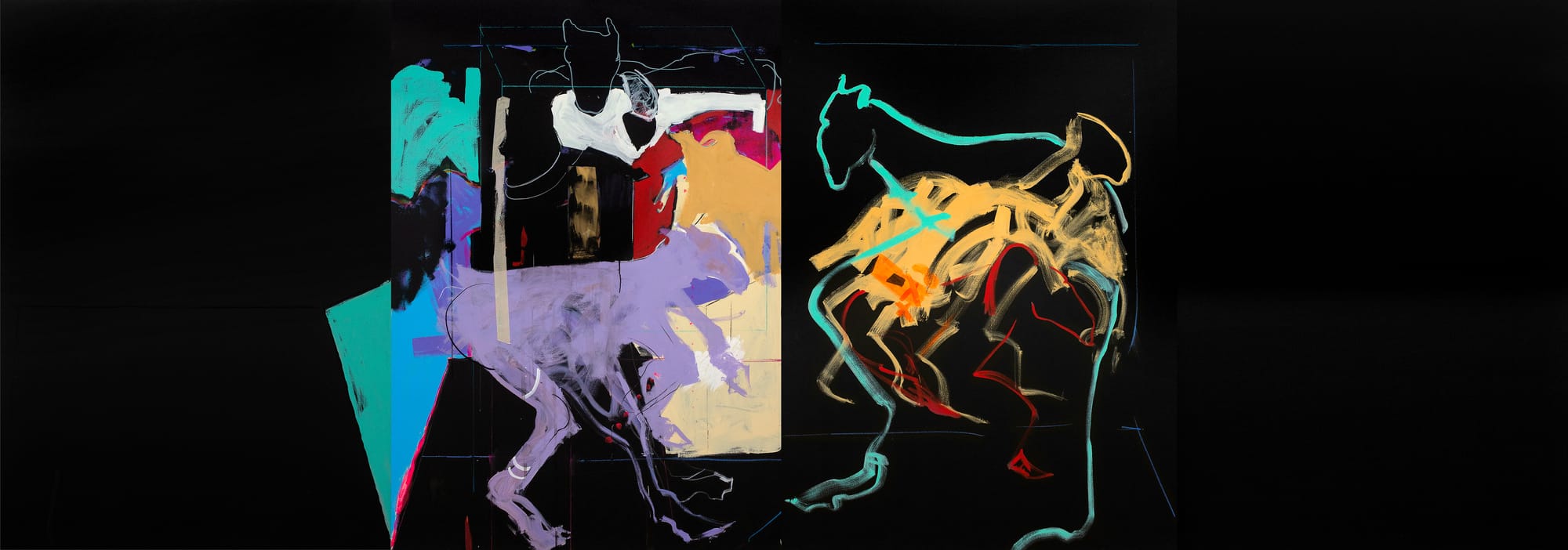
Lovelace O’Neal relocated to the Bay Area in the 1970s, teaching at the School of the Art Institute before joining the faculty at the University of California, Berkeley. In 1985, she became the first Black woman to receive tenure in its Department of Art Practice. She retired in 2006. After a chance sighting of whales migrating north, she began her Whales Fucking series.
“It was a fantastic encounter. I started to wonder what huge amounts of water would explode in the air when they were fucking. I couldn’t get that out of my head,” she told me.
Lovelace O’Neal was known for her provocative and poetic titles, such as “Running Freed More Slaves Than Lincoln Ever Did” (1995). Art historian Allan M. Gordon, her lifelong friend, told Hyperallergic that she “was both enigmatic and explicit. Her paintings were sometimes assertive, sometimes offensive(ish), but always telling.”
It was only in recent years that Lovelace O’Neal began to receive widespread recognition from the institutional art world. Three of her paintings were included in the 2024 Whitney Biennial. Her work was shown in Edges of Ailey at the Whitney Museum of American Art and Paris Noir at the Centre Pompidou. Her paintings were recently acquired by the de Young Museum, the National Museum of African American History and Culture, and the VMFA. In her final years, she received the Anonymous Was A Woman Award and the 2025 Murray Reich Distinguished Artist Award, and was named a 2022 On the Edge Honoree by the Fine Arts Museums of San Francisco.
Recalling her tireless spirit, Siegel added, “As a person, Mary delivered intensity with inimitable style; as she signed her emails, ‘IN THE SERVICE OF ART I REMAIN MLO.’”