Outrage Over Israeli Plans to Seize Palestinian Archaeological Site
Residents of Sebastia in the Occupied West Bank say that Israel’s plan to redevelop the area for tourism will cut them off from their history and livelihood.

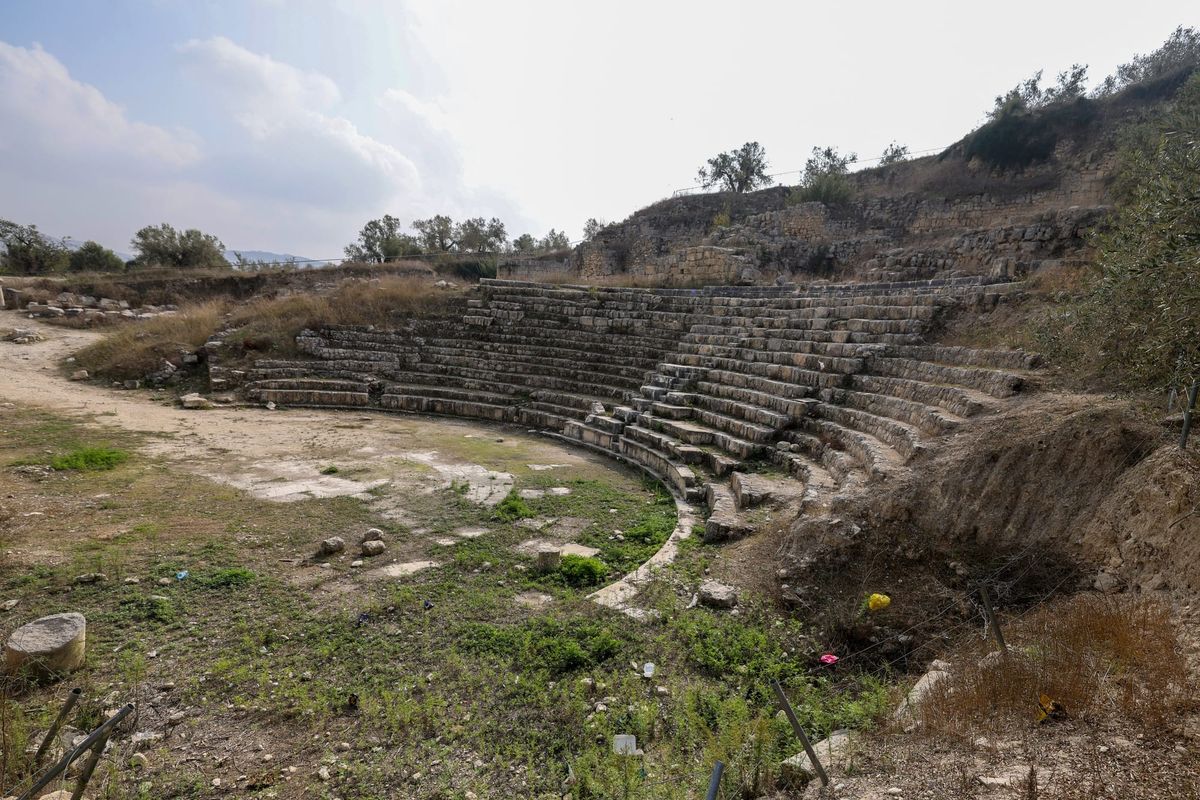
Palestinian residents in the Occupied West Bank village of Sebastia have expressed fear and fury at Israel's plan to seize the town and neighboring archaeological site, formally announced last November. Locals recently told the Guardian that Israel's plan to develop and convert the area into a public attraction aimed at Jewish settlers would “destroy” the village.
Situated only a few miles northwest of Nablus, the city of Sebastia, once known as Samaria (Shomron in Hebrew), served as the capital of the northern Kingdom of Israel during the Iron Age before the Assyrian invasion and takeover in 722 BCE. Continuously inhabited for approximately 3,000 years, Sebastia is a critical tapestry of archaeological and architectural ruins reflecting multiple eras of religious and imperial influence. The hilltop ruins sit within the boundary of the Occupied West Bank, a stone's throw away from the village, which is home to some 3,500 Palestinians.
Among the archaeological ruins are walls surrounding a derelict acropolis, a Roman amphitheater, remnants of a temple dedicated to Emperor Augustus, and a Hellenistic tower.
Israel's much-criticized plans for the site involve constructing a visitor center, a parking lot, and a fence around the area that would cut off villagers' access to the ruins and their olive orchards, effectively drying up their sources of income — tourism and olive-based products — entirely. An access road will reportedly connect Israel to Sebastia directly, without visitors having to pass through the Occupied West Bank town.
Alon Arad, executive director of the Jerusalem-based non-governmental archaeological organization Emek Shaveh, emphasized in a December article for +972 Magazine that Israel's seizure of approximately 450 acres of privately owned plots is the largest expropriation of Palestinian land to date.
“[...] Sebastia’s archeological significance only sharpens the political contradiction at hand: While the site merits careful study, the gulf between the ethical commitments claimed by Israeli archaeologists and the state violence carried out in archaeology’s name to justify steps toward annexing the West Bank has never been more stark,” Arad wrote in +972.
Hyperallergic has contacted Arad and Emek Shaveh for comment.
Israel has long invoked the land's archaeological importance and prominent connection to Jewish heritage in its campaign for control over the area, positioning itself through millions in state funding, sponsored excavations, and encroaching settlements in recent years to lay claim to the ruins for the creation of the tourism site.
Critics of Israeli policy and expansion emphasize that the city is historically intersectional, as it was repeatedly conquered and reinvented throughout Assyrian, Roman, Byzantine, Islamic, Crusader, Ottoman, and British rule, and that Israel is engaging in “archeological cleansing” to disguise its bid for territorial control.
“It is not right just to focus on one or other period,” Wa'ala Ghazal, a local curator at a small museum in the courtyard of a 13th-century mosque in the village, told the Guardian. The mosque Ghazal works in is an Ottoman-era fixture, but it had previously been a Crusader cathedral that had taken over a Byzantine church where John the Baptist was interred.
“Samaria happened in the Iron Age, but there were people living here before then,” she said.