Parallax(e): Perspectives on the Canada–US Border
Works by five Indigenous artists respond to the legacy of the Northwest Boundary Survey (1857–62) in this exhibition at The Reach. On view through May 30.
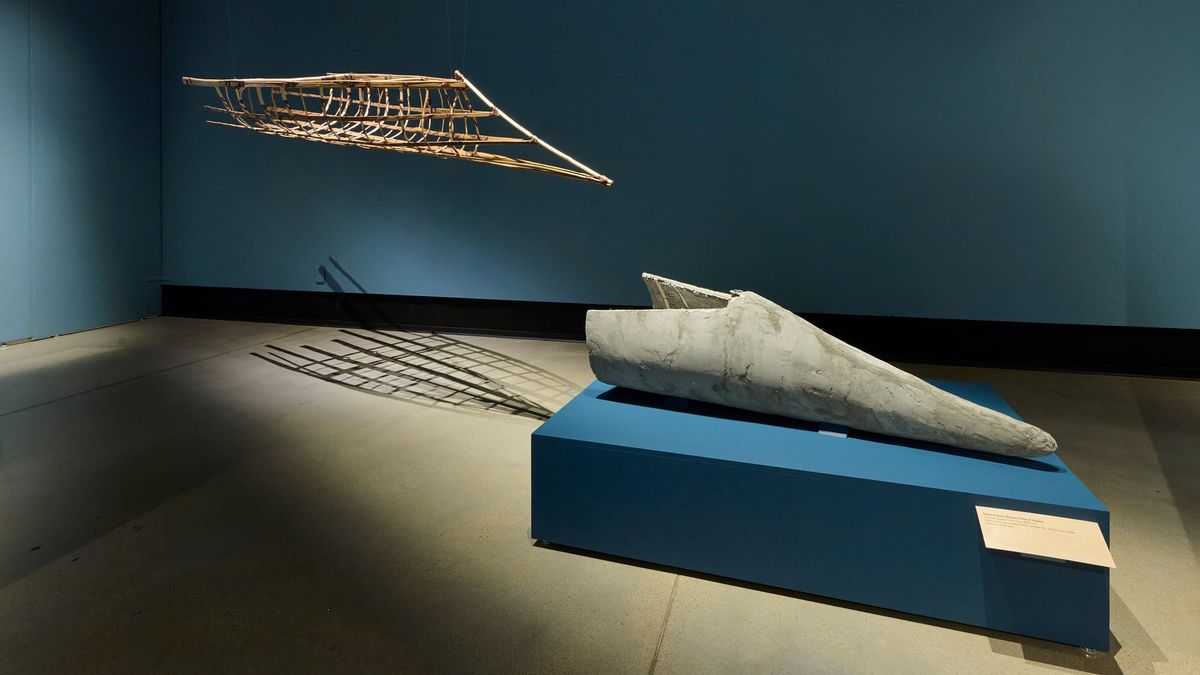
Parallax(e): Perspectives on the Canada–US Border unfolds as both an archival excavation and a contemporary reckoning with the making of the boundary line along the 49th parallel.
Titled after the scientific term “parallax” that describes the optical effect whereby the position of an object appears to change when observed from different viewpoints, the exhibition brings together photographs, maps, and watercolors produced by British and American surveyors, engineers, and artists associated with the Northwest Boundary Survey (1857–62) with recent artworks and new commissions by five Indigenous artists from both sides of the border.
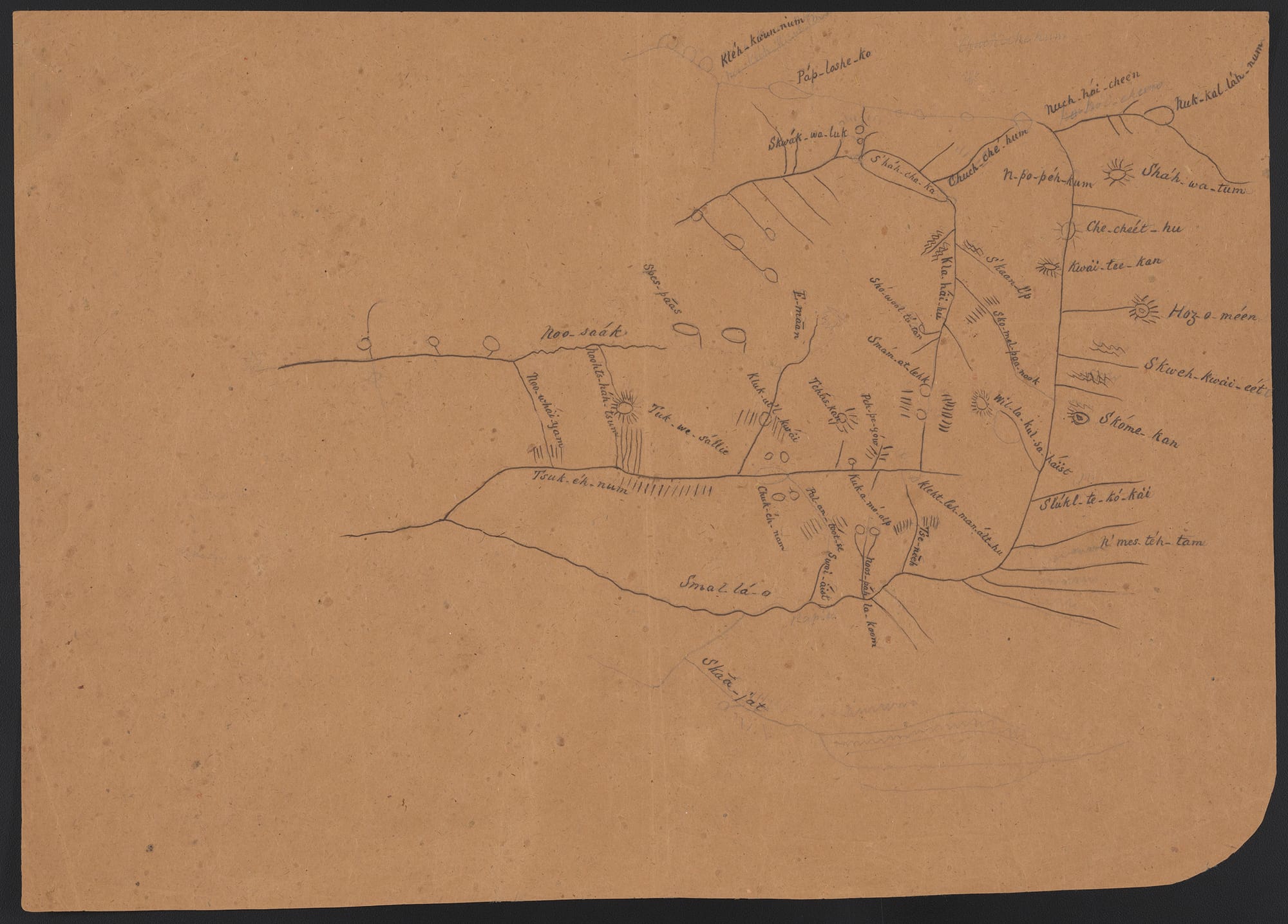
Rare landscape drawings, photographic captures, and exercises in cartography, borrowed from collections across Canada, the US, and the UK, such as the Rare Books and Special Collections at The University of British Columbia University, the US National Archives and Records Administration, and the Victoria and Albert Museum, visualize the carving of the border across the dense forests and extensive waterways of Indigenous territories. Taken together, these images worked to naturalize a geopolitical fiction.
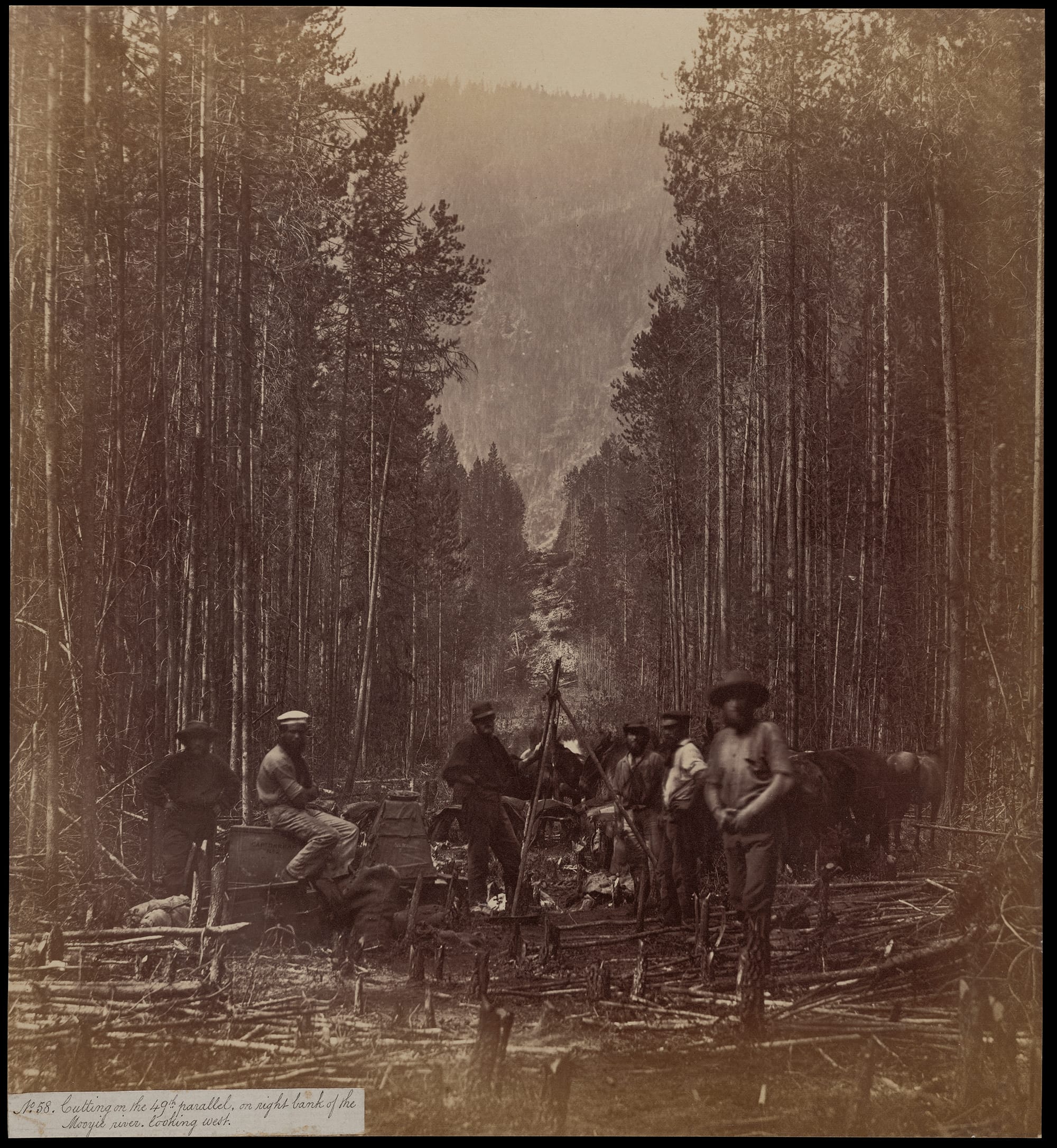
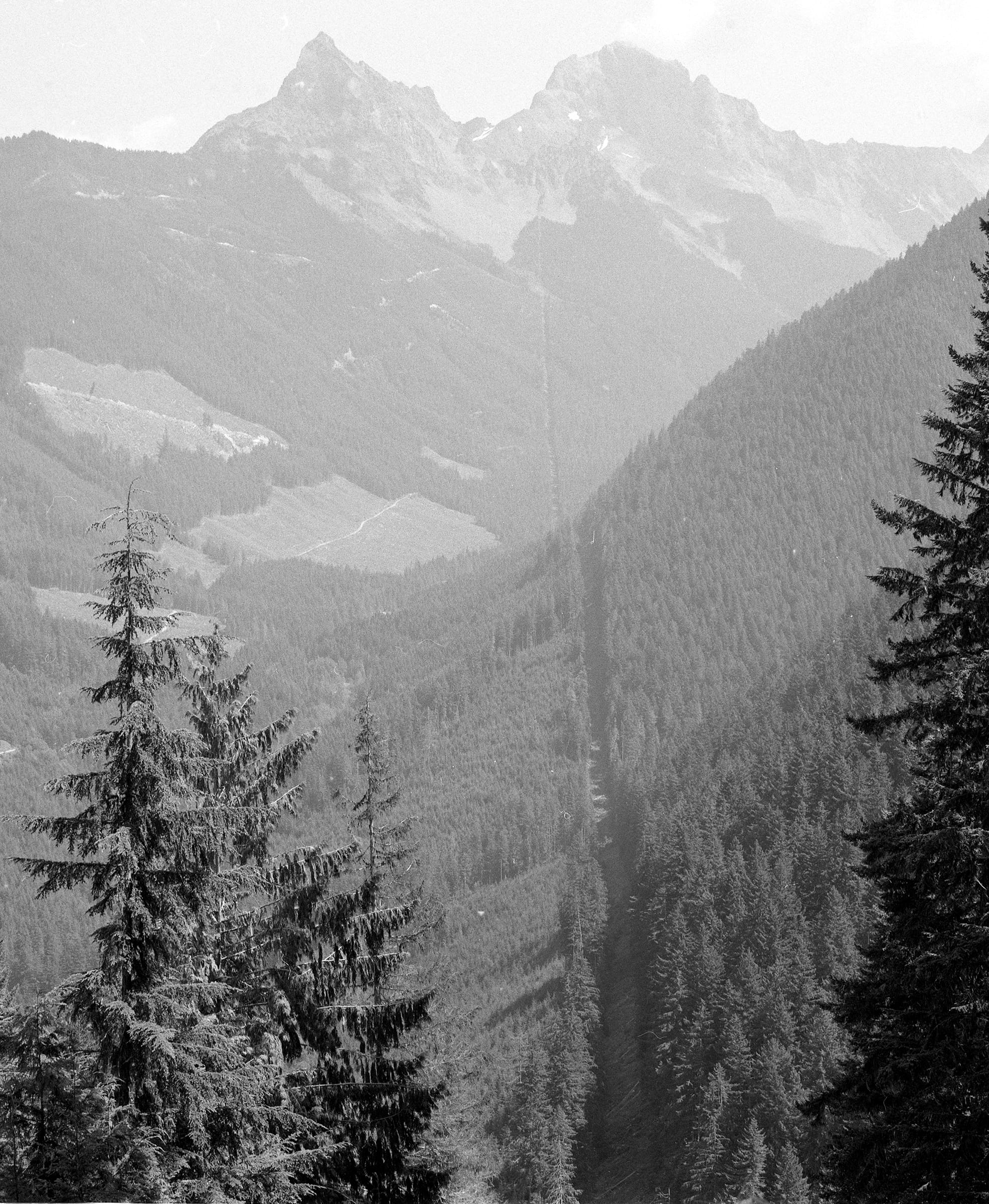
Left: British Corps of Royal Engineers, Cutting on the 49th Parallel, on the right bank of the Mooyie River looking west (ca. 1860), albumen print from wet collodion-on-glass negative, 9 5/8 x 8 13/16 inches (courtesy the Victoria and Albert Museum); Right: Deb Silver (Coast Salish, Sumas First Nation), Searching for the Line, 2025, silver gelatin print, 14 x 11 inches (courtesy the artist)
Yet, Parallax(e) resists reproducing this colonial gaze uncritically; rather, it interrogates the boundary as a colonial device of disruption and control. Archival traces point to the indispensable roles of Indigenous guides, laborers, and mapmakers, including figures such as Thiusoloc and his father, whose lived knowledge of the land was integral to the survey, but rarely represented in its official narratives. The exhibition’s framework, co-created with five Indigenous curatorial collaborators, centers the notion that “the border crossed us,” emphasizing how the boundary line disrupted longstanding Indigenous networks of kinship, ecological stewardship, cultural practice, and trade.
Commissions by Dr. Shawn Brigman (Spokane Tribe of Indians), Dr. Michelle Jack uɬ snəmtÌtkʷ (sqilxʷ/syilx), Deb Silver (Coast Salish, Sumas First Nation), Xémóntalot Carrielynn Victor (Stahlo Coast Salish, mixed European), and Dr. T’uy’t’tanat Cease Wyss (Sḵwx̱wú7mesh/Stó:lō/Hawaiian/Swiss) respond to this legacy with resilience and sovereignty, through the revival of canoe culture, relational explorations of transboundary identity, or acts of remembrance grounded in place- and language-based knowledge.
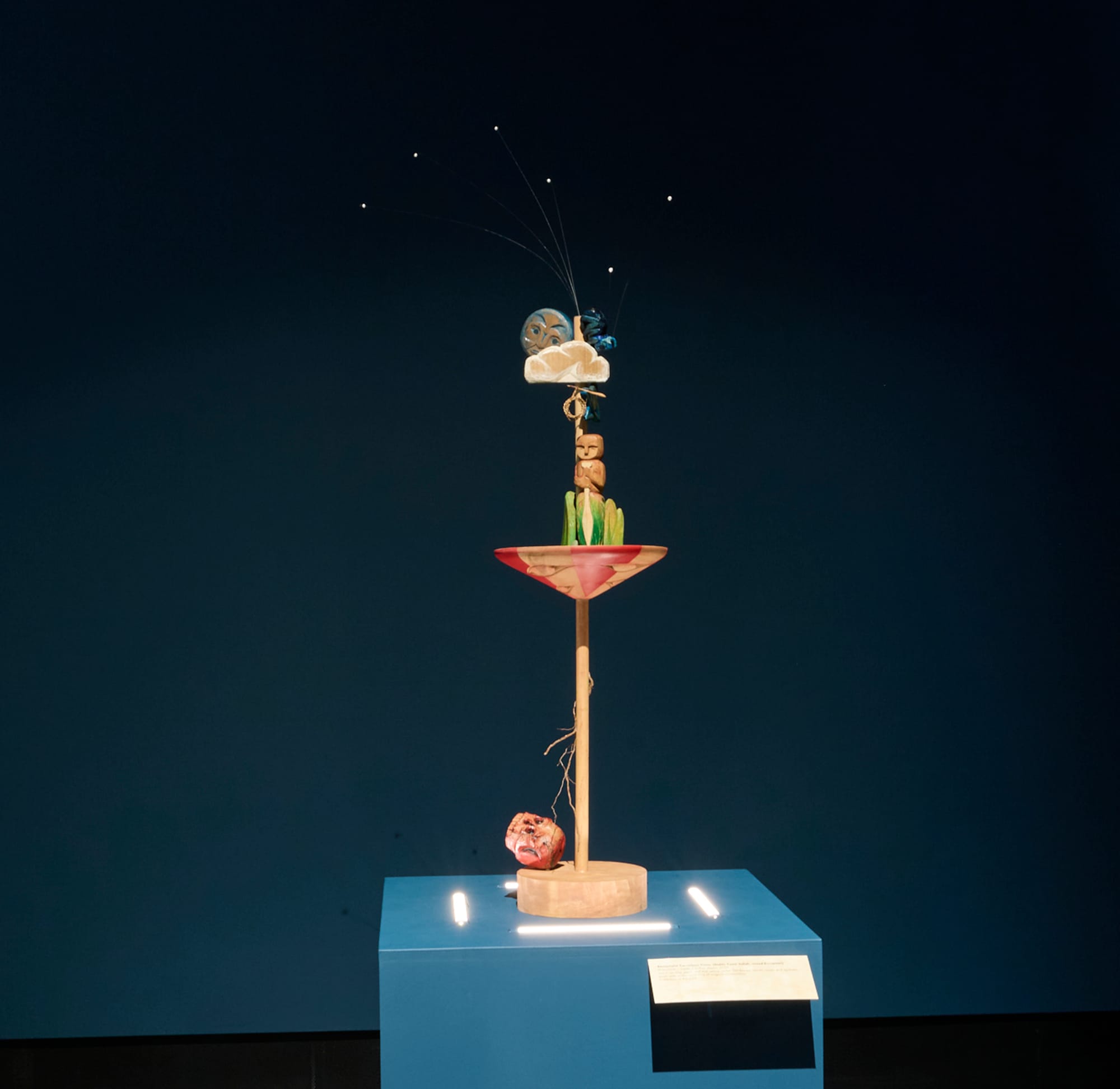
By presenting multiple perspectives across time, medium, and worldview, the exhibition asks viewers to reconsider what a border is, whose interests it serves, and what meaning it holds for those it crossed.
Generously supported by Canada Council for the Arts, Canadian Heritage, and the Terra Foundation for American Art, Parallax(e) is on view at The Reach Gallery Museum in Abbotsford, British Columbia, through May 30.
To learn more, visit thereach.ca.