Pussy Riot Shows Art by Russia’s Prisoners in New Protest Exhibition
The show at Ritsch-Fisch Galerie in France features work by people currently or formerly imprisoned in Russia, including Ukrainian civilians.

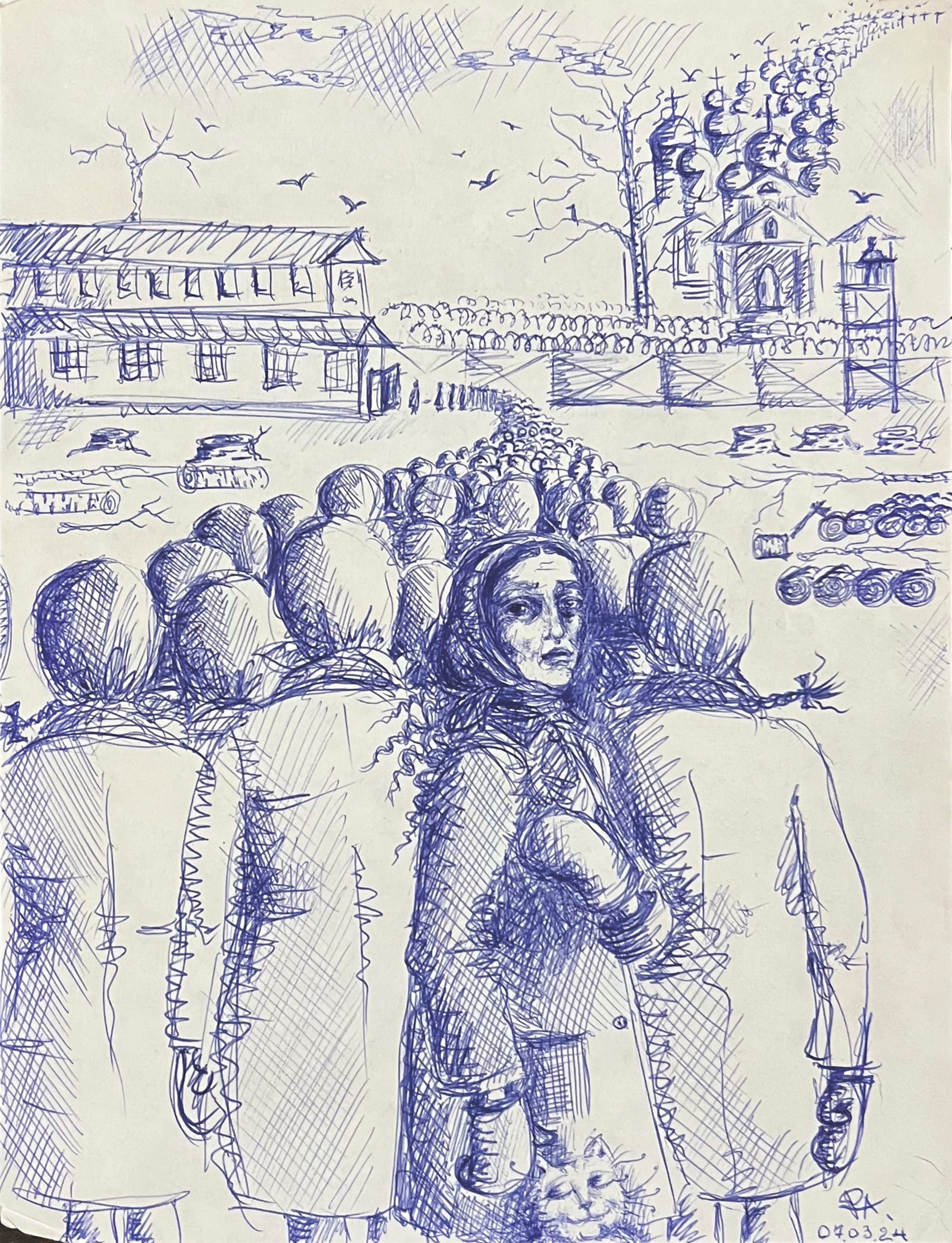
A young woman with a dejected countenance gazes behind her. Before her, a listless, faceless crowd inches towards an unnamed facility enclosed by barbed wire. The flapping wings of crows dot the cloudy sky overhead.
This is “Untitled,” a blue pen sketch on yellowed paper by Lyudmila Razumova, a photojournalist and artist who was arrested by the Russian State for anti-war graffiti in 2022 and is currently serving a seven-year sentence. Razumova produced the piece from her prison cell, hence the modest materials.
In the drawing, a smiling kitten with meditative eyes rests at the woman’s side, a brief moment of levity rendered nearly invisible by the work's somber tone.
The piece is one of the many works included in Resistance Imprisoned, a new exhibition highlighting the art of imprisoned Russian artists, hosted by the Ritsch-Fisch Galerie in Strasbourg, France. Co-curated by Nadya Tolokonnikova, founder of feminist art collective Pussy Riot, the show is the latest manifestation of growing discontent over Russia’s presence at the Venice Biennale this year.
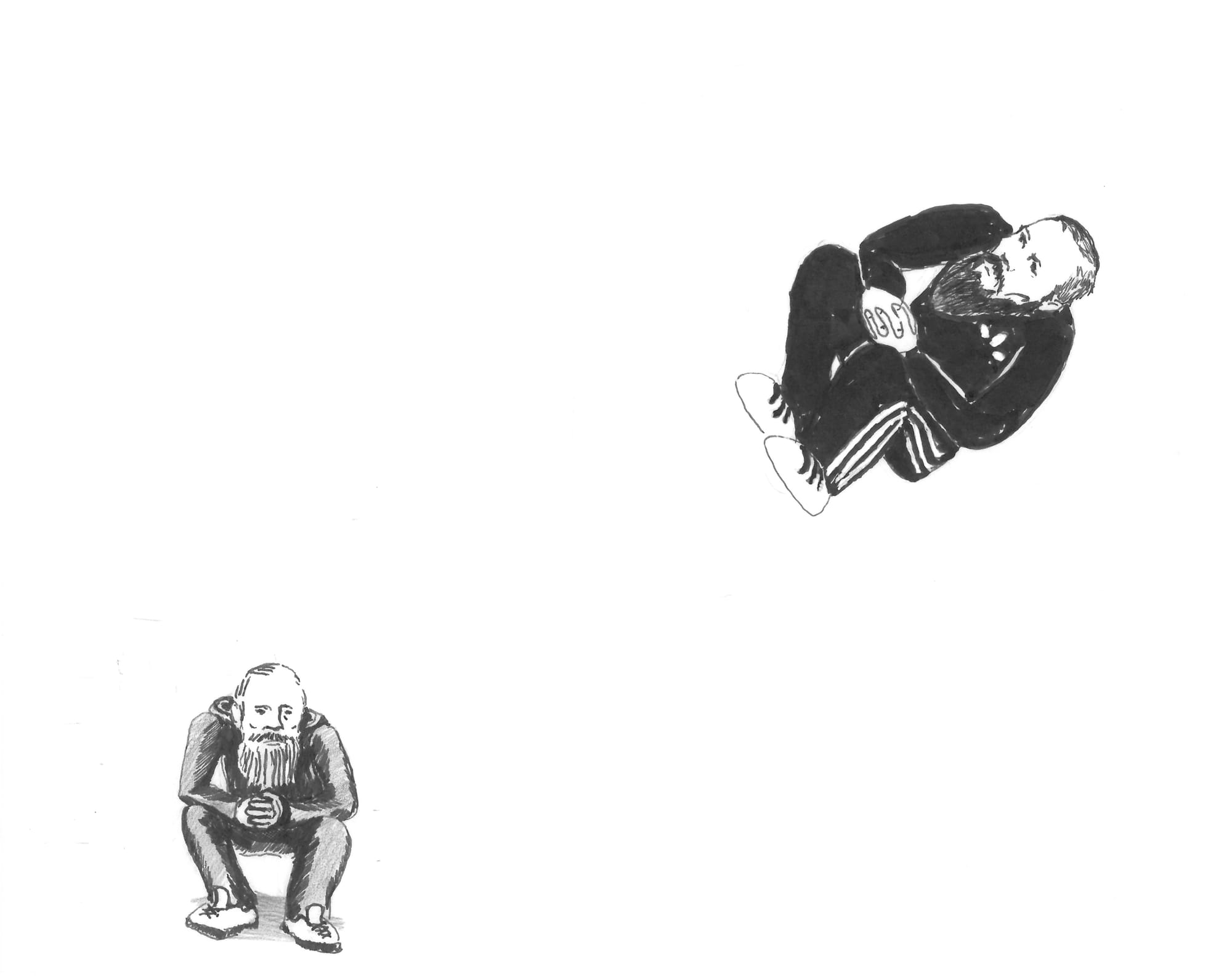
The exhibition kicked off on April 19 and will run through May 31, purposefully timed to coincide with the first month of the Biennale, which opens on May 9.
Last Tuesday, April 21, the Parliamentary Assembly of the Council of Europe (PACE) convened in Strasbourg to sign a written declaration that condemned Russia’s upcoming attendance at the Biennale and called for the work of imprisoned artists to also be shown.
Out of all the pieces on view, Tolokonnikova finds special meaning in the straightforwardness of Razumova’s drawing.
“There is something simple about the pen on paper, which already tells a story about her condition and her limited access,” Tolokonnikova told Hyperallergic. “She’s able to capture a lot of emotion in her work.”
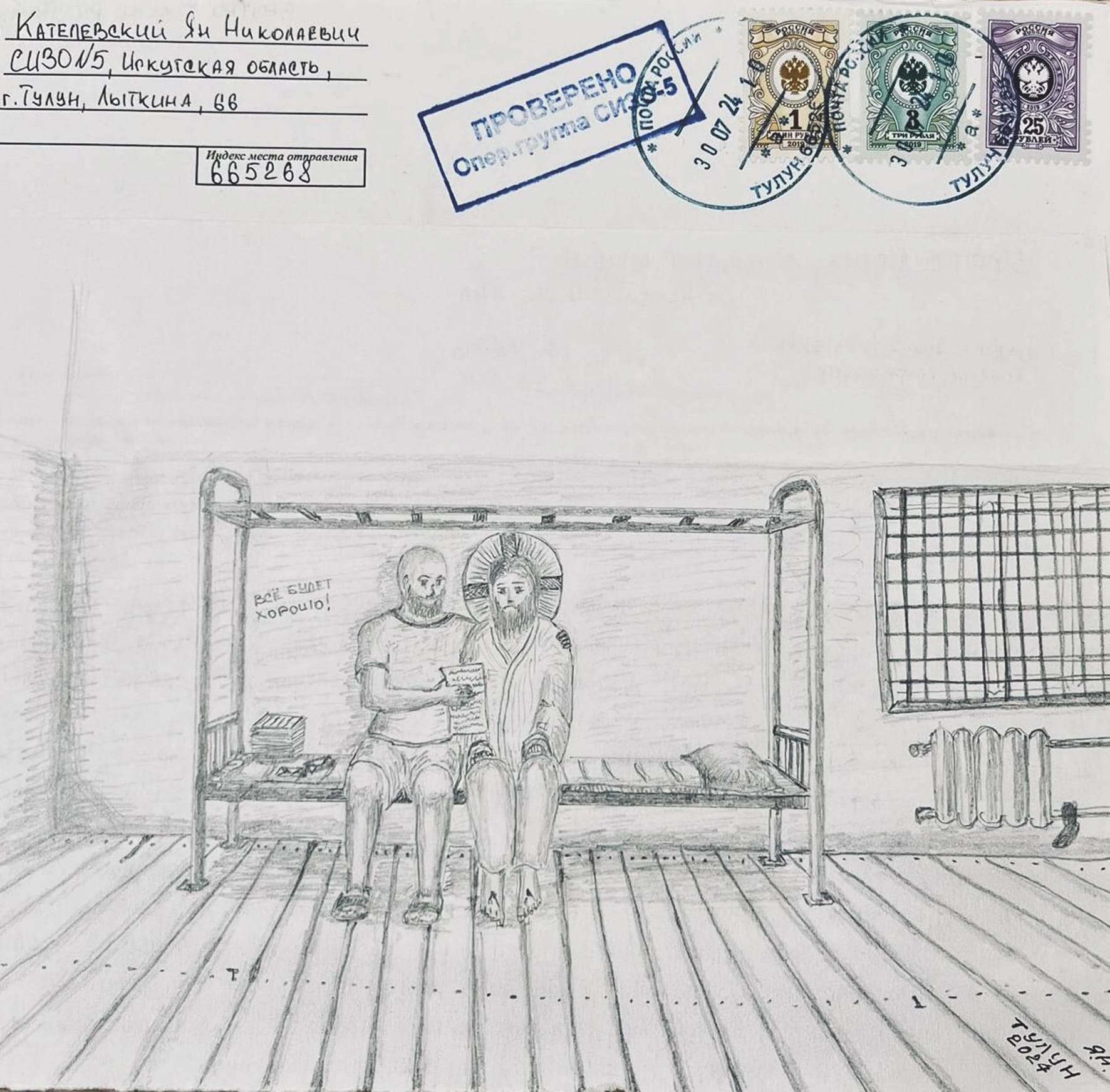
In a press release, Ritsch-Fisch Galerie said it prides itself on highlighting works produced by “outsiders, such as prisoners.”
Among the so-called outsiders who showed up at the gallery last week were Valentina Shapirko, the mother of Ukrainian soldier Pavlo Artemenko, who is presently illegally detained by Russia, and Alona Kasianiuk, the sister of Ihor Kim, a Ukrainian soldier sentenced to 27 years for defending the city of Mariupol in 2022.
“Presenting these works is both a privilege and a responsibility,” Richard Solti, director of Ritsch-Fisch Galerie, told Hyperallergic. “In prisons and penal colonies, drawing, embroidering, or writing is not a pastime, but an act of resistance and survival.”
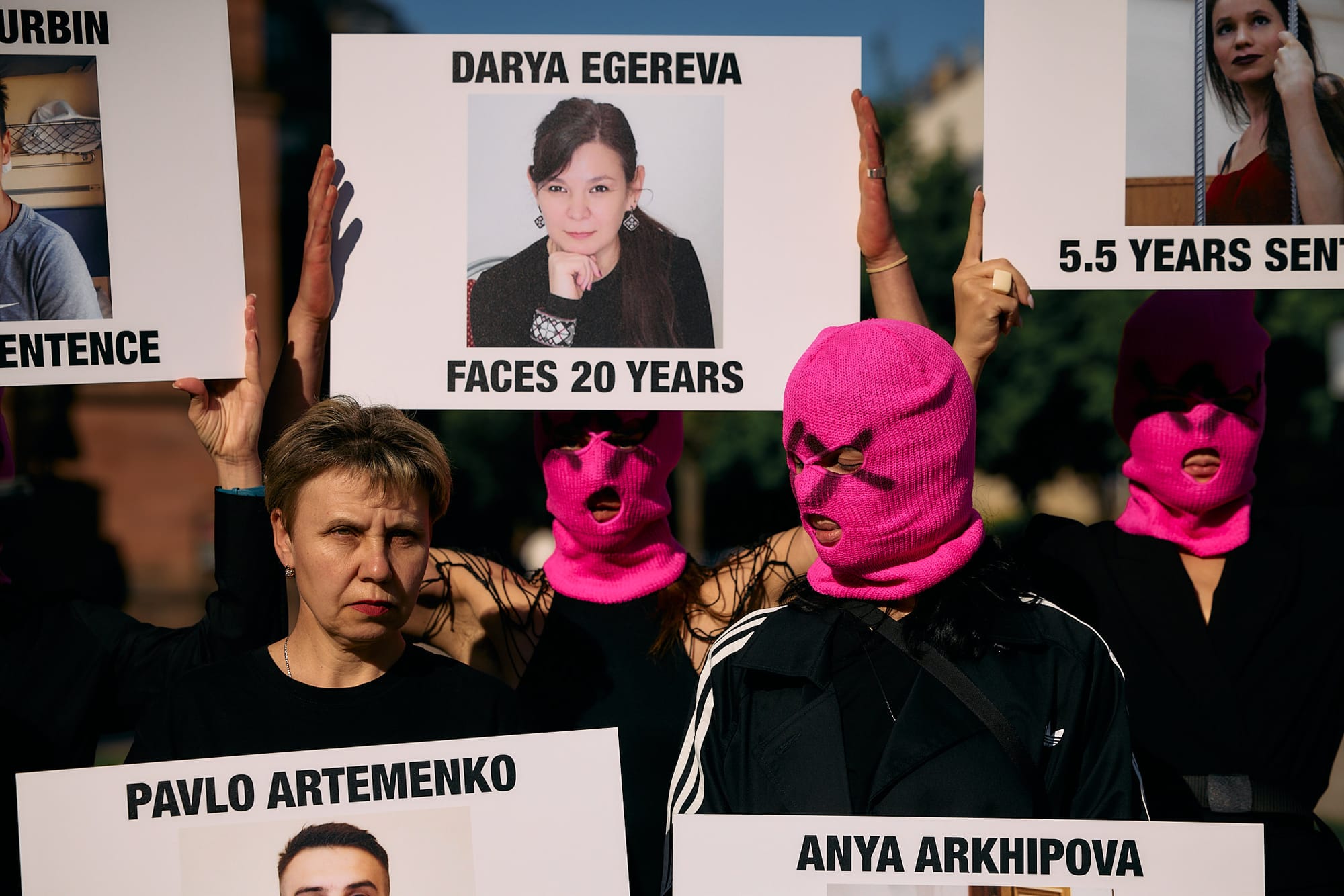
The goal of this exhibition is not to delight or enchant viewers. Rather, Solti hopes that visitors will leave with a “productive sense of discomfort.”
Tolokonnikova agrees. “This isn’t one of those openings where you get to see the art on the walls, and have a glass of champagne, and have a warm feeling,” Tolokonnikova told Hyperallergic. “Each one of these people is sitting in a cold prison cell right now.”
It seems that these small efforts of artistic resistance are changing the tide. Last week, the jury for the Venice Biennale announced that it would “refrain from the consideration of countries whose leaders are currently charged with crimes against humanity by the International Criminal Court,” effectively omitting Russia and Israel from the running.
“It’s a good small step,” Tolokonnikova told Hyperallergic of the jury’s decision. “But we have a couple more weeks to fully kick the official Russia presence out, and stop Kremlin soft power agents from being welcomed into Europe.”