Seurat and the Sea Is Postcard Perfect
Painted during summer trips to the Channel coast, Seurat intended his seascapes to “cleanse one’s eyes of the days spent in the studio.

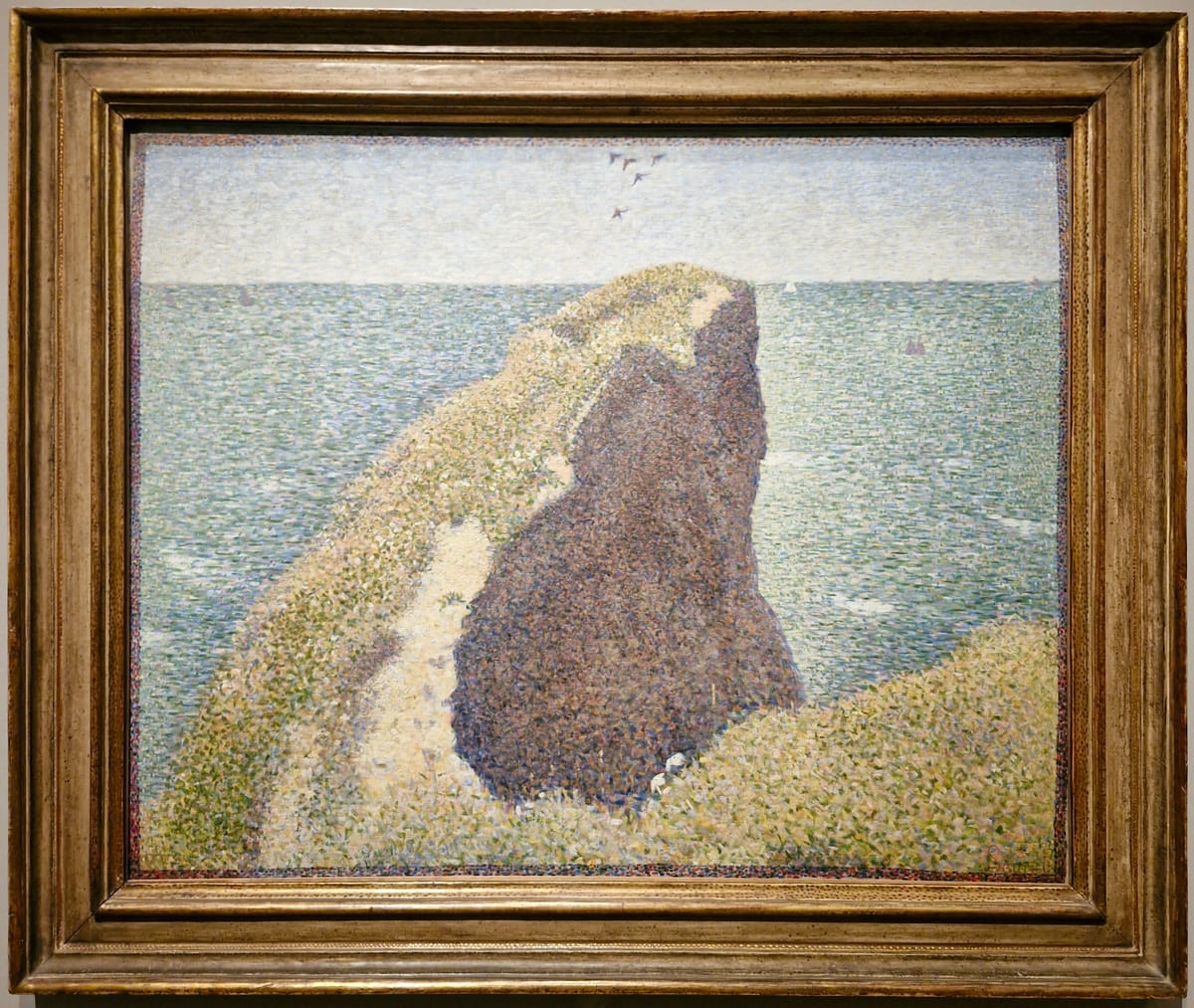
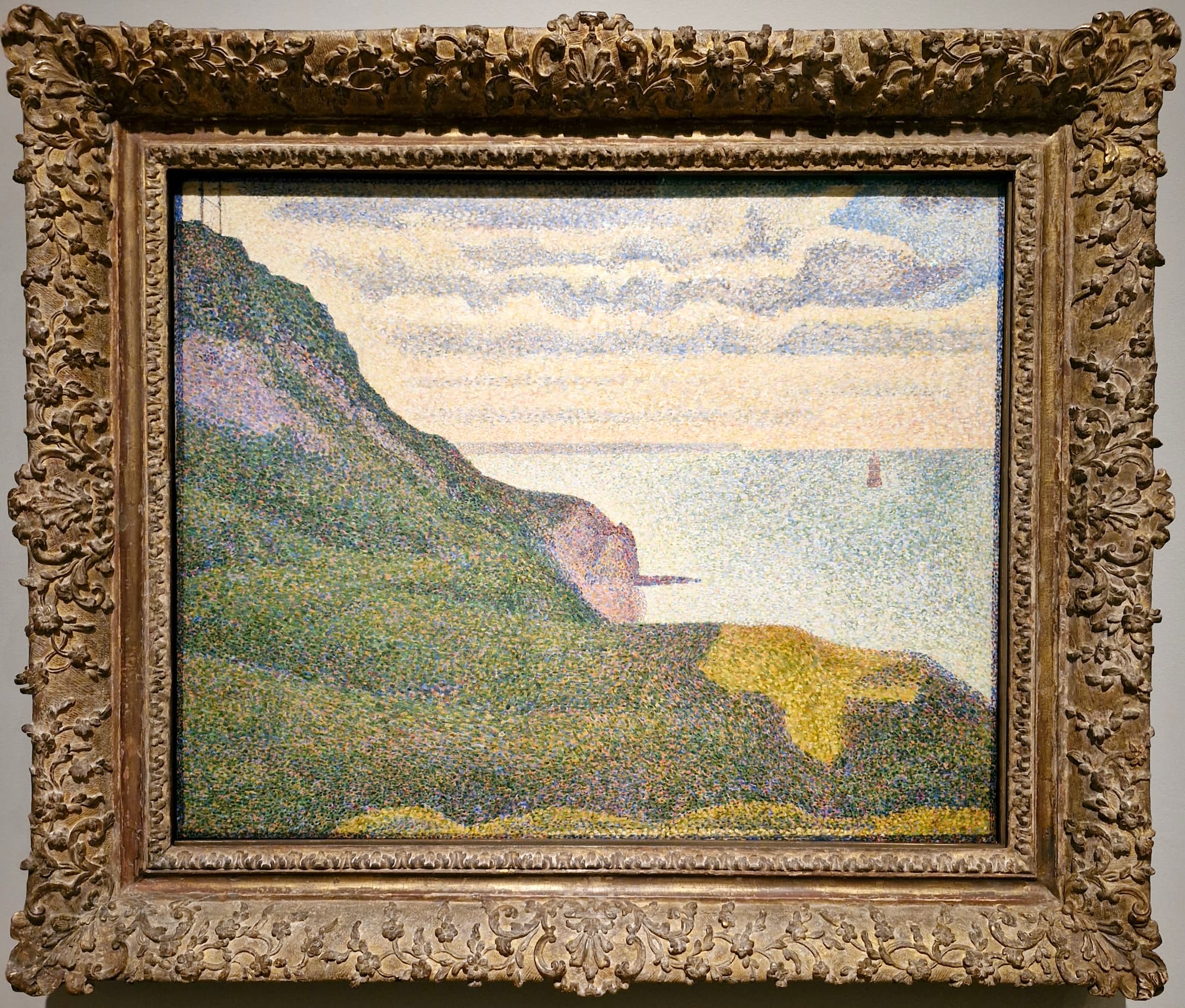
LONDON — Whether by accident or design, the Courtauld Gallery’s Seurat and the Sea immediately follows the National Gallery’s major survey on the same artistic movement. At least one painting came directly from that show without stopping at home first. While the National’s show, drawn from the Kröller-Müller collection, examined weighty issues of socialism and politics, this — purportedly the UK’s first exhibition dedicated to the artist’s seascapes — is more like a presentation of very nice postcards.
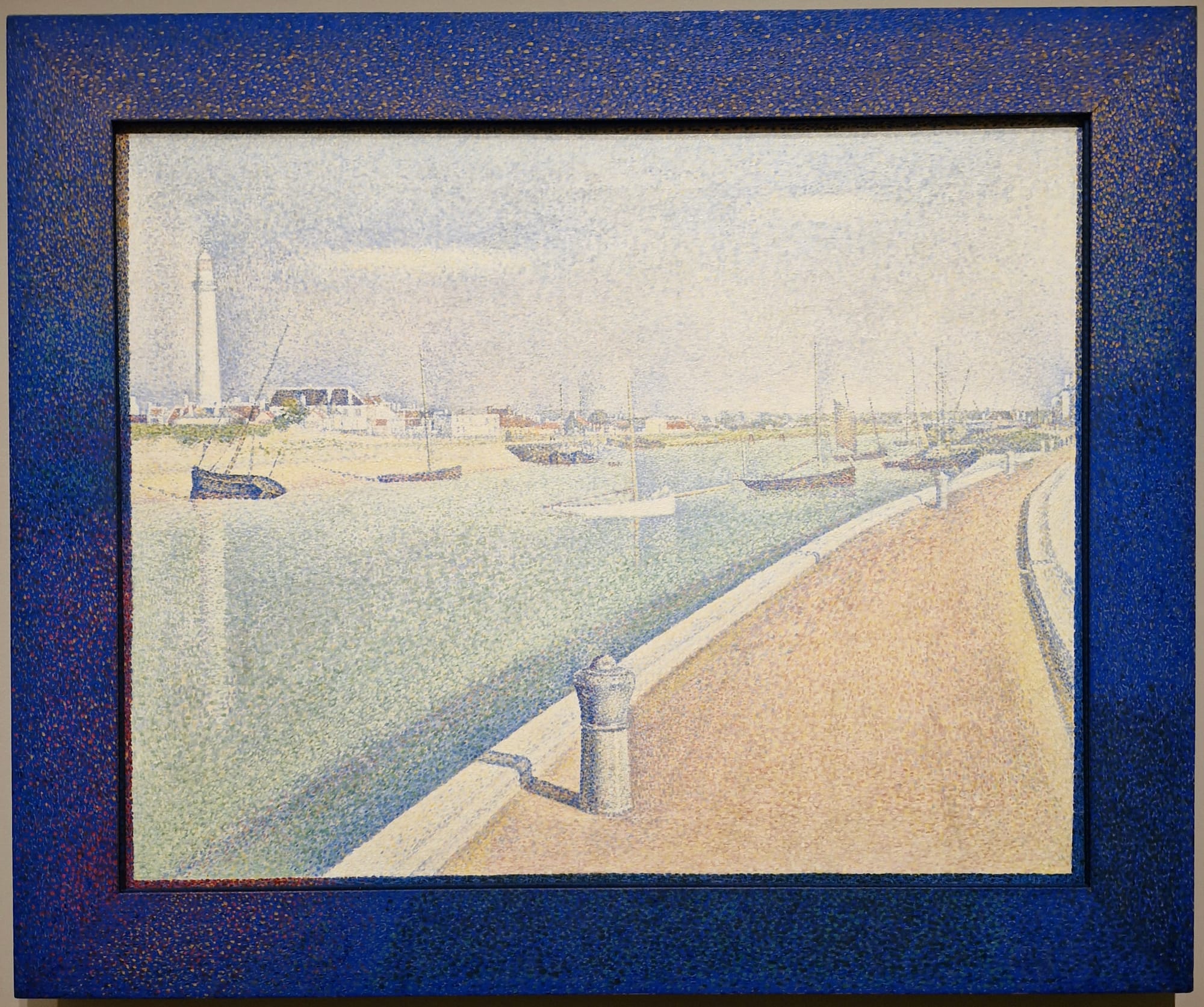
This is not to belittle it in the slightest, for the paintings were conceived as such. Of the 45 or so canvases that Seurat produced in his lifetime, we are told that over half are seascapes painted during annual summer trips to the Channel coast between 1885 and 1890, and he intended them to “cleanse one’s eyes of the days spent in the studio.”
The narrow subject matter doubly exposes pointillism’s limitations as a technique. As in the National show, this one includes a diagram explaining how Seurat used opposing color theory to create a shimmering optical illusion of tonal modeling through innumerable short strokes and, later, dots of pigment. While the Impressionists, many of whom are represented in the Courtauld’s collection, achieved that zingy and highly variable seaside light through expertly selected contrasting pastels, the visual brilliance of Seurat’s work comes from the masses of closely scattered dots. The color itself is mainly limited to contrasting primary tones, yet the full pictorial space is minutely exploded all over.
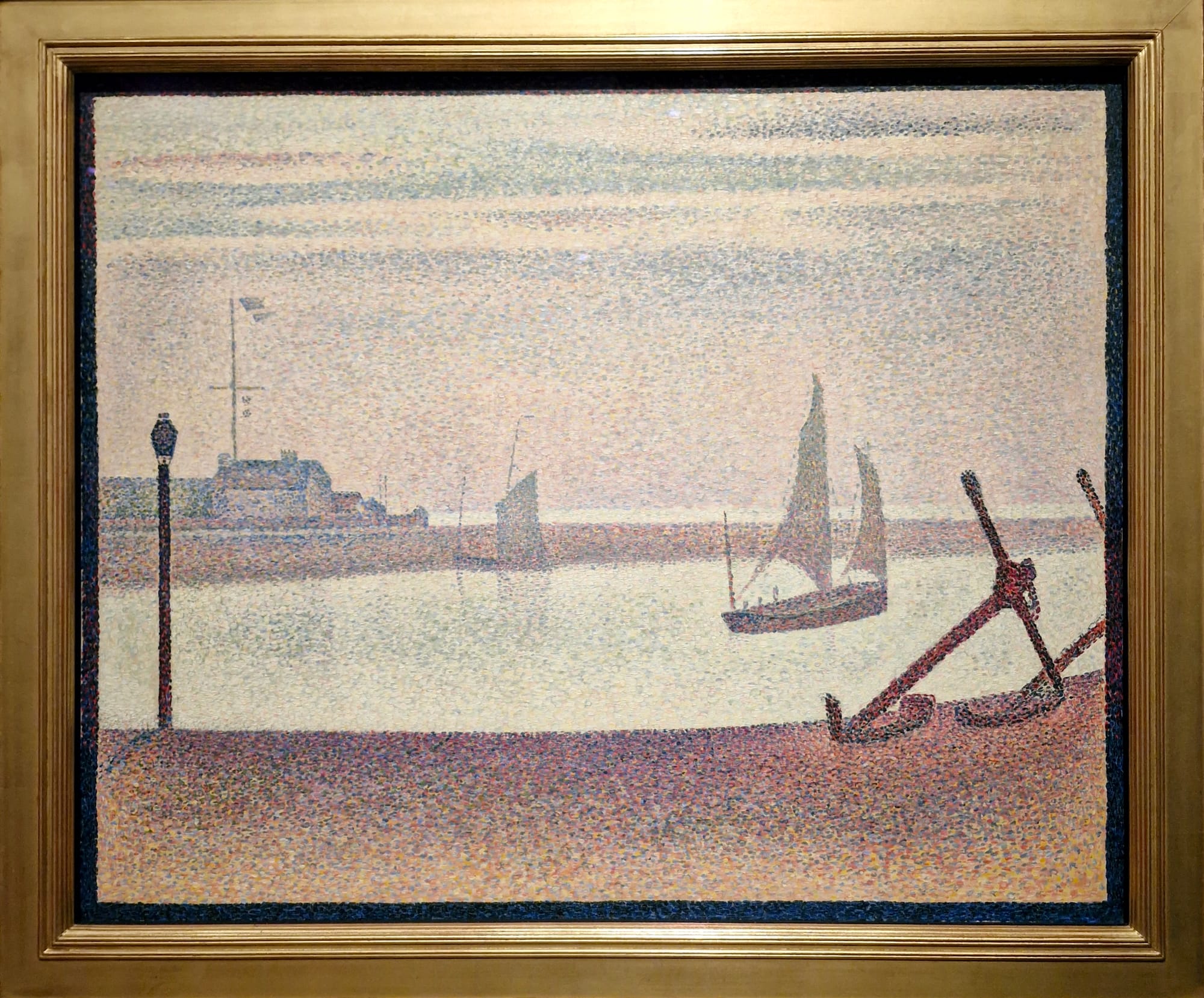
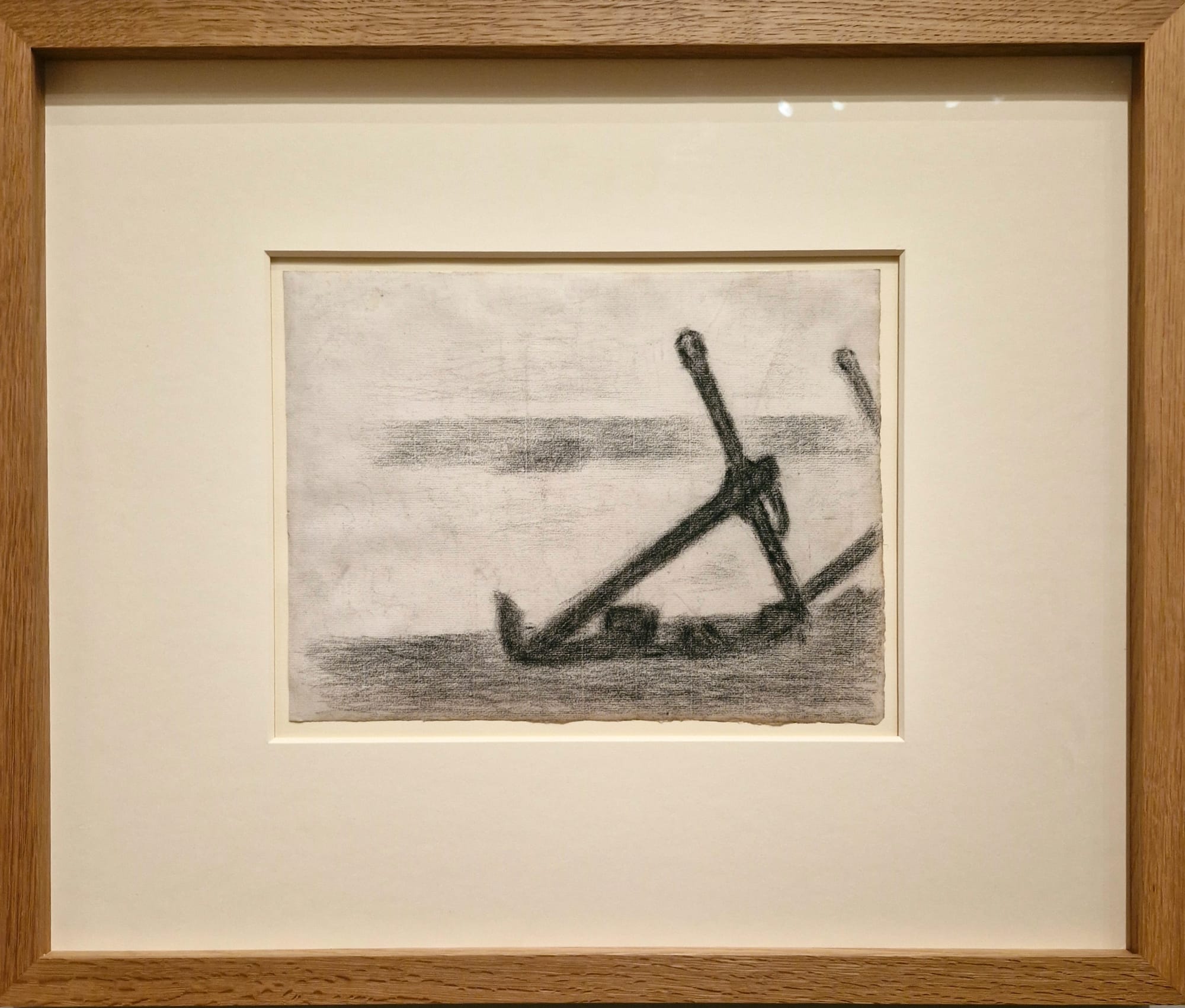
The exhibition really succeeds with its preparatory versions of the larger completed paintings. Compare, for example, “Le Bec du Hoc (Grandcamp)” from the Tate and its miniature study version from the National Gallery of Australia, Canberra (both 1885). In the study, the singular beak-like rock formation is rendered in larger “points” of relatively consistent distribution and direction, with slightly elongated horizontal dashes defining the sea area. For the final version, the angular dash direction is dialed up a notch, and the diagonal hatching is more distinct, resulting in a chaotic atmosphere. Similarly, the presence of a preparatory study for “The Channel of Gravelines: An Evening” (1890) from the Victoria & Albert Museum is fascinatingly alarming because it is the visual and formal antithesis of its finished version at the Museum of Modern Art in New York; in the study, smooth Conte crayon outlines silhouetted anchors against a flatly delineated beach.
That the captions for individual works constantly return to the same refrain — how pointillism works and its essential theory — indicates how little artistic, intellectual, or academic depth there is to chomp into here. They read, for instance, “Seurat’s radical technique consisted of juxtaposing dashes and dots of unmixed colour on the canvas” and “Each colour appears in the painting in varying intensities, harmonising the scene as a whole.” These statements could be applied interchangeably to nearly any piece. This is not a bad thing, for the show’s real takeaway is the meditative and unbending consistency with which Seurat applied his technique, committed and undeviating even when on holiday. Let the artworks wash over you pleasantly like their seaside vistas.
Seurat and the Sea continues at the Courtauld Gallery (Somerset House, London, England) through May 17. The exhibition was curated by Karen Serres.