Smiles Meyer Queers “The Last Supper”
The Los Angeles-based photographer, who was raised in a conservative Catholic environment, is reclaiming the divinity of queer and trans identity through religious imagery.

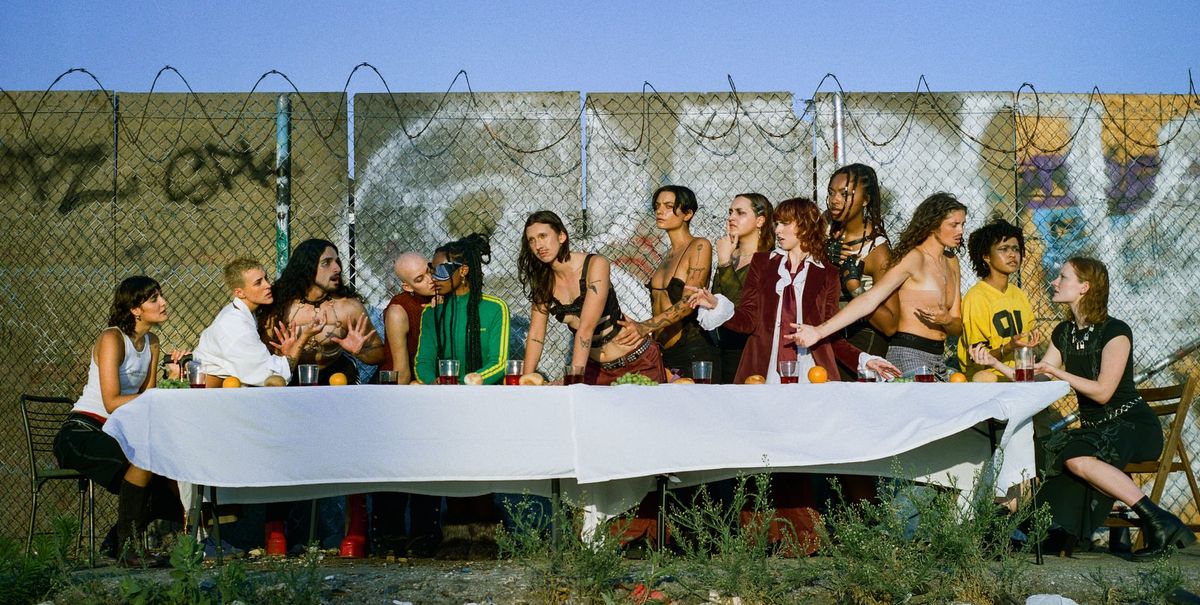
For Smiles Meyer, art is an act of divine transformation — both creatively and bodily. In 2024, the Los Angeles-based trans photographer and musician staged “The First Gathering,” in which they recreated Leonardo da Vinci’s “The Last Supper” (1495–98) with trans models. Meyer is part of a growing tradition of queer and trans artists visualizing queer identities with longstanding religious imagery, with artists like Elizabeth Ohlson Wallin recreating scenes including the Last Supper. The series builds on their previous projects like the Mary + I cover and nightclub exorcism shots taken for performance artist Maris, allowing them to unpack religious trauma through art that explores and celebrates their gender identity.
Meyer has always identified as an artist, but growing up in San Diego, California, they dreamed of becoming a poet. “I was first in love with words,” Meyer told Hyperallergic in an interview. But after they came out as queer around age 18, they experienced severe depression and started taking medication.
“With the antidepressants, it felt like it soaked up my sadness but also soaked up any ability to write, which is something that a lot of artists struggle with,” Meyer explained. “It was a year of me feeling creatively constipated.”
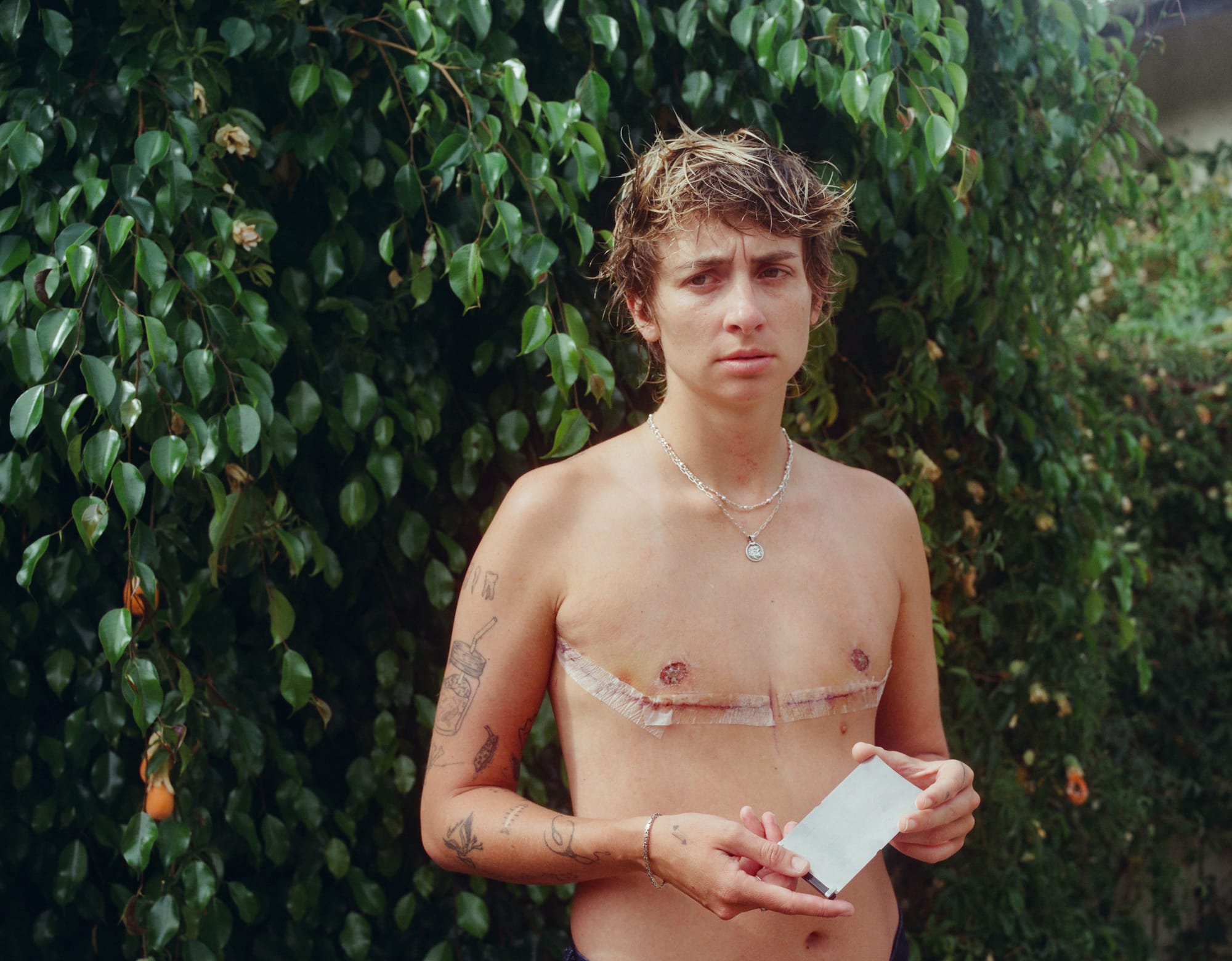
That changed in 2018, when they started taking photographs. At first, they cut up and rearranged pieces of their printed photos into collages to tell stories they couldn’t capture with words. Meyer continued this practice until, one day, they took a photo they believed was too good to butcher. From there, they embarked on what has become a nearly 10-year-long photography career.
Meyer partially credits their interest in deconstructing cisgender divinity as a trans person raised in the Catholic Church to Judith Butler, whose writing inspired them to consider “how trans people appropriate the power of creation.” Meyer said Butler’s frameworks encouraged them to reframe “what it means to be divine as not something that we associate with Jesus or the God in the sky but instead something that lives within all of us.”