Society’s Repair Begins With Art
We must cultivate spaces with the capacity to hold another kind of cultural experience that forges a reintegration of art and life.
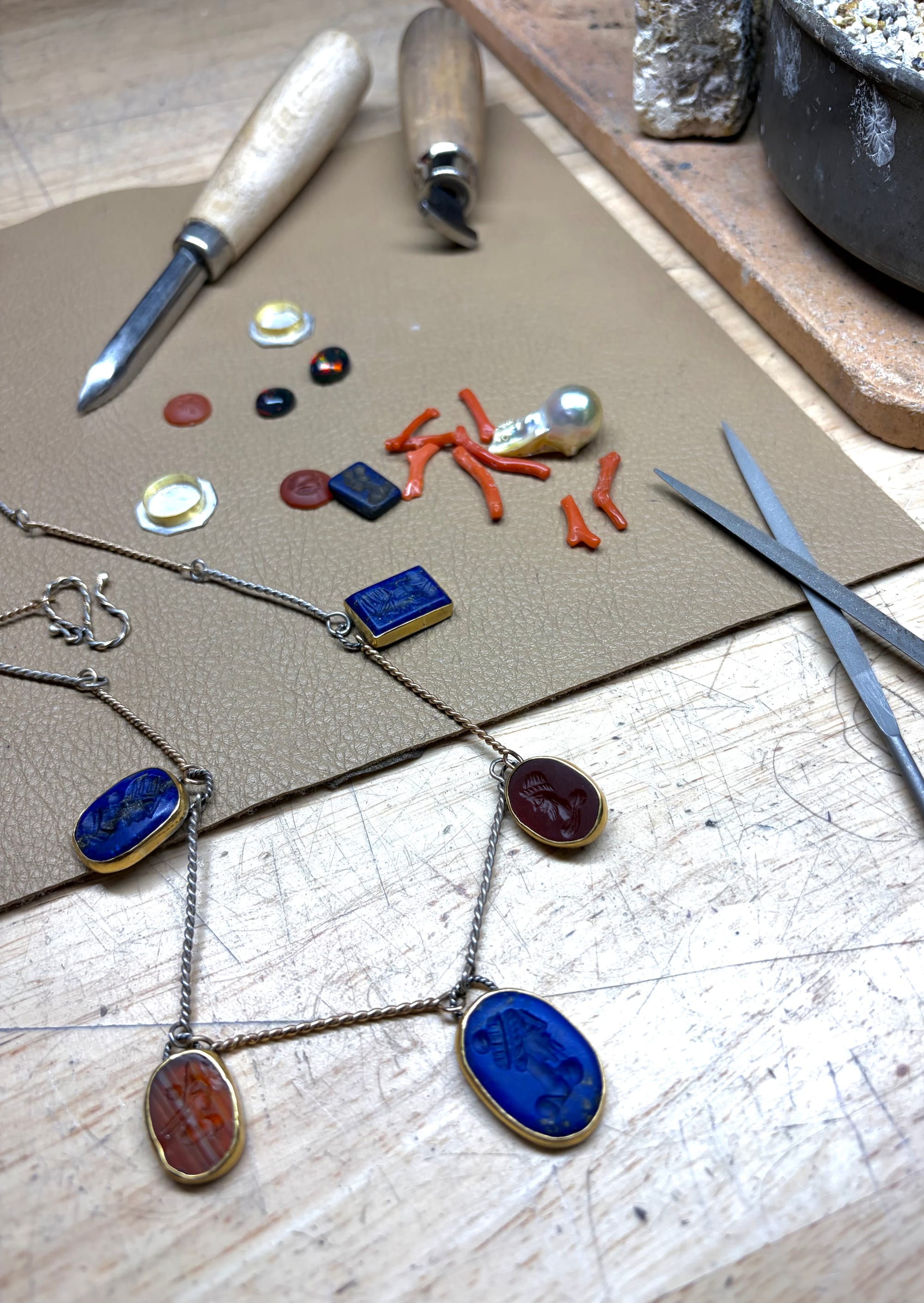
In the summer of 2024, amid the chaos of the US election debate, I started ice-dyeing throw pillows and vintage linens as a way to avoid doomscrolling. By the following summer, I needed to do something with my hands that was more complex to keep me sane, and to quell my family’s concerns about the massive quantities of pillows accumulating in our closets and on our couch. Googling “best jewelry class in NYC,” Time Out New York suggested I sign up for Carolina Iwanow’s weekly classes in Williamsburg. Soon, those four hours every Tuesday in Carolina’s studio were not only a balm to my rage and aching heart for all that was unfolding in the world but also gave me the mental space to engage more fully in what it takes to resist. By December, when I was facing two months without class during my teacher’s annual trip home to Argentina, I rented a bench at a nearby studio. These days, I try to spend two to three days of the week at the studio. Working with materials formed deep in the earth, silver, gold, ancient intaglios, and other unusual stones, alongside the messiness and courage it takes to learn new and unfamiliar skills, has been profoundly grounding.
In a time of social and political emergency and rising fascism, my hours at the jeweler’s bench afford me a space to make things, using creativity not only to invent forms but also to solve problems spurred by frequent, messy mistakes. There, I can process in the background, like sleep, giving myself the energy and fresh mind required to confront the overwhelming horrors of contemporary life, and plot my part in interrupting them. Arriving at this new (to me) configuration of how I spend my time and use my brain and my hands is deeply connected to the journey I have been on since leaving art and culture institutions in 2018. And it is fundamentally related to the ways we can radically deny the systems of power and their control over us both individually and collectively.
There is a fundamental narrative problem with art and culture in society, particularly in the US, as they are seen as a non-essential function of humanity, a sideline. The reality is the exact opposite. As humans, we produce culture all the time. It's what we do when we talk to one another, go grocery shopping, eat dinner with our families, or take a walk with a friend. It's not a luxury good or activity reserved for a select group.
The current pervasive disconnection between art and life, wherein art and its experiences are seen as bounded within institutions and other special spaces like museums and concert halls, creates a fundamental detachment from what makes us human, how we see ourselves and one another. Art and culture, after all, fuel our imaginations, cultivate our humanity, and allow us to see ourselves and one another. They also have the capacity to radically shift what we believe is possible, to better the world in which we live. If we abandon this power to the limited purview of institutions funded and governed by a narrow segment of society, we risk leaving on the table the potential for our collective culture to move towards greater justice and freedom.
Because art and culture are not separate from the other challenges, realities, and achievements of daily life, they can provide alternative ways to approach society’s greatest conundrums while also engendering ease and wonder. This is why we have seen direct attacks on the freedoms associated with cultural production in the US, ranging from the constraints on content and funding from the federal government on the Smithsonian Institutions (among the only federally funded arts and culture organizations in the US), and the takeover of the Kennedy Center, to the implied and direct threats to the tax exempt status that enables the nonprofit sector to raise private funds to operate museums and cultural organizations, in addition to universities, philanthropies, and charities.
Of course, these repressive strategies are not new, in the US or elsewhere. Historically, authoritarian and fascist regimes have recognized the power of art and culture and laid siege to its production and distribution. Take, for example, the Nazi focus on eliminating “degenerate” art, including Otto Dix’s depictions of physically and emotionally broken World War I veterans. Those works were deemed objectionable because they reflected critiques of war and national supremacy that the Nazi’s wished to uphold. In the US, meta-narratives told by cultural institutions have long established how culture is made and validated, what “counts” as art, and what cultural output has value, both aesthetically and financially. Cultural institutions have long enshrined fundamental ideals of what stories those in positions of political, economic, and social power want to tell about society. This is why the diversity of such institutions, and their smaller and more adventurous siblings, is essential to a vibrant civil society. And why independent art matters.
Further, the colonial impulse to remove materials from one cultural context and display them in another, out of reach of ritual, touch, and embodied meaning, has performed a particularly central role in the art-vs.-life segregation story in the Western and Northern Hemispheres. Through the multilayered violence of looting or other forms of removal, relocation to foreign soil, and encapsulation in museum spaces, a wedge is inserted between the object and the actual people who made and used it. My argument is not that preservation is evil, but rather that the way it is done and by whom matters. Getting it wrong rips meaning and art from lifeways, whether we are talking about paintings and jewelry, or vessels and ritual objects.
Add to this the fact that many people don’t feel that the institutions in which these objects are displayed are “for them” — meaning, they don’t feel welcomed in them — and you have a recipe for a long-term and debilitating set of conditions that convince a large segment of society that they do not produce culture, or that the culture they do produce is less than what finds its way into classical cultural spaces. Given this growing wedge between art and life, is it any wonder that society seems to be increasingly alienated and polarized? Without a common belief in artistic and cultural practices, how can we see the humanity in ourselves and in those around us? How can we mend the social and economic rifts that society has wrought? And how do we defeat the fascist waves beating at the shorelines of civil society?
It seems urgent, then, to cultivate spaces with the capacity to hold another kind of cultural experience that forges a reintegration of art and life, or perhaps more pointedly, that fuels a recognition that they were never separate in the first place. For the last several years, my focus has been on experimenting with alternative cultural infrastructures that can provide this kind of cultural production and experience.
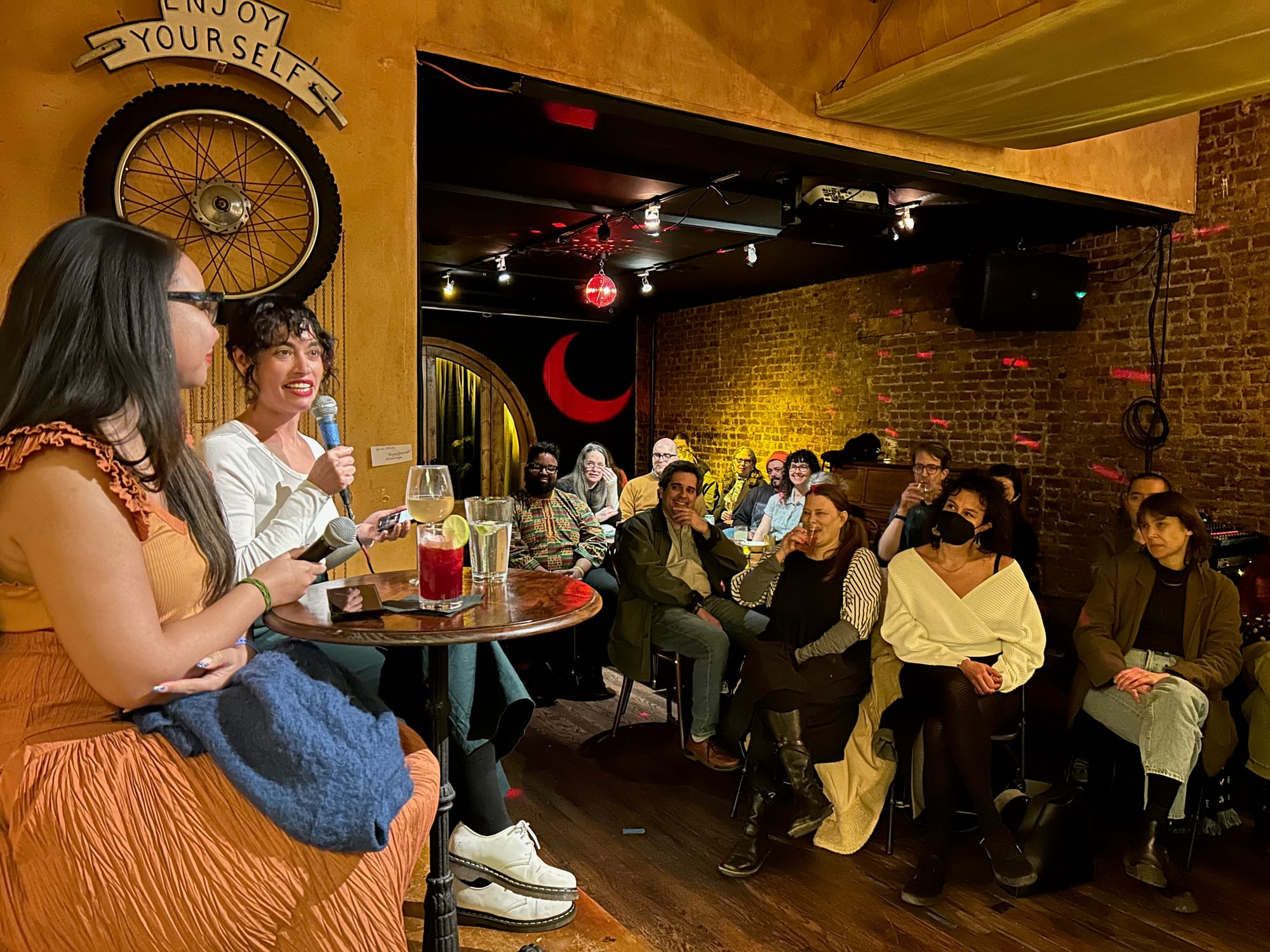
Three years ago, a small group of friends, all makers, artists, musicians, and I, opened the Francis Kite Club in Manhattan’s East Village. It is a bar and public social club offering inexpensive (for NYC) libations and a space to meet, have fun, plan events and performances, and generally connect with one another. The barrier to entry to a bar felt much lower than at the museums and cultural spaces where I’ve worked for 30 years, the protocols more transparent. And while you wouldn’t necessarily plan the same kinds of events for a bar as you would for a museum (a classical painting exhibition would not be ideal at the Kite), there are many artists creating works that don’t sit comfortably within the white walls of traditional cultural spaces.
For example, many artists are committed to engaging people through sociality and participation. As someone who has tried to cultivate the kinds of spaces to host such work, as I did as director of the Queens Museum, I can attest to the challenges of doing so in spaces that were not fundamentally designed for the social in mind. At the Kite, we launched a series of “residencies” for artists to experiment in this context. Among these, artist Chloë Bass hosted a series of performances at the Kite that included a conversation between her and a friend that meandered meaningfully into unusual territory, from parental relationships and family recipes to a discussion of whether AI should receive tenure at a university. Audiences were invited to participate robustly in the conversations, and they did. We served soup to the guests, cooked by Chloë, her special guest, and me. Sessions ranged from 30 to 50 people and lasted around two hours. A few of the participants simply needed a free, warm meal and were attracted by the soup. It was a beautiful, intimate experience, and I left every one of those evenings galvanized by the conversation and togetherness they fostered, as well as provoked to think about the subjects addressed in new light.
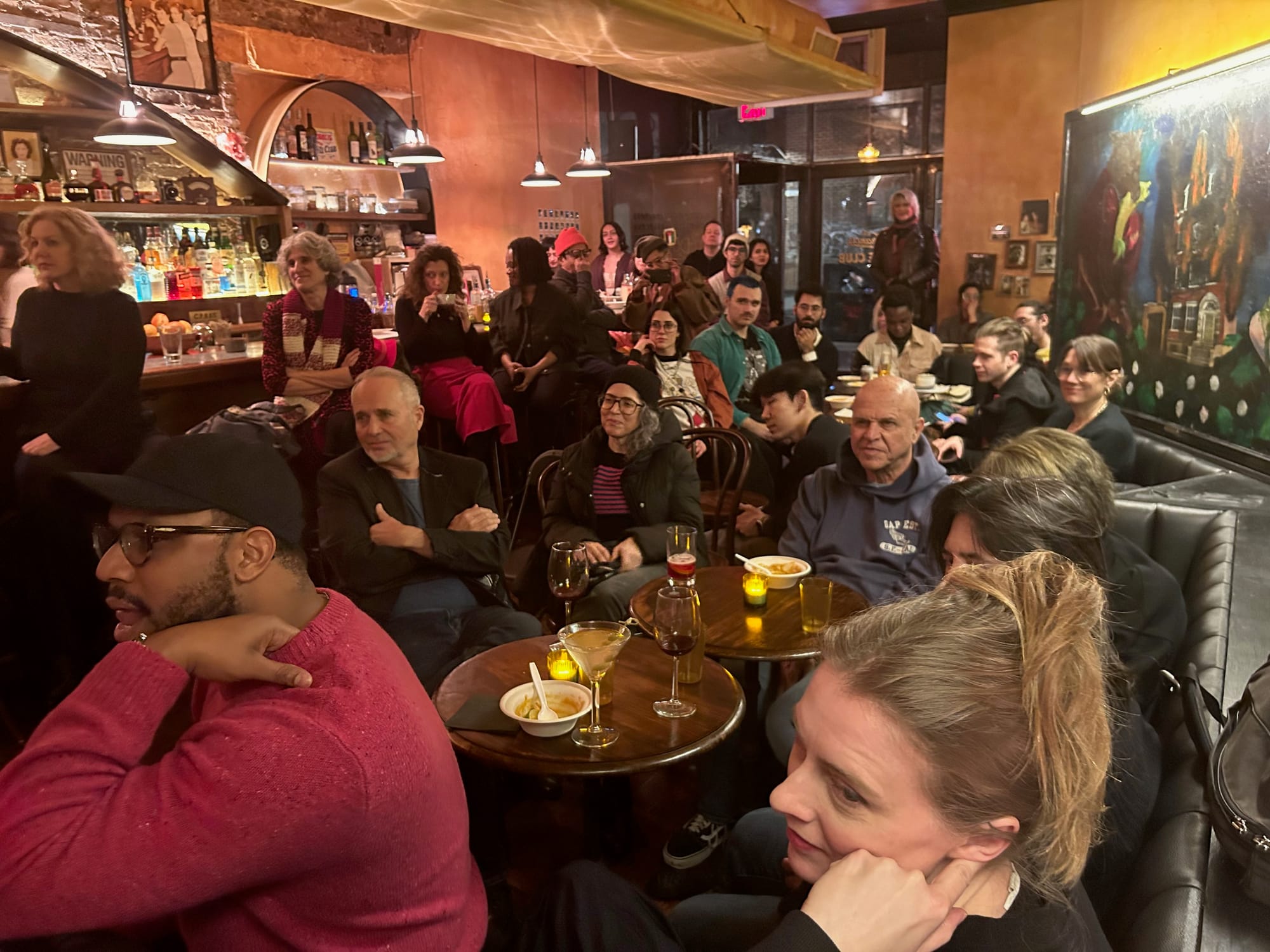
Beyond the social relations cultivated by these events, they each prompted participants to reconsider something fundamental in our daily lives and understand the quotidian differently. Such experiences are a gift because they open the door to using specific methodologies in alternative contexts and spaces. They parallel artist Mierle Laderman Ukeles’s 1976 proposal that cleaners and other maintenance workers in a NYC office building reconsider their work as “art” for one hour each day. The proposition here is that enormous power lies in recategorizing the activities of daily life. Might reclaiming culture as an everyday activity protect the freedoms we find at risk today? Perhaps this is where revolution begins.
While the scale of the events that take place at the Kite is necessarily modest, I have also been curious about larger-scale projects that could hold broader publics. I was fortunate, then, in 2024, to be invited by the innovative public art organization, Counterpublic, to imagine a convening that could take place between their sprawling triennial exhibitions in St. Louis, Missouri. I had been thinking about circuses for some time as a form of cultural infrastructure that is understandable, communicable, and accessible. Circuses also represent spaces of weirdness. Perhaps in this kind of atmosphere, art that seems alienating in a more classical space becomes more approachable. Plus, circuses exist in most cultures; they are aimed at audiences of all ages and backgrounds; they invite wonder, curiosity, and that important expectation of something odd. Even their taglines are inclusive: Come one, come all! Step right up!
St. Louis’s Grand Center Arts District is home to The Big Top, a big, beautiful circus grounds with red and white tents and fairy lights that is home to the St. Louis-based Circus Flora. We held our convening at the Big Top, naming it Circus of Life in October 2025.
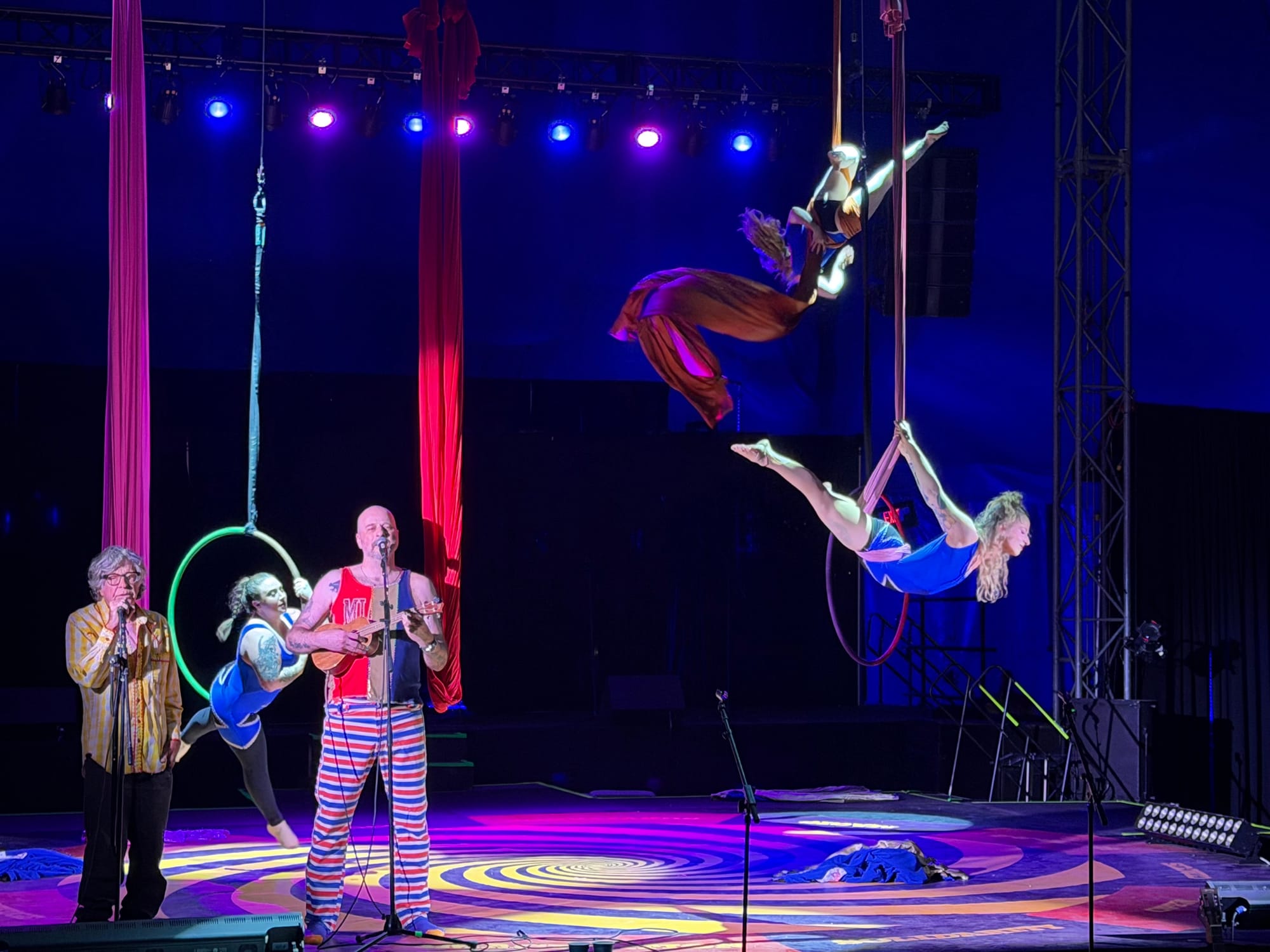
As with the Kite, the specific conditions of the Big Top and the idea of the circus itself invited certain types of artistic and cultural production. Elements of the program had to be big and performative, and others slow and contemplative. There had to be space for intimacy and individual reflection, as well as for big, group energy. Locations of discovery and “ah hah” moments, as well as for making and doing, and for that “wtf did I just experience” vibe. A lot of contemporary art gets a bad rap because it feels rigid or inaccessible, as though you have to be “read in” to get it. Sometimes, I put this down to context. In a space with white walls and a security guard standing by, it can be hard to be silly, ask questions, or respond authentically when expectations feel so formal and preconfigured. In a circus, by contrast, maybe we could lift those expectations so the artists presenting their work could be taken at face value, for all of their weirdness and experimentation and wisdom. It seemed to me that, similar to the Kite but on a different scale and register, the circus lowered the barrier to entry and participation for both the cultural space itself and its content.
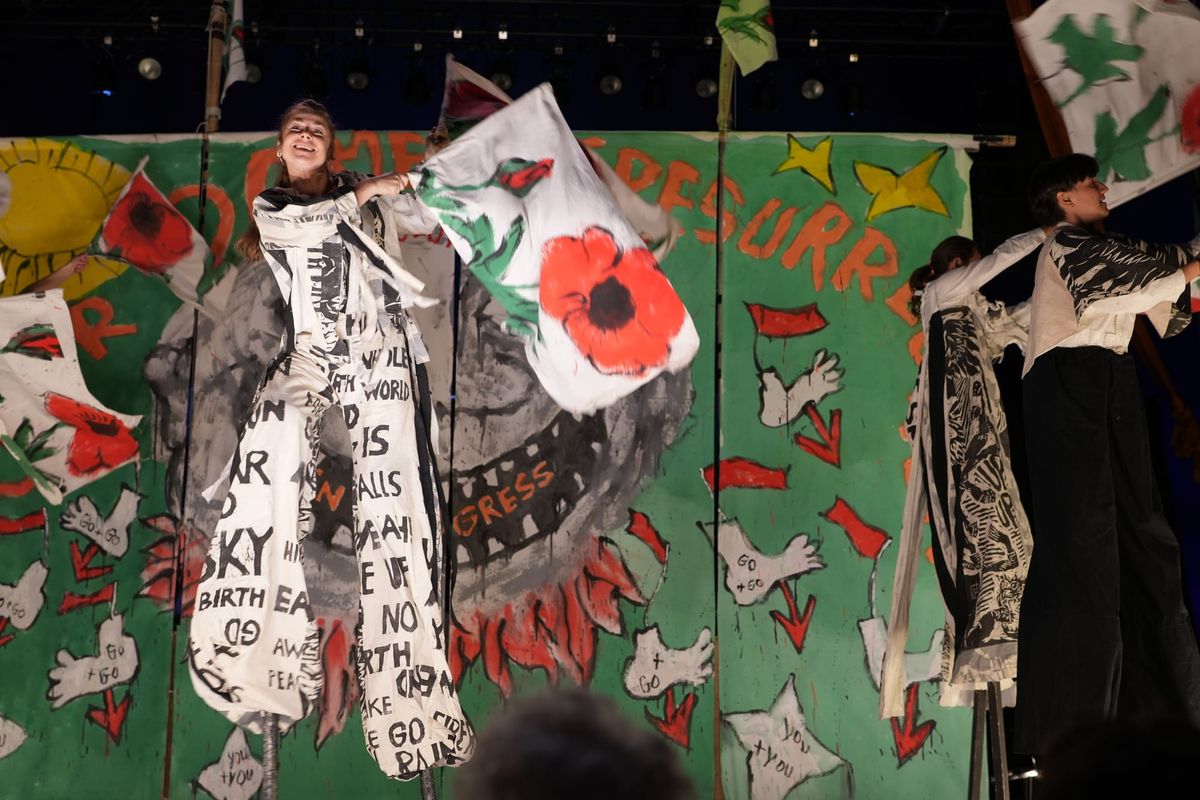
While the exuberant songs and massive puppets of the Bread and Puppet Theater may have been a clear choice for the Big Top, a group meditation followed by a collective karaoke performance of Cindy Lauper’s “Time After Time” by artist Prem Krishnamurthy may have been a less obvious activity to engage 500 people sitting under the twinkling lights of a massive tent. Prem showed us the intensity of connection between strangers sitting side-by-side while adding to the celebratory togetherness of the moment. Artist and choreographer Rashida Bumbray provided a deeply contemplative moment while shapeshifting before our eyes through movement and brilliantly executed costume changes that highlighted how African American women have performed and presented themselves on stages and in life, from Hattie McDaniel and Josephine Baker to Katherine Dunham and Gladys Bentley. Roxanne Gay and Nermeen Shaikh each delivered gut-punch talks and reflections on contemporary life and politics. Musicians Nicolas Jaar and Ali Sethi performed from their transporting album Intiha, bringing the vibrations of Jaar’s electronic inventions paired with Sethi’s transporting renditions of traditional Sufi ecstatic poetry.
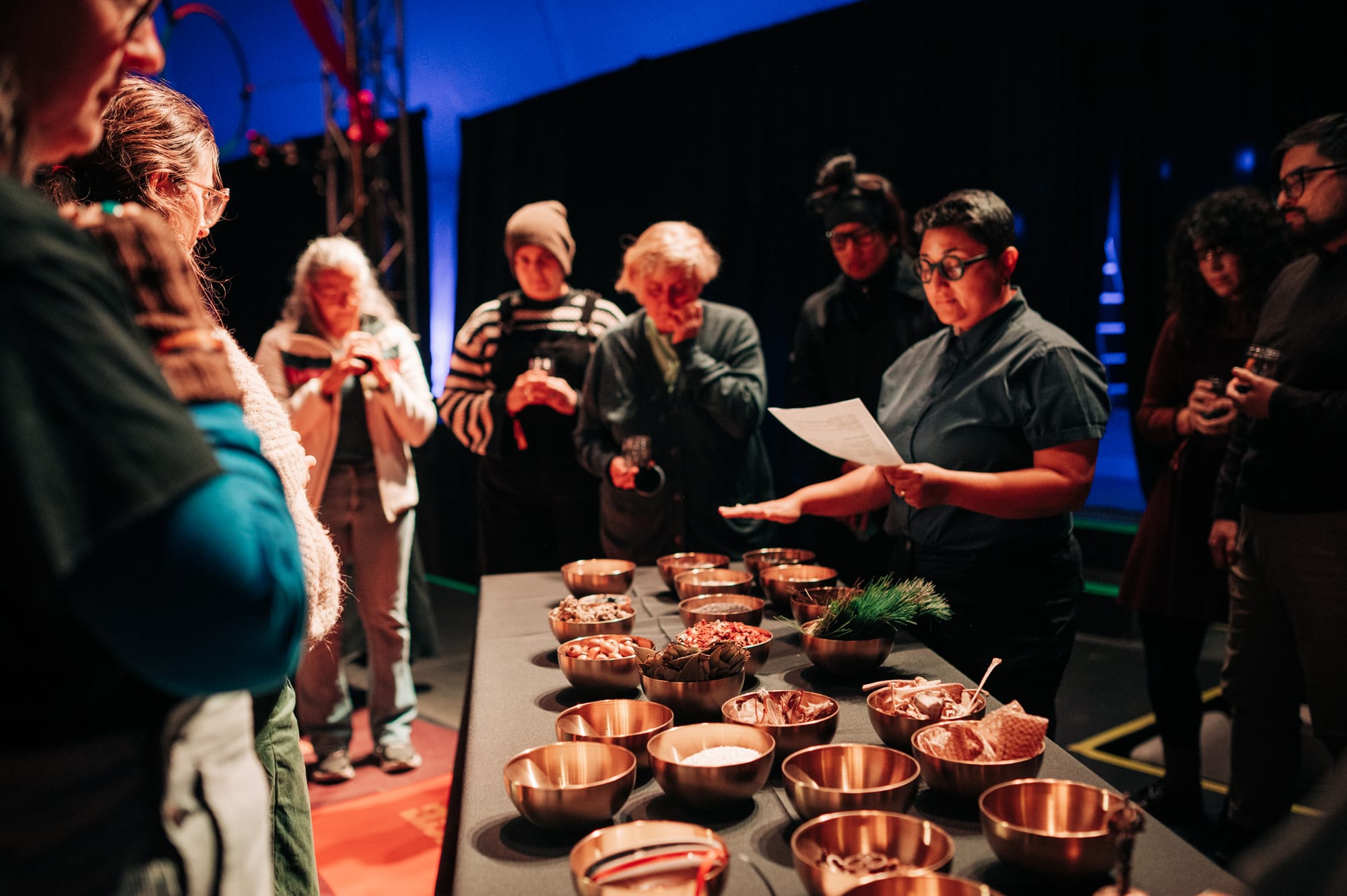
In parallel, others ranging from the art collective Hilma’s Ghost to artist Lauren Bon and her Metabolic Studio presented booths of intentional activities and games, alongside in-depth workshops to consider the potential of art and culture in communal resistance and how we might reimagine our lived realities. Together, these contributions seeded the ground with fresh thinking on multiple levels of contemporary conditions and crises, and fostered deeper interactions between participants. They provoked a melding of struggle with beauty, resilience, and resistance, an effort to approach what Indigenous scholar Gerald Vizenor has termed “Survivance,” an intentional mash-up of survival and resistance.
While the descriptions above focus on the content of what was shared by contributors, it leaves out what was experienced by the 1,200 people who attended the CIRCUS’s activities. And while I have access to the feedback shared by friends, colleagues, and family, as well as that of a handful of journalists who reflected on the event, I want to argue that the most important piece of culture that was produced at the CIRCUS unfolded between each of those 1,200 people and whoever they interacted with throughout the weekend. The CIRCUS made sense not only because, in many cases, it was a better way to encounter the art that was presented, but even more importantly because publics could bring their authentic selves into the space with fewer strings attached, to respond, reflect, discuss, and act in the moment and thereafter. Culture was not only experienced, it was produced by all in attendance.
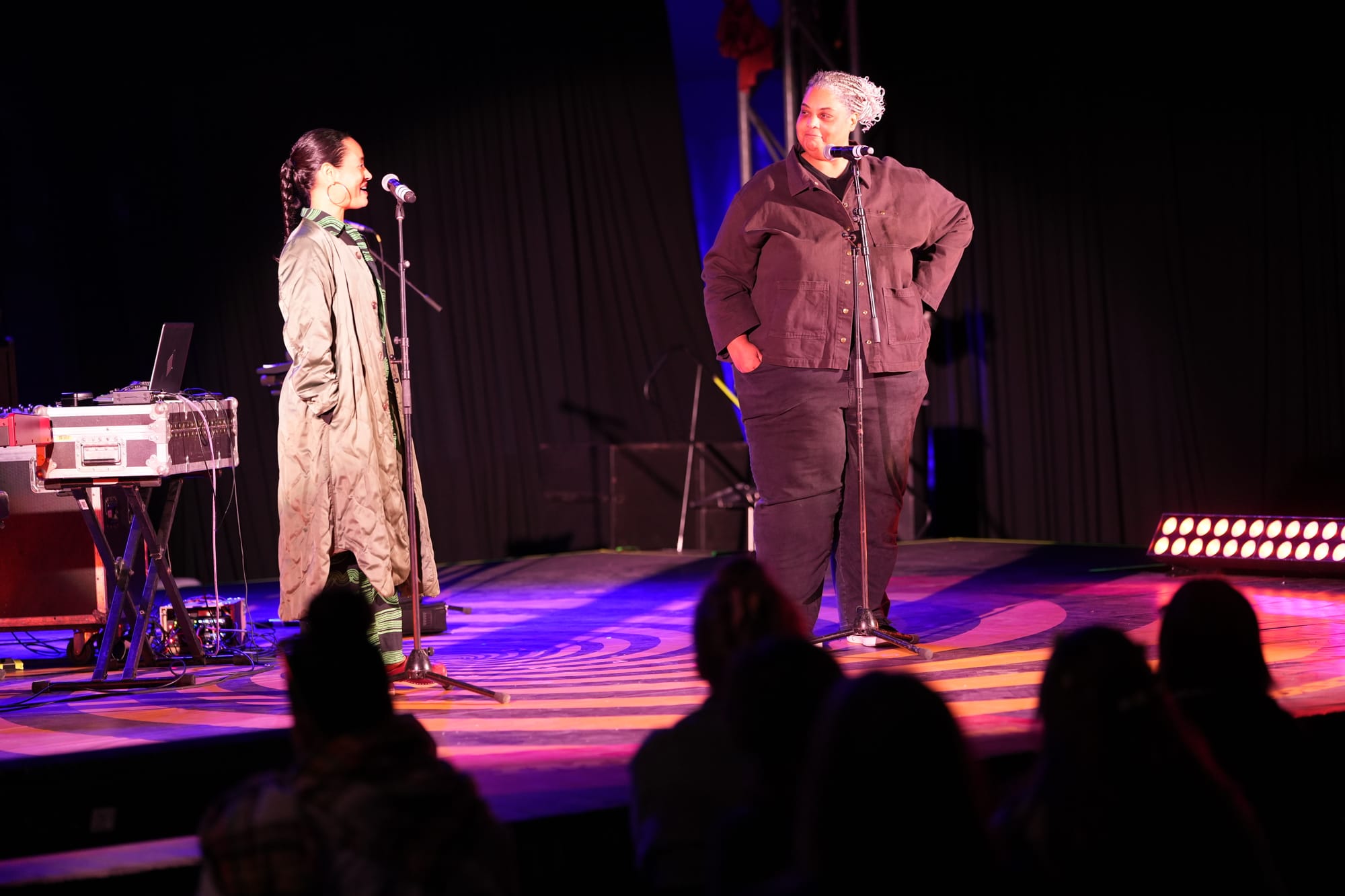
The Circus of Life was an experiment in what we hold in common by sharing cultural experiences, taking risks together, entering into spaces of making, learning, and observing. It was an attempt to reconnect our individual selves to the greater production of culture and hopefully to draw connections between how presenters created avenues for radical thought and action, and how publics could rename their own ways of being as cultural work. This is important and necessary at a time when powerful forces seem to dictate our lives and futures, and this small, yet profound act of claiming creative agency can return us to the driver's seat. Power is ephemeral and imaginary, and if art and culture open the door to those spaces, they can also cultivate in each of us the power of our own imaginations to live otherwise.
One last example of an effort in which I am involved is Fall of Freedom, a national call for cultural resistance to American fascism. Organized by a decentralized group of artists and cultural producers, the project spurred two days of cultural resistance comprising over 700 cultural events, art exhibitions, poetry readings, dance performances, film screenings, big and small, organized in 47 states in November 2025. A floodgate of participation was opened by inviting people to make, read, and do together. The open invitation to produce culture as resistance, and put imaginations to work against authoritarianism was powerful.Fall of Freedom has continued in 2026 with calls to action for May and upcoming in October.
At yet another scale from the Kite and Circus of Life, Fall of Freedom is likewise a form of alternative cultural infrastructure — one that is motivated by the importance of art to resistance and civic life. Through participation in such efforts, we might begin to recognize small things we do every day as cultural acts, connecting to our own humanity, and seeing that humanity in one another, and importantly, reimagining where power lies in society. Perhaps this recognition can become a daily practice, rather than a special event, cracking open the narrow imagination of reality prescribed by the contemporary social order.
In 2019, my first article for Hyperallergic was titled “The Narrowing of Museum Imagination.” There, I discuss how the increasingly narrow view of what museums and cultural spaces are and can be is part of the logic of capitalism and racial patriarchy that force a reality that steals away every human’s inherent creative capacity. This idea has remained central to my work ever since, expanding along the way to encompass not only arts organizations but the very conception of what it means to be human. By resisting the narrowness of where art and culture reside, we not only improve our own lives, but also begin to heal the enormous wounds of society’s recent histories and deep pasts. The reintegration of art and life must take place, not only for the quality of our individual and collective existence, but also because it’s fundamental to civic engagement and public good. If we can imagine the world as we want to live it, we have a chance to make it real.