Art
The Poisons, Potions, and Charms of Shakespeare’s Plays
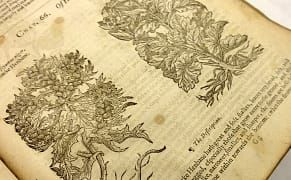
Potions, poisons, and symbolic herbs are frequent plot devices in the plays of William Shakespeare, and reflect the medical knowledge of his time.

Art
Potions, poisons, and symbolic herbs are frequent plot devices in the plays of William Shakespeare, and reflect the medical knowledge of his time.
Art
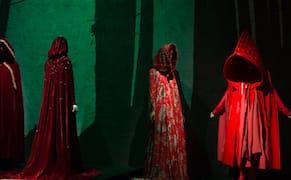
Whether it’s the click of silver slippers or a gown of gold descending from the branches of a tree, fashion and clothing have a unique presence in fairy tales.
Art
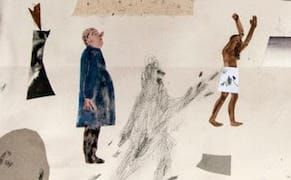
This week, Cory Arcangel opens a new show starring a drum machine, psychoanalysts and writers dissect the horror classic Rosemary's Baby, the city celebrates Rare Book Week, and more.

Art
At the center of Smack Mellon’s Dumbo gallery, Gil Yefman’s knitted wrecking ball of genitalia and bodily fluids hangs from the ceiling.
Art
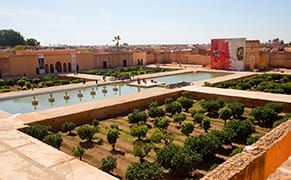
MARRAKESH — Set outside the institutional white cube, in restored ancient sites and the ruins of a 16th-century palace, the sixth edition of the Marrakech Biennale, Not New Now, arrives like a breath of fresh air.

Art
The "Positron" (1976–77) by Latvian artist Valdis Celms operated a bit like a disco ball, flashing various colors of light as the goliath metal orb rotated.
Art
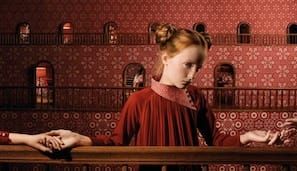
You need to spend half an hour looking at each of these photographs to gather all of what's happening inside it.

Art
Minimalist abstraction of the 20th century often feels placeless. Tony Smith's angular, inky sculptures could have crawled out of a dimension void of organic life; Mark Rothko's repeating black canvases in a Houston chapel reflected the space's lack of specific religion.

Art
When Richard Pryor strode through an audience of fans and celebrities at the Hollywood Palladium on December 9, 1981, the comedian — always renowned for his candor and vulnerability — was exposed in an altogether new way.
Art
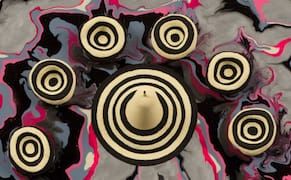
I first became aware of Carole Seborovski’s work in the mid-1980s, when she was a geometric artist working on paper with a restrained palette.
Art
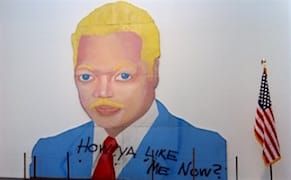
Why doesn’t the Whitney Museum of American Art inaugurate a series of exhibitions in honor of Herman Melville? It would certainly be fitting given the museum’s recent change of address.
Art
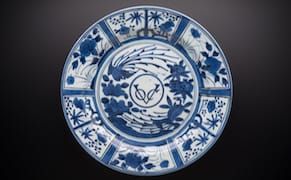
SALEM, Mass. — The Dutch East India Company wrested control of the Asian spice trade from the Spanish and Portuguese, went on to own virtually all of Indonesia, and monopolized trade with Japan for 200 years.