The Best Part of “Moss & Freud” Is When It’s Over
In the film, Kate Moss is looking for the right man to get her sober, and Lucian Freud is a Great Man who magically sees the “truth” in young women.

Condé Nast kills another flock of print mags. The Venice Biennale is a bust. Jeff Bezos reigns over the Met Gala, smugly stuffed into a black tux. Given the state of the art and fashion world today, who could deny the allure of early aughts nostalgia? Therein lies the obvious appeal of Moss & Freud (2025), a new film about the unlikely friendship between supermodel Kate Moss and portraitist Lucian Freud.
More a glitzy buddy film than traditional biopic, James Lucas’s debut directorial feature is as frivolous as Fendi fringe, as puffy as a Rodarte sleeve. And that is its only redeeming quality. At best, it is a toothsome, predictable film about intergenerational bonding. At worst, it is a film that openly celebrates an exploitative relationship between artist and muse. In either case, Moss & Freud makes The Devil Wears Prada II (2026) feel like cinéma vérité — so implausibly shallow are its characters, so hopelessly hackneyed are its dialogue and plot.
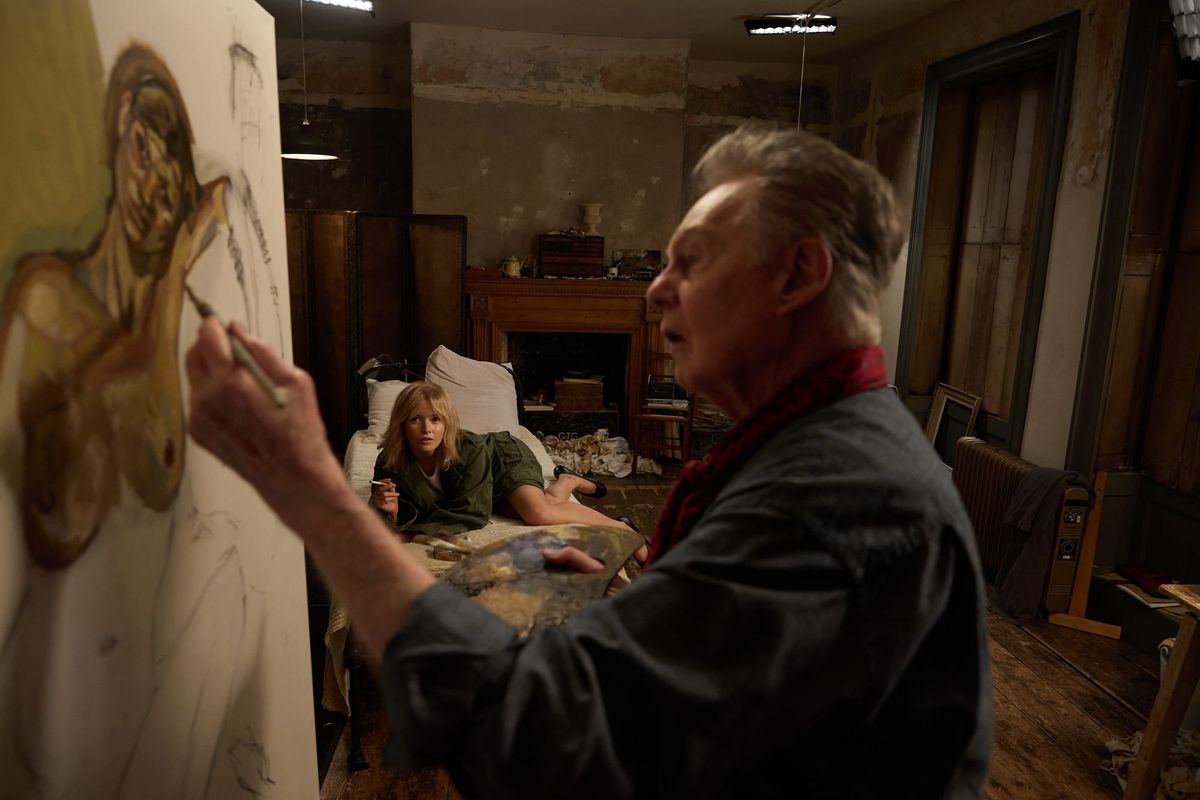
Moss & Freud is best when it revels in excess — from smoke and sweat-filled late-night dance clubs to empty splits of champagne strewn across a greenroom. In the first shot, set late at night, Moss (Ellie Bamber) blazes down a coastal British highway, her hair wind-whipped and her torso swallowed up by hungry rabbit fur. Managing to successfully speed, smoke, and drive stick — all while dodging the attention of the coppers — she epitomizes an irresistibly reckless decadence. Seconds later, after a set of compulsory drone shots of London at dawn, Moss’s stilettos glide up the staircase of the National Gallery. The museum is empty, aside from a solemn older man who, we’re quickly apprised, is none other than famous painter Lucian Freud (Derek Jacobi). “When one is naked, there is no hiding,” he intones, as they stare at the nude, if chaste, goddess in Titian’s “Diana and Actaeon” (1556–59). “Only truth.”
The maxim is but pretext for Freud’s proposition: pose for him (sans attire) as the subject of a new portrait. While initially reticent due to a packed calendar of runway shows, photoshoots, and otherwise enviable libertinism, Moss agrees a few months later, tiring of the lifestyle that has, as many of us remember (but goes unmentioned in the film), earned her the epithet “Cocaine Kate.”
After all, Freud is an artist with grand ideas whereas Moss is but a commercial model. After all, “painting is quite sensual,” as she puts it, admiring the Titian. After all, as the film later relays, painting is also “psychological,” “biological,” and “very meaningful.” Watching such scenes, I had to remind myself that I was watching a film, and not evaluating an especially sad excerpt of my first-year students’ writing.
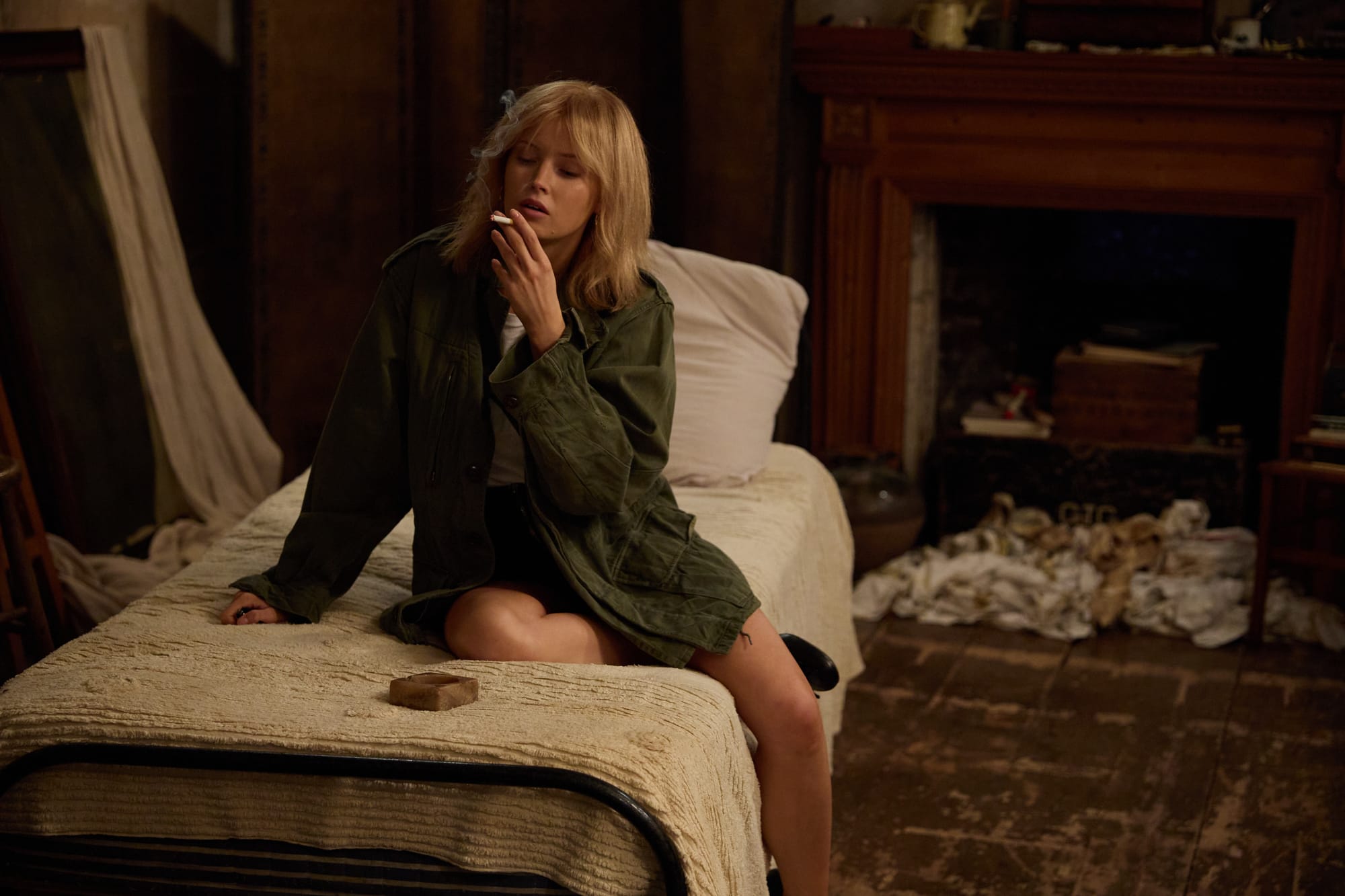
“I’ve been doing different things,” Moss confides to a new lover, an enamored magazine editor. “I’ve been doing things differently.” Such platitudes are no less vapid from a pretty mouth. Whether chain-smoking in a five-star suite or casually disrobing at Freud’s tony manse, Bamber lacks the impetuous charisma and nicotine grit of the South London-reared woman she portrays. She also, significantly, looks little like Moss; her presence doesn’t summon memories of heroin chic so much as willowy, wide-eyed Botticelli.
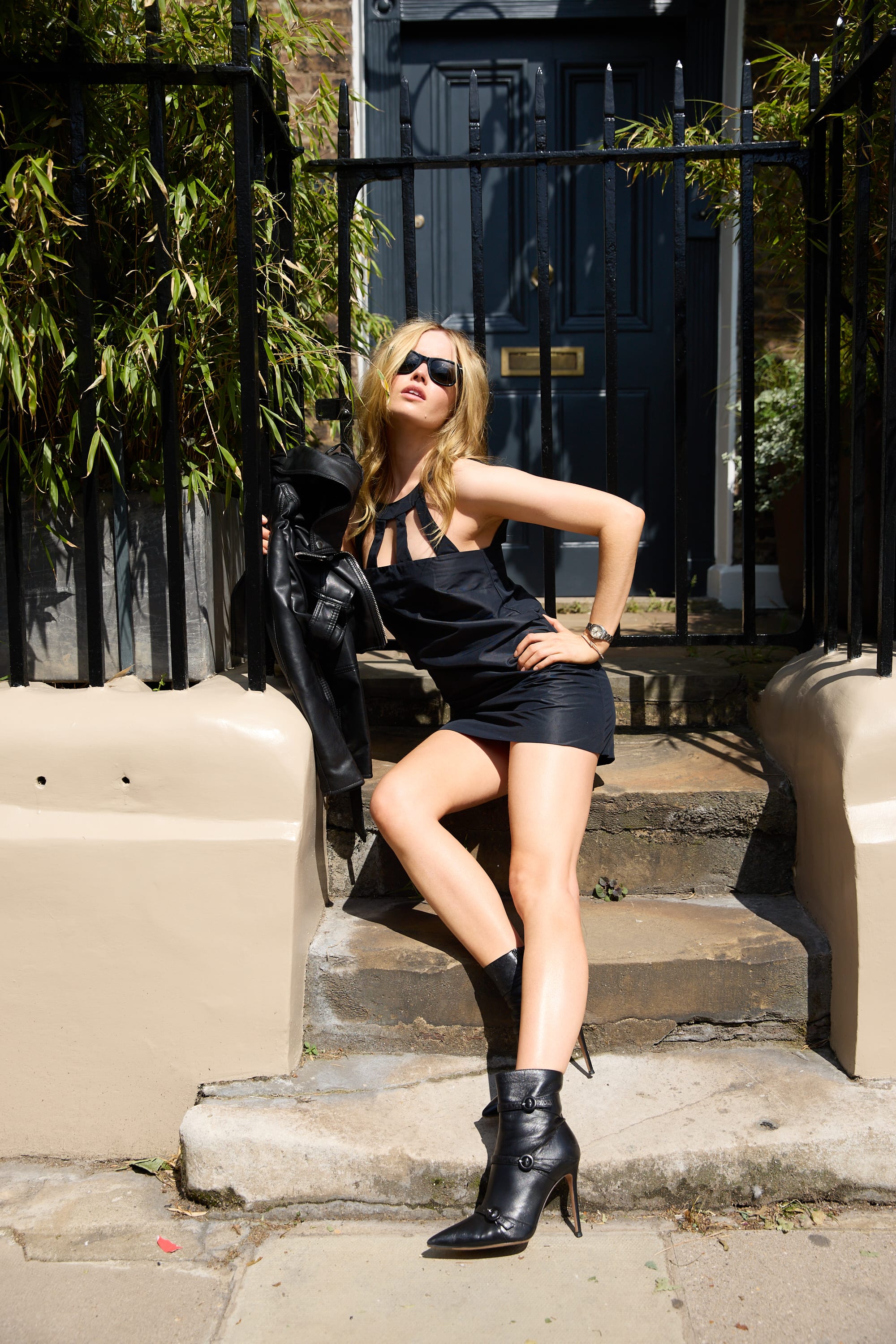
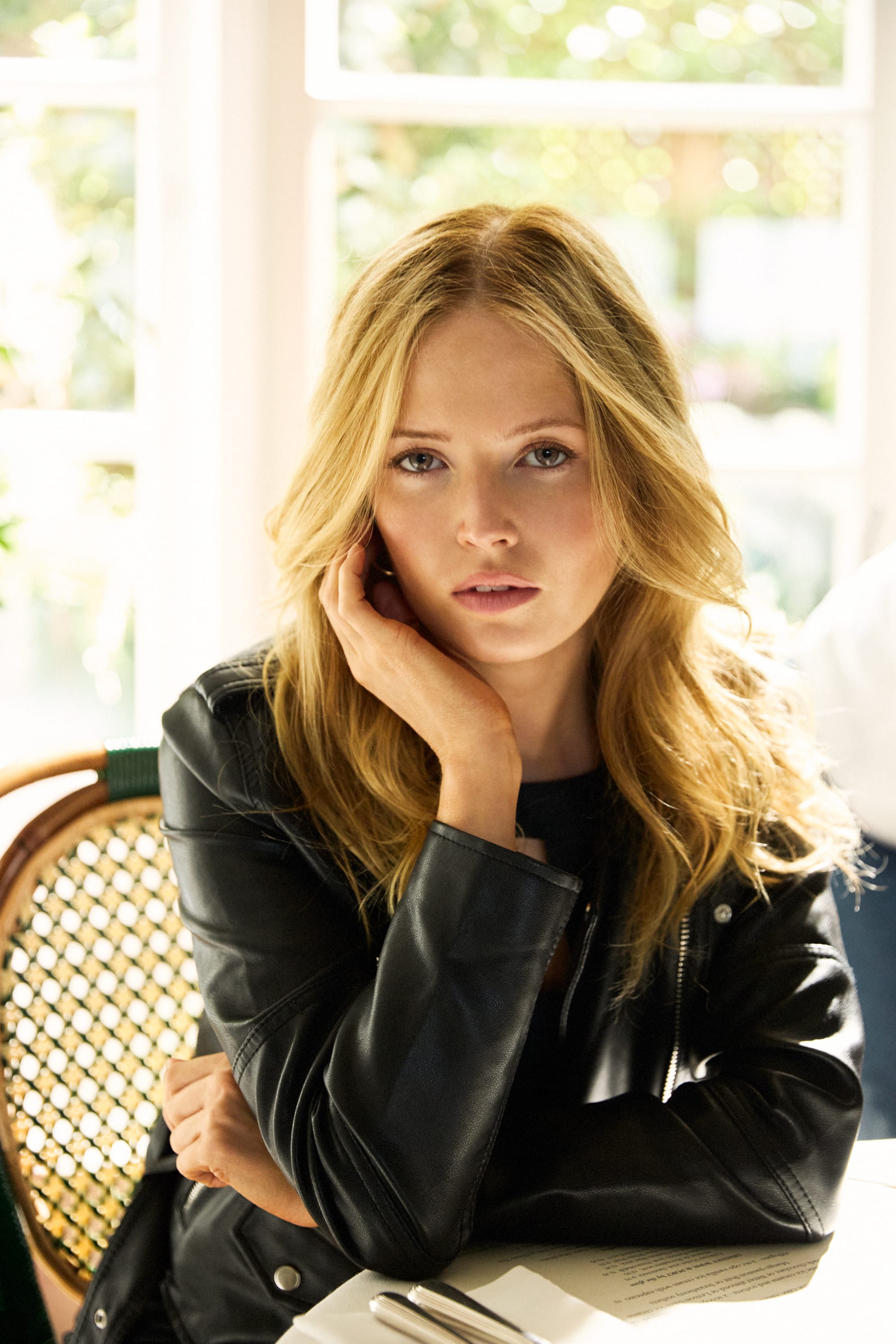
Film stills of Moss & Freud, directed by James Lucas
Despite their difference in class, Moss and Freud share a degree of privilege they are all too glad to squander. See Moss enjoin her Black taxi driver to enter a club in his skivvies and undershirt; it’s “S & M Night” and singles aren’t allowed. See Freud convince a waitress to quit her job to pose for his new painting; no mention of whether this “butcher’s daughter” is ever compensated. It would be one thing if we were invited to both revel in and judge this duo’s flagrantly bad behavior, but that’s not the kind of film this is. This is a film that firmly believes its anti-heroes are heroes. Moss isn’t an insouciant, smart-ass fashion gadfly; she’s a woman looking for the right man to get her sober (or plant a baby in her flat abdomen — whichever comes first). Freud isn’t a womanizing Holocaust survivor who takes his trauma out on those he loves most; he’s a Great Man who magically sees the “truth” in young women like Moss, which they themselves evidently cannot.
In the film’s final act, Freud explodes at Moss for being eight minutes late and not respecting his schedule. “I paint and I paint and I paint some more,” he screams, as though she (and we) aren’t painfully aware that this is what, by definition, all painters do. A more honest film would have at least gestured at the extractive tendencies of both the fashion industry and the fine art world. But Moss & Freud resists such complexity, preferring trite revelations to real insight.
“A moment of complete happiness never occurs in the creation of a work of art,” reads the film’s opening epigraph, credited to Freud. “The promise of it is felt in the act of creation, but then disappears toward its completion.” Just in case we missed it the first time, these words are spoken in breathy voiceover by Moss at the end of the film — a completion for which I, for one, was admittedly all too happy.
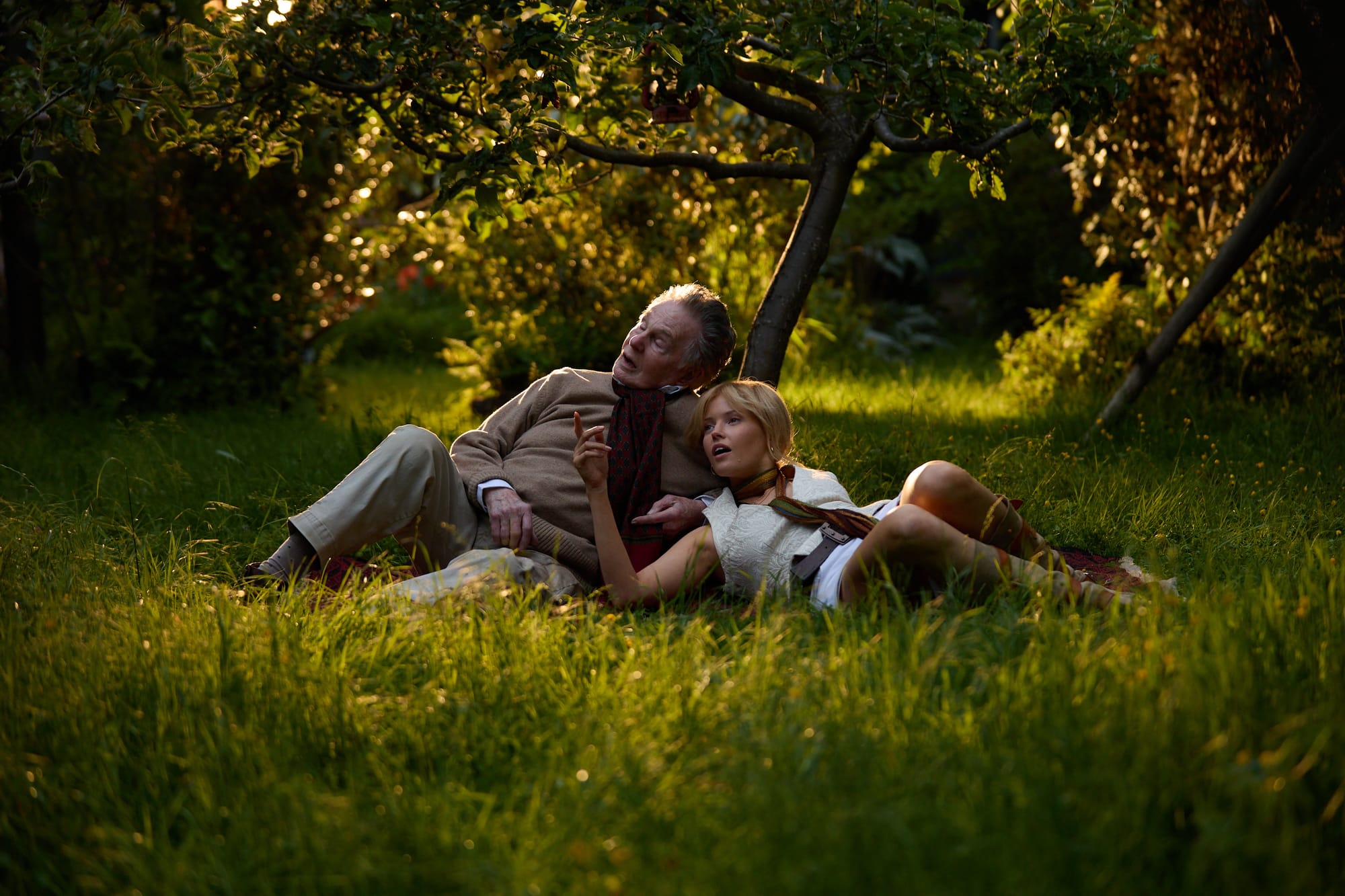
Moss & Freud, directed by James Lucas, is screening in select theaters in the United Kingdom through at least June 30. It is widely available to stream elsewhere in the world, with a United States theatrical release to come.