The Future of Museums Is a Dance Floor
The rave offers a temporary homeland, a space where belonging is felt rather than declared.

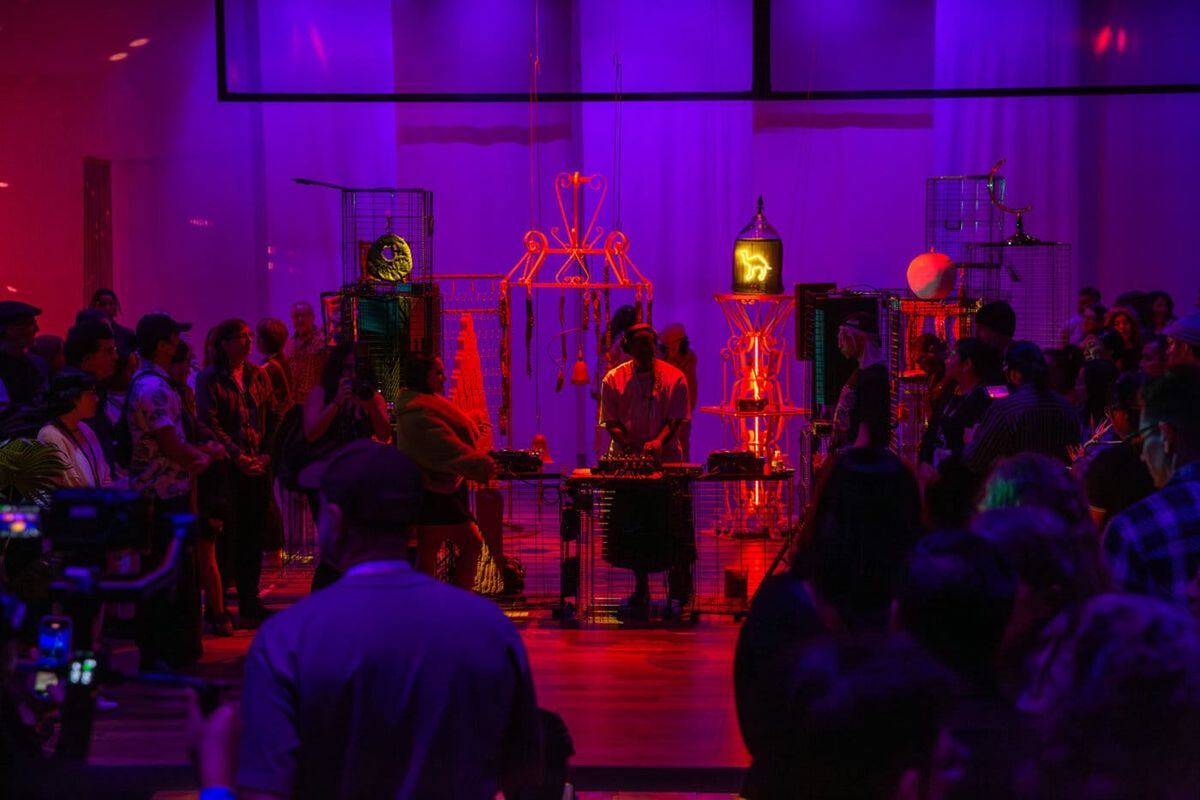
I remember a dance floor for what it allowed us to imagine. In the haze of strobe and bass, we built worlds. We mourned what we had lost and rehearsed what might come next.
As a curator, I understand raving as a transformative method of worldbuilding, one that can expand out of the warehouse and into the museum. Rave culture has long been dismissed as escapist or unserious, dance floors as hedonistic or indulgent, places of temporary release rather than political formation. Yet collective dancing has always been more than leisure, as McKenzie Wark and Destiny Brundidge point out in the anthology Writing on Raving (2025). When bodies move in rhythm, hierarchies loosen. The bass and rhythm are not only heard but felt. They pierce walls and bodies alike, reorganizing space and perception. For a moment, we stop being who we are told to be; for a moment, another social order becomes imaginable. The dance floor becomes a rehearsal space for forms of belonging that may not yet exist elsewhere.
Recently, museums and art institutions have begun to recognize that the dance floor matters. At his Dia Beacon solo show in 2024, Steve McQueen transformed Dia’s subterranean architecture through vibrating low frequencies and shifting light, using bass to sculpt perception itself. Elements of Vogue: A Radical Performance Case Study at Centro de Arte Dos de Mayo in Madrid in 2018 foregrounded voguing as embodied knowledge produced by marginalized communities, destabilizing the myth of a singular curatorial authority and challenging who gets to narrate history. In 2025, the Swiss National Museum’s Techno framed techno culture as heritage, tracing its objects, myths, and origin stories. That same year, I curated Rave into the Future: Art in Motion at San Francisco’s Asian Art Museum, featuring 10 West Asian and North African diaspora artists who reimagine the dance floor as a site of collective resistance. Together, these projects signal an institutional turn toward nightlife and sound as consequential cultural terrain.
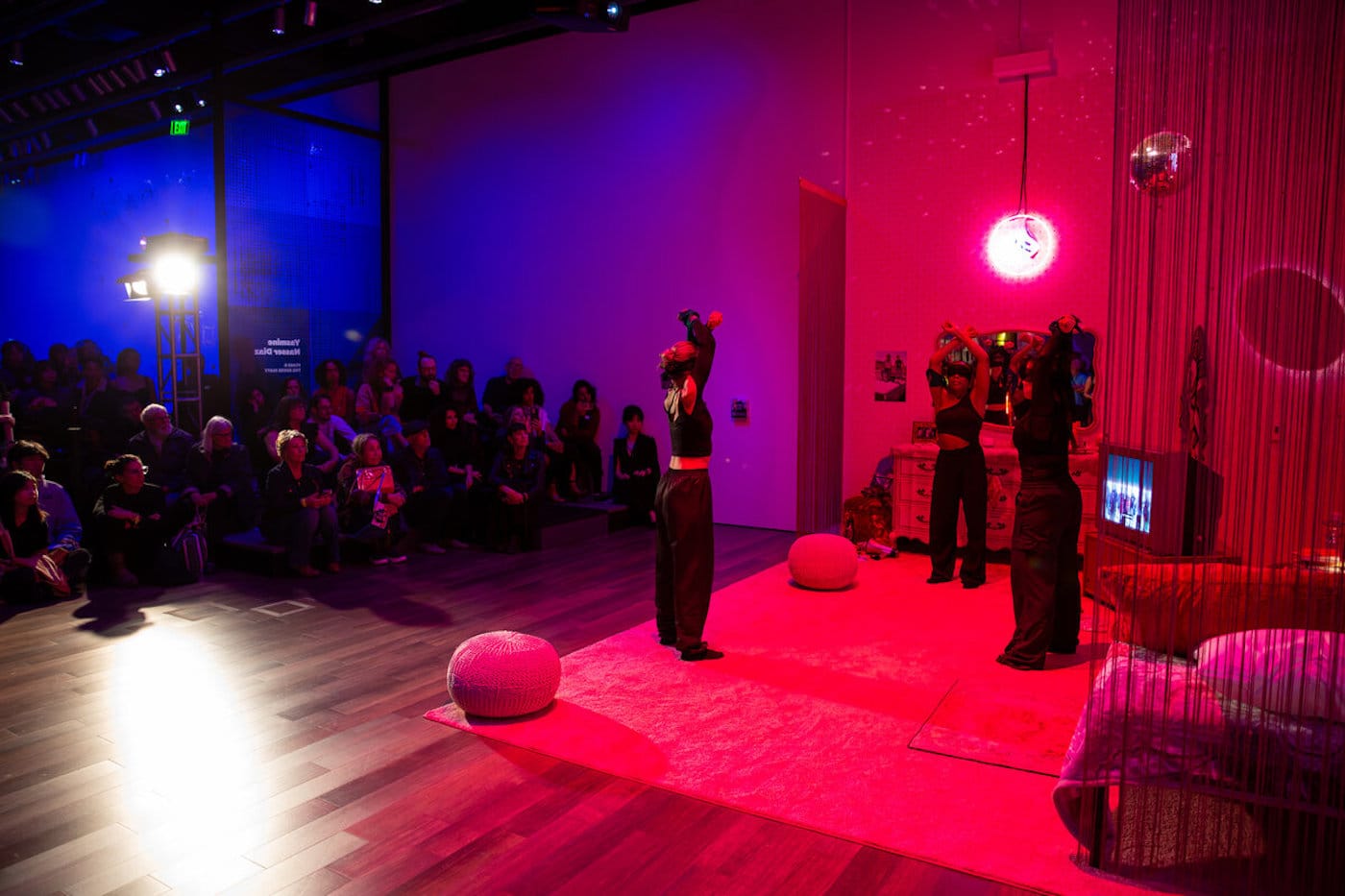
But rave is not only heritage, nor purely formal experimentation. It is a diasporic counterpublic. In communities shaped by displacement and migration, sound crosses borders and generations. Gathering refuses isolation. The rave offers a temporary homeland, a space where belonging is felt rather than declared. Mainstream art history and post-9/11 curatorial frameworks have often fetishized trauma when looking toward West Asia and North Africa in particular — flattening difference into predefined narratives of gender and geopolitics, as critiques of shows including Women Defining Women in Contemporary Art of the Middle East and Beyond have shown. Choosing to center joy and resilience becomes a refusal that asserts complexity over reduction and resonance over spectacle.
In Rave into the Future, this logic took material form. Lebanese-British artist Joe Namy’s copper dance floor operated as a conductive archive, marked by every step and scuff. It registered collective presence rather than individual authorship. Meanwhile, Yasmine Nasser Diaz reimagined the bedroom as an impromptu dance floor in “For Your Eyes Only” (2021–ongoing). Social media choreography is layered with footage of women-led protests — from Tehran to Cairo, Beirut to Istanbul — alongside viral feminist performances and digital traces that circulate across borders, collapsing the distance between intimacy and resistance. Meriem Bennani imagined a speculative refugee island where teleportation replaced borders and parties persisted despite confinement in “Party on the CAPS ” (2018–19). In the Brussels-based Turkish duo mentalKLINIK’s glitter-swept installation, robotic vacuums endlessly redistributed shimmer rather than containing it, turning the afterparty into an allegory of persistence. Across these works, joy was not naïve. It was insurgent and collective.
The exhibition complicated any singular narrative of rave culture. Most importantly, much like the dance floor itself, it did not remain static. The project unfolded through live activations that tested the elasticity of the museum space itself: Daytime disco sessions displaced nightlife into afternoon light, rejecting the assumption that the rave belongs only to darkness. Conversation between Arshia Fatima Haq of Discostan and Roshanak Kheshti explored decolonizing the dance floor, a devotional and radical space. Open calls invited local DJs into the galleries, redistributing authorship beyond the museum’s walls. A “Baby Rave” welcomed families onto the dance floor, expanding who gets to inhabit collective joy. These programs were extensions of the exhibition’s guiding question: Can a museum host intergenerational and diasporic forms of gathering without neutralizing them?
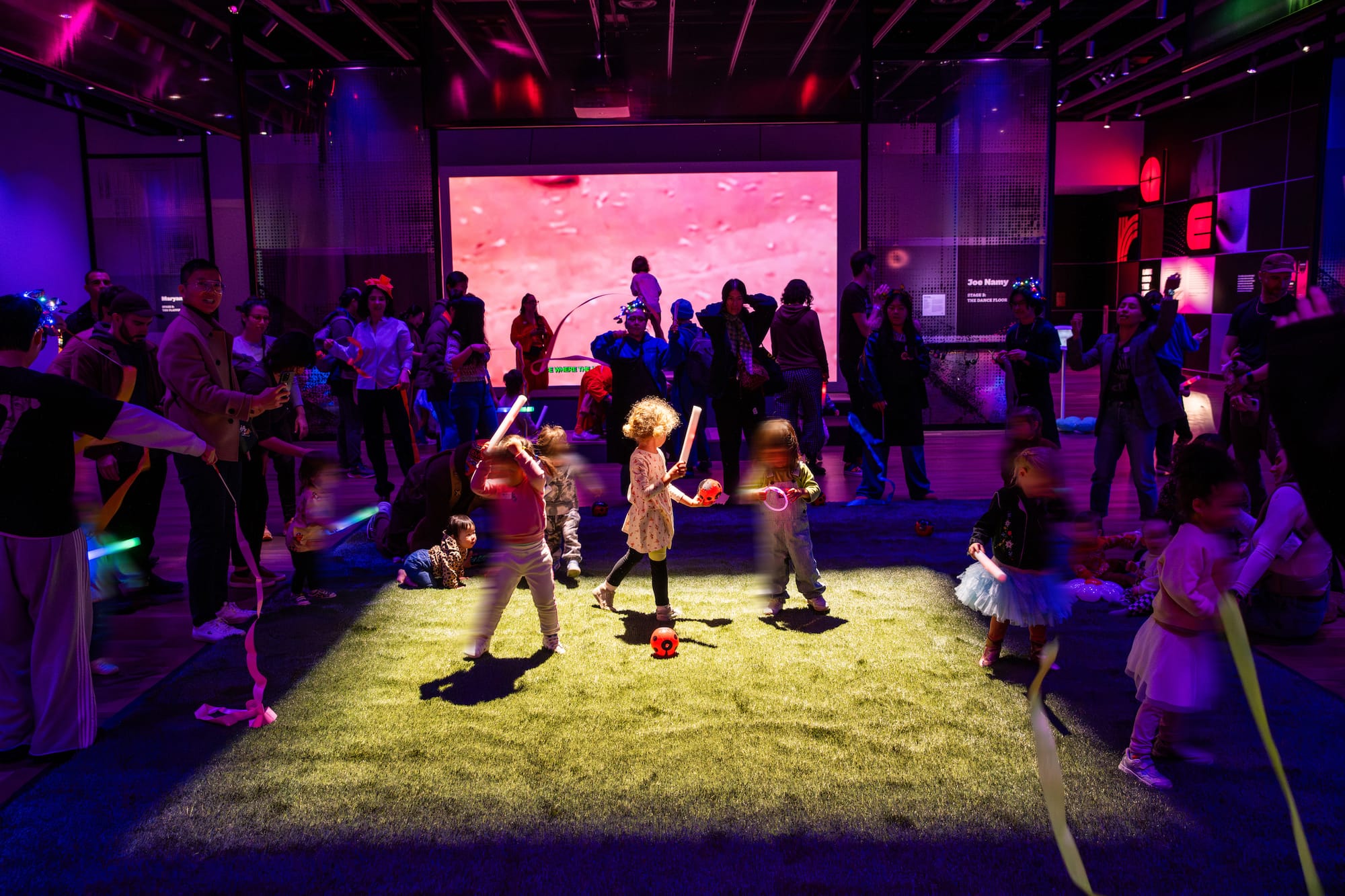
The institutional anxiety around glitter, which refused to stay in its designated zone, was telling. Questions of control surfaced repeatedly throughout the show’s run. Why are we so afraid of glitter? Perhaps because it mirrors the very conditions institutions struggle to hold — excess, collectivity without clear authorship, intimacy that exceeds the frame. Museums have largely learned how to exhibit grief. They seem less comfortable exhibiting pleasure that does not resolve into a clear object or narrative, that resists closure and containment.
The dance floor, on the other hand, reorganizes time and space. It suspends productivity and bends it toward collective experience. The rave gathers those not welcomed elsewhere — queer people, racialized communities, migrants — and allows alternative forms of kinship to be tested and felt in real time.
To curate a rave inside a museum is not to aestheticize nightlife. It is to ask whether the institution itself can host it. Can it transform from monument to gathering? From archive to choreography? If museums are civic spaces, they must grapple not only with representation but with resonance, with how bodies move together in space and what forms of solidarity that movement makes possible.
The question is not whether rave belongs in the museum. The question is whether the museum can learn from the rave — whether it can hold collective joy without negating it, and allow vibration to unsettle its walls.